Ask three people what a new conservatory roof costs and you will hear three very different numbers, and each of them may be right for their own conservatory. The roof is a large part of the structure, the choices run from a light polycarbonate sheet to a fully insulated tiled roof, and the frame beneath it sometimes needs work before anything can go on top.
MyBuilder's conservatory roof guide (updated 21/08/2026) puts the typical UK average at about £4,500 and a wide spread of £2,000 to £10,000+. That spread is the honest picture. A small polycarbonate swap on a sound frame sits at the bottom, while a solid roof on a large Edwardian conservatory that needs strengthening sits at the top.
Below we take the figures by roof type, explain why the solid option costs more, cover the structural allowance that sometimes catches people out, and list the things that genuinely change a price. Every figure here is a national guide, not a Watertight price. Your own number comes only after we have seen the roof. The result is a written quote showing one overall price, and our conservatory roof replacement service page shows how a job runs from survey to handover.
What the typical UK figures say
Cost guides group conservatory roof replacement by the type of roof going on, because that is the biggest single factor. MyBuilder's figures (updated 21/08/2026) are typical UK ranges for the whole job, including the work to fit the new roof, and they are a sensible starting point before anyone has measured your conservatory.
| Roof type | Typical UK range |
|---|---|
| Polycarbonate | £2,000 to £5,000 |
| Glass | £3,000 to £8,000 |
| Solid (tiled or insulated panel) | £5,000 to £10,000 |
| Structural reinforcement, where needed | £500 to £2,000 |
Read the table as overlapping bands, not a ladder. A large glass roof with a complicated shape can cost more than a small solid one, and a tight polycarbonate job on an awkward bay can edge into the glass band. The average of around £4,500 sits in the middle of the first two rows, which tells you most replacements are not the premium option.
Two cautions apply. First, a cost guide cannot see your frame, your access or your ground, so treat the table as an indication of scale. Second, a low figure is only a saving if the roof does what you want from the room. A polycarbonate roof that leaves the conservatory too hot in July and too cold in January has not saved anyone money for long.
It also helps to separate the roof from the work around it. A guide figure for the roof does not automatically cover new plastering, redecoration inside, or repairs to the dwarf walls, so ask any quote what it stops at and what it leaves to you.
Why a solid roof costs more than the other two
A solid roof is not a covering fitted over the old one. It is a small roof built from scratch: new rafters or a strengthened frame, insulation between and above them, a vapour layer, plasterboard or a lined ceiling inside, battens, and tiles or slates on top. Each layer adds materials and labour, and the room usually needs its electrics reworked because lights, spots and sockets now have to sit in a ceiling that did not exist before.
It also carries a cost that never shows on a polycarbonate job. A tiled roof built over a conservatory ranks as a material alteration under the regulations, and Homebuilding and Renovating (article updated 17 July 2023) says plainly that you must submit a building control application. That means plans, a fee to the building control body, and inspection visits at set stages. Our guide to Building Regulations for a solid conservatory roof explains the process step by step.
The MyBuilder range for a solid roof is £5,000 to £10,000, and the top of it usually reflects a larger footprint, a lantern or a hipped end that needs extra carpentry. The build-up itself, including why it feels so different from a glass room, is covered in tiled conservatory roofs and warm roof conversions.
What you are paying for in the room
The extra cost buys a room that behaves like the rest of the house: steadier temperature, no glare, and quieter rain. It also removes the option of a bright, glazed ceiling, so some owners choose to keep a roof window or two in the new roof to hold on to a little daylight.
Glass and polycarbonate: where the savings sit
Polycarbonate is the lowest figure in the guide, at £2,000 to £5,000 on the MyBuilder range. The sheets are light, quick to fit and easy to cut to shape, so there is little to build and little to inspect afterwards. The compromise is life and comfort. HomeBuilding (18 April 2024) puts a polycarbonate roof at a typical life of about 10 years, and The Eco Experts (updated 29 April 2024) say around 10 to 15, so the lower price buys a roof you may well replace again.
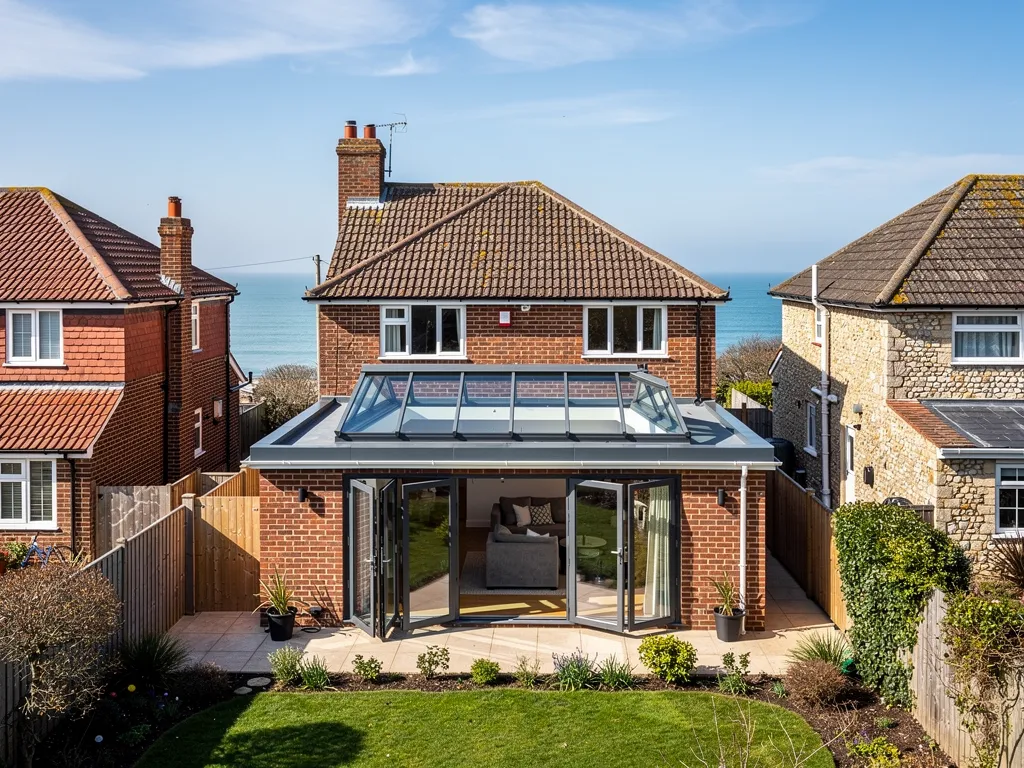
Glass sits between polycarbonate and solid at £3,000 to £8,000. Modern glazing units can be specified with solar control coatings or self-cleaning outer panes, which keeps the room usable in summer without losing the light. Glass weighs more than polycarbonate, which means the frame takes extra load, and that is one reason the structural allowance in the table matters here.
If you want the comparison across heat, noise, lifespan and cost together, read glass or polycarbonate conservatory roof, which sets the two side by side.
Fitting method matters too. Glass or polycarbonate sits on a set of aluminium or uPVC bars, and the bars, the gaskets and the cappings that cover them are as important to keeping the room dry as the panes themselves. When a quote is for new panes only, find out what happens to the bars.
Choosing on running cost, not just fitting cost
A fair way to compare is to ask what each roof costs per year of use. A roof that costs £2,000 less but needs replacing earlier, or that makes the room unusable for two seasons of the year, can end up more expensive than one that costs more at the start. We would rather you chose the roof that suits how you use the room than the one with the smallest first number.
Structural reinforcement and the frame underneath
The £500 to £2,000 structural allowance in the MyBuilder figures is the line most people do not expect. A conservatory frame was built to carry a light roof, usually glass or polycarbonate, and swapping to something heavier moves the load onto parts that were never asked to take it: the frame, the ring beam or head plate along the top, the dwarf walls and the foundations below them.
That does not mean every solid roof needs a structural fix. It means the frame has to be looked at before a roof is specified, not after the tiles arrive. We check the condition of the posts and the head, any movement or cracking in the dwarf walls, and where the new roof will bear on the house wall. If anything looks doubtful, a structural engineer's calculation is the sensible next step, and our page on the structural check before a solid roof explains what is looked at and why.
Where the frame is already tired, it can also change the whole question. A weak frame under a failing roof may be a reason to replace the roof as part of a bigger repair, or to think again about whether a repair is enough. Our guide on whether to repair or replace a conservatory roof sets out how to decide.
Foundations are rarely a surprise on a conservatory that has stood for years without cracking, but we still look at the base, the brickwork at the corners and the door and window openings for signs of movement before saying a heavier roof is suitable.
If the survey finds that the frame needs strengthening, you see it on photographs of your own conservatory, and the strengthening is included in the single price you are given.

What moves the price on your conservatory
Once the roof type is chosen, a handful of practical things decide where in the range your quote falls. None of them is a mystery, and all of them are worth understanding before you compare figures.
Size, shape and pitch
Area drives materials and labour, but shape drives complexity. A simple lean-to is the easiest roof to replace. Victorian and Edwardian styles with several facets, a hipped end or a ridge crest take longer to measure, cut and seal, and every extra junction is another place for a detail to be done well or badly.
Access and scaffold
A conservatory at the back of a terrace with no side access can be harder to reach than one on the side of a detached house. Where materials have to be carried through the house, or a platform has to be built around a low roof, the labour allows for it. MyBuilder gives £850 to £1,200 as a typical UK scaffold figure for a two-storey house (updated 21/08/2026). A conservatory usually needs less, but ask every quote whether scaffolding is included.
Removal, disposal and making good
Taking off the old roof, clearing it from site and tidying where the roof abuts the house wall are all part of the job. Old glazing and polycarbonate have to go to the right disposal route. The flashing between the new roof and the house wall also needs to be done properly, because it is a place where a new roof can easily leak. Our team leaves the garden clear and removes all the old roofing.
VAT
Check whether a quote includes VAT. Some guide figures are quoted without it, and the difference on a larger job is real money.
Reading a conservatory roof quote
A good quote lets you see what you are buying without a page of jargon. Ours follows a survey and comes in writing. Before it is written, we go up and look at the frame, the junction with the house and the existing roof, and we photograph what we find so that you can see it too.
When you hold quotes from different firms, check them against the same checklist rather than the same price. Does the quote name the roof type and the manufacturer or system? Does it say whether the frame has been assessed? Does it include scaffolding, removal of the old roof and VAT? Does it say who handles the Building Regulations application if the roof is solid? A low number that leaves these questions open is often just a different job from the one you thought you were pricing.
Ask, too, what the firm will do if something unexpected turns up once the old roof is off, such as rot in a timber plate. A clear answer means the figure on paper is the figure you will pay, barring a genuine surprise that is shown to you first.
Looking for the lowest-cost sensible option
If budget is tight, the right question is which smallest job genuinely cures the fault. Sometimes that is re-sealing and replacing a few failed panels, sometimes it is a new polycarbonate roof, and occasionally it is the larger job. Our page on the lowest-cost conservatory roof looks at where a lower figure holds up and where it does not.
Because the frame and the existing glazing bars set what can be fitted, the survey looks at them before any figure is written down, and the photographs show you the same details we see.