Most of the attention in an asbestos garage roof job goes to taking the sheets off. The waste is where jobs most often go wrong afterwards. Sheets that came down carefully can end up broken in an ordinary skip, left in a garden for weeks, or tipped by someone with no right to carry them, and the owner can be left with questions long after the roof is finished.
The rules exist because asbestos cement is only a low concern while it stays whole and undisturbed. Crushed, mixed with rubble or dragged across a drive, it can release fibres. So the waste has a route of its own: it is packed and labelled on site, kept in a skip that locks, described on a consignment note and carried by someone registered to carry it. Each link in that chain has a purpose, and each is something you can check.
This guide follows the sheets from the roof to the tip, explains what the paperwork means, and sets out the questions that tell you whether the people handling your waste are doing it properly. Costs and the wider removal process are covered in the linked guides, and the garage roof replacement hub (garage roof replacement) gathers the rest.
Why asbestos sheets count as hazardous waste
Waste from a house is normally something you can put in a skip, a bin or a household recycling centre. Asbestos waste is the exception. In law it is hazardous waste, which brings stricter duties on whoever produces it, whoever carries it and whoever receives it. The reason is plain enough: a broken sheet is a source of fibres, and fibres can travel.
HSE's guidance on asbestos cement roofs describes them as fragile and sets out how the material should be handled when it comes down. Large pieces should be lowered to the ground and not dropped, and rubble chutes should not be used, since both break the sheets. The way a sheet is treated on the roof decides the way it can be treated afterwards: a sheet that arrives at the ground whole can be wrapped whole, while a sheet that has been smashed arrives as dust and fragments.
HSE also warns against mixing asbestos waste with other waste. That includes the tempting idea that diluting it with rubble brings the load below the point at which special rules apply. It does not.
What this means for a garage
A garage roof is a small job, but the sheets still weigh a good deal, and a single garage can produce a pile of them. Plan for where they will sit between leaving the roof and leaving the property: on a firm surface, away from the road, covered, and not where children or pets can reach them. Our guide to removing an asbestos cement roof shows how the whole job runs, and this guide picks up the waste end of it.
Double wrapping and labelling on site
HSE's guidance for waste from asbestos cement asks for double wrapping and labelling. In practice, sheets are stacked flat, wrapped in heavy-duty polythene that is sealed at the joins, then wrapped a second time, and marked with a hazard label so that anyone who handles them later knows what they are. Smaller offcuts and any loose fragments go into asbestos waste bags, which are also sealed and labelled.
The point of two layers is that the outer one can be torn by a corner without releasing the contents. The label is for the next person, who may be a driver, a tip worker or a neighbour, and who cannot tell from the outside what is in the package.
Wrapping is done as the sheets come down, as each pile is ready, so that they do not lie unwrapped in the open. Loose debris from the roof, such as moss and sludge in the gutters, can also contain fibres and goes the same way. Anything the sheets touched, including disposable coveralls and cleaning cloths used on the job, is wrapped with the load.
What not to do with your own sheets
If you have sheets that were removed before you bought the property, or a neighbour offers you old sheets for a shed roof, do not take them. Do not break them up to fit them in a car or on a trailer either. If sheets are already on your land, a stack of whole sheets that is covered and left alone is a better situation than a broken one, and the next step is to get advice before moving it.
We wrap and label as part of the job, and we show you the wrapped load before it leaves.
Why the skip must lock
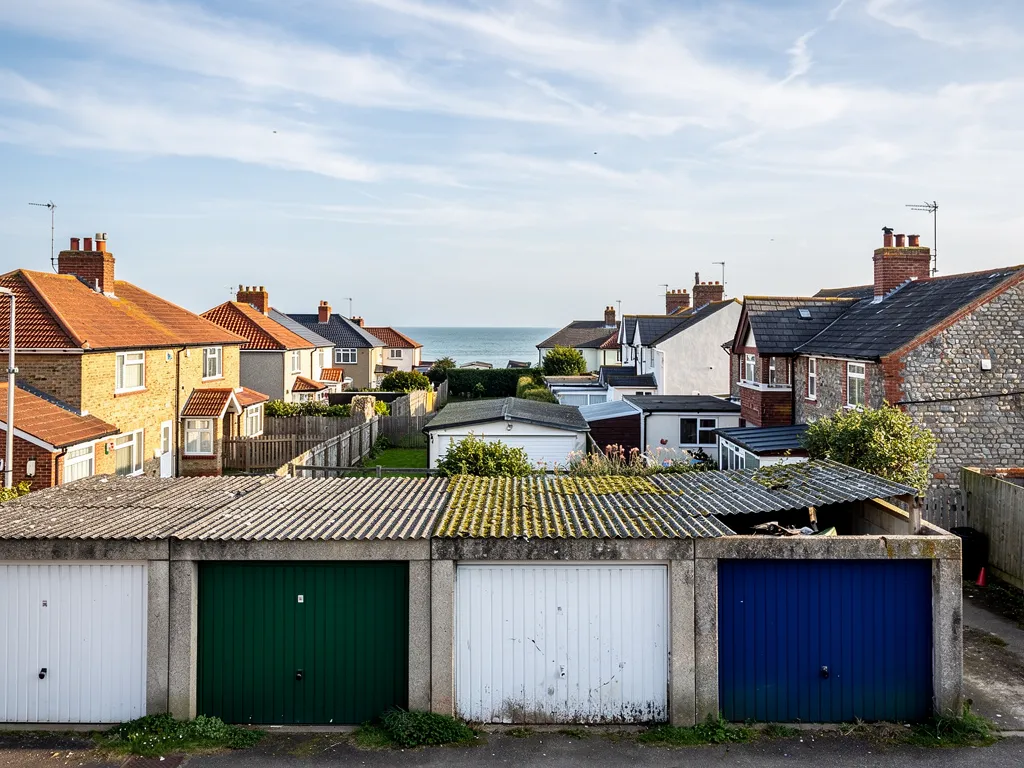
HSE's guidance asks for a lockable skip for asbestos cement sheet, and makes the point that dropping sheeting into an ordinary open skip does not meet the standard. A normal open skip is a trap: it can be filled by anyone, picked over by passers-by, rained on, and loaded with other waste on top. It also means the asbestos is in the same container as everything else, which breaks the rule against mixing.
A lockable skip, which has a lid or a closed top, solves several problems at once. It keeps the wrapped sheets under cover. It prevents other people from adding to the load or taking anything from it. It makes it clear to the haulier what is inside. And it gives you a point on your own property where the waste is secure for however long it has to wait for collection.
It should be on the right ground, with the lid closed and locked whenever work stops. Choose a spot on your own ground where the skip does not block a lane or a neighbour, and ask the skip company how it will be delivered and collected.
Smaller jobs and other vessels
A small garage roof can be loaded into a closed container or a covered vehicle on the day, so the waste leaves as the sheets come off. Whichever is used, the principle is the same: the sheets stay wrapped, covered and apart from everything else until they reach a site that is allowed to take them.
Beware of anyone who proposes a normal skip with a tarpaulin. It is one of the shortcuts that costs the least on the day and causes the most trouble afterwards.
Consignment notes and the waste producer
A consignment note is the paper trail for hazardous waste. It records what the waste is, where it came from, who carried it and where it went. GOV.UK guidance says that the household exemption from consignment notes covers domestic hazardous waste, but not asbestos waste. So the usual relief for householders does not apply here.
The same guidance says that a contractor who removes asbestos from a home must consign the asbestos, and complete the consignment note as the waste producer. In plain terms, when a contractor takes the roof off for you, the contractor has the duty to arrange the paperwork, and the note should name the contractor as the producer. That is what a householder should expect to see, and it protects you, because the note shows the sheets went to a site that accepts them.
What to ask for
- Who is completing the consignment note, and is it in their name as producer?
- Will you get a copy once the waste is received at the site?
- Which site is taking the sheets?
A contractor who is vague about these answers, or says a note is not needed for a house, has not understood the rule. A copy of the note is worth keeping with your property papers, since a future buyer's solicitor or surveyor may ask what happened to the old roof.
If you are removing the sheets yourself, which we would not recommend, the position is different and you should take advice from the waste regulator before you move anything. Our guide on why asbestos roofs are fragile explains the risk of doing it with no training.
Upper-tier carriers: who may take the waste away
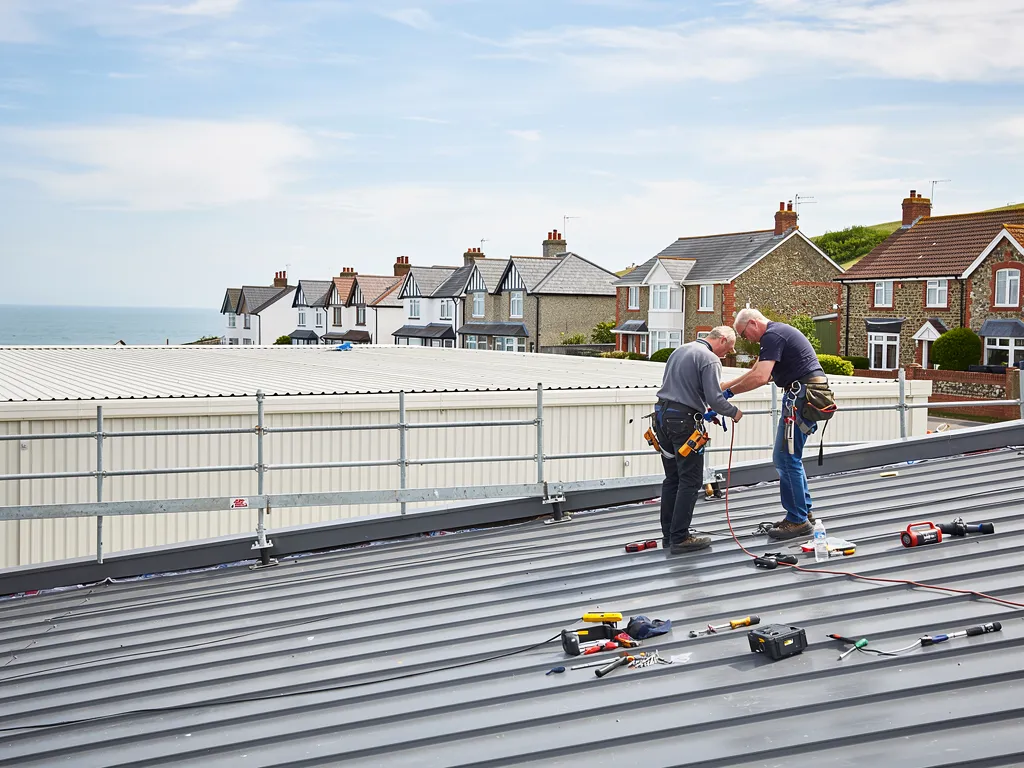
The people who move waste must be registered to do it. GOV.UK says that anyone who carries construction or demolition waste, or acts as a broker or dealer in it, is classed as upper tier. Sheets stripped from a garage roof are construction waste, so they fall into that bracket, and renewal comes every three years at £130.25.
For you, this means one simple check. Whoever takes the sheets away, whether it is the roofer, a skip firm or a specialist haulier, should hold an upper-tier carrier registration. You can ask for the registration number before the sheets leave. A reputable firm will be pleased to be asked.
Why it matters to the homeowner
If waste is carried by someone who is not registered, it is more likely to be tipped illegally, and householders can find that their name or address is linked to waste that turned up in a lay-by. The consignment note and the carrier registration are the paper that shows where yours went.
It also helps to know what an unregistered offer looks like. A van that turns up with a cash price for taking the sheets away, no paperwork and no mention of where they will go, is the pattern to turn down. A low price is not a bargain if the sheets end up in a field.
We discuss the carrier, the skip and the paperwork with you before the job begins, and by the final visit nothing from the roof remains on your property. Keep the consignment note the carrier gives you, since it shows where the sheets went.
Cost, timing and the questions to ask
Waste handling is part of the price you pay for removal. MyBuilder (updated 21/08/2026) gives a typical UK average of around £2,000 for asbestos removal and £350 to £1,295 for a single garage roof, while Checkatrade gives £950 to £3,750 for removal and disposal. Those figures include the cost of safe disposal, which is one reason they are higher than for an ordinary roof. Our guide to what a garage roof costs puts them beside the new covering.
The written quote follows a survey, so you see one total price. Before you accept any quote, including ours, check whether it covers the skip or container, the carrier, the consignment note and the tip charge, as well as VAT and the new roof.
Questions worth asking any contractor
- Are the sheets lowered whole, and will they be double wrapped and labelled?
- Will they go into a lockable skip or a closed container?
- Who completes the consignment note, and will I get a copy?
- Does the carrier hold an upper-tier registration, and what is the number?
- Where are the sheets going?
If the answer to any of these is unclear, wait. A pause of a day costs far less than a mistake with hazardous waste, and the job is not so urgent that the paperwork cannot be sorted first.
On the day, expect the work to be calm and unhurried. Nobody should be breaking, bagging loose or sweeping dry. If you see any of that, ask the crew to stop.