Thick, rough sandstone slabs cover a Horsham stone roof, and they are laid in sizes that shrink steadily as the courses climb. When one cracks or slips, the repair needs a replacement of matching thickness and matching size. That is where the difficulty starts. In 2019 the Society for the Protection of Ancient Buildings spoke of a crisis in the supply of roofing slabs, and the trade press carried the story that summer.
Supply moves over the years, so this page keeps the 2019 reports dated and offers no view of what any quarry or merchant holds now. What it can do is explain why a shortage changes the order of thinking on a repair: your roof's own stone first, other sources second, and a written record of where any replacement came from.
If you own a stone roof in Steyning, Storrington, Henfield or a village at the foot of the Downs, the practical points below apply whatever the market is doing this month. Our Horsham stone roofing page covers how we survey and mend these roofs, and the sections that follow deal with the stone itself.
What the 2019 reports actually said
The reports were specific. The Society for the Protection of Ancient Buildings said Horsham stone roofing slabs were in crisis supply, and that no substitute exists which is right for the geology. Reports also had Horsham District Council working alongside Historic England on the problem, which shows the concern reached well beyond a handful of roof owners.
Two points matter for anyone with a leak today. The first is that the reports describe a difficulty in 2019. They are not a statement about this year, and a careful roofer will not pretend otherwise in either direction. The second is that the wording concerned slabs for roofing, not Horsham stone as a whole. The stone lies in the ground close to the town it is named after, and the Horsham conservation area appraisal says those nearby areas of stone were the source of the roofing. The scarce part was suitable thin material that splits into roof-sized slabs.
Why a dated report still helps
A headline from 2019 cannot tell you what a repair will cost or how long a replacement stone will take to find. It does explain the habits that grew up around these roofs. Owners and roofers learned to save every sound stone, to note what came off a slope, and to treat the choice of a replacement as a decision rather than an order placed over the phone.
So when we survey a stone roof, we ask what the roof itself can give back before we ask where anything else might come from. The sections below follow that same order, starting with why thin slabs are the hard part.
Why thin roofing slabs are the hard part
Horsham stone is a flaggy sandstone, which means it splits along its bedding into flat slabs. Roofing stone must be thin enough to lay in courses and sound enough to keep out weather for generations. According to the 2019 reports, slabs thin enough for roofing were found in the upper layer of a quarry, and that layer had run out. This one detail explains a good deal about why the shortage was felt on roofs rather than in walling or paving.
A roof does not need slabs of a single size. Horsham roofs use random sizes, in a graded pattern that starts big at the bottom edge and finishes small at the top, covered covered in our guide to diminishing courses. A replacement therefore has to pass two tests at once. It must be the right thickness to sit without rocking or lifting its neighbours, and it must be near enough in size to belong in the course it is going into. A stone that is right in one respect and wrong in the other still causes trouble, often a few winters later.
What this means when you ring for a quote
You may find that a roofer asks questions that seem to be about the stone rather than the leak. Is there any spare stone stored in a barn or garage? Has the roof been patched before, and with what? Were slabs ever taken off during an earlier job and kept? The answers shape the plan, and they save time on site.
Spare stone kept from a past repair, or stone from a part of the roof that is going to be rebuilt, can be the difference between a small job and a long search. If you have any, tell us before the survey, keep it dry and flat, and do not let a skip take it away.
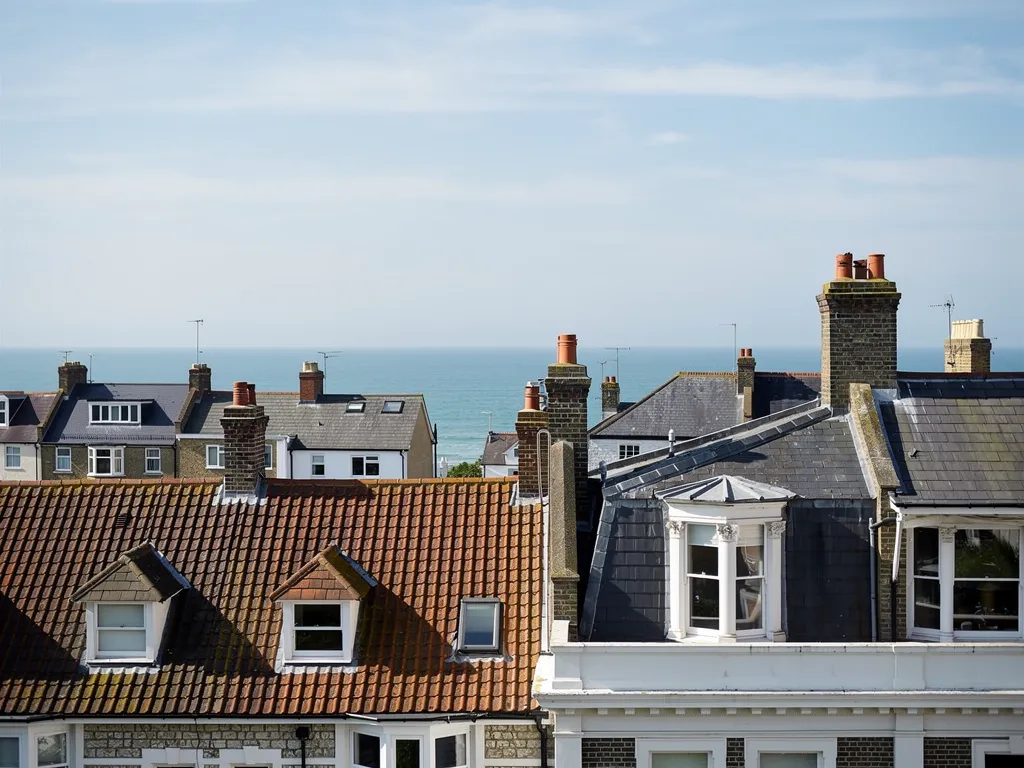
What owners turned to, and what the Stone Roofing Association advises
The 2019 reports describe two routes that owners usually took when new slabs could not be found. One was clay tiles. The other was reclaimed stone slates, which frequently meant stone lifted from other historic structures. Both are understandable, and both carry a cost: to the character of the roof in one case, to somebody else's building in the other.
The Stone Roofing Association publishes a guide to these roofs, and it sets out an order of preference. Reusing the stone already on the roof comes first, and as much of it as can be saved. Slates salvaged from other buildings should be avoided where there is any alternative, partly because buying them feeds the break-up of old roofs elsewhere. If new Horsham slates can be had, the guide wants them used to cover any gap. Where salvaged stone from outside is unavoidable, the buyer should check that it was obtained legitimately.
In practice reclaimed stone turns up often, since new slabs have been scarce, but frequent use is not the same as a recommendation. Our page on reclaimed Horsham stone goes through the questions to put to a seller.
A word on mixing stones
The same guide warns against putting limestone slates on a roof of sandstone. A replacement that looks close on a pallet can weather differently once it is up, and it may sit differently against its neighbours. If anyone offers you slates described as the same as Horsham stone, ask what the stone actually is, where it came from and whether it has been on a roof before. A seller with a straight answer will give it in a sentence.
None of this is a reason to refuse help. It is a reason to ask early, before money or a delivery date is fixed.
Reusing your own stone first
Because of all this, a sound repair starts by making the roof's own stone go further. On a typical job that means working carefully whenever a section is stripped, sorting the slabs by course so that each goes back where it came from, and putting aside any piece too damaged for a visible slope. Even a broken slab is worth keeping, since its thickness and size tell us what to look for.
It also means choosing the repair that disturbs the least stone. Resetting a slab that has slipped is better than replacing it. Replacing a single cracked slab is better than relaying a whole slope. And relaying a slope with the roof's own stone, in its original order, is better than stripping it and bringing in something new. These choices are why a stone roof cannot be judged properly from the pavement.
Once the survey has covered the slope and the loft, you receive photographs of the faults on your own roof alongside the written quote, which gives one total price. We recommend the smallest job that cures the cause, and we explain what each option would mean for the stone you have. The detail of that work sits in our guide to repairing a Horsham stone roof.
Keeping what you have in good order
Moss, blocked gutters and neglected details shorten a roof's life, and every slab that fails sooner is one more that has to be found. A modest amount of regular care protects a stock that cannot easily be topped up. Look at the gutters after autumn, keep trees from shedding onto the slope, and have a roofer check the roof after any storm that you notice affecting it. Leaving a roof alone for decades is not care, whatever its reputation for longevity.
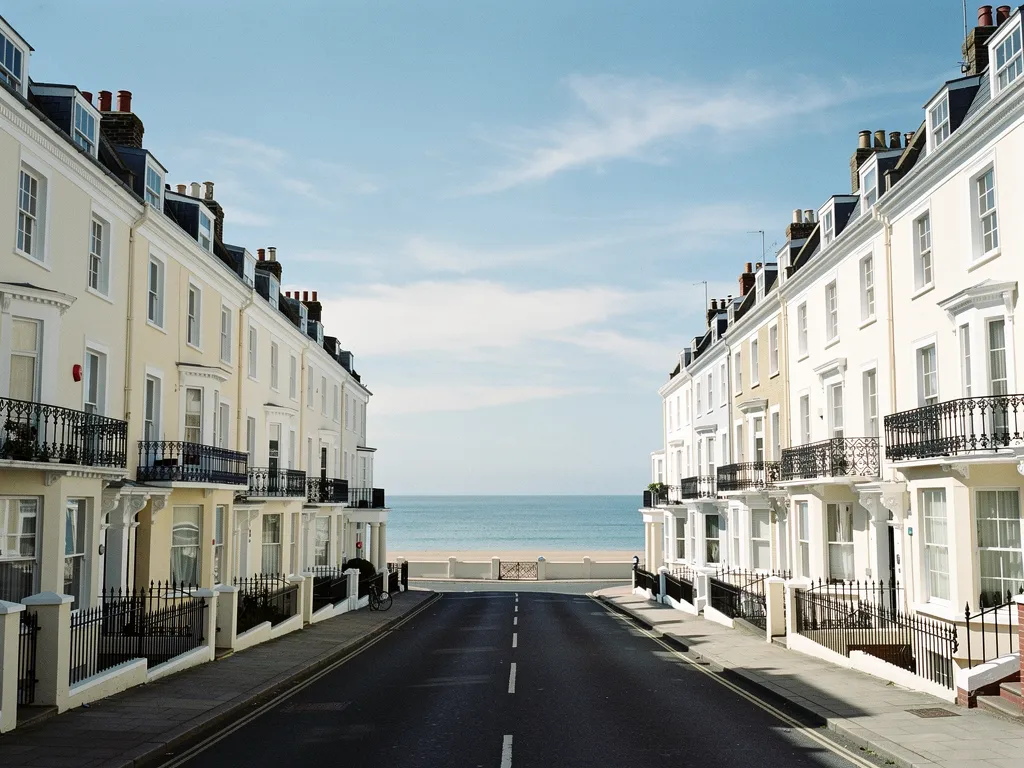
Shadow slates and mixed lapping where stone ran short
Where stone has been short, earlier repairers improvised. The Horsham conservation area appraisal records roofs that now show a blend of double and single lap laying, with shadow slates in places where stone ran out. Double lap means each slab overlaps those beneath it, much as slates do on a conventional roof. The Stone Roofing Association describes a single lap method that it treats as peculiar to Horsham stone, where each joint between slabs is weathered by a sliver of Welsh slate known as a shadow, set in mortar.
A shadow slate is a thin piece of slate set beneath the joint between two stones. It does the job that an overlap would do. Used as part of an original design, it is a recognised detail. Used to cover for a missing stone, it is a compromise that history has left on many roofs, and one a surveyor learns to read.
Its advice is to keep double lap, or put it back, wherever that can be done. Moving a roof away from single lap, it adds, means reassessing the weight carried and how sound the frame is, getting building control approval, and obtaining a church faculty where one applies. A listed building also needs the council's consent.
Why this matters during a shortage
Changing the lap is no shortcut round a shortage. It alters the roof's character, its loading and often its legal position. Where shadow slates belong and where they do not is covered in our guide to repairing these roofs, and we talk through it at the survey so the decision stays yours and is made with the evidence on the table.
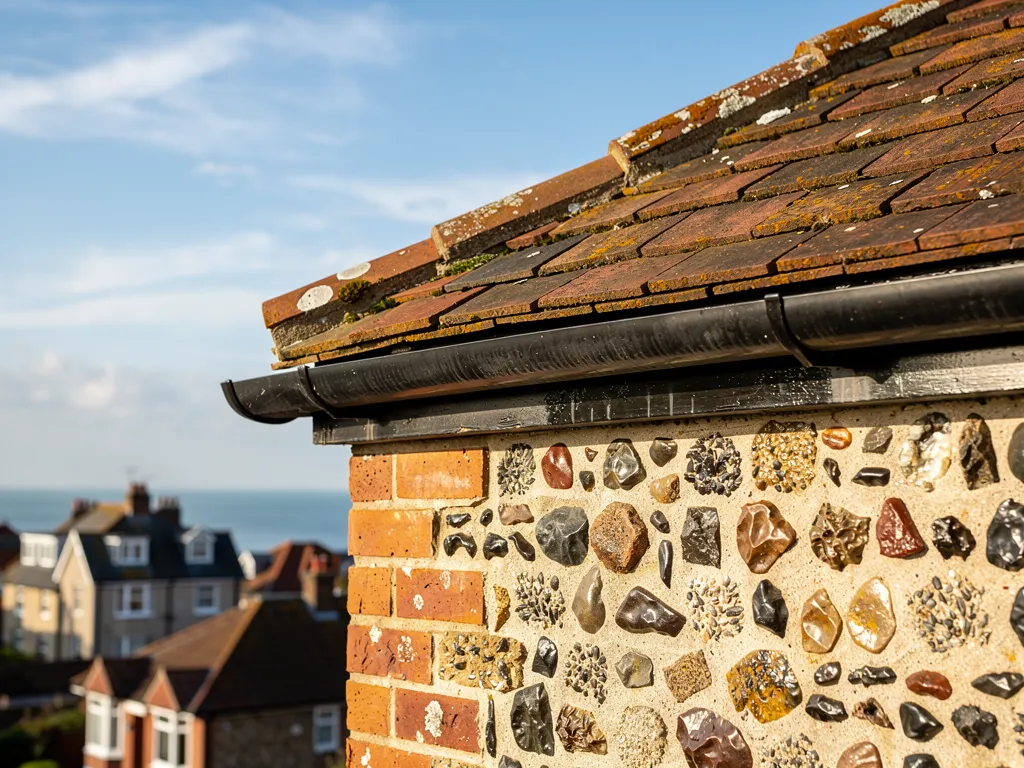
Questions to settle before any stone is ordered
A shortage makes it more important to agree the plan before work begins. A good roofer talks you through a short list of decisions, and you should expect the answers in writing.
Start with how much of the roof is in question. A leak at one valley or one cracked slab calls for a different job than a sagging slope. If the house is listed, ask whether the planned work counts as repair in kind or as a change that needs consent. If the roof is within a conservation area or the South Downs National Park, ask the planning authority what applies before anything alters the look of the roof. The Adur & Worthing planning team covers Worthing and Adur, and Horsham District Council covers the Horsham area.
Then ask about the stone itself. Where will any replacement come from, and is it the same kind of stone? Has it been checked as legitimately obtained? How will the slabs be sorted by size so each lands in a suitable course? And what happens to good stone that comes off during the work, including whether it is kept for the next repair?
What moves the cost
The price of a stone roof repair depends on access, the extent of the damage, how many slabs can be reset instead of replaced, what stone is needed and what the survey turns up. Pricing comes after the survey, and we aim to keep ours good and fair. When the job is done, a written guarantee on our workmanship runs for ten years.
Where the sensible answer is a bigger project, such as relaying part of a slope, we set out the reasoning and the alternatives before any stone is ordered. Tidying up and taking away the waste is part of finishing.