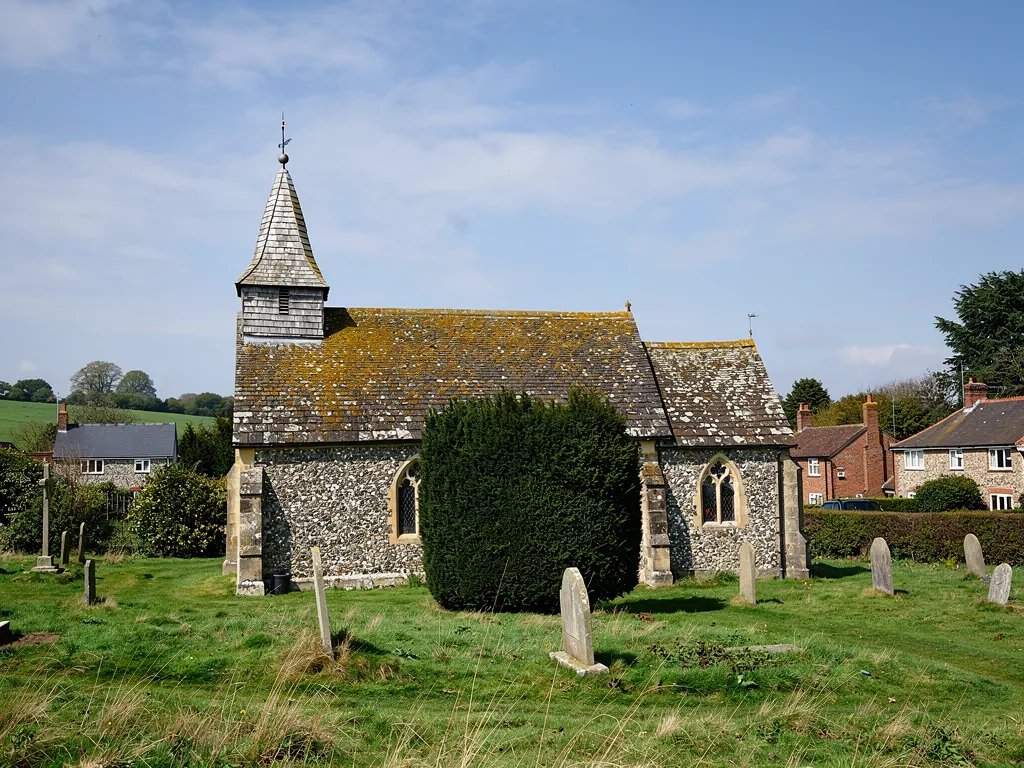
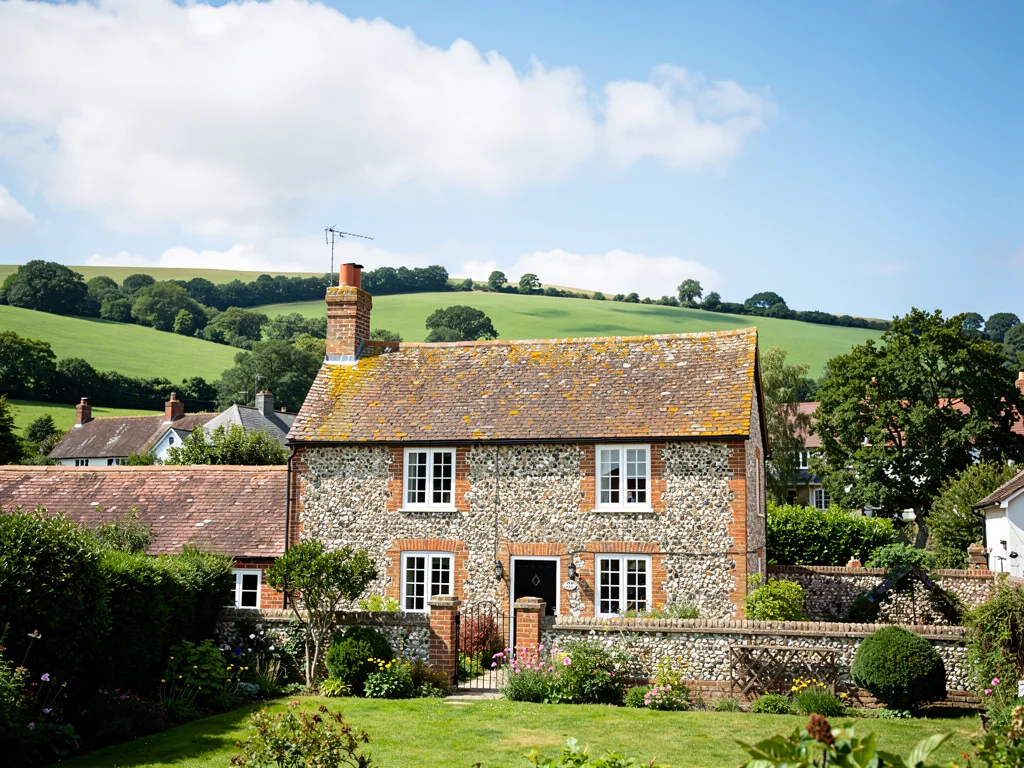
When a Horsham stone roof needs repair, the question of where the replacement slabs come from arrives quickly. New stone has been hard to find, and second hand slabs lifted from other buildings and sold on fill much of the gap. It is a market with real advantages and real risks, and the guidance on it is more cautious than many owners expect.
The Stone Roofing Association sets the order of preference. The roof's own slabs come first. Where slabs from other buildings are the only option, it asks that their source be checked, because taking them can mean the loss of a historic roof elsewhere.
None of that makes reclaimed stone wrong. It makes it a second or third choice, to be used with care and with paperwork, and it means the first job is usually to see how much of the roof's own stone can stay.
This guide explains the order of choices, why the market for second hand stone exists, what provenance means in practice, how to match stone and what to do when the roof simply does not have enough.
Your own slabs come first
The Stone Roofing Association puts it as a rule: the first thing to try is putting back as much of the existing stone as the roof will give. Everything else on this page follows from that sentence.
There are good reasons behind it. The slabs on your roof have already weathered in place, and they match every other slab on the building in colour, thickness and texture. They belong to the right quarry area and the right rock type. A slab that has sat on the roof for generations is also, by definition, one that has survived the weather the building faces.
In practice, reuse means careful handling. The roof is stripped by hand, the slabs are lowered and stacked, and each one is checked. Sound stone goes back. Stone that has flaked into layers, cracked through or lost its face is set aside. The battens and underlay, which are not stone, are renewed as the survey requires.
A well-managed strip often leaves more usable stone than an owner expects, and it also gives the clearest picture of how many replacements the job needs. Until the roof is open, that number is an estimate.
What this saves
Every sound slab that goes back is one you do not have to find, buy or match. On a material where supply is difficult, that matters. Our guide to relaying a stone slate roof sets out the process, and the page on Horsham stone repairs covers the smaller jobs where only a few slabs are involved.
The wider hub, Horsham stone roofing, shows how these choices fit together on a whole building.
Why second hand stone is so widely used
If the advice leans against it, why is salvaged stone so widely used? Because the alternative has been hard to get. The Stone Roofing Association's guidance and the trade reports together give a consistent picture: slabs from other buildings are plentiful in the repair trade precisely because new stone has been scarce.
The best-documented account dates from 2019, and we present it as exactly that. In 2019 the Society for the Protection of Ancient Buildings reported that Horsham roofing slabs were in serious short supply. The thin slabs, it said, came from the upper layers of the workings, a source now used up. It also said no other rock matches the local stone geologically. Owners, the reports noted, tend to fall back on clay tiles or on second hand stone slates, which frequently involves stone taken from other old buildings. Horsham District Council was working with Historic England on the problem at the time.
We have not re-checked the present supply position, and we would not want to guess at it. What can be said is that the pressure which created the salvage market was real, and that it explains why a roofer may offer you reclaimed slabs without anyone thinking it unusual.
Our page on Horsham stone supply goes further into how supply affects a project. The point for now is simple. A practice can be widespread without being the recommended first step, and salvaged stone is never the opening assumption.
If a quote assumes second hand stone, ask why your own slabs cannot be reused and where the replacements are coming from.
The advice on stone taken from other buildings
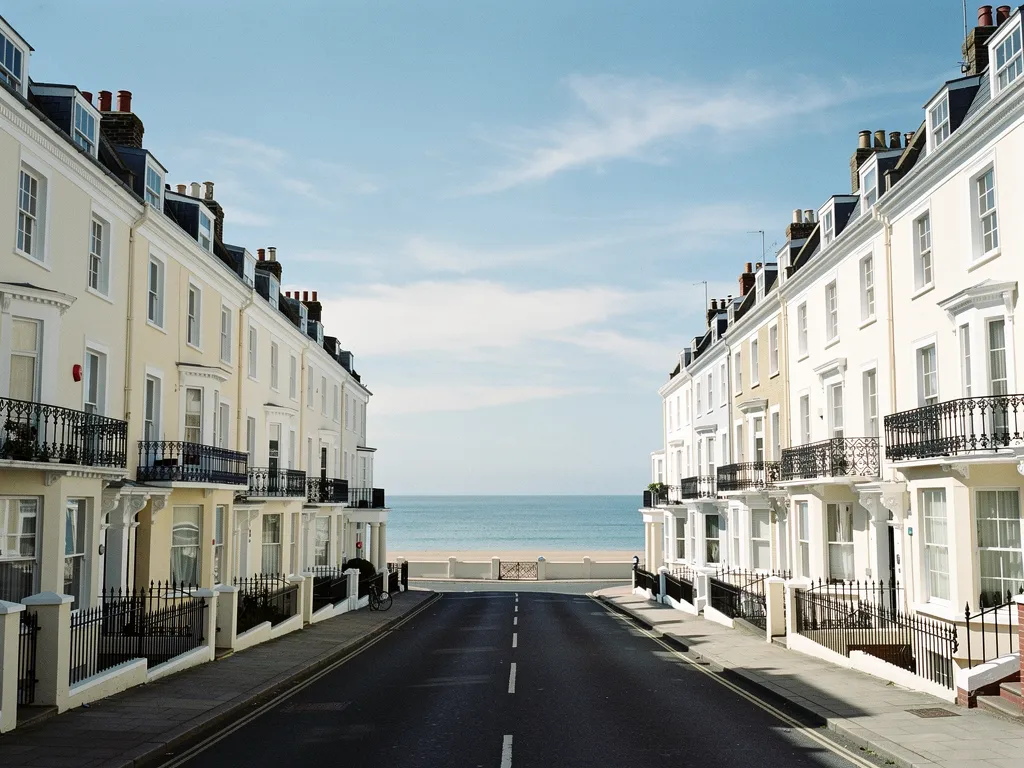
The Association is clear. Salvage from other buildings is best avoided where possible, it says, because paying for it encourages roofs elsewhere to be dismantled. That is a statement about the effect of demand. A slab lifted from one roof to repair another leaves a gap somewhere else, and a market that pays for lifted slabs rewards the stripping of roofs that might otherwise have survived.
This is the principle behind the whole order of preference. Use your own stone. If it needs topping up, newly cut Horsham slabs are the better choice, where suitable ones can be had. Only if neither works does stone from another building come into the picture.
The same point is made for historic buildings in particular. Steyning's conservation area appraisal describes the survival of slab roofs there as widespread, and a local authority that writes about a roof tradition in those terms is plainly interested in how it is looked after. If your building is listed, replacing the covering in other materials needs listed building consent, and the Association says alterations to listed Horsham roofs will require that consent. Mending in place with matching stone is a separate matter.
That is why we raise the subject before we price. If your roof can be mended with its own stone, or with new Horsham slabs, we say that plainly. If it cannot, we explain what is left and how the stone will be sourced, rather than leaving it to be discovered mid-job.
You can read the guidance yourself in the Stone Roofing Association's Horsham stone roofs guide.
Provenance: asking where the stone came from
Where slabs from elsewhere are unavoidable, the Association wants their origin confirmed as lawful before any are bought. In plain terms, that is a question about provenance: where did these slabs come from, and did the people who supplied them have the right to remove them?
There are several reasons to ask. A roof may have been stripped without permission, or from a building protected by listing. Stone taken that way carries a history you would not want attached to your own roof. Even where the removal was lawful, a supplier who cannot say where their slabs came from is a supplier you cannot check.
Questions worth asking a supplier
Ask which building the stone came from, and whether it was taken in a planned strip or a demolition. Ask whether it is sandstone, the same family as your own, because the Association is firm that different rock types must not be combined on one roof. Ask how the slabs have been stored, since stone left to frost and wet in a yard can be damaged before it reaches you. Ask for a written note of what you are buying and who is selling it.
Written records protect you if the question is raised later, for instance by a council, a buyer's surveyor or a conservation officer. Our guide to reclaimed stone provenance goes through the paperwork in more detail.
We can help with the checking, but the decision is the owner's. If a supplier hesitates over simple questions, treat that as information, and keep looking until the answers come easily.
Matching new or salvaged stone to the roof
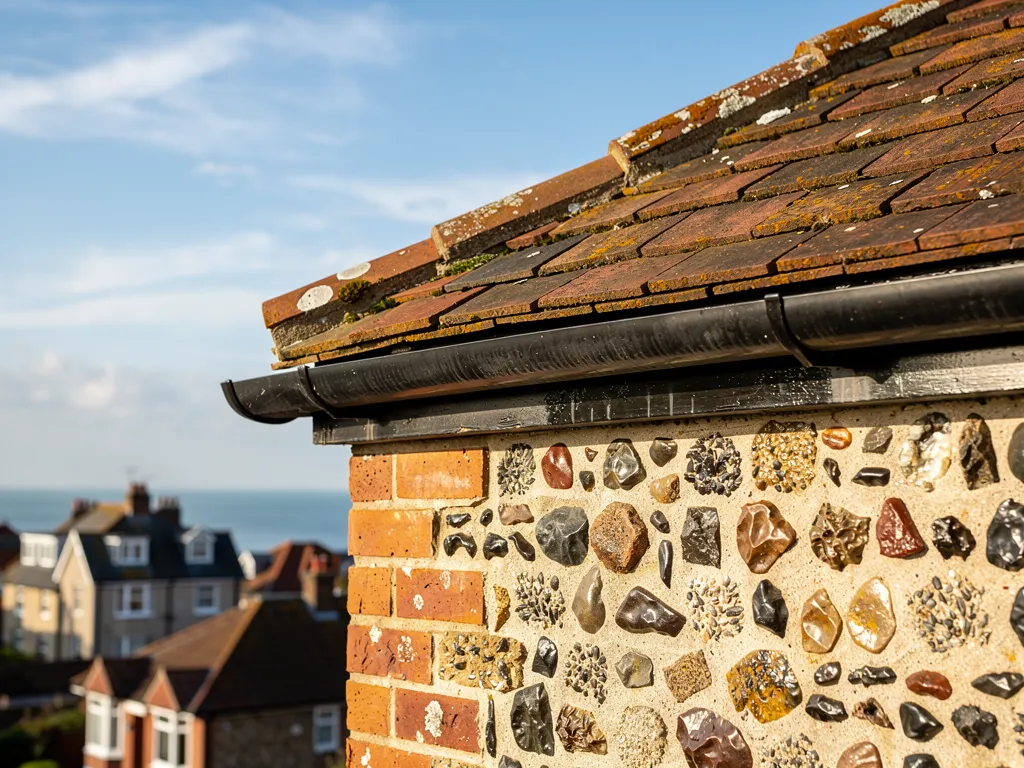
Even legitimate stone has to fit. A Horsham roof is built of random-sized slabs graded by size as the courses rise, and replacement slabs must slot into that scheme. A slab that is too small for a low course, or too thick for a patch near the ridge, will sit wrongly and may let water in or stress the course around it.
The rule about mixing is firm. A roof of Horsham sandstone should receive sandstone, and a supplier who describes their stone vaguely should be asked what it actually is. Our answer on what rock type Horsham stone is explains why the description matters.
Appearance is the second test. New stone is paler and cleaner than stone that has weathered for decades. Salvaged stone is closer in tone, which is part of its appeal, but it may be a different thickness from yours. A sensible approach places new or salvaged slabs on the less visible slopes, or blends them across the roof in a pattern that does not leave a patch.
Fixing matters too. The stone has to be held in a way suited to its weight, and the method depends on the system, the pitch and the condition of the battens. See how stone slates are fixed for the main methods.
When we survey, we record the dimensions and condition of what is already on the roof, so that any stone brought in can be checked against it before it is laid. That record is also the evidence a conservation officer may ask to see, and it spares you from arguing the point from memory later.
What to do if the roof cannot supply enough
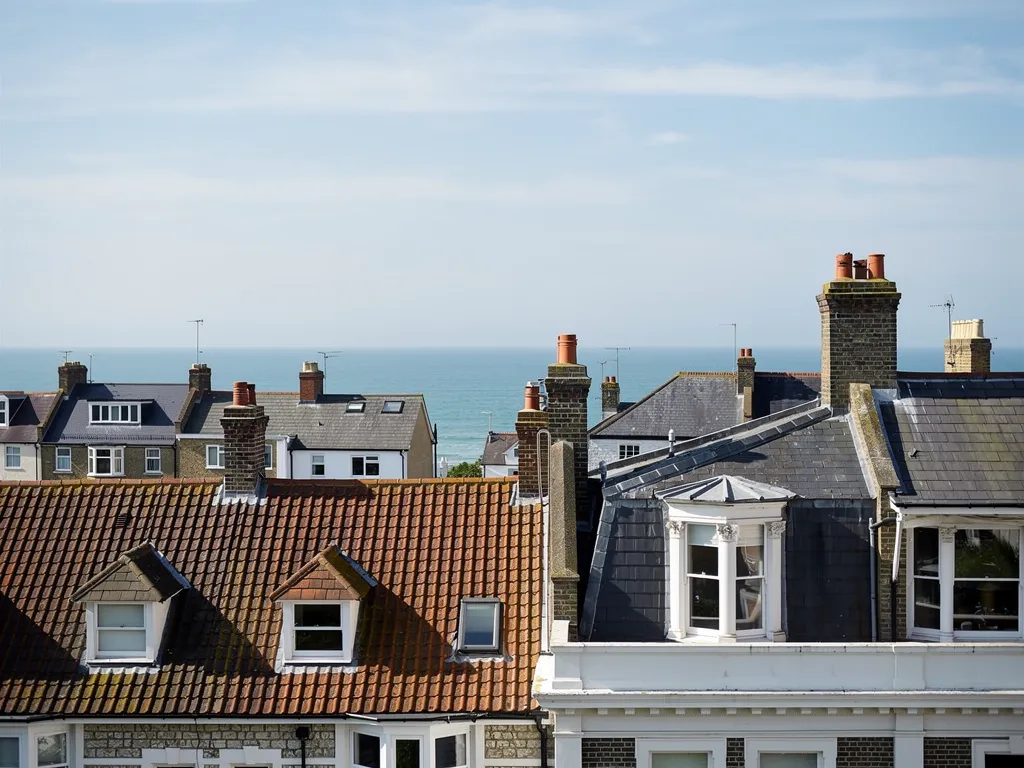
Some roofs cannot be repaired from their own slabs. Decades of frost, an earlier clumsy repair or a long-standing leak may have left too many flaked or broken pieces. At that point the choices are real, and the order set out by the Association gives a way through them.
First, find out how big the shortfall is. Only an opened roof shows this, and a survey with photographs gives a working estimate before any commitment is made on your side. Second, ask whether suitable new Horsham slabs are available to make up the difference, because the Association prefers them to salvage if they are. Third, if they are not, consider stone from other sources with its provenance checked and its type matched to yours.
Beyond that, owners sometimes ask about alternatives, such as clay tiles or other coverings. The 2019 reports observed that owners tend to turn to clay tile when stone cannot be found. For a listed building that change of covering needs consent, and in a protected area ask the council first. Our guide to alternatives to Horsham stone sets out what is involved.
The right choice depends on the building, the amount of stone that survives and what the council will accept. Our recommendation is whichever job cures the problem with the least intervention, and we say plainly when a roof can be mended from its own stone.
The first step is to send photographs of the roof through the quote page. We survey it, photograph the fault on your own slabs and send our quote in writing once that is done.