
Question answered
Are ridge tiles covered by home insurance?
The short answer
Ridge tiles can be covered if a storm damaged them, but home insurance generally excludes wear and tear. The Financial Ombudsman Service asks if a storm really struck on the day, whether the damage matches what a gale does, and if the weather was the main cause. Check your policy, tell your insurer early and keep photographs. No outcome is guaranteed.
It depends on why the ridge tiles came off. Storm damage may be covered, while gradual deterioration is often excluded. Your policy wording and your evidence decide it.
A storm event or a tired ridge
Ridge tiles sit along the apex of the roof, where the wind pulls hardest. If a named storm lifts them off a sound bed, that may count as a storm claim. If the mortar has been crumbling for years and the tiles finally let go on a breezy night, an insurer may treat it as wear and tear. From the pavement the two look alike, which is why evidence carries so much weight.
Which? reported in November 2025 that insurers often rely on a standard storm definition written into their policies, and its example of wear and tear was a leak through a poorly maintained roof. Your own policy wording sets the terms, so read it carefully, including the sections on maintenance, before you assume anything either way.
A roof in good repair is a stronger starting point if you ever need to claim, which is one more reason to deal with a cracked or loose ridge before the weather turns.
How a complaint about a ridge claim is judged
The Financial Ombudsman Service explains how it treats storm complaints, and the thread running through it is cause. It tests the link between the weather and the damage: was there a genuine storm, does the damage fit one, and would it have come about anyway? It also says the burden of proving an exclusion sits with the insurer.
For a ridge this boils down to condition. A tile thrown off a sound-looking bed just after a gale reads as a storm event. A ridge with hollow, cracked mortar that was visibly failing reads as gradual damage, and the Ombudsman notes that policies often exclude that. Our page on a leaking ridge shows what an old failing bed looks like from the loft, which is where a surveyor would look for the evidence.
None of this predicts how your own claim will go. It explains why a dated photograph of the ridge before the storm is worth having.
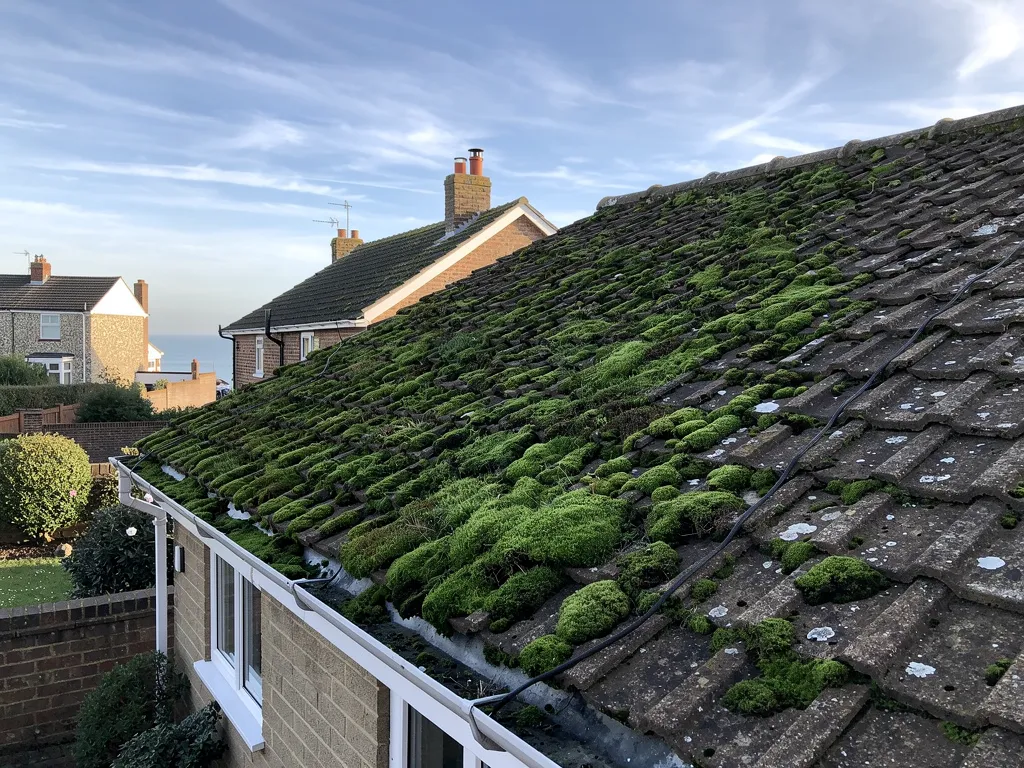
What to do the day tiles come down
Keep clear of the area and make the ground safe. Photograph the fallen tiles, the gap in the ridge and any damp inside, with dates. Tell your insurer straight away, then arrange temporary protection so the damage does not spread, and keep photographs and receipts for whatever you spend. That is a sound habit after any storm.
A leaking roof comes first for us, and it is made safe before anything else. The survey photographs then give you a record of what is there. Whether a claim succeeds is a matter between you and your insurer. Temporary protection and a permanent repair are different things, so let the insurer know before the lasting repair and keep every receipt, including the cost of any scaffold hired for the emergency work.
Excess, no-claims and whether a claim is worth making
A ridge repair is often a modest job, and a claim carries costs of its own. Your policy will have an excess that comes off any payment, and a claim can affect your premium at renewal. For a few loose tiles, the repair may cost little more than the excess, so it is worth asking your insurer what a claim would mean before you start one.
Where the damage is wider, such as a ridge and a run of tiles brought down or water inside, the sums change. Then a roofer's written quote and photographs give the insurer something concrete for the insurer to see. Price depends on how long the ridge is and how it is reached, so a survey first makes the claim paperwork simpler. Typical UK ranges for the repair itself are on our ridge tile repair cost page.
If the claim is turned down
Complain to the insurer first. Should the insurer fail to reply finally, or reply in a way you dislike, the Ombudsman will look at the matter, and its service costs nothing. A deadline applies: you get half a year from the insurer's final response. The Ombudsman has a page on storm damage complaints that explains the steps.
Keep every quote, photograph and message together in one folder. A dated survey photograph taken before a storm can show the ridge was in order, and one taken afterwards shows what changed. If the insurer asks for a roofer's report on the cause, a written account with photographs of the fault, such as a cracked bed or a missing fixing, is the sort of evidence that moves a decision. Nothing here promises a payout.
Making a dispute less likely
The best protection is a ridge that is properly fixed. A sound bed backed by clips or screws is far less likely to lift, and our pages on repointing ridge tiles and how to fix ridge tiles describe the repair that holds. If you are unsure about the state of yours, have it checked in autumn, not after the first gale.
A ventilated ridge is a related detail worth understanding. For the timing of the work, see how long a ridge repair takes, and the whole service sits on the ridge tile repairs hub.
Ridge tiles and claims: two more questions
Does my insurer have to pay when a gale takes the ridge off?
Not automatically. It turns on your policy wording and the evidence, and the insurer has to show that an exclusion such as gradual damage applies. If you disagree with its decision, complain to it first, and then you can go to the Financial Ombudsman Service.
Should I fix the ridge before the insurer has looked at it?
Make it safe and photograph everything, but speak to your insurer before permanent work. Temporary protection is usually acceptable. Keep photographs of the removed material and every receipt.
Tell us about your roof
Describe what is happening and we will call you back to arrange a visit.
- Photographs of what we find
- A written quote with one total price
- Or call 01903 299063
10-year workmanship guarantee, in writing.