
Question answered
How long does a ridge repair take?
The short answer
A ridge repair runs from an hour or two for a few loose tiles to a day or two for a full re-bed or dry ridge on a larger house. The length of the ridge, the height of the roof, scaffold access, hips and the weather all change the time. Lime mortar and cold or wet days slow it further. The survey gives a realistic time before you commit.
A small ridge repair is often done in one visit, while a full re-bed or dry ridge can take a day or two. Length, access and weather set the pace.
Small repairs are a visit, not a project
If only one or two ridge tiles have shifted, or a short stretch of bedding has come away, the repair is quick. The roofer rakes out the failed bed, sets the tile on fresh mortar, fixes it mechanically and tidies the joint. On a plain roof with safe access, that is typically a couple of hours once they are up there.
Access is the catch. The ridge is the topmost line of the house, and reaching it safely may mean a tower or scaffold. When scaffold is needed it goes up before the repair and comes down after, so the days on site are longer than the hours of actual work. Ask whether the time you are given includes it.
For a minor defect, our page on repointing ridge tiles explains when a re-point does the job and when it only delays the real repair.
Time on the ground before and after
The work on the roof is only part of a job. Scaffold, where it is needed, goes up the day before or the morning of the repair. Materials are carried up, the work area is protected, and on the coast a first look at the sky decides whether to start. At the end the tower comes down, the gutters are checked for fallen mortar, and the garden and drive are swept.
If you ask for a time and the answer is given only in hours of mortar work, ask again. The honest figure covers set-up, the repair itself, curing time where it matters and the clear-up. A quick job plus a slow wind-down is still a job that needs a booked day.
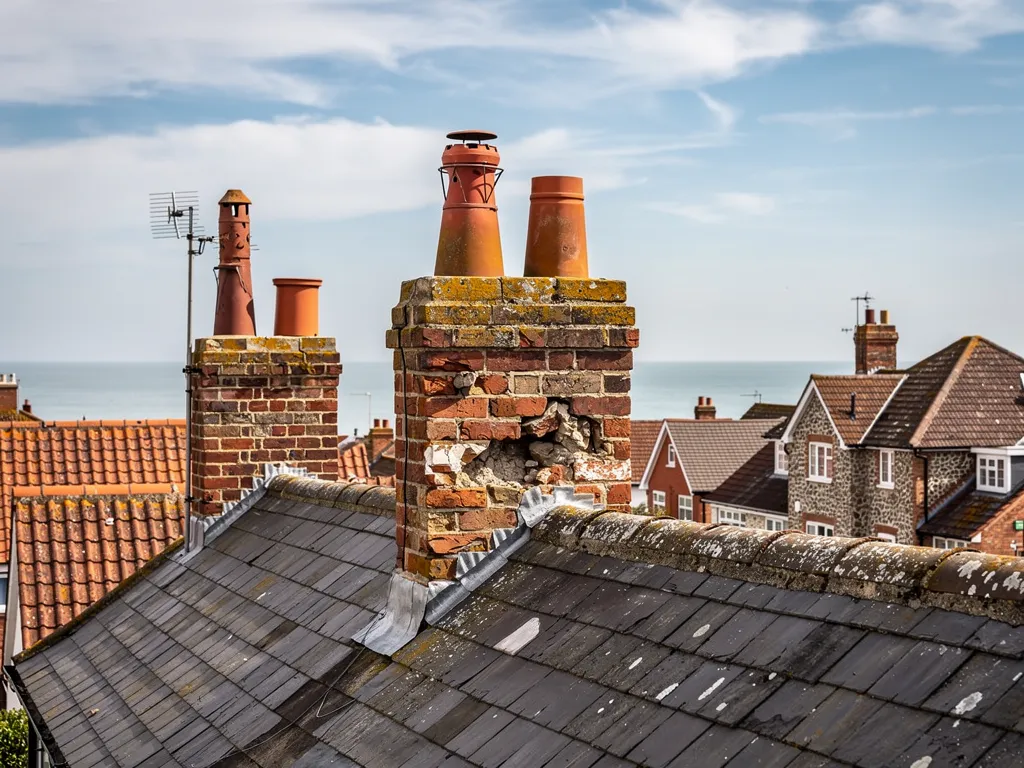
Ridge, hips and verges on one roof
Many ridge jobs are really several jobs in one. A hipped bungalow has a short ridge and four long hips. A gabled house has a long ridge and two verges. Each run is worked as its own section, with its own ends and cuts, and the times add up even though the tile and the mortar are the same.
That is why a quoted time for a ridge should name what it covers. If the verges and hips are included, the figure should say so. If they are not, a job that looked like a day can turn into two, and the scaffold stays up in between. Ask for the runs to be listed by name when you discuss the timing.
Full re-bedding and dry ridge
Re-bedding a whole ridge means lifting every tile, cleaning off the old bed, re-laying on fresh mortar and fixing each tile. On a short run on a semi-detached house that is commonly a day. A long run, a detached house or a roof with several hips can take longer, since each hip is a ridge in its own right.
A dry ridge can be faster per metre once the rail is on, because there is no mortar to lay and no waiting between stages. The preparation is the same: the old bed comes off and the timbers beneath are checked. MyBuilder's guide puts a typical dry ridge job at between £500 and £1,000, which is generally a one to two day task, not a week.
Roof edges add time of their own. The page on verge repairs shows why a gable edge is a separate job, and dry verge on an old roof covers the timber checks that come first.
What stretches the job
Weather comes first. Rain stops mortar work, because a wet bed will not bond. Wind makes work at height unsafe, and on the coast a gusty day can end a session early. Cold matters too, and lime mortar copes with it worse than cement. The page on ridge mortar in cold weather goes into the detail.
Hidden faults add time as well. A rotten ridge board, a slipped tile on the slope below or a decayed batten under the line all have to be put right before the ridge goes back. Those are the sort of things the loft check and roof photographs bring to light, so the time we give allows for them.
The roof itself also counts. A steep pitch, a bungalow with long hips, a chimney close to the ridge or narrow side access all slow things down. A listed building may also have a wait for consent. None of that is slow work; it is the roof setting the pace.
Questions to settle before the day
Ask for the time in the written quote, with scaffold and clear-up included, and find out what the fallback is when the forecast changes. A sound plan names a dry day or two and a fallback if one is lost. The site is left tidy, with the rubbish taken off with us.
You need not stay in, though a phone number that answers helps if the roofer finds something in the loft. If the repair follows a storm, let your insurer know before the lasting repair begins; our page on ridge tile insurance explains how storm damage is judged.
We start with a survey and photographs of your own ridge, trace the fault and show you what is there. You then receive a written quote showing one total price and a time to plan around. The ridge service hub is ridge tile repairs.
Ridge repair timing: two more questions
Can a ridge be repaired in winter?
Yes, on a dry, frost-free day. Mortar work stops in rain or hard frost, so winter jobs are planned around the forecast. A dry-fix repair is less sensitive to temperature than a bed of wet mortar.
Is my roof left open while the ridge is being done?
No. The work goes along the ridge a section at a time, and the roof stays weathertight while it does. If tiles are lifted and the weather turns, the exposed stretch is covered and made safe first.
Tell us about your roof
Describe what is happening and we will call you back to arrange a visit.
- Photographs of what we find
- A written quote with one total price
- Or call 01903 299063
10-year workmanship guarantee, in writing.