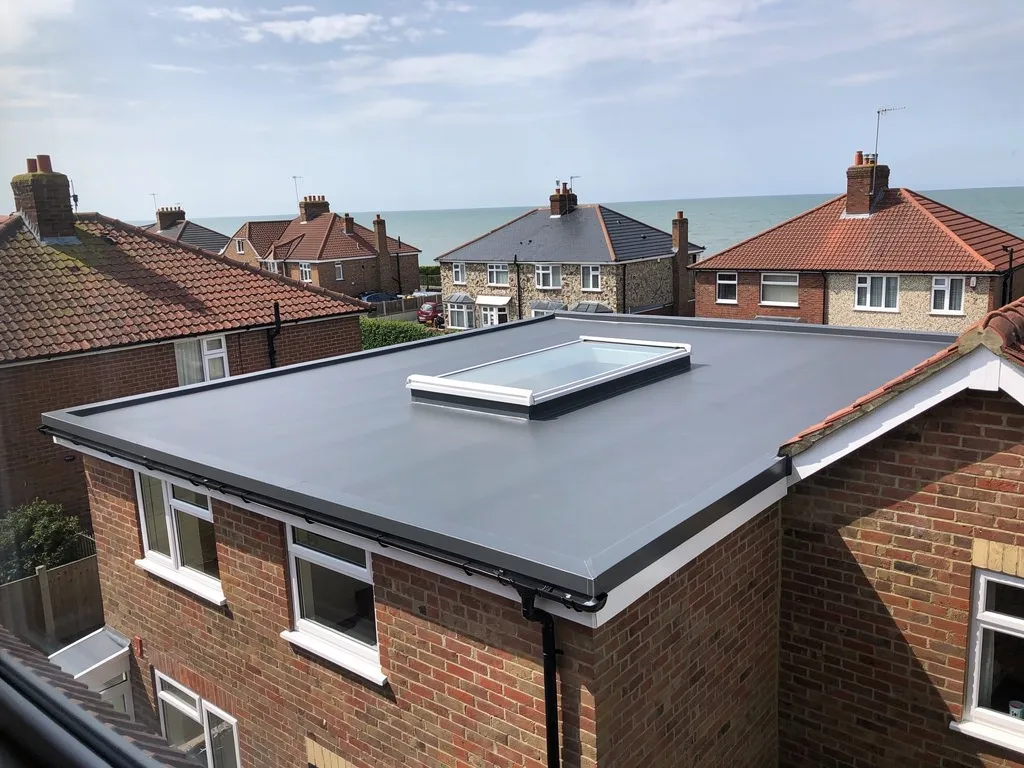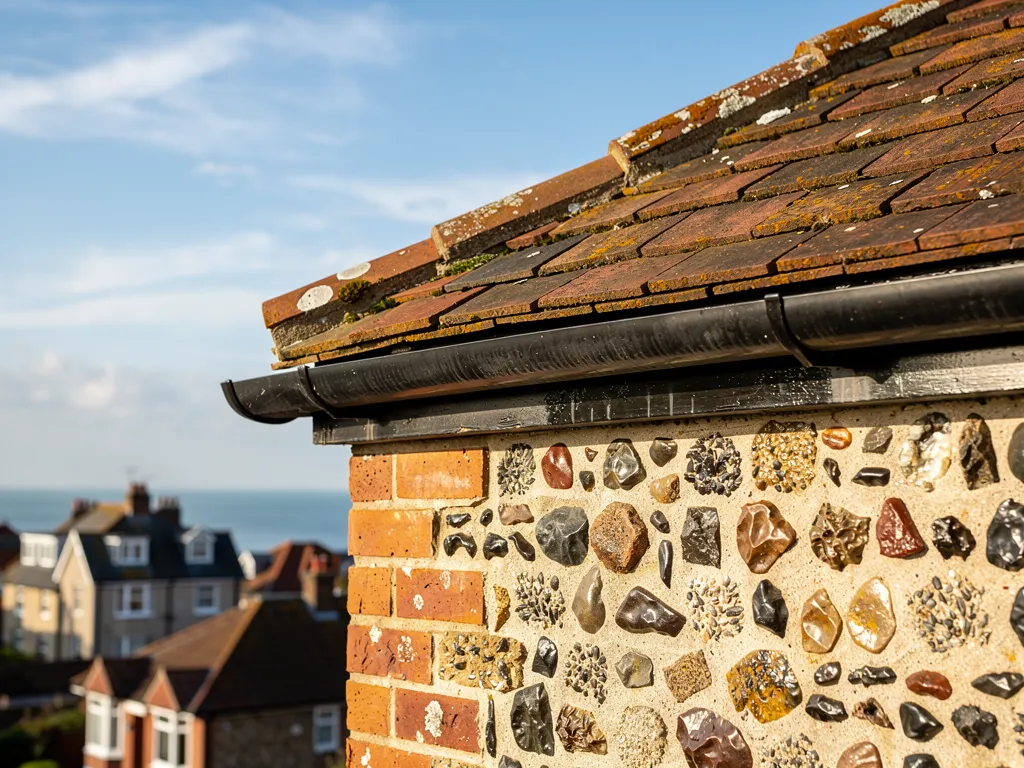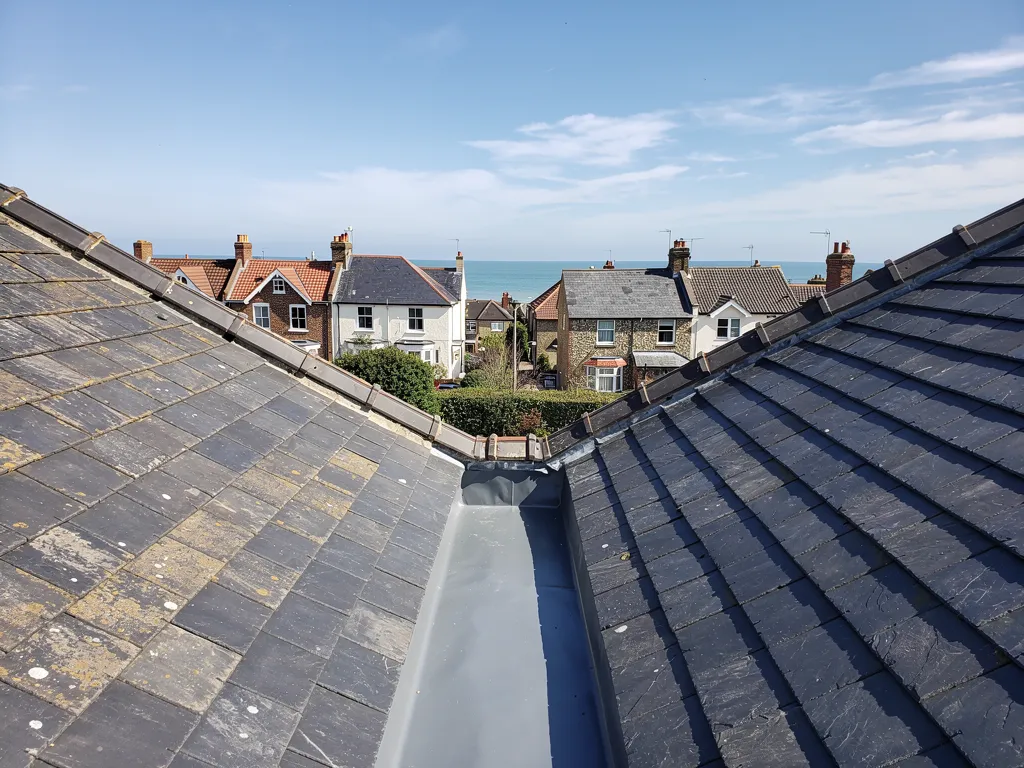
Winter on the Sussex coast brings cold snaps, long wet spells and gales that arrive with little warning. Those conditions matter to anyone with a ridge to repair, because wet mortar and a ridge in January are not easy partners. A bed laid at the wrong moment can look fine for a week and then start to crumble.
The ridge is the line of capping tiles along the crest, traditionally bedded in a sand and cement mix. Being at the top of the house it takes every kind of weather first and the work there is a wet trade carried out in the open air. A roofer laying mortar is working with chemistry as much as with a trowel.
This guide explains how mortar gains its strength, what frost and rain do to it, how to tell whether an existing ridge has been hurt by cold, and how repairs are timed so the work lasts. It sits within our ridge tile repairs work, and none of it needs any special skill from you except patience.
Why mortar cures instead of drying out
People often say mortar dries, but that is not quite what happens. Cement reacts with water in a process called hydration, and the reaction is what turns a sloppy paste into a hard bed. If the mix loses its water too quickly, in a strong wind or hot sun, the reaction stalls and the mortar stays weak. If it holds the water but the surroundings are very cold, the reaction slows to a crawl. Either way the result is a bed that never reaches the strength it was meant to have.
That is why a ridge bed needs a stretch of steady, moderate weather. The first hours matter most. During them the mortar is soft enough for the tile to sink into it, then firm enough to hold the tile in place, and then slowly hardening for days and weeks beyond that. The strength gain continues long after the bed looks finished.
Why the ridge is awkward
On a wall, fresh mortar can be covered with sacking and left in shelter. A ridge cannot be sheltered so easily. It sits at the top of the roof, in the wind, with little cover from anything. A thin bed of mortar under a curved tile has plenty of surface for the air to pull moisture out, and a cold breeze takes heat away too.
The mix matters as well. A sand and cement bed sets harder and faster than a lime-based mortar, and lime stays vulnerable to cold for longer. On an old building where lime is the right choice, the timing becomes even more important, and the wait for suitable weather can be longer.
What frost does to fresh mortar
Water expands as it freezes. That simple fact causes most cold-weather mortar failures. If the water in a fresh bed freezes before the cement has used it up, ice crystals grow inside the mix and push the grains apart. When the thaw comes, the mortar looks the same but has lost its bond with itself and with the tile. It may be crumbly, sandy or powdery on the surface, and a thumbnail will mark it easily.
The damage is not always obvious on the day. A bed that froze overnight can seem sound by lunchtime, and the tiles may sit tight for days. The weakness shows later, when a gust or a heavy rain loosens a tile that should have held. By then the roofer has gone, and the owner has a ridge that looks new but behaves like an old one.
What a roofer does about it
The honest answer is that we do not lay mortar when a hard frost is forecast for the following night. We look at the forecast for the day and the one after, and if cold is coming, we wait or choose another method. Some mortar additives exist that help a mix gain strength in cold conditions, but we treat them as a reason to be more careful rather than a licence to work in any weather.
A dry-fix ridge does not suffer from this problem, since there is no bed to freeze. Our guide to dry ridge cost per metre sets out what that route costs, and the next sections explain when it makes sense in winter.

Frost damage on an old ridge
Frost does not only harm new mortar. An old bed that has cracked and soaked up water is at risk every time the temperature drops. Water sits inside the hairline cracks, freezes, expands and widens them. After a thaw the crack is bigger, takes in more water, and the cycle repeats. A winter of cold nights can turn a weathered joint into a loose one.
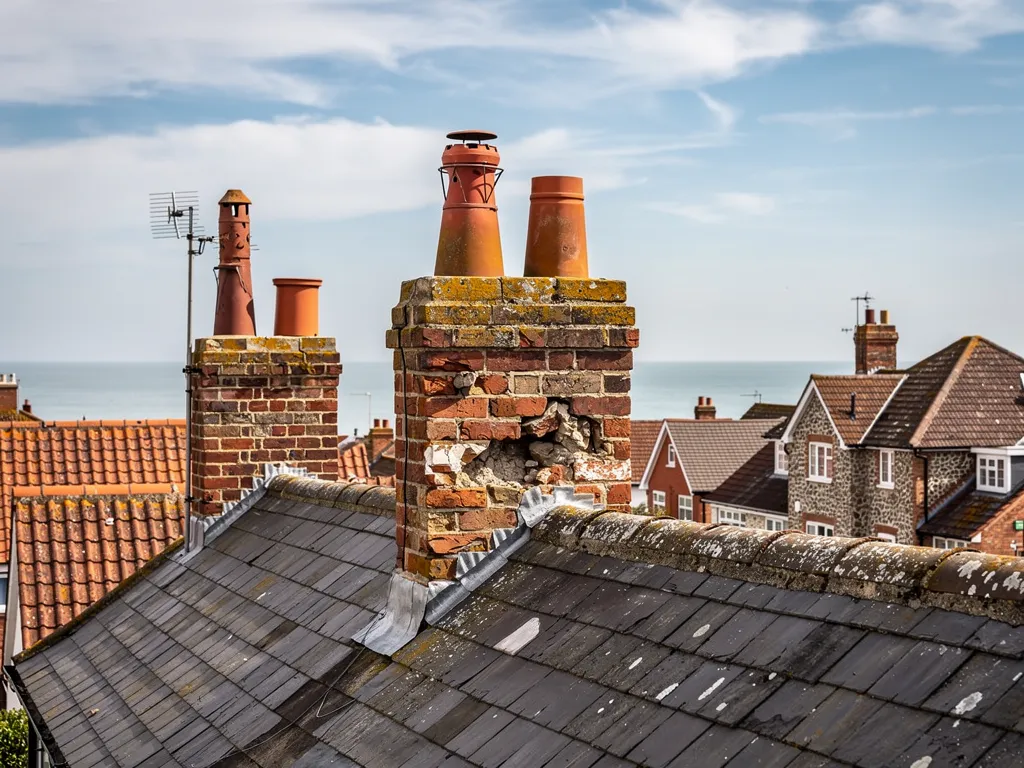
You can often see the result from the ground after a cold spell. Look for pale crumbs or grit on the path or in the gutter, which is mortar falling out of the joint. Look along the crest for a tile set slightly crooked, a dark gap along a joint, or a face of mortar that has flaked away and left the sand showing. Mortar that has gone sugary, like damp sand, has usually lost its cement strength.
Why it leads to leaks
Ridge mortar has a second job beyond holding tiles. It closes the open end of each tile where it meets the slope and keeps wind-driven rain out of the roof space. When frost breaks it up, that seal goes. Water can then enter beneath the ridge, run down the underlay and show as a stain on a ceiling some way from the crest. If you have a mark that appears after wet weather, a leaking ridge gets checked early, since it sits at the head of every water path.
How much work follows is set by how far the damage reaches. A small area of crumbled pointing can be raked out and repointed. A long stretch of failed bed, or tiles that have come loose, needs lifting and re-bedding, and each tile should be mechanically fixed as well. Since the 2014 revision of BS 5534, a ridge or hip tile needs a mechanical fixing beyond its mortar, so a repair that merely renews the bed is incomplete.
What rain does to a fresh bed
Frost is only half the winter problem. Rain is the other half, and it harms mortar in a different way. A fresh bed that is rained on before it has firmed up can have the cement washed out of it. The sand is left behind, so the surface turns weak and rough, with streaks running down the tiles. Heavy rain can also soften a bed to the point where a tile slides or settles out of line, and a wet ridge timber below the mortar does not help adhesion.
A light shower soon after laying is less serious than a downpour, but there is no way to predict which will arrive. Driving rain from the sea can hit a ridge sideways and reach the vulnerable ends of the bed, where the mortar meets the slope. For that reason we are cautious about laying mortar on days with showers forecast, even when they look scattered.
Damp materials and damp timber
It is not only the rain falling on the day. Wet tiles, a saturated ridge board and damp sand all change how a mix behaves. Tiles that have taken on water pull less moisture out of the mortar, and the bond can suffer. We aim to work when the ridge itself has had a chance to dry, and that can take a day or two after a wet spell, particularly on a north-facing slope that gets little sun.
Sea air adds its own damp, so a slope facing the coast can stay wet longer than you might expect. We keep an eye on the condition of the surfaces as well as the forecast, because both govern the result.
The same sensitivity is why our page on mortar versus dry fix is worth a look if you are weighing up methods before winter sets in.
Timing a ridge repair around the weather
Good timing is mostly patience. We look for a window where the morning is dry, the day is not about to turn bitterly cold, and the evening and night after are free of frost and heavy rain. Winter often offers such windows, but they are shorter and less reliable than in spring or early autumn.
If the forecast allows, the work goes in at the start of the day so the mortar has the longest possible time to take its first set. We cover fresh work when the weather turns. We keep batches small, mixing only what we can lay at once, because a mix standing in a cold bucket stiffens or chills. If conditions change during the day, we stop, make the ridge safe and return when the weather is kinder. Nothing is gained by pressing on and having to redo the job in a month.
When a repair cannot wait
Sometimes the roof will not tolerate delay. Tiles are loose and about to fall, or a gap is letting rain straight into the house. Active leaks and storm damage jump the queue, and a roof letting water in or shedding tiles is made safe before anything else. That may mean taking down a loose tile and covering the gap with a temporary seal so no water enters. The lasting repair follows when the weather turns, and photographs taken at the make-safe stage show what is waiting to be done.
A temporary measure is only that. Sealant, sacking and felt are for days, not years, and a ridge left in that state through a whole winter will let in water. The aim is to bridge the weather, not to ignore the fault.

Choosing the method for a cold-season repair
When winter is the only time available, the method matters. Re-bedding in mortar remains a sound approach, provided the weather window is there, and each tile is also mechanically fixed. Where the window is narrow or uncertain, a dry-fix ridge avoids the problem altogether, since the tiles are clipped to a fixing strip with no wet bed to cure. Systems of this type are tested to BS 8612, and the roof can be finished in conditions that would rule out mortar.
That does not make dry ridge the right answer on every roof. Some tile profiles, some heritage roofs and some owners suit a mortar finish better, and the survey weighs these things up. What we avoid is forcing a wet repair into the wrong weather just to meet a date.
Looking after a ridge before the cold arrives
Autumn is the sensible time to look at a ridge, from the ground and without climbing anything. If the pointing is cracked, crumbling or missing at the ends, repairing it before the first hard frosts stops water from getting in and freezing there. A short list helps: check for fallen grit, look along the line for crooked tiles, and note any new stain on a ceiling after rain.
When you ring us about a ridge, mention the date the damage appeared and any recent cold spell, as that helps us judge whether frost or wind is the cause. We trace the fault first, show you photographs of your own ridge with the written quote, and suggest no more work than the fault demands. The workmanship is guaranteed in writing for ten years, and we tidy up and take away our waste.