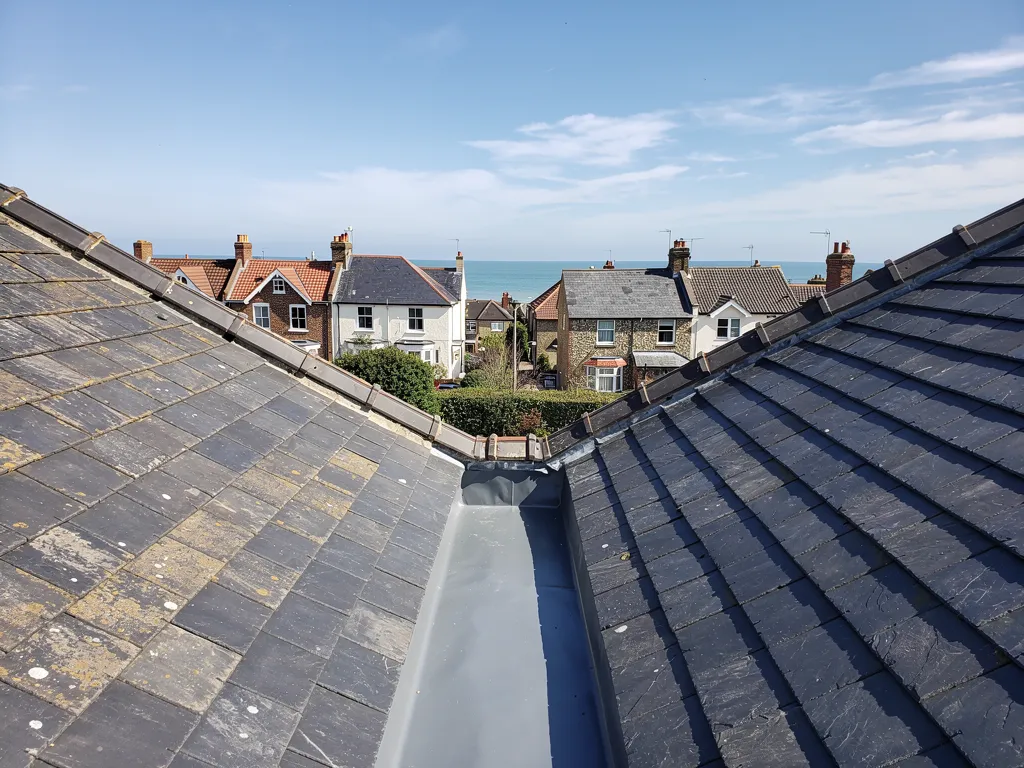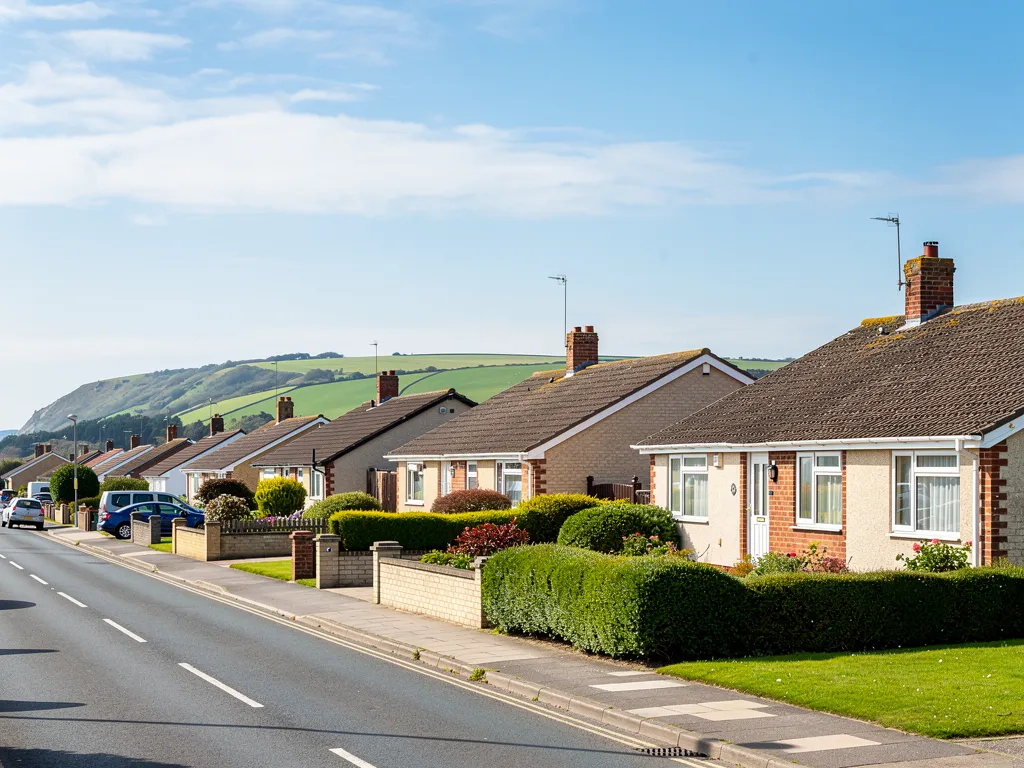
A traditional ridge is a row of curved tiles set in wet mortar. A dry ridge swaps that mortar bed for a fixing that runs along the crest, with the capping tiles held mechanically on top. Nothing is mixed on site, so nothing has to set, and the ridge goes on in dry or damp weather alike. Dry ridge is a common choice on re-roofs and on repairs where the old bed has failed.
Because the system runs in a straight line, the cost is quoted by the linear metre. That is useful for a homeowner, since a ridge is one of the few parts of a roof you can measure from the ground. A bungalow ridge may be a handful of metres, a long terrace far more, and a hipped roof adds sloping runs at the corners.
The ranges below come from two public cost guides, and the wider ridge tile repairs service is described on its own page. They are typical national figures, not Watertight prices, and your own survey sets the real number. If you are comparing a dry ridge with a straightforward repair, our guide to ridge tile repair cost covers that side.
What you are paying for with a dry ridge
A dry ridge system has a few parts. A batten or a continuous strip is fixed along the crest, usually to the ridge timber. Clips or brackets hold the capping tiles to that fixing, and a roll or strip at each side seals the gap between the tile and the slope, often with built-in ventilation openings. The end tiles and the junctions at the gable and at any hips use their own components. Roofers sometimes refer to the whole assembly as a dry ridge kit.
Kits of this sort are tested to BS 8612, a 2018 standard written for dry ridge, hip and verge fixings. Many manufacturers now give the clips and trays as a system designed to be used together. That matters for price, because a recognised kit costs more than loose offcuts of strip, and the labour on a tidy job takes longer than a quick jab of mortar.
What the per-metre figure covers and what it does not
A per-metre rate normally means the ridge itself: lifting off the old tiles and mortar, fixing the new system and bedding the caps on it. It does not usually include scaffold, extra repairs to the ridge board or battens, new tiles where the old ones have crumbled, or work on the verges. Those extras depend on the survey. This is why one roofer's rate per metre cannot be compared with another's until you know exactly what each has included.
Where a roof has hips, the sloping ridges that run down the corners of a hipped roof, those carry a rate of their own in the published guides, because they need cut tiles and a different bracket at the foot of each run.
The published ranges per metre
Two national guides give figures you can use as a starting point. Both are written for homeowners and updated through the year, and neither knows your roof.
| Item | Typical UK range | Guide |
|---|---|---|
| Dry ridge installation | £40 to £60 per linear metre | MyBuilder, updated 21/08/2026 |
| Typical dry ridge job | £500 to £1,000 | MyBuilder, updated 21/08/2026 |
| Dry ridge | £50 to £70 per metre | Checkatrade, October 2026 |
| Dry hip | £70 to £100 per metre | Checkatrade, October 2026 |
The Checkatrade figures are given before VAT, so a quote that includes it will look higher. The MyBuilder range is a general guide, and its typical job of £500 to £1,000 sits alongside the per-metre rate as a sense check for an ordinary house.
Where dry ridge sits against other ridge work
Not every ridge needs the full system. MyBuilder's slate guide lists £300 to £600 to re-bed or replace ridge tiles, and £200 to £400 for repointing ridge or hip tiles. Repointing alone tidies mortar that is weathered but still fixed, while a re-bed or a dry ridge replaces the bed. Which of the two costs less depends on the roof, and a dry system can make more sense when the old bedding is crumbling throughout.
Remember these are national guides, collected from jobs across the country. Sussex prices, a coastal exposure or an awkward roof can sit above or below them, which is why a survey comes before a price.
A worked example from your own measurements
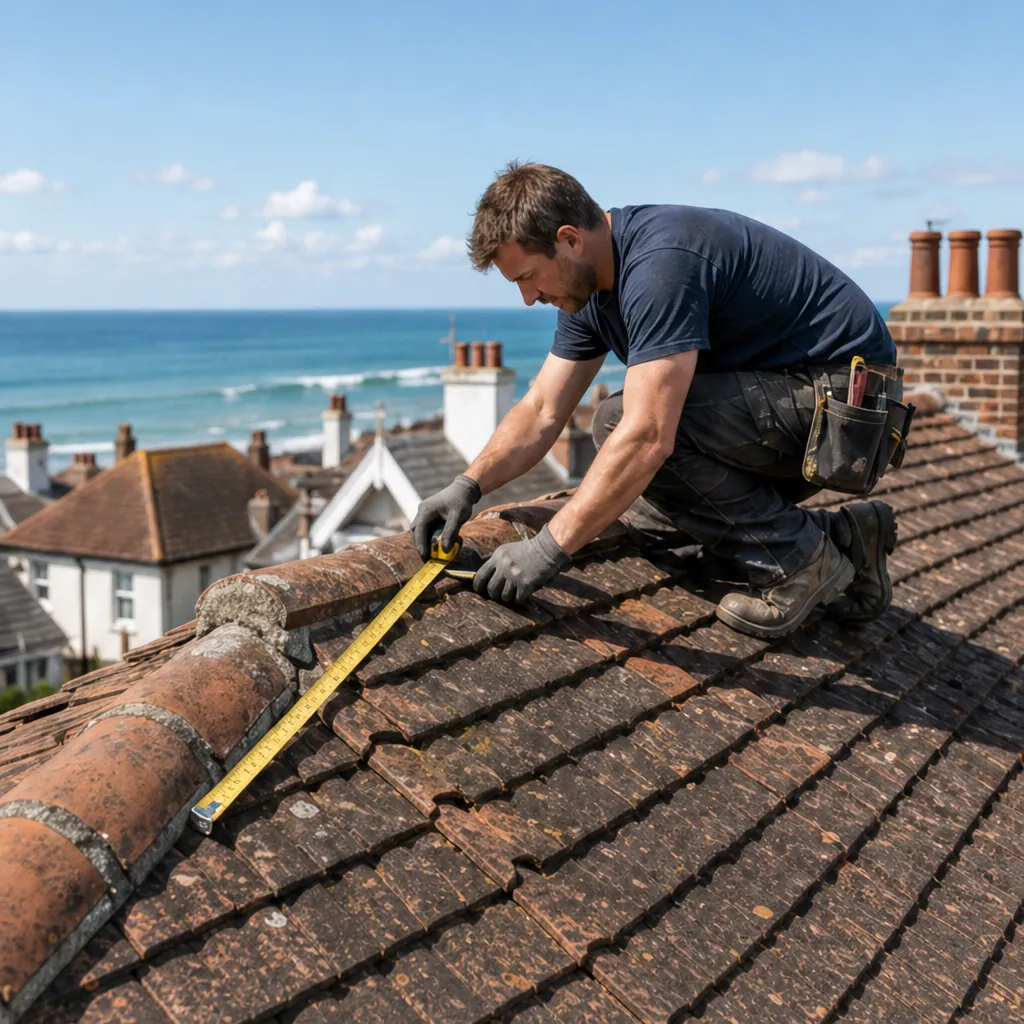
You can get a rough figure at home with a tape measure or a satellite view. Measure the length of the ridge from one gable to the other. Add the hips if there are any. Then apply the per-metre range and see where it lands.
Take a semi-detached house with a ridge of about 8 metres. At £40 to £60 per metre, the dry ridge itself would come to £320 to £480. At Checkatrade's £50 to £70, it works out at £400 to £560. Both sit below MyBuilder's £500 to £1,000 for a typical job, which includes the realities that a bare per-metre sum leaves out: setting up, making good the ends, and any broken tiles replaced.
Now a hipped bungalow with a 6 metre ridge and four hips of about 4 metres each. The ridge at £50 to £70 is £300 to £420. The 16 metres of hip at Checkatrade's £70 to £100 add £1,120 to £1,600. The total moves a long way up because hips cost more per metre and there is plenty of them. A hipped roof can therefore cost far more than a gable roof of similar footprint.
Why your number will differ
Treat these as shapes, not forecasts. Figures drawn from a measurement leave out the access method, the tile type and the condition of what lies beneath. A ridge in poor shape may also need timber repaired or the ridge line levelled before any system goes on. Hence the figure on your quote is based on the survey, not on a sum like this one. The sum is useful for one thing: it tells you whether a price is in the right region before you read the detail.
What pushes the price up or down
Access is usually the largest single factor. A bungalow ridge can be reached from a tower or a roof ladder, while a two-storey house needs scaffolding. In MyBuilder's scaffolding guide, a standard two-storey set-up runs to about £850 to £1,200, with a chimney scaffold at £400 to £900. For a short ridge job, that can cost more than the ridge itself, so it pays to ask whether a quote includes it.
The tiles come next. If the existing caps are sound, they can be cleaned and reused on the new system. Where they are cracked, mismatched or perished, new ones add to the cost, and a decorative or unusual profile costs more to match. Length matters, as the per-metre rate shows, but so does the number of ends, junctions and hips, because each needs its own fittings.
The ridge beneath matters too. A dry system needs a straight, sound timber to fix to. If the ridge board has rotted, or the roof has sagged along the crest, that repair has to happen first and is a separate cost.
Smaller factors worth knowing
Waste removal, the condition of the verge ends, the height of the building, the season and how many roofers a job needs all feed in. On a coastal house, the extra fixings that suit an exposed roof can add a little to the materials. Our page on ridge tiles and coastal wind explains why those fixings matter.
Finally, VAT. Ask whether a quote includes it, because the Checkatrade figures above do not, and a price that looks lower may simply be before VAT.

Dry ridge or re-bed: which job suits the roof
Both methods can give a sound ridge when done properly. The question is which is right for the roof in front of you.
A re-bed keeps the traditional look: mortar showing along both sides of the ridge, tiles bedded in it and now also mechanically fixed. It suits roofs where the existing tiles are sound and the owner wants the classic finish, and it is the usual choice on heritage roofs. The drawback is the weather. Mortar needs a spell of mild, dry conditions to cure, so a repair may wait for the right days.
A dry ridge goes on in more types of weather, needs no curing time and adds ventilation along the crest, which can help a cold roof space. It also resists the cracking that makes mortar beds fail. The visible difference is small once the ridge is finished, though some owners prefer the look of pointed mortar.
When we lean one way or the other
If the old bed is crumbling along its whole length, a dry ridge is often the sensible choice, since patching a failing bed in short sections rarely lasts. If only a few tiles have shifted and the rest is sound, a targeted repair is the smaller job, and we recommend the smaller job. If the roof is a slate one, ridges and fixings differ, so we check the covering first.
Either route should leave every ridge tile fixed to the structure and not resting on the bed. That is the real difference between a ridge that holds in a gale and one that does not, and it is something the survey photographs can show.

What a sound dry ridge quote should say
A sound ridge quote is easy to read. It names the roof, the length of ridge and hips involved, the system or method proposed, and whether scaffolding, waste removal and VAT are in the price. If any of those are missing, ask. A low per-metre rate with scaffold left out can end up costing more than a higher rate that includes it.
It should also say what happens to the old tiles: reused, replaced or a mix. It should name the work at the ends, where the ridge meets the verge, where the slope finishes beside a gable wall. Dry ridge ends rely on how the verge is finished, and the undercloak, the strip beneath the verge tiles, affects both strength and appearance. Our page on verge undercloak explains that detail.
How we price it
We survey first and photograph your ridge, tiles and the timber beneath, then show you the pictures with the quote. The quote is one total price. We state the cause we found, the length of ridge and hips we will fix and the method. We price fairly, and the job we suggest is whichever is smallest while still curing the fault, which is a re-bed on one roof and a dry ridge on the next.
The old mortar and broken ridge tiles leave with us once the job is done, and the quote says whether the ridge is being fully rebedded or only repaired. Should a ridge be loose and dangerous, we deal with the danger straight away and settle the lasting repair after you have seen the survey.
For anything above, a quick phone call with your approximate ridge length and a few photographs gets the survey booked.