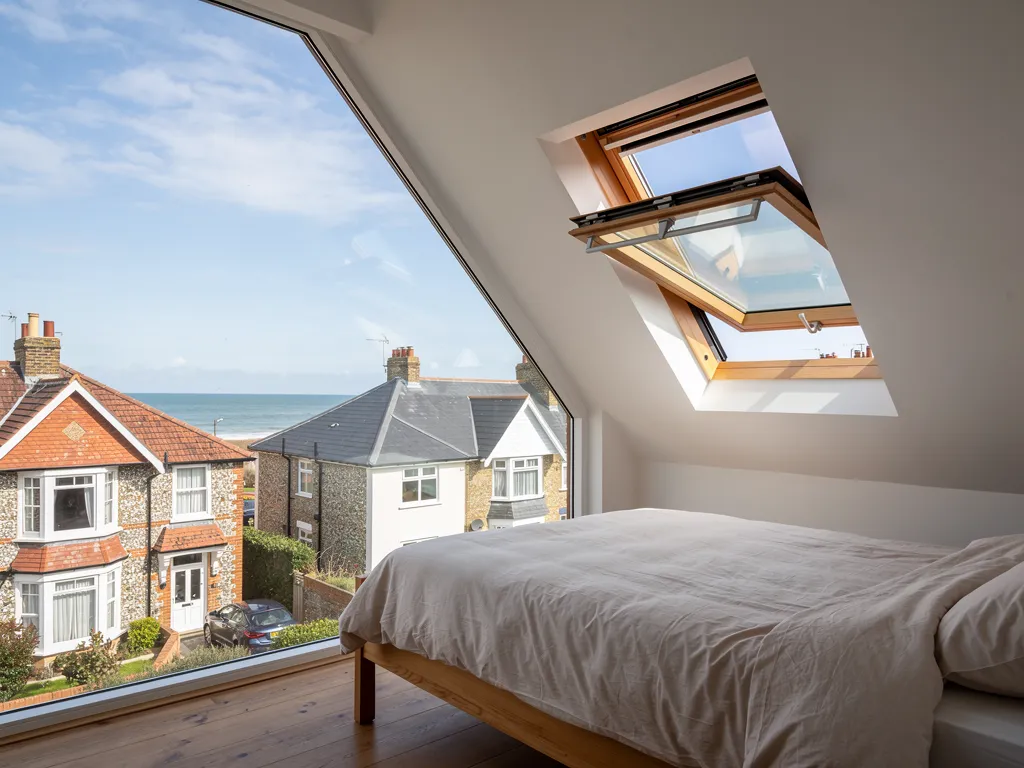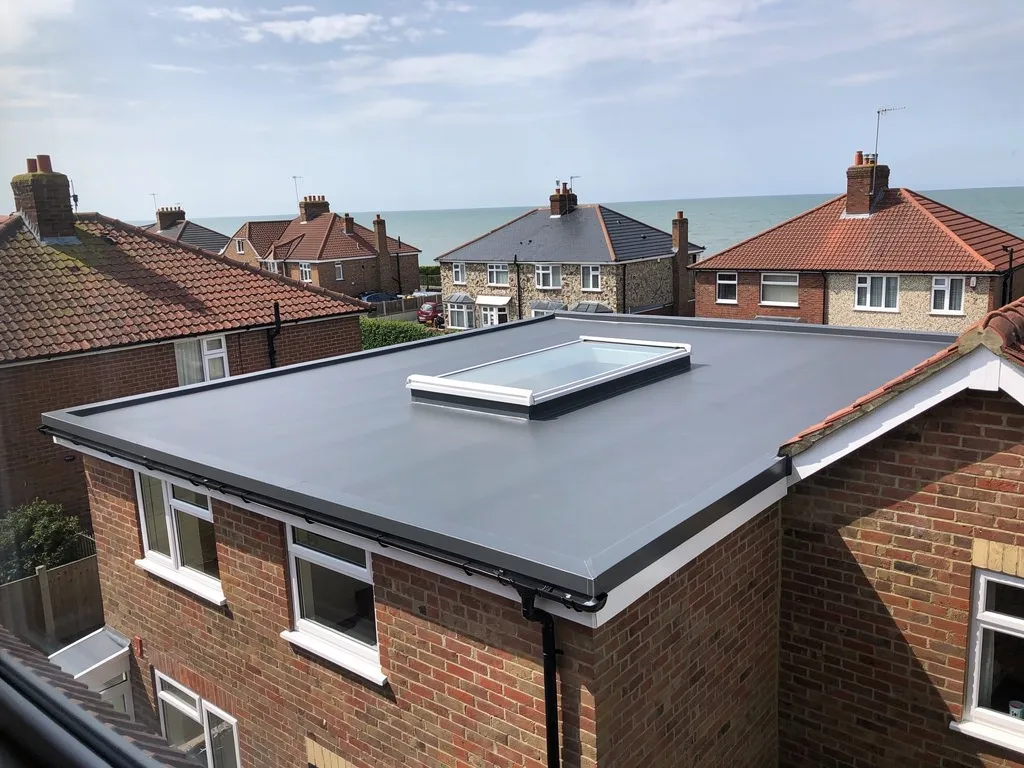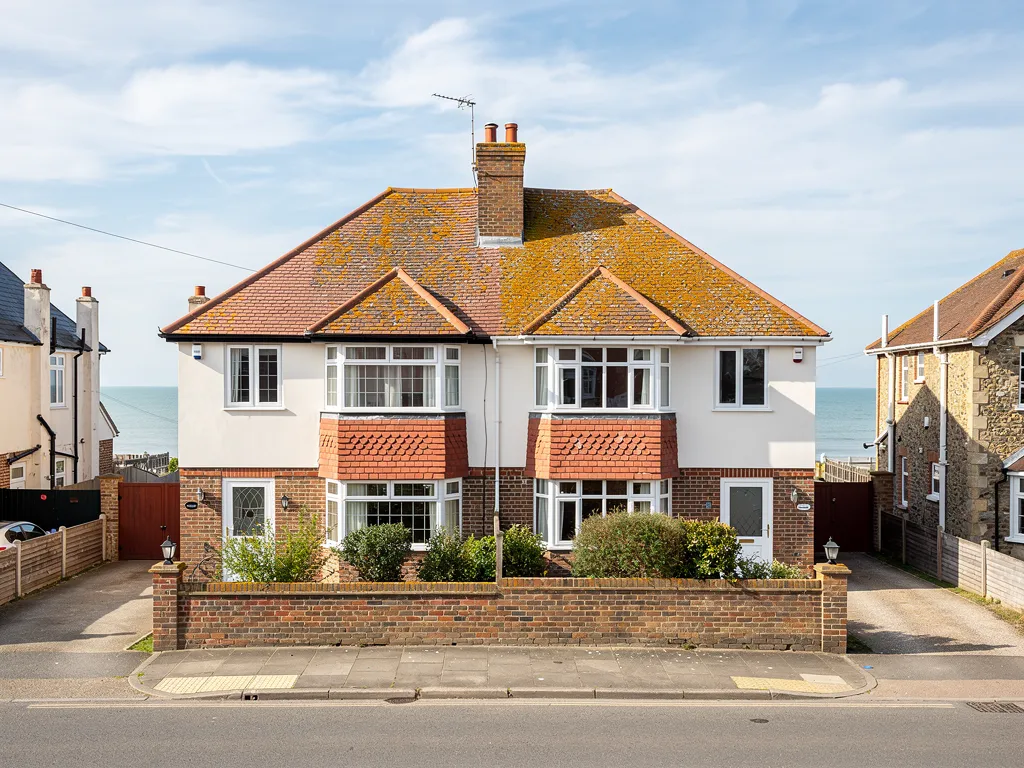
When a gale comes through Worthing and the morning shows a ridge tile on the lawn, the roof beneath is usually fine. The tiles on the slope are hooked over battens and weighed down by their neighbours. The tile that went was a different animal: a curved cap sitting alone on the very top of the building, held by a bed of mortar that may be decades old.
A ridge is the line along the crest where the two slopes meet, closed by a run of capping tiles. Hips, the sloping edges of a hipped roof, carry the same kind of tile. Wind does not need to be exceptional to pull at them, because the crest is where air is forced upward and then accelerates. Anything fixed only by its own weight and a thin layer of cement is the easiest thing on the roof to lift.
This guide explains how a ridge tile lets go, what mechanical fixing means in practice, why a coastal address changes the specification, and what to look for from the ground after a blow. It sits within our wider work on ridge tile repairs.
Why the crest is where wind does its work
Think of the roof as a shape the air has to get over. On the windward slope the wind pushes against the tiles and slides up to the crest. At the top it separates from the surface and speeds up, and a region of low pressure forms on the far side and across the ridge itself. That low pressure acts as suction, trying to lift whatever sits there. Ridge tiles are the nearest thing to hand.
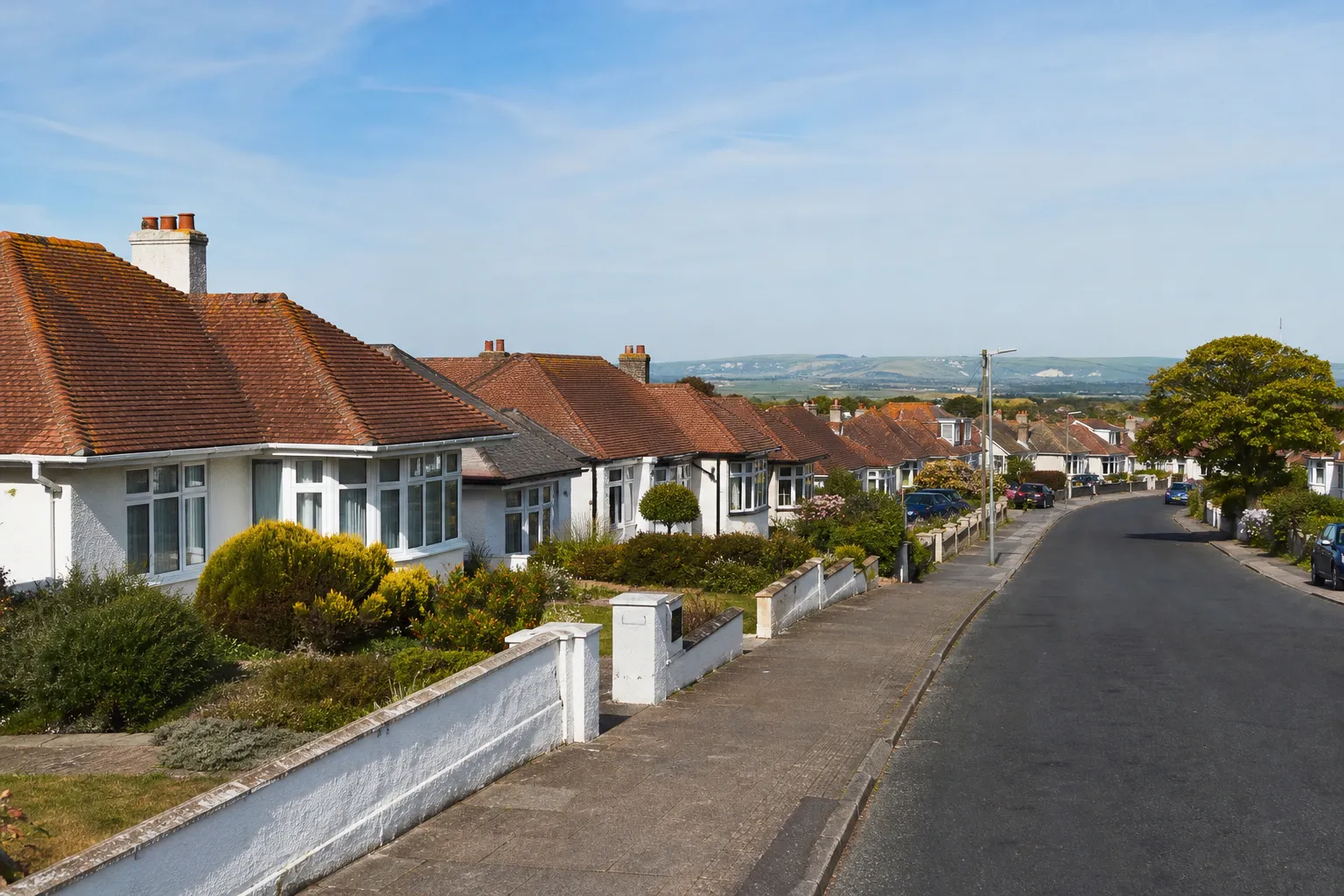
Pitch matters. Marley's wind guidance singles out pitches under 30°, where the exposed windward face can suffer heavy suction, a negative pressure that tugs tiles upward. A shallow-pitched bungalow roof therefore asks more of its ridge than a steep Victorian one does, and bungalows are common on the coast here. Add the length of the slope, the height of the building and how open the ground is around it, and each house ends up with its own demand on the crest.
The coast changes the odds
Our houses face open sea weather, with few hills or tall buildings to break a gale before it reaches the roofline. The same tile on a sheltered inland street and on a seafront terrace faces very different loads. A wind figure for a whole town would mislead, because the proper method looks at the individual site, using its ground, height and surroundings.
What we can say plainly is that a ridge on the coast is a working part of the roof, not decoration. It needs to be built as one, which is why the fixing method matters more than the look of the mortar.
How a ridge tile actually lets go
Failure at the ridge is rarely sudden. It tends to follow a sequence that a careful look from a ladder or a camera can read.
It starts with the mortar. Each capping tile sits in a bed of sand and cement, with the ends pointed up where tiles meet and where the ridge finishes at the gable. Over years that bed shrinks, cracks and loses its bond with the tile, often first at the joints. Rain gets into the crack, and the bed weakens further. Then a gust rocks the tile on what is left. It might shift a few millimetres, and the next gust shifts it more.
Once a tile has moved, wind can get underneath its edge, and the load goes up sharply. The tile may snap along a hairline crack, slide down the slope into the gutter, or take flight altogether. The tiles next to it then lose a neighbour's support and are the next to go, which is why one missing tile on a ridge often turns into three after the following storm.
End tiles and verges
The ridge ends are the most exposed spots. The end tile at a gable sits proud of the verge, the roof edge at the gable wall, and catches wind from two sides. Where the verge is pointed in mortar and the tile at the top is barely fixed, the whole corner can lift. Our page on ridge tile types shows the shapes of end and cap tiles, which helps when describing a fault to a roofer.
None of this says the roof was badly built. Mortar alone was normal practice for generations. The standard has simply moved on, as the next section explains.
What mechanical fixing means
The standard for slating and tiling is BS 5534. Marley's account is that after the 2014 revision, mortar's pulling strength could not carry ridge and hip tiles unaided, and every bedded tile or fitting should also be mechanically fixed. Until then, a mortar bed with nothing else was widely accepted. Marley's own page adds that working to the standard is not a legal duty. It remains the yardstick a careful roofer measures a job against.
In practice a mechanical fixing means each ridge tile is held to the roof structure by something other than cement. That might be a screw or a bolt through the tile into a ridge timber, a bracket or clip that grips the tile and fixes to a batten, or a purpose-made system. Mortar can stay on as a weather seal and a neat finish while the fixing takes the pull.
Dry ridge as the other route
A dry-fix ridge replaces the bedding with a continuous strip fixed along the crest, onto which the tiles are mechanically held, often with ventilation built in. Systems of this kind are tested against BS 8612, which dates from 2018 and is the test specification for those dry-fixed parts. Dry systems suit many roofs, though not all: a heritage roof, covered on our listed and conservation roof page, may call for a more discreet fix.
Neither route is a cure-all. Dry ridge brings its own checks, such as clip condition and the fit of the tile on the strip. A re-bedded ridge with proper fixings can last well, provided each tile is actually attached and not simply sitting on a fresh bed.
Fixing a ridge for a coastal address
A good coastal fixing starts with the question of where the house stands. Wienerberger describes each roof being fixed to its own site-specific specification, which weighs the location, the altitude and local wind exposure. The Eurocode calculation behind it starts from a basic wind speed then corrects it for the terrain and for how tall and long the house is. The logic is simple even without a figure: the fixing answers to the place, not to a postcode.
Wienerberger says every single-lap tile, the flatter interlocking kind, must carry a mechanical fixing, and Marley's reading of the standard has edge tiles around the perimeter held twice over. Perimeter tiles run along the verges and eaves, where uplift is strongest. On a coastal roof we pay particular attention to them as well as the ridge.
Near Shoreham airport
One local point deserves a mention. Marley warns that large aircraft taking off and landing stir up vortices, so roofs close to an airport can meet local wind loads above those worked out to BS 5534. Its advice for a site within 6 km of an airport is to put the fixing question to its technical service. Sections of Shoreham, Lancing and Sompting may lie inside that radius, so a roof on the Adur side can need extra manufacturer advice on fixing. We ask the maker rather than assume.
For any coastal ridge, the fixings should be chosen for the exposure and matched to the tile and the timber beneath, and it should be easy to see on a survey photograph that each tile is held down and not just resting on mortar.
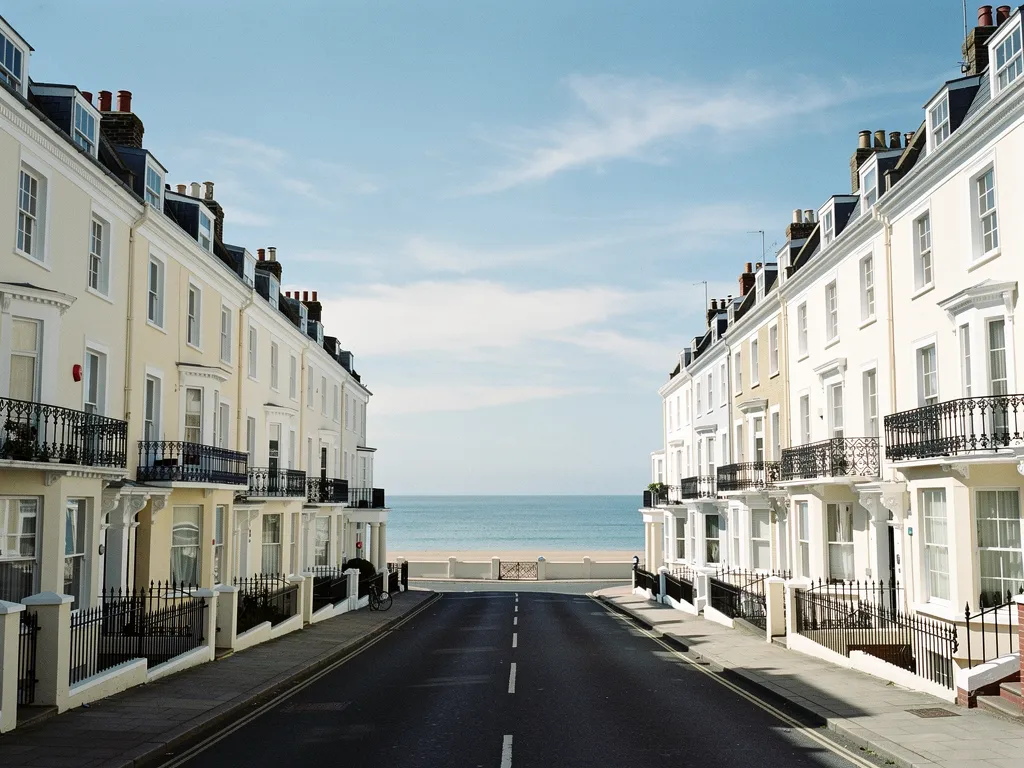
Checking a roof from the ground after a gale
You do not need to climb anything to check a ridge, and you should not. A safe look takes a few minutes from the lawn or the street, and the zoom on a phone does the rest.
Begin with the ground. Fragments of curved clay or concrete in the borders, grey crumbs of mortar on a path or in the gutter, and a tile lying whole by the fence are all clues about what has moved. Then study the crest silhouetted against the sky. It should run straight. A dip, a hump or one tile tilted out of step with the row suggests the bed has failed. Look at the gable ends too, where the end tile and the verge meet, and at any hips.
Gaps show up as dark slots between the tiles where there should be a continuous line. Pale, fresh-looking mortar on the ground beneath is a sign that the pointing has been dislodged recently. If you notice movement, such as a tile that rocks in the wind, do not wait for the next forecast.
Making safe, then mending
If a ridge tile is hanging or likely to fall, keep people and cars clear of the area below and call us. We prioritise storm damage and make a leaking or unsafe roof safe first, which usually means securing or taking down the loose tile. The permanent repair follows when the weather allows.
Photographs from the ground help us plan the visit, though they never replace a close look. Where a ridge has failed in one place, the tiles either side are worth checking too, since they were likely bedded at the same time with the same mortar.
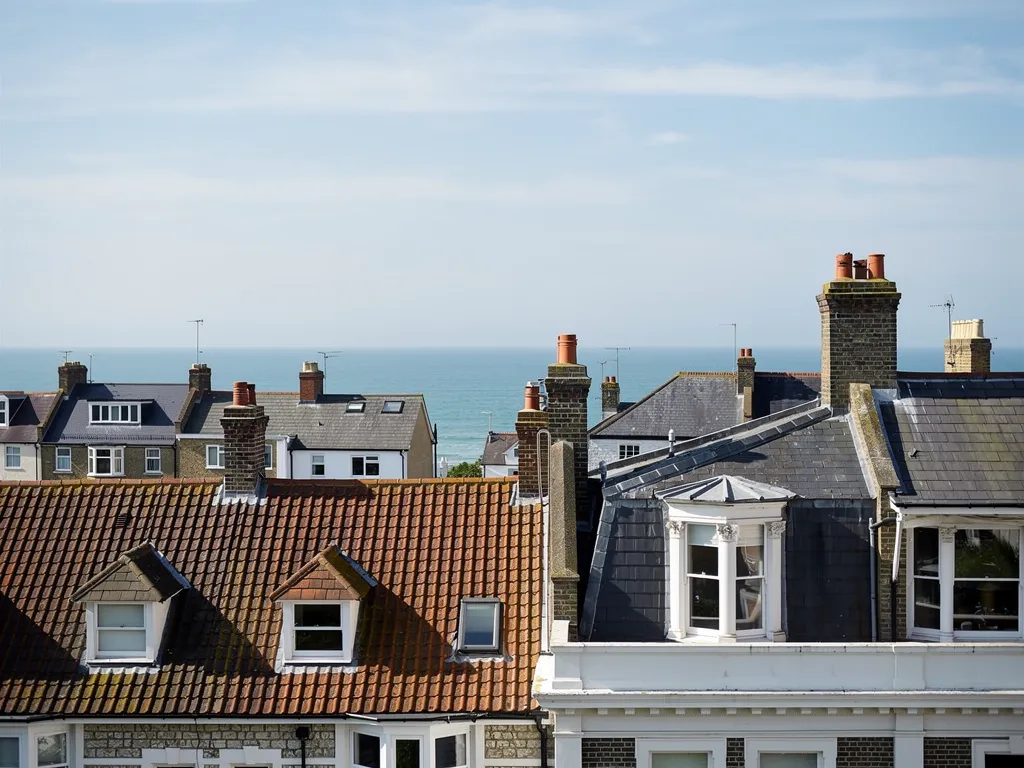
Repair choices and what drives the cost
There are three broad routes, and the survey decides which one the roof needs. A single loose or missing tile on a ridge that is otherwise sound can be refixed or replaced and the pointing renewed. A stretch of failed bedding calls for the affected tiles to be lifted, the old mortar cleaned out, and the tiles re-bedded with a mechanical fixing on each. A whole ridge that is worn out may be better rebuilt, either re-bedded all along its length or converted to a dry ridge system.
MyBuilder (updated 21/08/2026) gives £300 to £600 as its typical UK range when ridge tiles are re-bedded or swapped, and £200 to £400 for repointing ridge or hip tiles. For dry ridge, its dry ridge guide gives £40 to £60 per linear metre, and £500 to £1,000 for a typical job. These are national figures from the guide. Our page on dry ridge cost per metre goes further into the figures.
What moves the price on a coastal house
Access is the main factor. A low bungalow ridge can often be reached by a mobile tower or a ladder, while a tall house or one with a long run needs scaffolding, which shifts the figure more than the tiles do. The tile type, how many need replacing, whether the verges need work too and whether the pointing and the fixings both need renewing all feed in.
We trace the cause first and photograph your own ridge, and our written quote, sent once the survey is done, gives a single total. Where a refix will hold, that is what we propose, and a rebuild only when the ridge needs it.