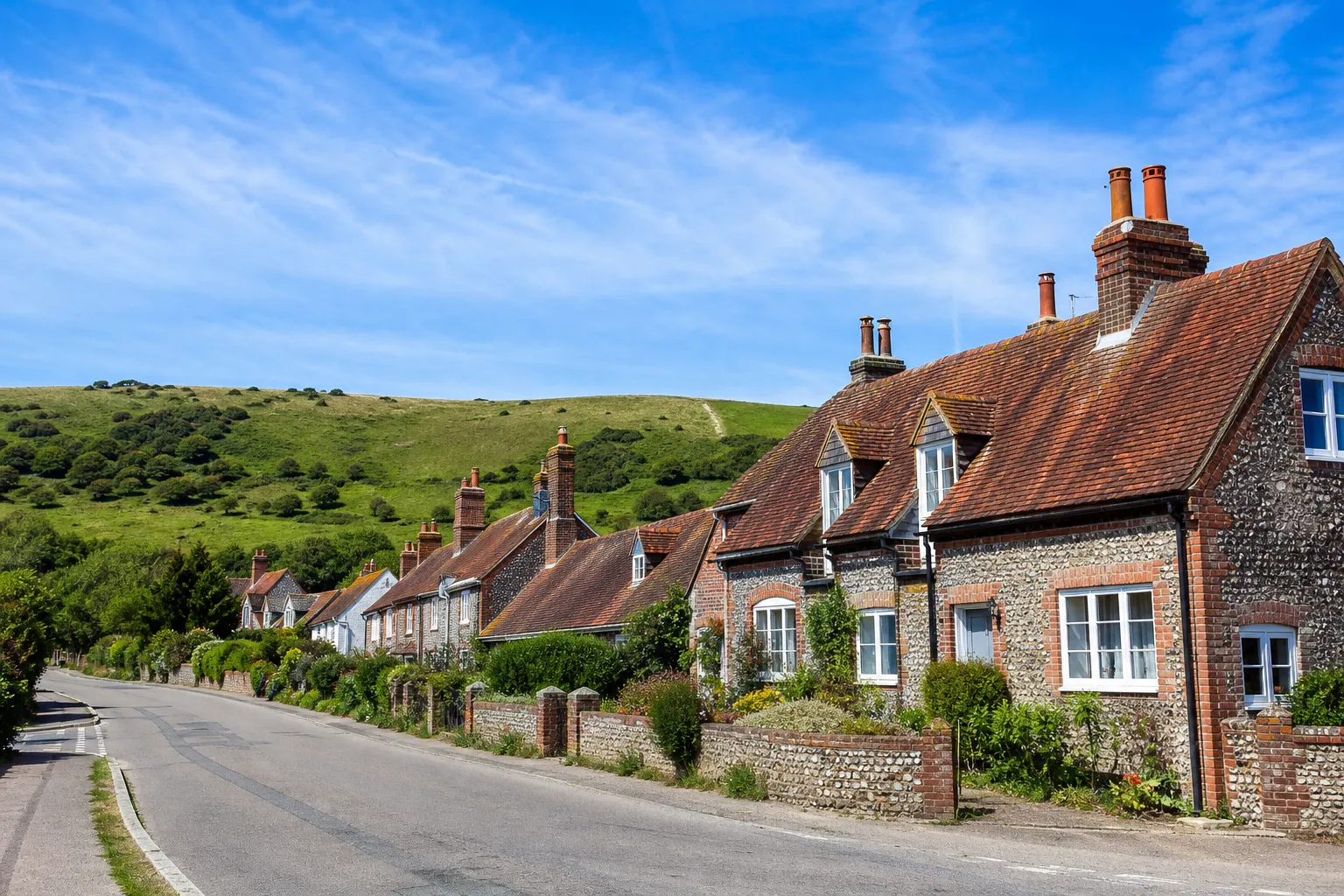
Ask three firms what a roof clean costs and you can be given three very different numbers. The gap is rarely a trick. One person is pricing a quick brush and spray from a ladder, another a full scrape with a treatment and gutters cleared, and a third has quietly added a scaffold tower because the eaves are high. The jobs are not the same job, so the figures are not comparable until you know what each one covers.
Roof cleaning removes moss, lichen and the dark algae streaks that settle on tiles and slates, and it is usually done in two parts: the growth is taken off, then the surface is treated so that it is slower to return. The method matters to the price, and it matters to the roof. Our guide to roof cleaning methods sets out the options in detail.
Below are the typical UK ranges published by one national price guide, the factors that push a quote up or down, and the questions worth asking before you agree to anything. None of the figures is a Watertight price. Ours is a written quote, sent once our surveyor has been up and looked, and the roof cleaning and moss removal page shows how we work.
Typical UK prices by roof type
MyBuilder's roof cleaning price guide (updated 21/08/2026) puts the entry point for a roof clean at around £300. Beyond that opening figure, it separates the ranges by what the roof is shaped like and made of.
| Roof | Typical UK range |
|---|---|
| Flat roof | £300 to £600 |
| Pitched roof | £450 to £850 |
| Tile roof | £400 to £750 |
| Slate roof | £500 to £1,000 |
Read those as the middle of the national picture, not as a promise for any one house. A small flat roof over a rear extension sits at the bottom of the scale because there is little of it and you can reach it. A large slate roof on a tall Victorian villa near the seafront sits near the top, because slate is slower and more careful to work on and the eaves are a long way from the ground.
Slate costs more to clean than the same area of tile for a practical reason. It is thin, it can be brittle underfoot, and it is easy to crack with a heavy boot or a stray blow, so the work goes more slowly and with more attention to where weight is placed. That time is what you are paying for.
Treat the table as a sense check. If you are quoted £90 for a whole pitched roof, ask what is being left out. If you are quoted £2,000 for a modest semi, turn the question round and ask what justified the figure.
Why per square metre scraping prices mislead
Some firms quote by area instead of a flat sum. MyBuilder gives £5 to £10 per m² for manual scraping, which is the hand work of lifting moss off with a scraper and brush. It sounds simple, but a per-metre rate is only as reliable as the area it is multiplied by.
The area that counts is the surface of the roof slopes, not the footprint of the house. A pitched roof has more surface than the ground it covers, and the steeper it is, the bigger the gap. Dormers, a rear offshoot, a bay roof and a garage all add to the total. If a firm has measured only the front elevation, the sum will be short, and the difference tends to turn up later as an extra.
As a worked example, 60 m² of scraping at £5 to £10 per m² comes to £300 to £600. That is arithmetic on the published rate, not a quote, and it leaves out the treatment, the gutters and any access costs. Whether those are included is the first thing to ask.
It also helps to remember that the rate describes one method. Scraping is slow and thorough where the moss is thick. A quicker approach may be cheaper per metre, but if it leaves roots in the tile surface the growth is back sooner, and you have bought the same clean twice.
Asking for the area in writing
A fair quote states roughly how many square metres of roof are being cleaned and which slopes. If the area is not mentioned, ask for it. It takes a minute and it settles most disagreements before they start.
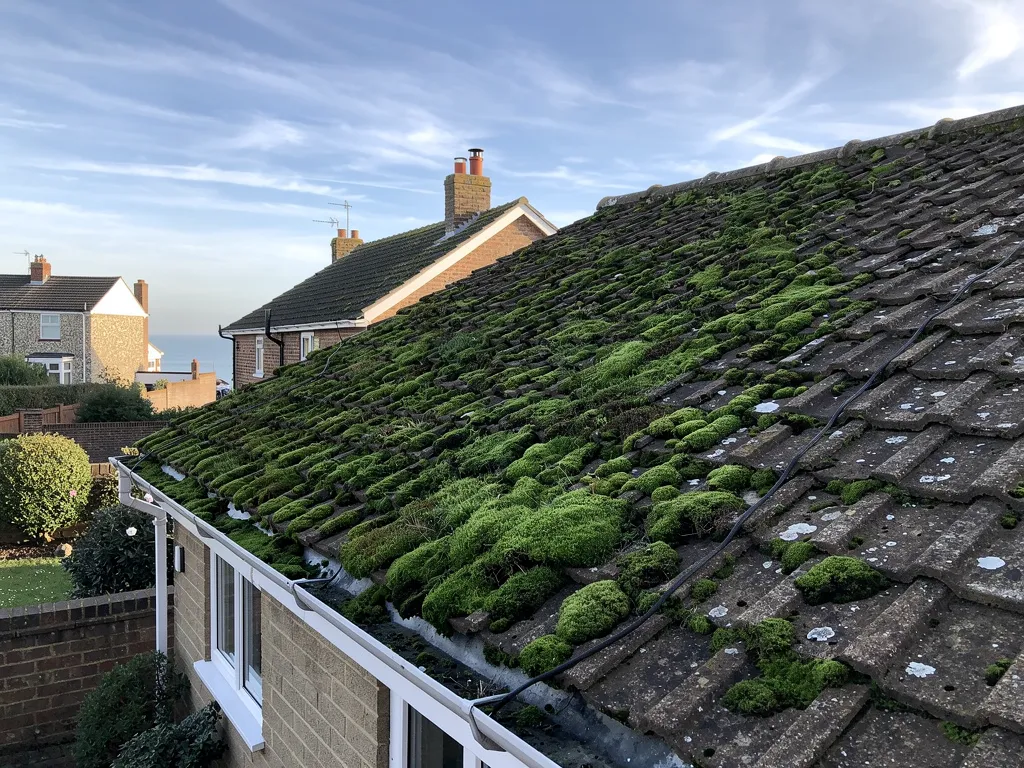
Access, size and covering: what shifts a cleaning figure
Four things explain most of the distance between the cheap quotes and the dear ones: access, size, the covering and how thick the growth has become.
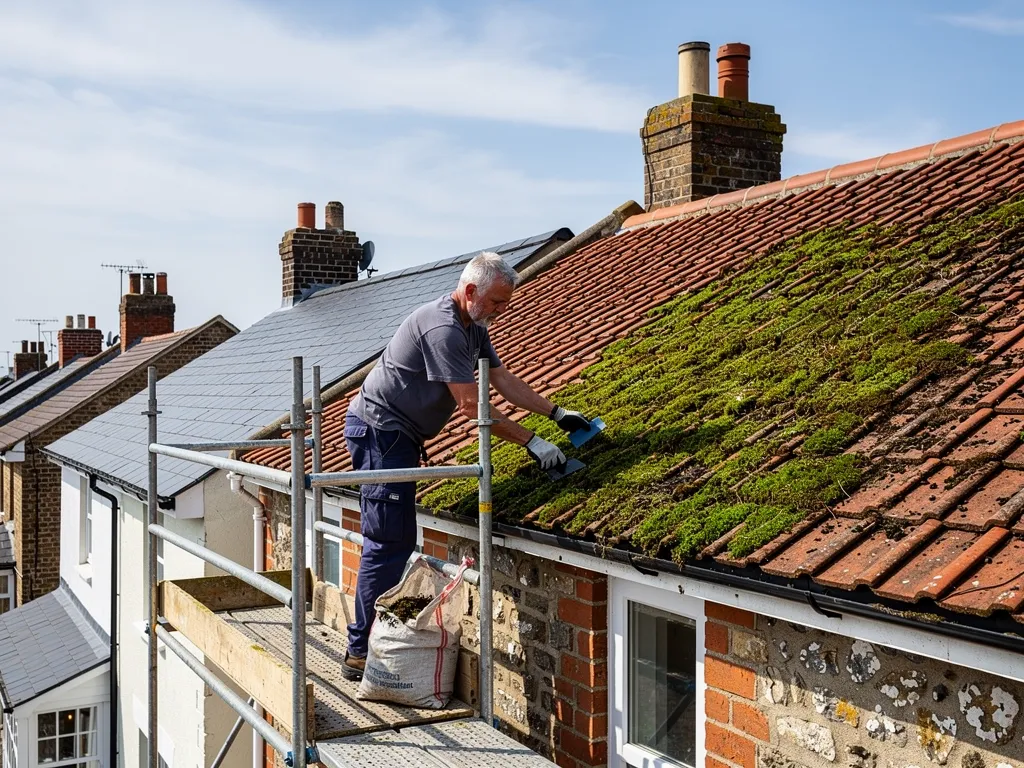
Access is the quiet one. A bungalow with a low eaves line may be reachable with a ladder and a roof ladder, while a three-storey house is not. MyBuilder puts scaffolding at around £850 to £1,200 for an ordinary two-storey house, so a tower or full scaffold can swallow a large share of a modest clean. If the poles need the public footway, the firm erecting it must obtain a Highways Act licence, which takes notice. West Sussex County Council issues those across the county, and Brighton & Hove does so within the city.
Size and pitch come next. More surface takes more hours, and a steep slope slows everyone down because every movement has to be made safely.
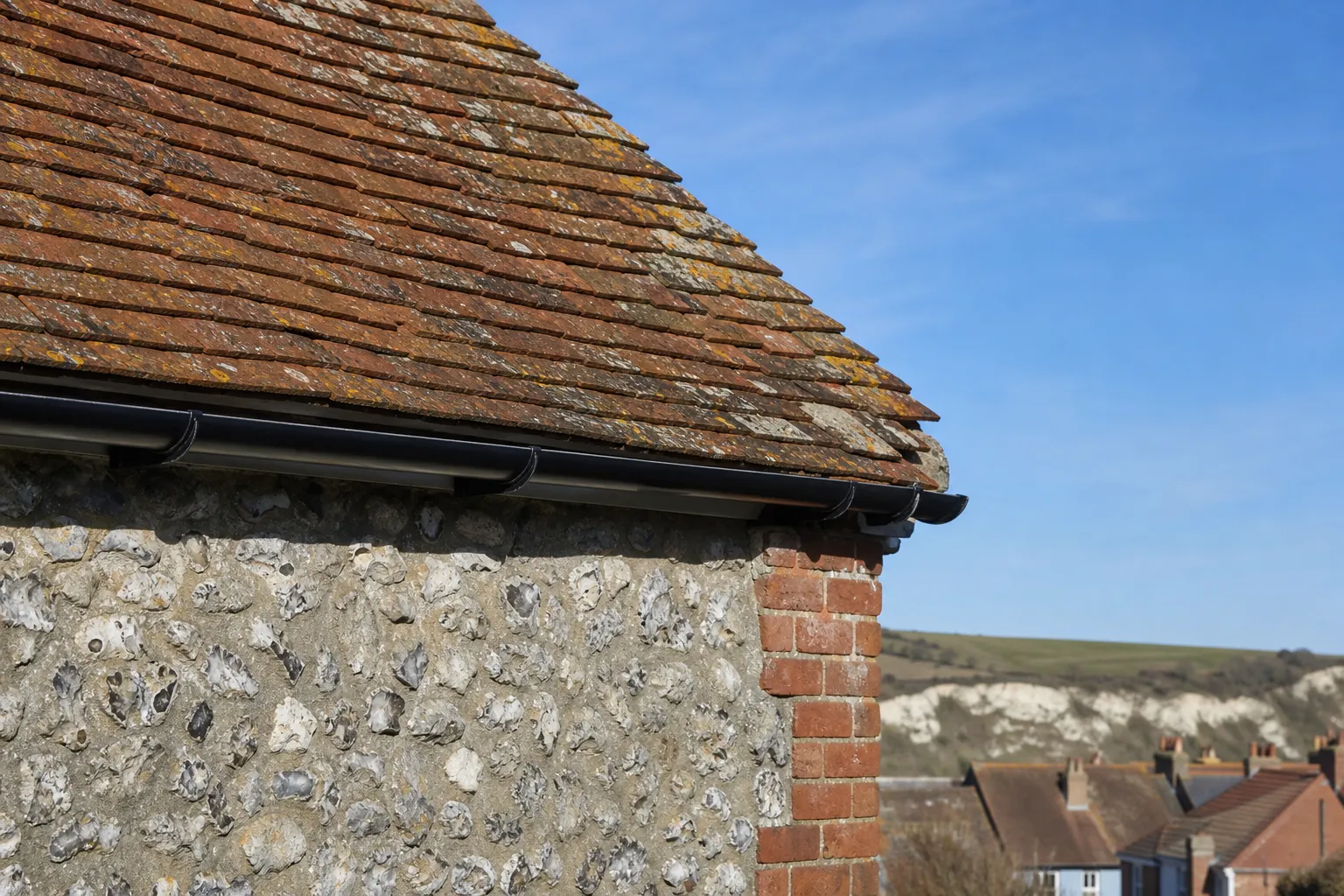
The covering matters because each material is cleaned differently. Natural slate wants a gentle touch. Concrete tiles are tougher but have a surface coat that hard jetting can wear away. Old clay peg tiles can be fragile, and some roofs on the Downs villages carry heavy lichen that has taken years to build. Heavy, deep growth takes longer to lift than a thin film.
Finally, the roof's condition decides whether cleaning can safely happen at all. Slipped tiles, cracked slates and failed pointing are found as the growth comes off, and a roofer who cares about the result will tell you before carrying on.
Before you set two prices side by side, find out if each figure already contains VAT, and any scaffolding. A number that leaves either out is a smaller number for a different job.
What a roof cleaning quote should cover
A clear quote tells you what will actually happen on the day. It names the method, so you can see whether the roof will be scraped, washed gently or treated, and it says whether a biocide is being applied after the clean. A treatment applied after the clean is a decision of its own, with its own timing.
Debris deserves a line in the wording too. Moss and lichen come off in quantity, and they end up in the gutters and on the ground. Gutters need clearing as the work goes on, because a clean roof draining into a blocked gutter has not been finished. Ask who clears the garden and who takes the waste away. On our jobs the garden is left tidy and the debris leaves with us, and the quote says that in plain words.
Look at what is said about access and weather. Rain, high wind and frost can all stop the work, and a sensible firm will tell you what happens to the booking if the day is not suitable. It should also say what the firm will do if it finds damaged tiles while working, which is stop, show you the damage, and agree what it needs instead of simply carrying on.
Finally, look at how the price is stated. Ours reaches you once the surveyor has finished, with a single total covering the entire job, and the pictures of your own slopes come with it, so the moss, the condition beneath it and the reason for the figure are all visible. If a quote is a single line on a text message with no mention of method, area or access, you are being asked to take the whole job on trust.
Low quotes, door knockers and pressure washing
A very low price for a roof clean is often a very fast clean. The usual route to a fast result is a pressure washer, and MyBuilder's guide warns that jetting could harm fragile tiles. Jetting can strip the surface off concrete tiles, force water up beneath the laps and into the loft, and push moss deeper into the pores instead of out of them. The roof looks bright for a few weeks and then the growth comes back faster. We cover the risks in detail in our guide to pressure washing roof tiles.
Treat a caller at the door, who says moss caught their eye as they passed, with caution. A price offered on the step, before anyone has been up or looked from the loft, has nothing behind it. Take your time. A firm worth hiring will not mind you wanting to think.
Equally, an unusually high price should come with a reason. A roof with long access, a tall house, steep slopes and thick growth can honestly cost more than the table above suggests, and a good firm will explain exactly where the extra lies.
Questions that separate the options
Ask how the moss will be removed, whether the roof will be walked on, and whether the clean is followed by a treatment. Ask what is included for gutters and how debris is dealt with. Ask for the reply in writing. Firms that clean roofs properly find these questions easy to answer.
When a clean is the wrong spend
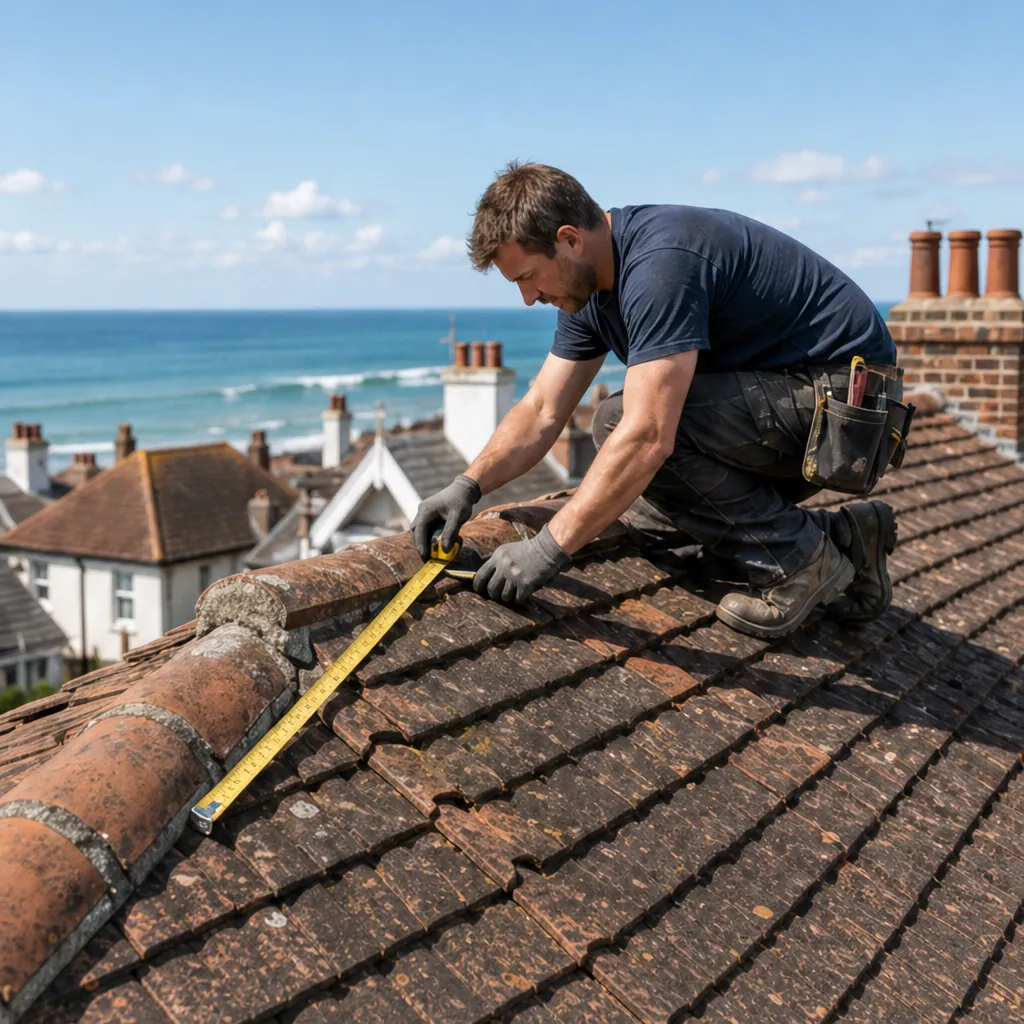
Cleaning improves a roof that is basically sound. It does not repair one that is failing, and paying to clean tiles that are due to come off the roof is money spent twice. The test is what lies underneath the growth.
Some warning signs deserve a survey before a clean. Tiles that sit unevenly or have slipped, slates that rattle or have worked loose, ridge tiles with cracked mortar, and a loft with daylight or damp patches all suggest the covering itself needs work. Heavy moss can also be hiding cracks in tiles, which show as the moss comes off. On a covering that has had its time, a replacement may prove the lighter cost over time than cleaning and patching something that is about to give up.
That is the reason we survey first and take pictures of the slopes, so the figure reflects the roof as it really stands. A clean goes ahead if a clean will do, a repair where something has failed, and a replacement only once the covering is finished. Our piece on whether roof cleaning is worth it helps you weigh that decision.
After a clean, a little care keeps the result, and the weeks that follow tell you how well the job was done. The quote and the photographs are in your hands before the work begins, so you can see what each slope looks like now and judge the result against it.