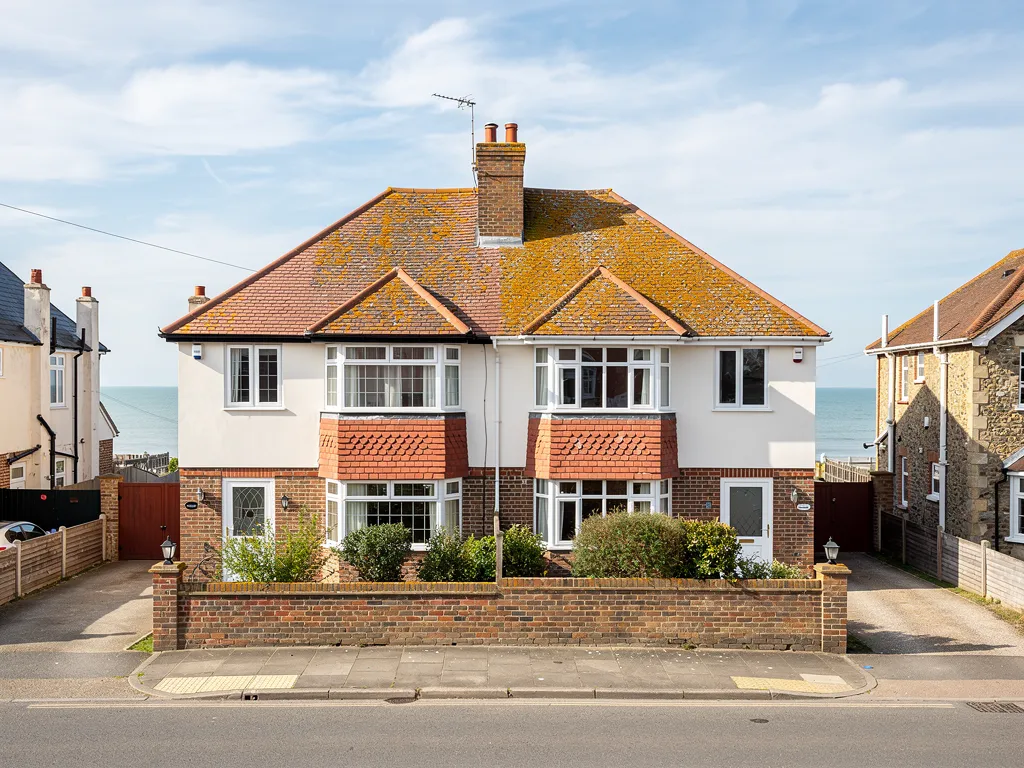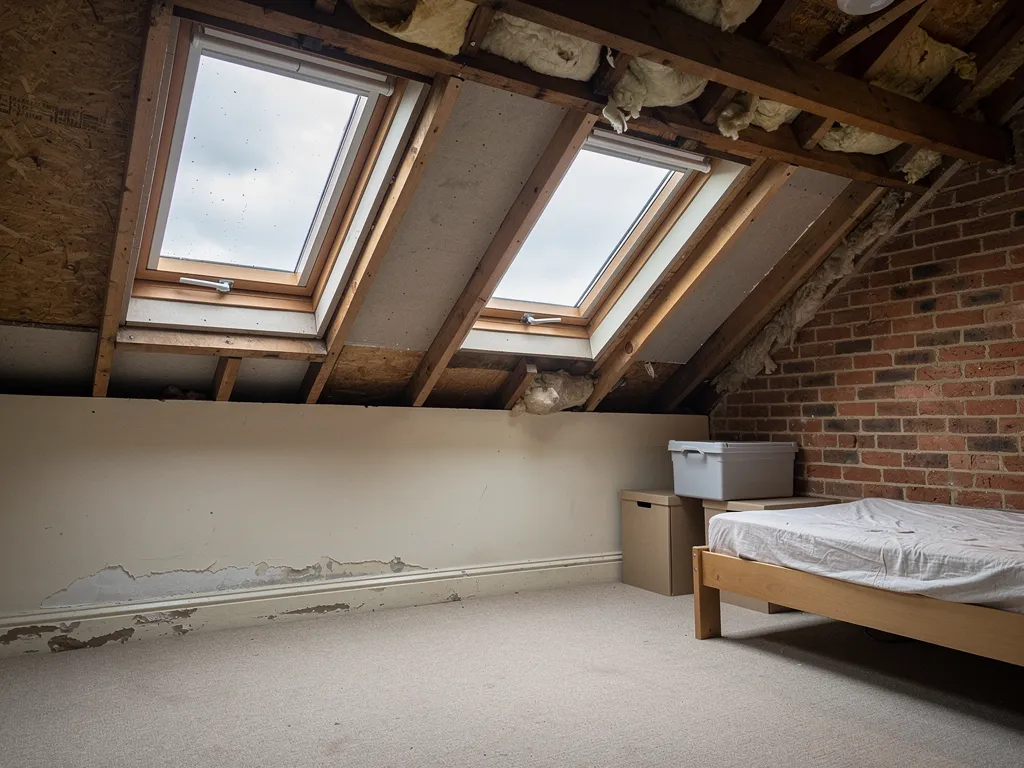
A roof is cleaned in one of a handful of ways, and the choice shapes everything that follows: how long the roof stays clean, how much of the covering survives the job, and what the bill comes to. Two firms can both say they will clean your roof and mean quite different things by it.
The growth itself is easy to describe. Moss grows in cushions that hold water against the covering. Lichen forms flat crusty patches that grip the surface, and algae leaves the dark streaks you see running down north-facing slopes. Each is living material, and each can be dealt with by removing it, by killing it, or by both in sequence.
That gives the four main methods: hand scraping, soft washing, biocide treatment and pressure washing. Some are physical, some are chemical, and the best results usually combine two of them. We take each in turn below, then set them against the materials found on Sussex roofs, from Welsh slate on the seafront terraces to concrete tiles on the post-war estates, so you can see what suits your own covering. Cost is covered separately in our guide to what a roof clean should cost.
Hand scraping and brushing
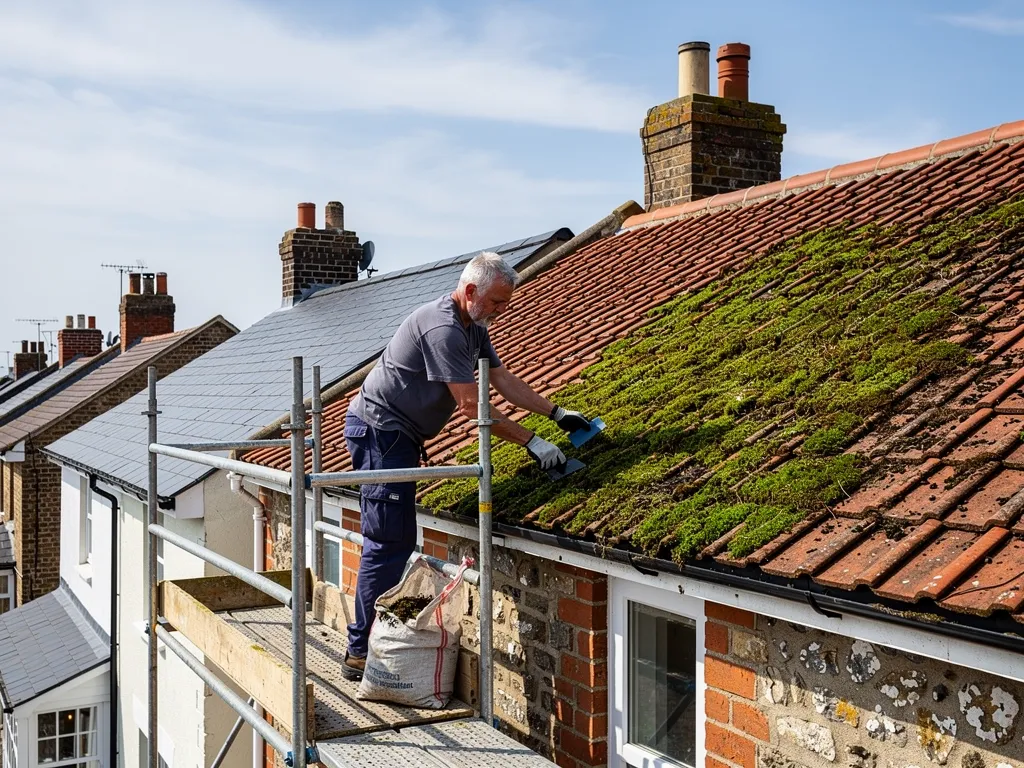
Scraping is the oldest method and still the most controlled. A roofer works across the slope with a flat scraper and a stiff brush, lifting moss in sheets and sweeping it down towards the gutter. Nothing is forced against the tile, and the person doing it can feel when a tile is loose or cracked, which is a real advantage. MyBuilder's roof cleaning guide lists manual scraping at £5 to £10 per m², a typical UK range that depends on the roof and the access.
The method suits thick moss, where bulk has to come off before anything else will work. A chemical applied on top of a deep cushion of moss only wets the surface. Taking the bulk away first lets any later treatment reach the tile underneath.
It has limits. A scraper dislodges moss but cannot remove everything that has rooted into a rough tile surface, and thin lichen can survive it altogether because it is fastened so closely. Scraping across slate demands care, as the edges of old slates are brittle, and a blade used in the wrong direction can lift the surface layer of a clay tile.
Why it is slow, and why that helps
It takes longer than a spray, and the time shows in the price. But the slowness has a use: the person on the roof is looking at every tile. Cracks, slips, perished pointing along the ridge and failed mortar at the verge all come into view as the growth comes away. Many of the faults we find during a clean would have been invisible from the ground.
Debris needs managing. Moss falls into the gutters, so they are cleared as the work goes on, and the garden below is sheeted or swept so nothing is left behind.
Soft washing: low pressure with a cleaning solution
Soft washing replaces force with chemistry and time. A cleaning solution is sprayed over the roof at low pressure, left to work, and then rinsed or allowed to wash off with the rain. The pressure is about the same as a garden hose, so the tile surface is not blasted, and the solution does the killing and loosening that a jet would otherwise do by brute strength.
The attraction is gentleness. Because the water is not driven hard, there is far less risk of forcing it up under the laps of the tiles and into the loft, and the surface coat on concrete tiles is not stripped. It is a common choice for roofs where the covering is ageing, brittle or valuable. Algae and lichen respond well to it, as the solution reaches them in a way a dry scraper does not.
It is not magic. Thick moss still tends to need physical removal first, and a spray that is left to soak on a roof that is full of growth does little more than feed it water. The effect also takes time to show: dead moss and algae can look worse before they look better, and the clean look appears over the following weeks as rain washes the residue away.
What to ask a soft wash firm
Ask what the solution contains and what happens to the run-off, because it drains into gutters and gardens, and into drains, not into thin air. A reputable firm covers plants, protects the area below, and is willing to say what it is using. Our guide to biocide roof treatments goes further into products, timing and care for the surroundings.
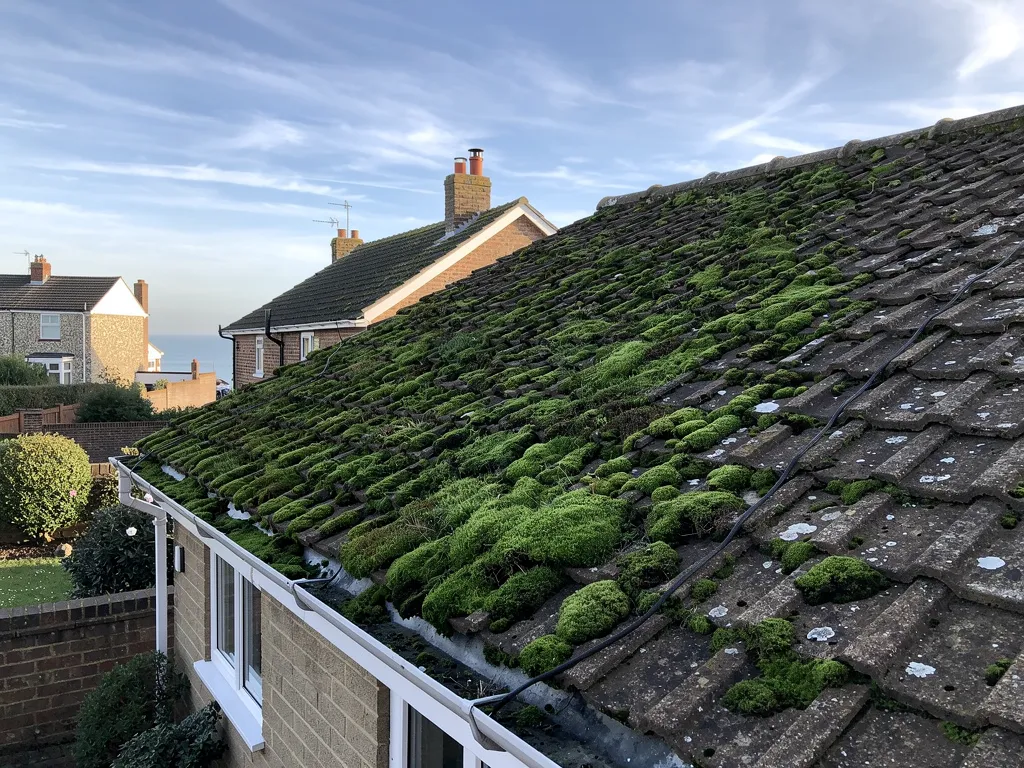
Biocide treatment on its own and after a clean
A biocide is a product that kills living growth. On a roof it is applied as a liquid, usually sprayed across the slopes, and it works by poisoning the roots of the moss, the crust of the lichen and the algae film, so each dies and lets go. It can be used alone on a roof with light growth, or as the second stage after scraping, where it kills what the scraper could not lift.
Its strength is staying power. A clean that only removes growth leaves spores behind, and a roof that stays damp and shaded will regrow. A treatment slows that down by leaving a surface that growth finds harder to settle on, though it is never a permanent barrier, and the roof will need attention again in time. How often depends on shade, trees nearby, the aspect of the slope and how porous the covering is.
The weakness is patience. A biocide does not clean in a day. The dead growth stays put until wind, rain and frost loosen it, which can take weeks or months, and a roof can look streaky and uneven in between. That surprises people who expected an instant result.
It also needs the right weather. Applying in the wet washes the product away, and applying in a hard frost can stop it taking. Best results come when the roof is dry and the forecast is settled for a day or so afterwards, and the season you choose changes how well it works.
Treat the label as part of the specification. The manufacturer's instructions govern dilution, drying time and what must be protected nearby, and they are worth reading as closely as the quote.
Pressure washing and steam: where the risk lies
Pressure washing is the picture many of us have of roof cleaning, and it is the method with the most to go wrong. A powerful jet blows moss off in seconds, which is why it appeals to firms that want to finish quickly. MyBuilder's price guide cautions that a jet could harm delicate tiles, and the caution is well founded.
The damage takes several forms. On concrete tiles, a hard jet can strip the thin surface layer, leaving a rougher and more absorbent tile that holds growth sooner. On old clay and on slate, a jet can chip edges, loosen nibs and break fragile pieces. Water driven upwards beneath the laps can reach the underlay and the loft, which is the reverse of what the roof is for. Jetting also tends to force moss into the pores of the tile instead of lifting it out, so regrowth can arrive quickly.
There is a gentler cousin in steam, which uses heat and low pressure. It can lift growth without a jet's force, but the equipment is slower on a pitched roof, and it is more common on small, delicate or historic areas than across a whole house.
Our separate guide to pressure washing roof tiles looks at the risks in more detail and at what a careful operator does differently.
When a jet is acceptable
Hard surfaces that are not part of the weathering layer, such as a paved path below the roof or a sturdy concrete garage slab, take a jet well. The roof itself rarely does. If a firm proposes jetting your covering, ask which tile, which pressure and what protects the laps.
Matching the method to your covering
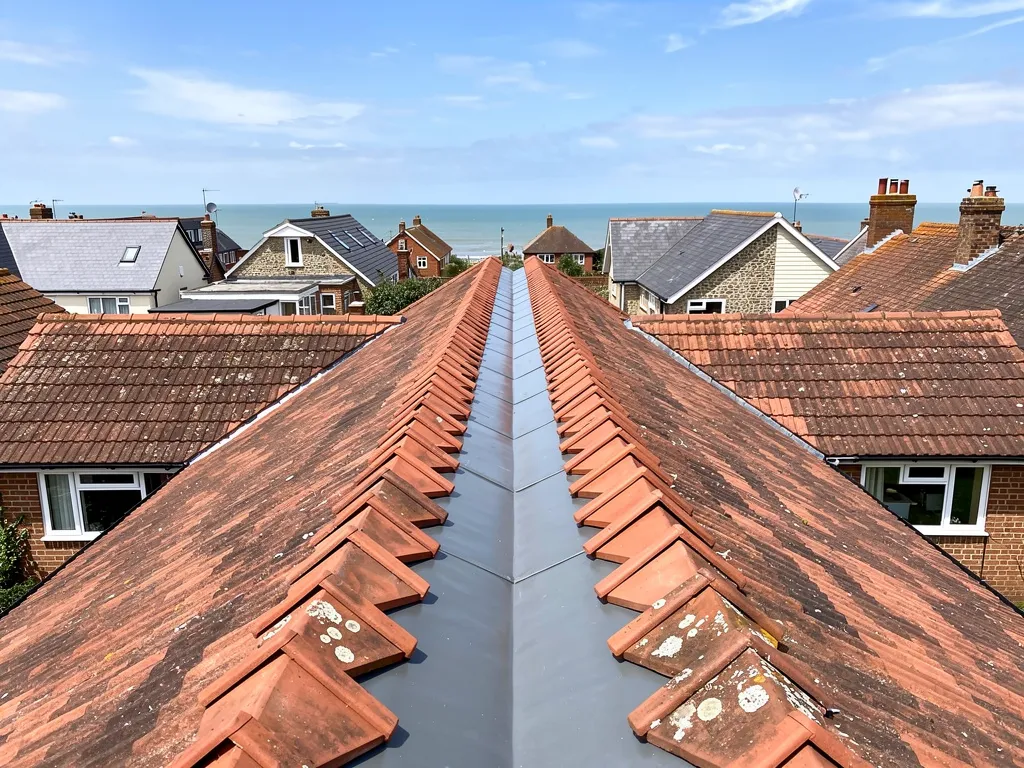
No single method suits every roof, and the covering is the best guide to which one to use. The table sets out how the usual choices fit the materials found across Worthing, Shoreham and the villages inland.
| Covering | Usually suits | Take care with |
|---|---|---|
| Natural slate | Hand scraping, then a gentle treatment | Brittle edges, any jetting |
| Clay plain tiles | Soft wash or careful scraping | Chipped nibs, old porous tiles |
| Concrete tiles | Scraping plus biocide, or soft wash | The surface coat under a hard jet |
| Stone slates | Light brushing, specialist advice | Lichen that protects the stone |
| Flat roof membrane | Sweeping and a mild wash | Sharp tools that cut the surface |
Slate rewards a light hand, because its edges chip and its surface layers separate under force. Old tile and stone-slate roofs on the Downs and in the Weald villages call for judgement too: the lichen on some of them has been there for generations and belongs to the look of the roof. Taking it off is not always wise, and a survey should tell you which growth is harming the covering and which is simply sitting on it. The hub page on roof cleaning and moss removal gathers the whole subject in one place, from surveys to aftercare, if you want to read around it.
Condition decides the rest. A roof with slipped tiles, hairline cracks or failing ridge mortar should be repaired before it is washed, or the cleaning will push water through the weak points. Sea air, shade from trees and a north-facing slope all feed regrowth, and they affect how often any method needs repeating.
Combining methods and judging the result
On a great many pitched roofs the best answer is not one method but two, in order. Scrape the bulk of the moss by hand, treat the surface to kill what remains, and let the weather finish the work over several weeks. Each stage covers the weakness of the other: the scraper removes weight the biocide cannot reach, and the biocide reaches roots the scraper cannot lift.
That sequence is slower and costs more than a quick wash, and for a covering you plan to keep, it earns its keep. Cleaning that has to be repeated every year or two is more expensive in the end than a proper job done once.
You can judge the result yourself. Look for tiles that are uniformly clear, with no green or black skin in the lap lines, and gutters that are empty instead of full of debris. Weeks later, check whether the dead growth has dropped away and whether regrowth is starting at the shaded edges. A good firm tells you what to expect, and when.
What we do on a survey
We start by looking at the covering, the pitch, the shade and the state of the ridges, and the slopes are photographed for you. The method comes from the slopes we have inspected, never from habit, and the written quote that follows names it. A method that suits a sound concrete tile may be wrong for an old clay or slate slope.
Plenty of roofs turn out to need a small repair alongside the clean: a handful of replacement tiles, ridge pieces refixed, a gutter realigned. We would rather you heard that before the work than after it. Where the covering is sound and the growth is light, a modest treatment may be all that is needed, and that is what the quote will propose.