
Question answered
Do you need a bat survey for roof work?
The short answer
A bat survey is not needed for every roof job, but bats must be thought about before any roof work starts. The law protects every bat species and the places they breed and rest, and roof repairs and replacements are among the work that can affect them. Spot signs of bats and you should pause and take advice from an ecologist or the National Bat Helpline.
Bats and the places they roost have legal protection, and roof work is just the sort of job that can disturb them. The building and the work decide whether a survey is needed, so ask before anyone starts.
Why a tile or ridge repair can reach bats
Bats do not nest like birds. They squeeze into narrow gaps and rest there, often in places a homeowner would never notice: under a lifted ridge tile, behind a fascia, between the underlay and the battens, in the gap where a gable wall meets the roof timbers. The slot is small, the bat is small, and the first sign is easy to miss.
GOV.UK guidance on bats explains that every species is protected, along with the places where they breed and rest. It names roof repairs and replacements, as well as loft insulation and conversions, as work that can disturb them. That takes in jobs that feel routine: re-bedding a ridge, stripping a slope, closing a gap under the eaves or boarding out a loft.
The protection attaches to the roost as well as the animal, and a roost can be empty at the time you look. So the question is not only whether you can see a bat today. It is whether the roof has features that bats use and whether the work will change them.
Signs that bats may already be using your roof
Droppings are the usual clue. Bat droppings are small and dark, and they crumble to a fine powder when pressed, unlike mouse droppings, which stay firm. Look on window sills, on the wall below a gap at the eaves, on the top of a car parked under the gable, or on loft boards near the apex.
Other signs are staining around a gap, where oils from fur darken the edge of a timber, and the sight or sound of bats at dusk, leaving the building in warmer months. Scratching in the loft in daylight is more likely to be mice or birds. Nobody should climb into a tight roof void and poke about, which can disturb a roost and is not safe.
If you do notice any of this, photograph it from a safe distance and pause the work. A roofer who finds droppings mid-job should do the same. Pulling off tiles to see what is underneath is the one step that cannot be taken back.
When a survey becomes part of the job
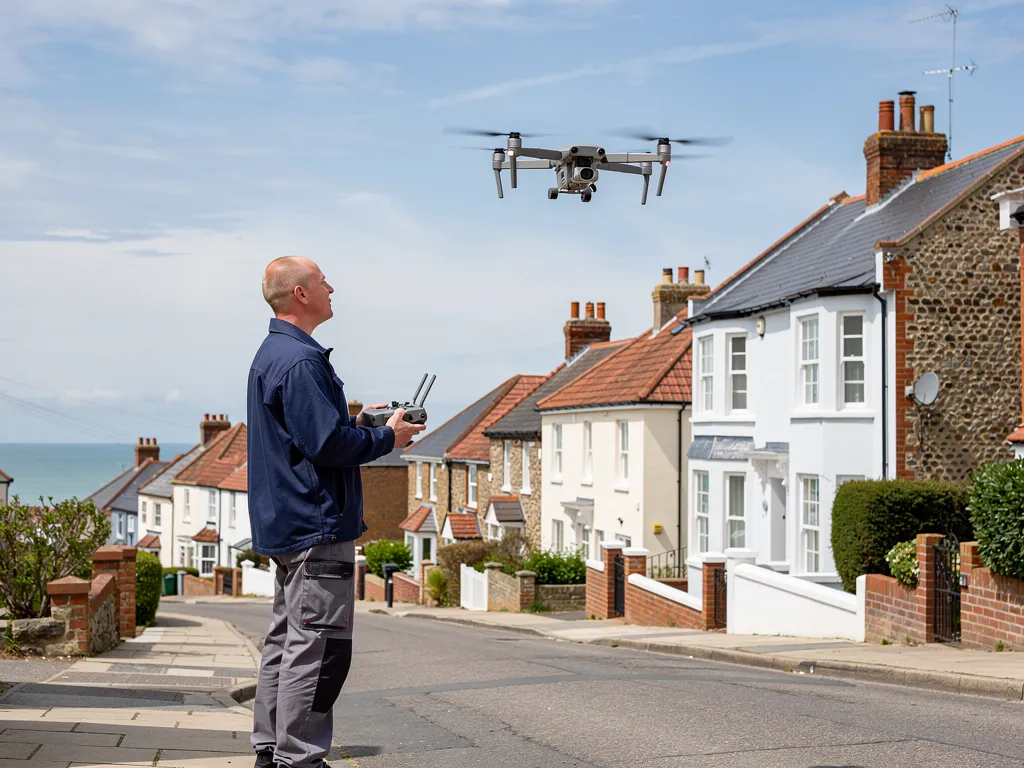
For a small repair with no signs of bats, a formal survey may not be needed. For work that opens up a roof or loft, the picture changes. A re-roof, a loft conversion, a dormer or a new roof window changes the structure bats use, and the planning team may ask what you have found on the roof before it will decide an application.
That is a question for Adur & Worthing planning, or for the planning authority that covers your address, such as the South Downs National Park Authority. We cannot decide it for you, and neither can a builder. If signs of bats are present, an ecologist is the person who identifies the species, assesses the roost and explains what has to happen before and during the work.
Tell the people quoting for the job about anything you have seen, even if it seems minor. A good roofer would rather lose a week to a proper assessment than start a job that has to stop halfway.
What happens on our side when we spot signs
Our survey is a visual check first. We look at the ridge, hips, verges, eaves and fascia, and we photograph what we find, including any staining or droppings near a gap. If anything points to bats, we tell you on the spot and explain what it means for the work.
No tile comes off and no gap is sealed until the bat question has an answer. We then leave the decision about who to contact with you, with the written quote following the survey once the way forward is clear. The photographs go with the quote, so an ecologist or planning officer sees what we saw.
It also helps to know what bats do not need. A well-run roof job does not have to remove the features they use. Sometimes the answer is to keep or recreate a gap, or to change the timing of a repair, and that is for the ecologist to advise on, not for us to improvise. Our roof inspection cost page explains what a standard survey involves and what it typically costs.
Planning roof work around other checks
Bats are one item on a longer list of things to settle before a roof is opened up. Condition matters too: a roof with damp timbers, poor airflow or old coverings needs repairs that may be larger than you expected. Our guide to the signs of poor roof ventilation shows what moisture does to a roof space.
Newer roofs raise the same question. A recent extension or a new-build roof may have gaps left by the builders that bats find attractive, so the sensible habit is the same: look, photograph and ask before closing anything.
Keep a simple record of what you see and when. Dates, photographs and the location of any droppings give an ecologist or planning officer a head start, and they cost nothing. The overview of all our checks sits on the roof inspections and surveys page.
Bats and roof repairs: two practical points
Can I seal up a gap under my eaves if I think bats are using it?
No. Because the resting place is protected as well as the animal, blocking a gap that bats use is the wrong step. Photograph it, leave it as it is, and ask an ecologist or your planning authority what to do before the roof is touched.
Is a roof survey from a roofer the same thing as a bat survey?
No. A roofer's survey records the condition of the roof and spots signs worth passing on. Identifying bats, judging a roost and advising on the work is the job of an ecologist, who can be brought in when the roof survey turns something up.
Tell us about your roof
Describe what is happening and we will call you back to arrange a visit.
- Photographs of what we find
- A written quote with one total price
- Or call 01903 299063
10-year workmanship guarantee, in writing.