
Question answered
Your insurer wants a roof survey: what now?
The short answer
If your insurer asks for a roof survey, read the request carefully, then arrange an inspection that records the covering, its age and its condition, with dated photographs and a written report. Send it across and keep a copy. Wear and tear is treated differently from storm damage, so evidence of upkeep helps. A survey cannot guarantee a claim or a policy.
An insurer asking about your roof is asking about its condition, not accusing you of anything. A clear, dated report with photographs is the simplest way to answer.
Find out exactly what they have asked for
Start by reading the insurer's letter or email again, because the wording matters. Some ask for a general report on condition. Others want one fault checked, a statement that the roof is sound, or a survey by a named type of professional. Ring or write back and ask them to put in writing what form they need, who must carry it out and when it is due.
Ask what they plan to do with it. Is it for a renewal, a new policy, a claim or something raised at an earlier inspection? The answer changes what the report should cover. A survey after a claim has to describe the damage and its likely cause, while a renewal survey describes the roof overall.
Keep every message. If the requirements seem unclear or unreasonable, ask the insurer for its reasons, and take any complaint to the insurer first. Should you be unhappy with the final response, or hear nothing within eight weeks, the Financial Ombudsman Service is the next step.
What a useful roof report records
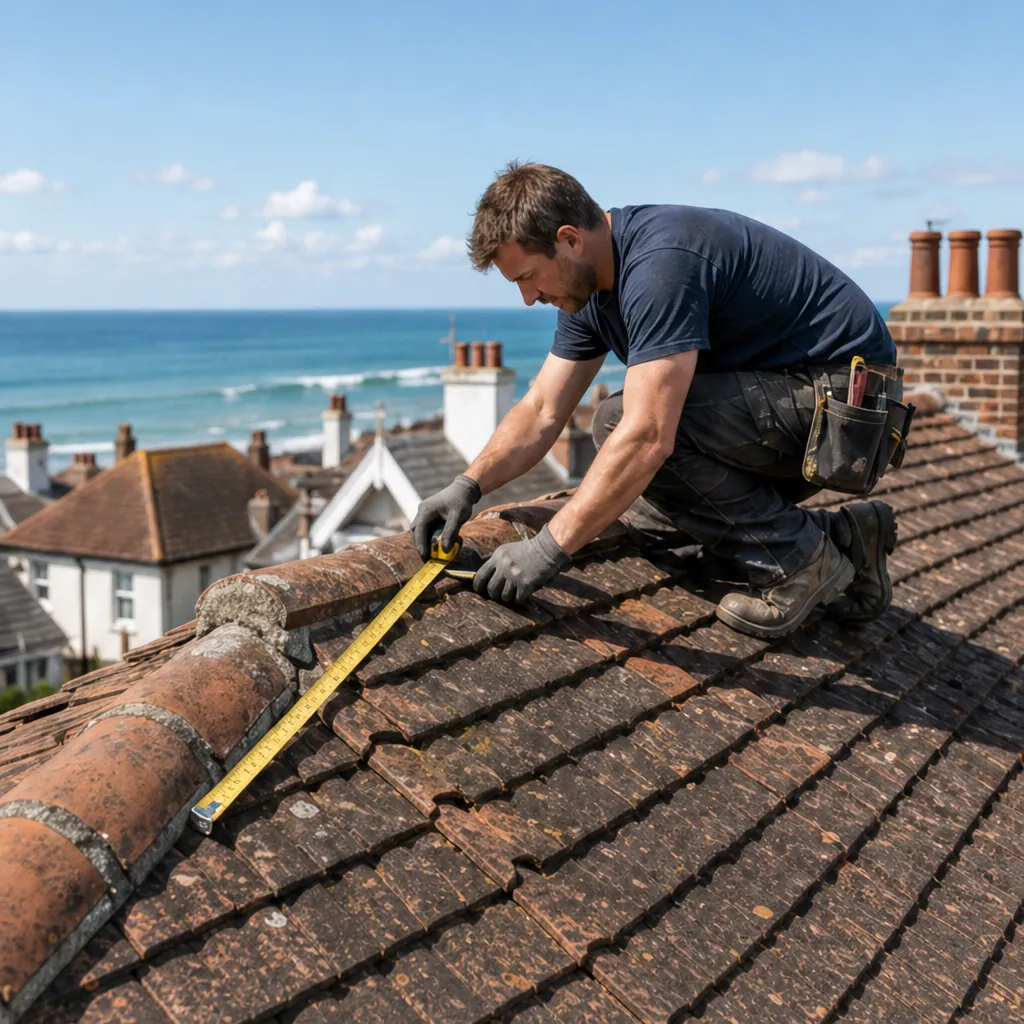
The report should state the covering, and the roof's approximate age if that is known. It should note the ridges and verges, flashings, valleys, chimney and gutters, and describe any defect with its location. Dated photographs of each area make it far more useful than a paragraph of opinion.
It should also record what was inspected and from where: the ground, a ladder, a drone, a pole camera or inside the loft. Pole cameras, drones and ladders each see different things, and our roof survey report guide shows how a finished report reads.
Recommendations should be plain: urgent items, work that can wait and points to keep watching. A list of faults alone leaves you guessing, while a ranked list lets you plan. You get photographs from the visit, and any written quote for work follows the survey, so evidence and price arrive together.
Why wear and tear is the phrase to understand
Home insurance is built around sudden events such as a storm, not slow deterioration. The Financial Ombudsman Service tests a storm claim against three questions: did a storm happen on the date, does the damage fit what storms generally do, and did the storm drive the damage or might it have occurred anyway? It adds that policies often exclude slow, cumulative harm.
Which? reports that insurers often adopt an industry storm definition with a gust threshold, and gives a wear-and-tear example: rain entering through a roof that has been badly looked after. It also cites Financial Conduct Authority figures of 32 per cent for storm claims made in 2024 that were paid.
This is why a dated record of your roof, made before any loss, has value. It shows how the roof stood and what you did about it. It cannot make an insurer pay, and nobody offering a survey can promise otherwise.
Gathering the paperwork before the surveyor arrives
Collect what you have. Invoices for roof repairs, gutter clearance or chimney work show upkeep. An earlier survey, a homebuyer report that mentions the roof or photographs from when you moved in all add to the picture. Note the date of anything you cannot document.
Tell the surveyor about every known problem, including old leaks and past repairs. It reads better in the report than it does when discovered later. Have the roof size and covering type ready; our page on how to measure a roof area shows how to work the size out.
If timber in the loft looks damaged, mention it, because insurers care about structure. The woodworm in roof timbers page explains what beetle damage looks like and when it matters. Make sure the surveyor can reach the loft hatch, and clear a path to it. The wider set of checks is under roof inspections and surveys.
If there is storm damage or a leak right now
Then tell your insurer before anything else. Advice circulated by the industry body during Storm Eunice in 2022 was to get in touch with your insurer at once, and to arrange stopgap repairs that hold the damage in check, but only once the insurer has been consulted. Take pictures of the damage first, before anything is cleared away.
Where water is coming in, the first job is making the roof safe, and a leak or storm damage goes to the front of our list. We keep photographs and a written note of the temporary work, so the insurer has a record of it. Permanent repairs should wait until your insurer has said what it needs to see.
Dealing with the claim itself is your job, and its outcome is your insurer's decision. What a roofer can supply is an accurate, photographed account of the roof, which is the item you will be asked for. Send the report and paperwork to the insurer together, and keep copies of everything.
Roof surveys for insurers: two questions
Does the insurer have to accept the survey I arrange?
Not necessarily. Some insurers name who must carry out the survey or what form it takes, so ask first. A report that follows their written request, with dated photographs and clear findings, gives you the best chance of it being accepted.
Could the survey make my cover more expensive or harder to get?
It can, if it shows a roof in poor condition, but a report that records a fault alongside a plan to fix it is often better than silence. Ask your insurer how it will use the report before you send it.
Tell us about your roof
Describe what is happening and we will call you back to arrange a visit.
- Photographs of what we find
- A written quote with one total price
- Or call 01903 299063
10-year workmanship guarantee, in writing.