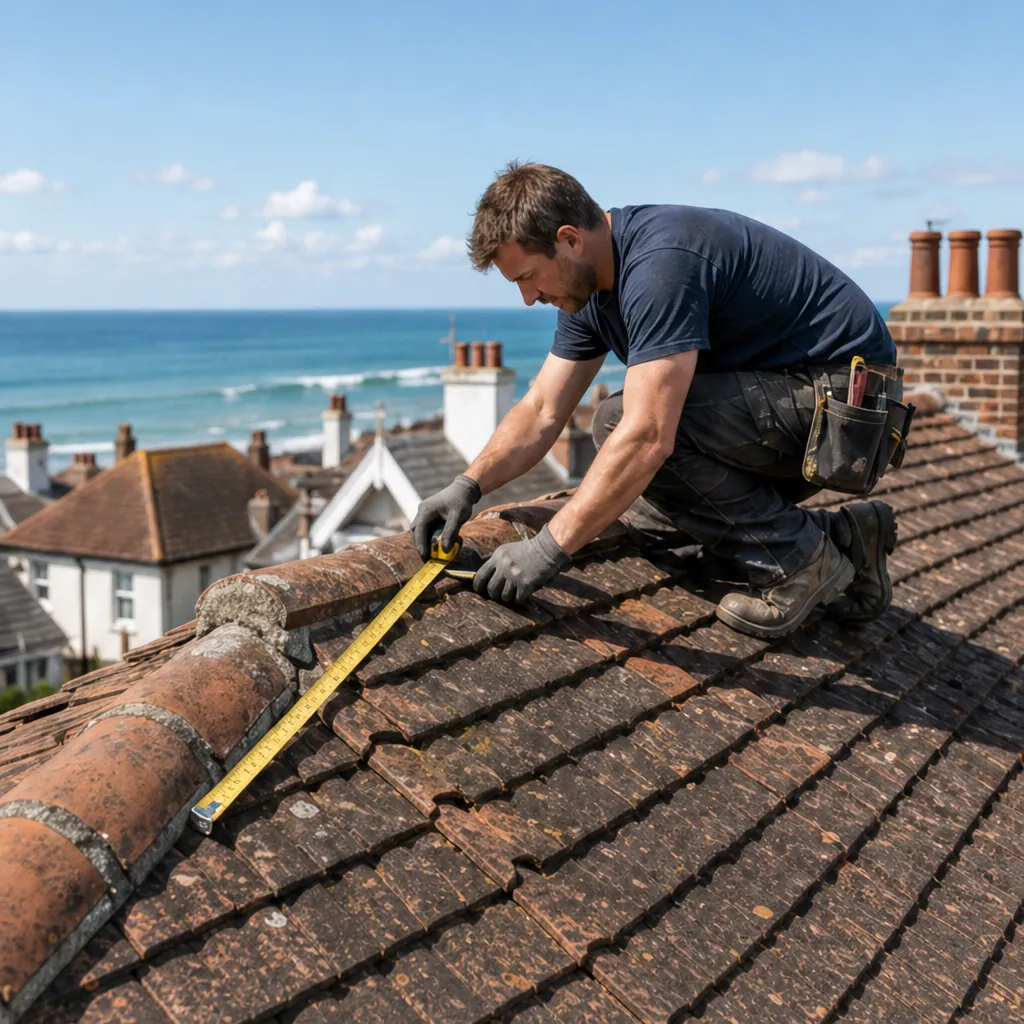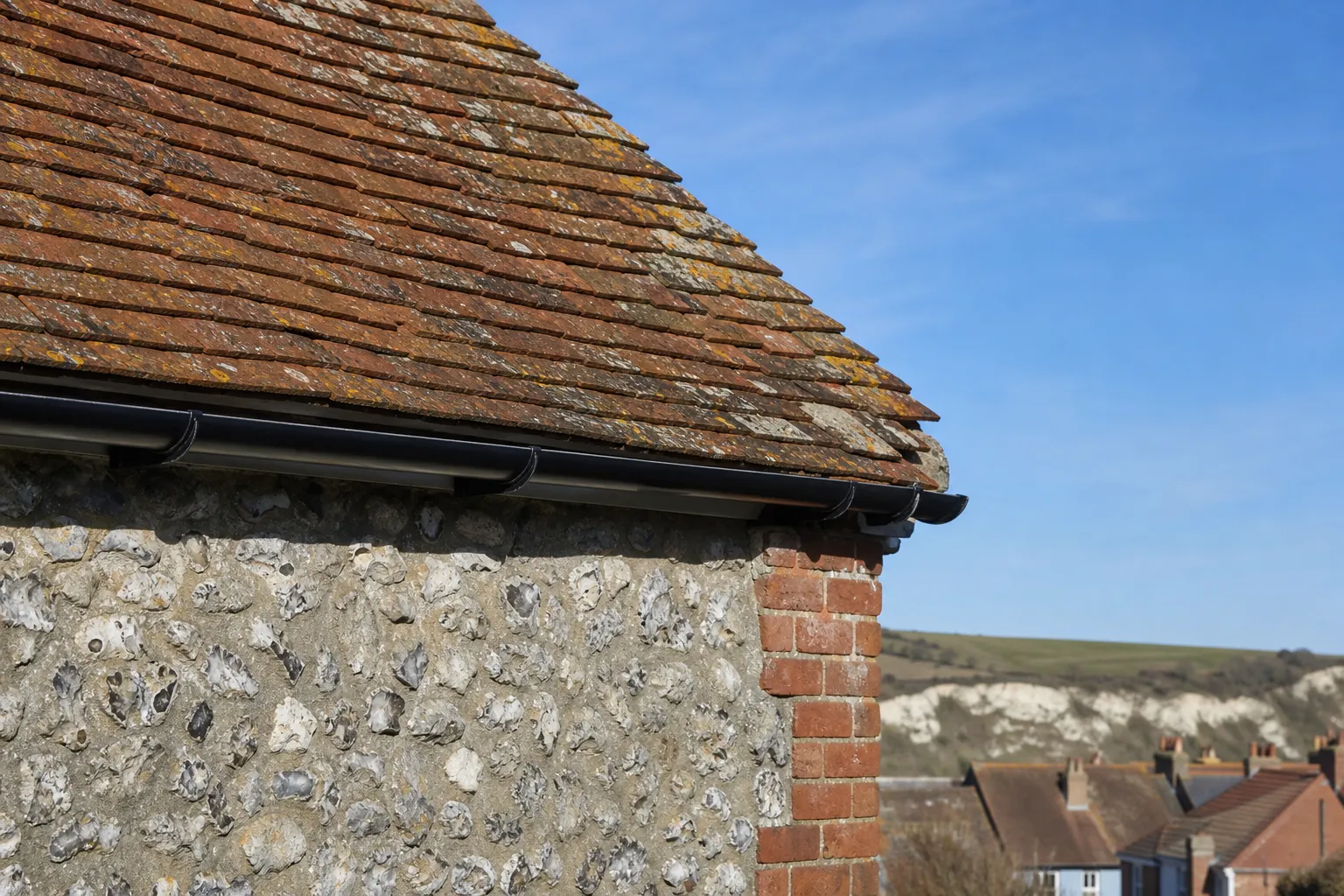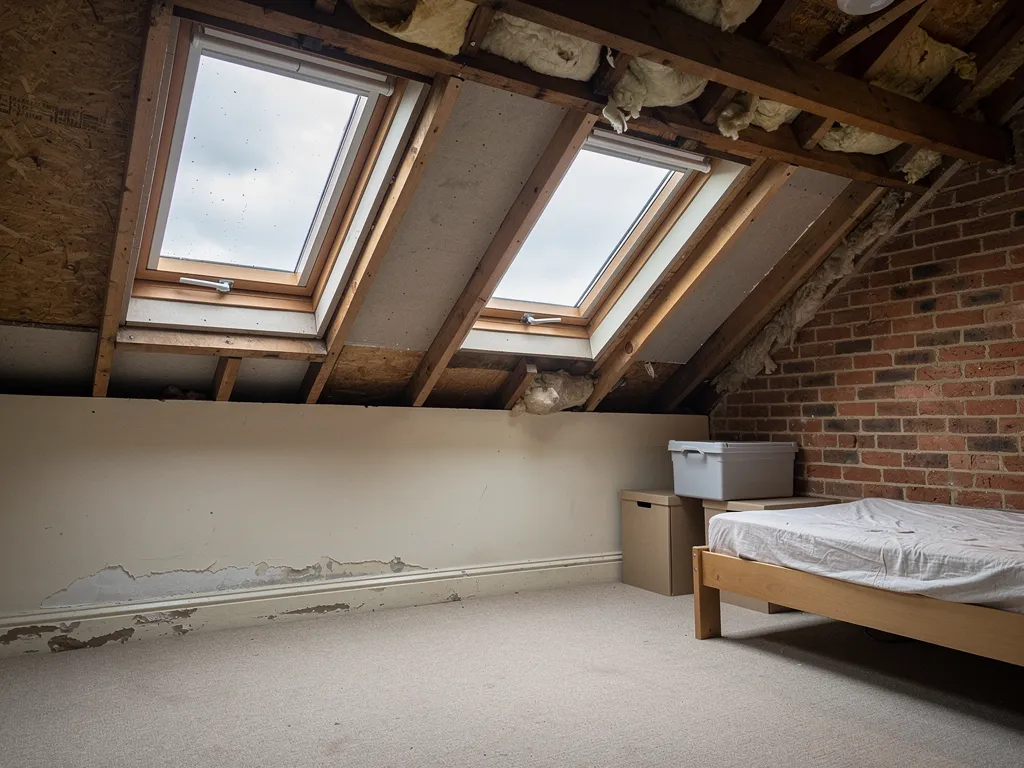
After a survey you tend to be handed one of two things: a verbal summary on the doorstep, or a document so thick with jargon that it settles nothing. Neither helps you decide. A good report sits between them. It is short enough to read in ten minutes, specific enough that you could hand it to another contractor, and clear enough that you can see for yourself which faults matter and which can wait.
The contents follow a simple logic. Photographs show the fault in place. The findings say what each one is and why it has happened. A rating says how soon it needs attention. The options set out what could be done about it. Then, in a separate document, comes the quote. Keeping the report and the quote apart is deliberate, because a report that is secretly a sales pitch tends to find more wrong than is there.
Below is what each part should hold, with the questions worth asking if one is missing. If you are weighing a roofer's report against a chartered surveyor's, that comparison is a question in its own right. The service as a whole is described on our roof inspections and surveys page.
Why the report is kept apart from the quote
The report answers a question about the roof: what shape is it in? The quote answers a question about work: what would it cost to put right? They are related, but they are not the same document, and mixing them muddies both. Once a price is attached to every observation, it becomes hard to tell where the finding stops and the selling starts.
So the report comes first and stands on its own. It says what was found and what the realistic choices are. You can read it, keep it, and show it to someone else without any obligation attached. The written quote arrives afterwards as a separate piece of paper, and it names one total for the work we recommend rather than a list of sums. If you want to think about the report for a week before asking for a quote, that is an ordinary way to proceed.
What the cost depends on
Where money does come into it, the drivers are the same on any job: the difficulty of getting at the roof, its covering, the area involved and whatever the survey turned up. A roof needing a scaffold tower is dearer to work on than one reachable by ladder, and a repair confined to one slope costs less than one that runs round the building. The report records those facts so the quote can rest on them, and it is also where you can check that the quote matches what was found.
MyBuilder (updated 21/08/2026) gives a typical UK range of £150 to £250 for a standard roof inspection, £200 to £400 for a drone survey and £300 to £500 for a thermal survey. Whatever quote you receive, check if it counts VAT and the scaffold.
Photographs that prove the finding
Pictures carry most of the weight in a report, because they let you check the roofer's words against the roof. A useful set has three kinds of shot for each fault. A wide view shows where on the building it sits, so you can place it by the chimney or the left-hand slope. A close-up shows the detail: the split in the lead, the cracked bedding, the slipped slate. And where the loft matters, an inside view shows the same spot from underneath.
Each picture should be labelled with where it was taken and what it shows, in a short caption that a layperson can follow. A photograph of a roof with no caption is nearly useless a month later, when nobody remembers which slope it was. The date belongs on the set as well, since the roof will have changed by the time you come back to it.
Photographs should also cover the good news. A shot of a sound ridge or a clean valley tells you that part was looked at and passed. Without it, a report that lists three faults leaves you wondering what was left unchecked.
What a camera cannot show
Some things do not photograph well. Condition under a slope, the feel of soft timber, or the sound of a loose tile when tapped are better described in words. The report should say when a finding rests on touch or on a closer look from the loft rather than on an image, and it should say which parts of the roof could not be reached. Where a drone or a pole camera was used, the report names it, so you know how the view was obtained.

Findings written in plain terms, with the cause
The core of the report is the list of findings. Each entry should name the part of the roof, describe what is wrong, and say why it has happened. That last step is what separates a survey from an inventory. Telling you that a ridge tile is loose is an observation. Telling you it is loose because the old mortar has perished and nothing else holds it is a finding, and it points straight at the repair.
The wording should be plain. If the report uses a trade word such as flashing, valley or flaunching, it should explain it once, or give you a glossary. You should not need to look anything up to follow it. Equally, a report should not talk down to you. It can say that the lead at the base of the chimney has lifted and let water behind it without describing the roof as a disaster.
Separating cause from symptom
A good report keeps the cause apart from the symptom. A brown mark above the bed is a symptom. The cause may be a failed flashing three metres away, and water often travels a long way inside a roof before it shows. Entries that run the two together, such as a stained ceiling blamed on the tiles above it, deserve a question. You are entitled to ask how the roofer traced the water back.
Findings that are not faults belong in the report too. Normal ageing, such as a lightly weathered surface or the slight softening of paint on the fascia, is worth noting so you can see the difference between wear that is expected and damage that needs action.
Urgency: what is needed now, soon, or later
Not every fault deserves the same hurry, and a report that treats them all alike is not much help. Each finding should carry a rating that tells you how quickly it needs attention. Three bands do the job. The first is for faults that are letting water in or could cause damage in the next bad spell, such as a lifted flashing over a living room. The second is for faults that are developing and will cost more if left, such as a crumbling ridge bed. The third is for items to keep an eye on, such as early moss or ageing sealant that is still sound.
The rating should come with a reason. A fault is urgent because water is already entering, because a gale could finish the job, or because the timber beneath is at risk. If it is not urgent, the report should say what would make it so, which gives you a trigger to watch for.
If water is coming in as you read, the priority is to stop it. Our first step on a leaking roof is making it safe, with the lasting fix to follow when conditions suit. That temporary step sits outside the report, which describes the condition of the roof, not the emergency visit.
Be wary of a report in which everything is rated urgent. Real surveys nearly always find a mix of items, and a page of red flags is more often a sales tool than a diagnosis.
The same logic applies in reverse. A report that finds nothing at all on an old roof should be treated with some caution, and it is fair to ask what was actually inspected.
Options: repair, partial replacement or recovering
Once the faults are rated, the report should set out what could be done, and it should offer choices where there are any. For a given fault there are often two or three. A cracked valley lining might be patched, relined or, if the covering is close to worn out, dealt with as part of a larger recovering job. Each option has a different cost and a different lifespan, and you are better placed to decide if you can see them side by side.
The aim is whatever job fixes the fault for good and no more. Where a repair will do, the report says so. Where it will not, it explains why, for example because the underlay has perished across the whole slope and patching one area leaves the rest to fail. Recommending the biggest job is easy. Recommending the right one, and giving reasons, is what makes a report worth having.
What the options should explain
Each option needs three things: what the work involves, what it would fix, and what it would leave. A patch repair fixes this leak but leaves the surrounding lead at the same age. A relining deals with the whole valley. A recover deals with every point at once. The report should also say what would happen if you did nothing for now, in measured terms. Some faults wait safely and others do not, and the difference is information you can use.
Where the options touch building control or planning, the report flags it and points you to the right body to ask. Our written quote then follows, for whichever route you choose, and the report's photographs travel with it.

Reading the report and deciding what to do
When the report arrives, read it in three passes. First look at the photographs and captions, and see whether you can find each fault in them without help. Then read the findings and check that each one has a cause. Finally look at the ratings and the options, and ask yourself whether the proposed work matches the seriousness of what was found. If a report recommends a full replacement and the photographs show a handful of slipped tiles, the gap needs explaining.
It is worth keeping the report. It becomes the baseline for the next inspection, so you can see whether a watch item has worsened. Our guide on how often a roof should be inspected explains the rhythm that suits different coverings and ages. A dated report with photographs also helps a future buyer, which is one reason owners commission one before listing a house. The roof check before selling page covers that situation.
Matching the report to the survey
It also helps to know what the survey behind the report should have covered. Our checklist of what a roofer checks sets out the stages, from the covering to the loft, so you can see whether a report has skipped any. A report that never mentions the roofline, the chimney or the loft is probably describing a partial look.
If anything in the report is unclear, ask for it to be explained or reissued. A roofer who has done the work properly will be glad to talk it through, and the answers often turn up detail that made the page too long to include.