
Question answered
Roof survey when buying a leasehold flat
The short answer
When buying a leasehold flat, check the lease to see who is responsible for the roof, and get your solicitor to explain the wording. In many blocks a freeholder or managing company maintains it and recovers the cost through the service charge. A roof survey shows the condition, which tells you whether major work is likely soon.
With a leasehold flat, the roof is usually shared and often not yours to repair. Before you commit, find out who is responsible for it, what state it is in and what it may cost.
Read the lease before the roof
Who repairs a leasehold flat roof is decided by the lease, so that is the first document to read. It sets out which parts of the building belong to you, which fall to a freeholder or managing company, and how the cost is shared between the flats.
Leases differ, and the wording of one is not a guide to another. In some blocks the roof clearly falls to the landlord. In others the top-floor flat has repair duties for the space above it, or the wording is unclear. Legal questions belong with a solicitor, so this page leaves the law on leases alone. Your solicitor can explain what your lease means for the roof and any other shared parts.
Ask the seller or the agent for the full lease, not a summary, and read the sections on repairs and service charges. Look for a reference to the roof, the structure and the common parts. If the roof is not mentioned anywhere, tell your solicitor in writing so that the question gets an answer before exchange.
Questions to put to the seller and the managing agent
The managing agent holds the building's maintenance history, so ask for it. How old is the roof covering? Has it leaked, and has anyone repaired it? Is major work planned, has it been quoted and how will it be paid for? Is money held in reserve for roof work, or would owners be asked for a lump sum?
Ask whether there are surveys, reports or photographs from the last few years, and who arranged them. If the block is older, ask whether the covering has been replaced in whole or only patched. A roof patched many times may be reaching the limit of what patching achieves.
Also ask who insures the building, and how that is arranged, since a roof claim can depend on the policy. Keep the answers in writing. A seller who cannot answer, or an agent who is slow to reply, is giving you information too, and it is worth passing on to your solicitor before you sign.
What a roof survey can and cannot show you
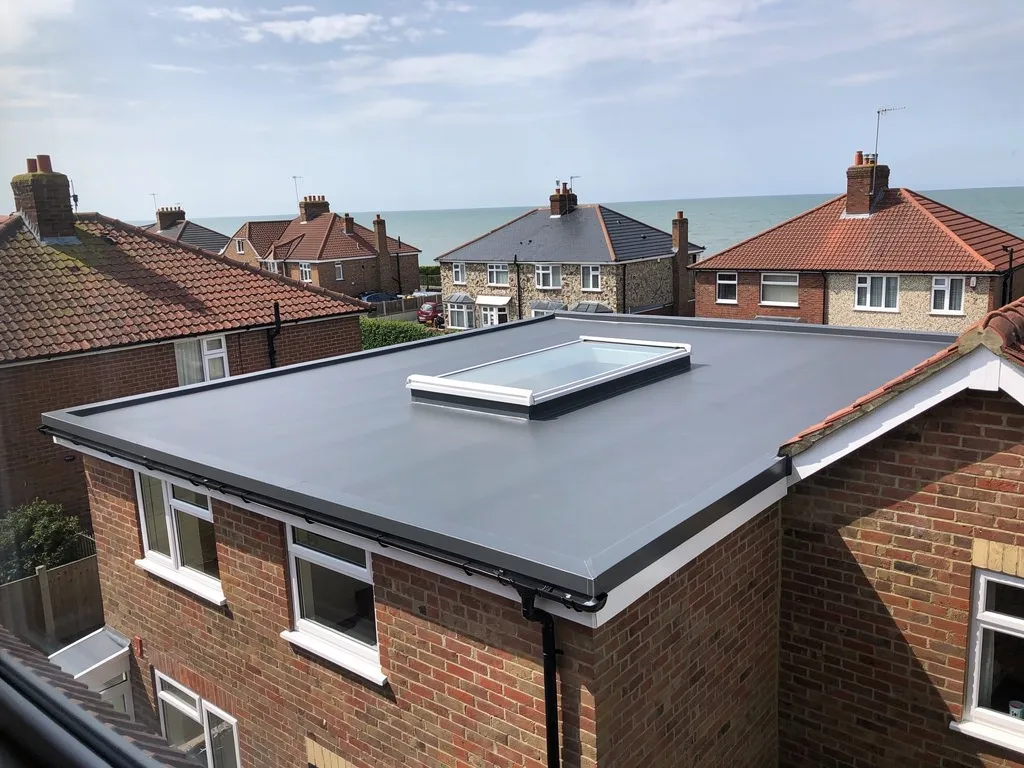
A roofer's survey records the covering, the flat-roof surface or tiles, the flashings, the gutters, the parapets and any signs of water inside the top-floor flat. We look at the roof from the places we can safely and lawfully reach, and we show you photographs with the written quote for any repair.
Access is the practical issue. A shared roof belongs to the building, so permission to go up may need to come from the freeholder or the managing agent. Your seller may be able to arrange it, or an inspection from the ground, a neighbouring roof or a drone may be what is possible. Other ways of checking are listed under roof inspections and surveys.
A survey tells you condition. It cannot tell you who is responsible, and it cannot decide the lease. Treat the two pieces of information as a pair: condition from the survey, responsibility from the lease.
Reading the signs inside the top-floor flat
If you are buying the top-floor flat, the best evidence of the roof is on the ceiling. Look for brown or yellow patches, paint that has flaked or bubbled, cracks that follow the line of a roof joist and a musty smell in cupboards on outside walls. Fresh paint over one patch of ceiling is worth asking about.
Look at the walls near any parapet or roof edge, and at window reveals. Damp can arrive from a roof, from condensation or from a failed gutter, so a patch alone does not tell you the cause. If timber in the roof is involved, our page on woodworm in roof timbers explains what to look for.
For flats lower down the block, the roof still matters because it shapes the service charge. Ask the managing agent what work has been done and what is planned, then look at the common parts for stains in stairwells and landings, which can show where water has travelled through the building.
Using what you learn when you buy
Give the survey and the answers from the agent to your solicitor, who can raise anything that affects the purchase. An ageing roof is not automatically a reason to walk away, but it changes the money. It may suggest a negotiation on price or a closer look at the service charge accounts.
If the building is new, or newly converted, the roof is a different question. Our page on snagging a new-build roof covers the faults to look for, and the insurer roof survey guide covers what an insurer may ask to see.
Do not rely on a lender's valuation to tell you about the roof. A valuation exists for the lender's benefit, and the roof may only be glanced at. A roofer's survey with photographs gives you something concrete to hold alongside the lease, and a plain, written quote shows what a repair might involve.
Buying a flat with a shared roof: two questions
Can I arrange my own roof repair if the roof leaks above my flat?
Not without checking. Where the freeholder or managing company maintains the roof, work you commission yourself may breach the lease or cause problems for other owners. Report the leak in writing to the managing agent and keep a record, then take advice from your solicitor.
Is a flat roof survey different from a pitched roof survey?
The method differs. Flat roofs are judged on the membrane or felt, upstands, drainage outlets and any ponding, while pitched roofs are judged on tiles, ridges and flashings. Both are also read against the ceilings below for signs of water.
Tell us about your roof
Describe what is happening and we will call you back to arrange a visit.
- Photographs of what we find
- A written quote with one total price
- Or call 01903 299063
10-year workmanship guarantee, in writing.