
Question answered
How long does a roof repair take?
The short answer
A small repair, such as replacing a handful of tiles or refixing a stretch of ridge, usually takes a few hours once the roofer is on site. Lead flashings, valleys and chimney work take a day or more, and a flat roof patch depends on the covering and the weather. Scaffold, rain and tracing the true cause can add days before or after the work.
Most small repairs take a few hours and larger ones a day or two. What stretches the programme is rarely the repair itself: it is access, weather and drying time.
Small jobs: a few hours
Replacing slipped or broken tiles, refixing a few slates with new clips and securing a cracked ridge tile with proper mechanical fixings all fit into part of a day. The time goes less on the tile than on getting there: setting up ladders safely, checking the area around the damage for more of it and clearing the debris out of the gutter below.
Where a pitched roof has a short list of faults, an hour or two for each is a sensible rule of thumb. A job that looks simple from the garden can grow once tiles are lifted and the underlay beneath turns out torn or rotten. That is why the survey comes first, and why you see photographs of the real condition before any work starts. A repair that is tidy and short is only possible when the cause is already known, and a neat job done on the wrong spot takes the longest of all, because it has to be done twice.
Medium jobs: a day or two
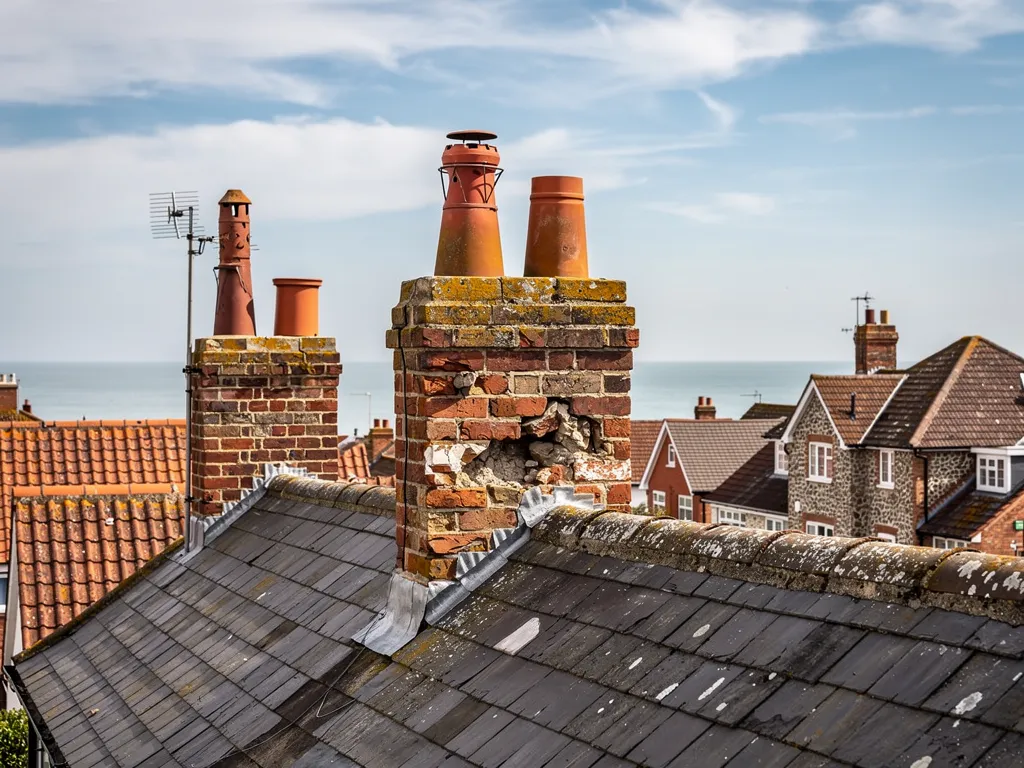
Lead work takes longer than many people expect. A new flashing along a chimney or side wall has to be measured, cut, shaped and set into a slot cut along the brick joint, and the covering beside it often has to be lifted and relaid. A failed valley is similar, because the tiles on both sides come off before the lining can be renewed.
Re-bedding a run of ridge or hip tiles with a dry-fix system sits in the same bracket, with the length of the ridge deciding between a morning and a full day. Chimney repointing and a new fillet of mortar need time to cure, so a roofer may call back to check the joint after the first visit. Plan for a day on site, with a short return when the work includes a wet trade. Ridge work on a long terrace or a run of bungalows can stretch into a second day simply because of the length.
Flat roofs and larger repairs
A flat roof patch depends on the covering. A small area of torch-on felt or EPDM can be done in a few hours if the boarding underneath is dry and firm. If the deck is soft, the job becomes a section of new boarding first and the covering second. A GRP roof needs dry weather and curing time, so one section may be laid in the morning and left to harden. Where the whole roof is nearly spent, a patch may be the wrong answer, and a repair-or-replace conversation follows. Roof repairs is the place to see how that decision is made.
Larger structural jobs, such as splicing in a rotten rafter end or relaying a sagging slope, take several days and usually involve scaffold.
What adds days before the work
Access and licences add the most. If scaffold must go over a pavement, the scaffold firm needs a council licence first, and the county council wants at least 10 working days' notice, so the roofer may be ready long before the platform is. The detail is in whether roofers use scaffolding.
Finding the cause can also take time. A leak that appears only in certain winds may not show on the day of the visit, and a roofer who guesses and patches the wrong place has only moved the problem along. If rain is getting in, a temporary cover goes on straight away and the lasting repair waits until the cause is understood. If you suspect the marks are not a leak at all, condensation or a leak sets out how to tell.
Weather, drying and the second visit
Weather can halt a roof repair for a day or more, and the forecast is checked before any covering is lifted. Rain makes slopes unsafe, wind makes loose materials dangerous to lift, and most adhesives and felts will not bond to a wet surface. Late autumn and winter on the south coast bring more of this, which is why timing matters.
Afterwards, allow time for the building to dry. Timbers and insulation that have been soaked will not dry overnight, and a stain can stay visible for weeks while the plaster behind it dries out. If the stain grows or the drip returns once the work is finished, that is a different problem with its own steps, so keep your notes to hand. Mark the edge of any stain in pencil with the date; it makes a return visit far quicker, and gives you a fair way to judge whether the roof is now dry.
Fitting a repair into your week
Does someone have to stay in during the work?
Not for the whole visit, but someone should be reachable. We may need to get into the loft to check the underside, and a first visit to a leak often includes a look inside. Tell us about pets, alarms and parking, and the site is left clear, with all waste removed. Contact us before the visit if you need a particular time slot.
Can a roof repair be done in the rain?
Emergency make-safe work can, because stopping water coming in comes first, using a temporary cover where needed. A permanent repair usually waits for a dry spell, since felts, sealants and mortar need a dry surface, and a wet roof is unsafe to work on.
Tell us about your roof
Describe what is happening and we will call you back to arrange a visit.
- Photographs of what we find
- A written quote with one total price
- Or call 01903 299063
10-year workmanship guarantee, in writing.