
Question answered
Water stain on the ceiling: is it the roof?
The short answer
A brown stain on the ceiling is caused by water from the roof, from plumbing or from condensation. A roof leak grows after rain and sits under a fault above. A plumbing leak grows with no link to the weather, often near a bathroom, tank or radiator pipe. Condensation shows as mould and damp over a wider, colder area. When the stain grows, and what the loft shows, tells you which one it is.
A brown mark overhead can come from the roof, the pipes or the air in the room. The shape of the stain, and when it grows, usually points to which.
Roof, pipe or air: three suspects
Water stains look alike because the water has done the same thing to the plaster each time. It dissolves the tannins and dirt in the ceiling and leaves a ring that darkens as it dries. The colour tells you less than the pattern and the timing do, and a stain that looks old can still be growing. Old rings can also be painted over, so ask whoever lived there before whether the ceiling has been redecorated.
A roof leak follows the weather. The mark grows after rain, sometimes a day or two late, and it tends to sit below a slope, a chimney or the junction with a wall. Plumbing leaks follow use: the stain grows after a bath, when the heating comes on or when a tank refills, and weather makes no difference. Condensation follows cold, damp days and settles on surfaces that stay cold. Putting those three questions first narrows the field quickly, before anyone climbs a ladder.
What to look at in the room
Note the shape. A roughly round, defined stain with a darker edge that has crept outwards usually points to a specific drip above. Several rings, one inside another, show the leak has dried and returned many times. A stain that follows a line along the ceiling may be tracking a joist or a pipe. A bulge or sag means water is pooling above, which needs prompt attention; a ceiling bulging with water explains how to relieve it safely.
Check what is directly above the mark. A bathroom, toilet or radiator suggests plumbing. A top-floor ceiling under the roof suggests the roof. Touch the stain on a sunny day: if it is cold and damp, that favours a pipe or condensation, whereas a stain that is wet only after rain points to the covering.
What the loft will show
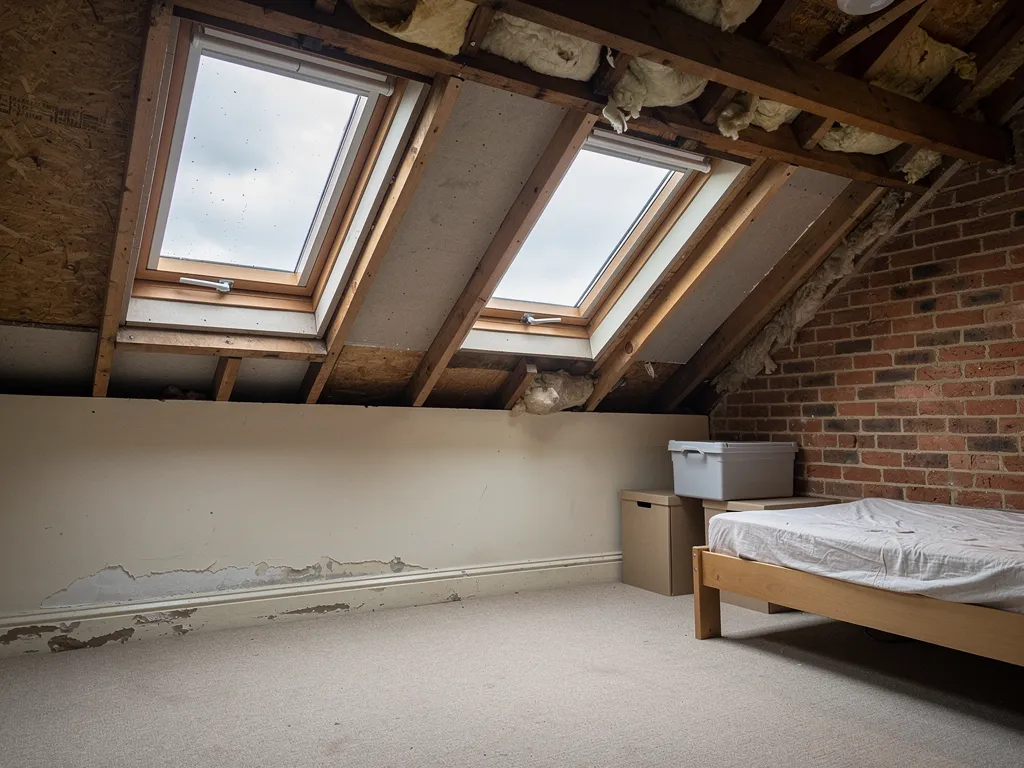
If you can get into the loft safely, go up with a torch. Look above the stain for wet insulation, dark tide marks on rafters and felt, and any pinpricks of light; daylight through the roof explains why that is a warning. Follow the marks uphill, because water runs down the slope to where it drops. The entry point is usually higher, and often to one side.
Look at the pipes and the cold water tank while you are there. Damp lagging, a fine drip from a joint or a tank overflow will account for a stain without any roof fault at all. Step only on the joists and keep a hand on something solid. If the insulation is soaked, wet loft insulation sets out the sequence for dealing with it.
Do not paint over it yet
It is tempting to cover the mark with stain-block and move on. Resist, until you know the source. Paint seals the surface and can hide a leak that is still active, and plaster that is damp behind it will blister and mark again. Wait until the ceiling has dried fully and the source is closed, then use a stain-blocking primer before the final coat.
If the leak is old, the plaster may have lost strength and need replacing. Press gently: soft or crumbling plaster is a sign of long exposure. In a listed home the repair route can involve consent, so check with the conservation team before changing materials. Photograph the stain now and again each week. The record shows whether it is growing or fading, and it saves a roofer time on the first visit. A quick sketch of the room, with the stain drawn to scale against the walls, helps a surveyor work out which part of the roof sits above it.
When to call a roofer
Call one if the stain grows after rain, if there is a bulge, if the loft shows tide marks or daylight, or if no other explanation fits. If you are unsure, a survey settles it. We work from the loft outwards, let you see the fault on photographs of your own roof and send a written quote after the visit, so you see the problem before you commit to anything.
Sealant is sometimes offered as a quick answer. It can help for a short time in the right place, but it often covers the symptom; do roof sealants work explains where it earns its keep. If water is reaching electrics, stay clear and have the circuit turned off at the fuse board. Our roof repairs page covers the full range of faults we trace and fix.
Reading a ceiling stain
Does a dry stain mean the leak has stopped?
Not necessarily. A stain can dry out between wet spells and look old while the fault above is still open. Draw a dated pencil line round the edge of the stain and check it after the next downpour. If the edge has moved, water is still coming in.
Can condensation cause a brown ceiling stain?
It can, particularly on a bedroom or bathroom ceiling that stays cold, or beneath a poorly ventilated roof. It usually shows as grey or black mould and damp across a broad area rather than a single brown ring. Better ventilation and extraction is the cure, not a roof repair.
Tell us about your roof
Describe what is happening and we will call you back to arrange a visit.
- Photographs of what we find
- A written quote with one total price
- Or call 01903 299063
10-year workmanship guarantee, in writing.