
Question answered
Can you repair your own roof?
The short answer
You can inspect your own roof safely from the garden and from the loft, and note down what you find. Climbing onto the slope to replace tiles, dress lead or seal joints is best left to a roofer. The risk of a fall is serious, the real fault is often some way from the stain, and a poor repair can bury the cause for the next storm.
Checking your roof yourself is worth doing, and most of it can be done with your feet on the floor. The repair is a different matter, because the danger lies on the ladder and the slope.
What you can check from the garden
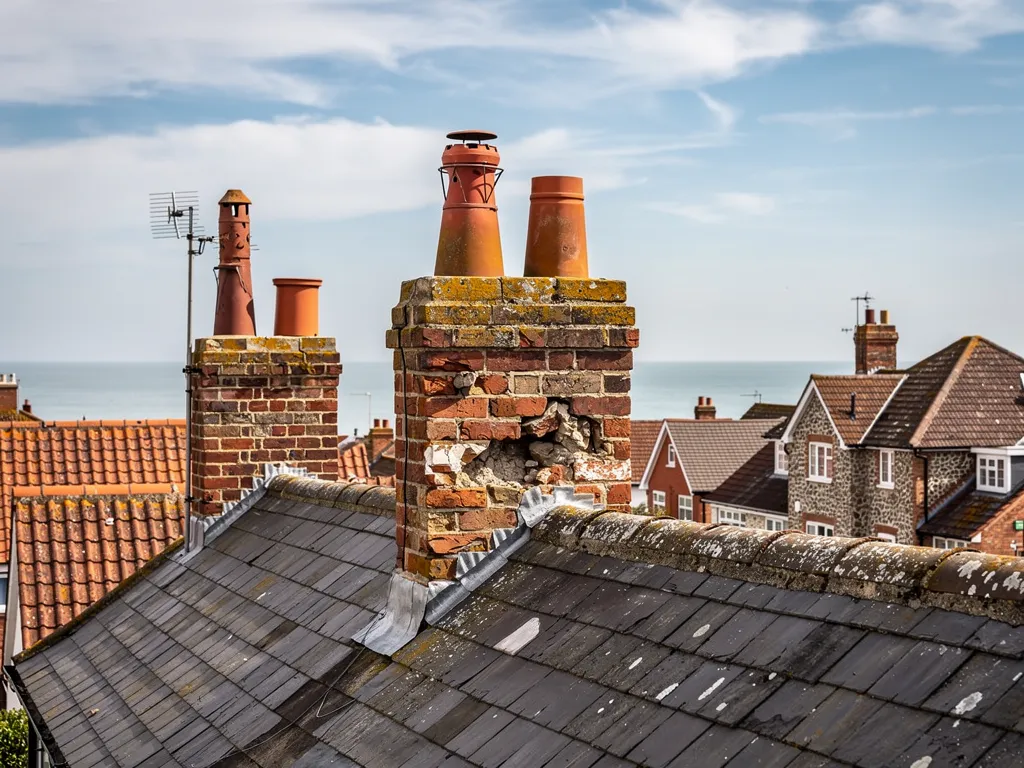
Start at ground level with binoculars. Choose a dry, bright day, stand back from each elevation of the house and scan the slopes for slipped or cracked tiles, gaps in the ridge line and moss packed between courses. Gutters deserve a look as well: a run that sags, drips at a joint or sprouts grass is telling you the water has nowhere sensible to go. Chimneys show their age at the pointing and along the strip of lead where stack meets slope.
Walls tell their own story. A dark streak below a gutter joint, damp brick under the eaves or green staining beside a downpipe marks the path the water has taken. Take close photographs with your phone and keep them dated, because a set of pictures taken over a year helps a roofer, and an insurer, see what has changed. The roof maintenance checklist gives a season-by-season list.
What the loft can tell you
A loft is the safest place to learn about a roof because you stand on a floor. Go up with a torch and look at the underside of each slope. Pinpricks of daylight, dark tide marks on the rafters, damp patches on the felt or boards and flattened wet insulation all point to a route for water. Press a screwdriver gently into a suspect timber: if the point sinks in with little effort, the wood has been damp for a good while.
Put your weight on the joists alone and keep off the plasterboard in the gaps. Take a second person with you if you can, so someone knows where you are. Visit after a spell of heavy rain, since that is when a fault is most likely to show itself. Make a note of where any damp sits, measured from the chimney or the party wall, so that anyone who visits later can go straight to it. A sketch of the loft with the marks drawn in is better still. This detail often saves the first hour of a survey.
Why the slope is best left alone
Working on a roof is one of the more dangerous jobs a householder can take on. Tiles and slates turn slippery with damp or moss, a ladder that is not tied at the top can shift without warning, and some surfaces will not carry a person at all. Old cement sheeting is the clearest example: HSE guidance is blunt that roofs of asbestos cement are always fragile, so if a garage or outbuilding roof might be made of it, stay off it altogether.
A second reason is practical. Water often travels a long way between the opening and the stain, so a repair made above the mark can miss the cause entirely. Swapping a tile that was never at fault feels like progress and leaves the leak where it was. Tracing the source usually means seeing the roof from the inside and the outside together, which is a trade skill and not a weekend task.
Jobs that look simple and are not
Re-bedding a ridge tile is the classic trap. Since the 2014 revision of BS 5534, the ridge and hip courses are secured with clips or screws as well as a mortar bed, so a bucket of mortar and a trowel can leave a ridge that looks sound and lifts in the first gale. Lead flashing is another. It has to be cut, dressed and tucked into a chase in the brickwork in a particular way, and a smear of sealant over a poorly dressed strip simply conceals the joint.
Pressure-washing moss is a third, and it is often done with no thought for what is underneath. A jet can strip the face of a tile and drive water under the laps, leaving the roof worse than before. If one of these jobs tempts you, take a look at why roof repair quotes vary; much of a price comes from access and the true cause, not from the tile or the strip of lead itself.
Where to draw the line
A sensible split is easy to remember. Do the looking, the photographing and the diary of dates and weather yourself, and leave anything that puts you on the roof, on scaffold or beside a chimney to a roofer. That includes lead, ridge fixings and any flat roof covering. The point is not that the trade is a mystery. A fall, or a repair that fails, costs far more than a visit, and a dropped tile or tool can land on a path, a car or a neighbour.
Whoever you hire should show you photographs taken on your roof before a price is agreed, and put the figure in writing. If scaffold is likely, read whether roofers need scaffolding, and for planning your week see how long a roof repair takes. The full range of faults and fixes sits on our roof repairs page.
Before you pick up a ladder
Is it safe to clear a gutter myself?
Only from a sound ladder that is footed or tied, on firm level ground, and without leaning sideways to reach. Never step onto a porch or extension roof to get at it. If the gutter sits above a first-floor window, or the ground slopes, leave it to someone with proper access equipment.
What might a repair cost if I hire it in?
MyBuilder's roof repair guide, updated 21 August 2026, gives a typical UK range of £150 to £1,500 for a repair, with major work at £2,500 or more. Where your repair lands depends on access, which covering you have and what the inspection turns up, and a written quote follows that visit.
Tell us about your roof
Describe what is happening and we will call you back to arrange a visit.
- Photographs of what we find
- A written quote with one total price
- Or call 01903 299063
10-year workmanship guarantee, in writing.