Slate costs more than most coverings to lay, and it also lasts longer than most. The question is rarely what slate costs on its own but what a slate roof costs over the many decades it is meant to keep the rain out. A fair figure starts with a fair method: a typical range from a named guide, then what your own roof does to it.
The figures below are national typical ranges from MyBuilder and Checkatrade, dated, and they are not Watertight prices. They show where a job is likely to sit, and what pushes it up or down. They cannot replace a survey, because a Victorian terrace in Worthing with a chimney stack on the party wall is priced differently from a flat-gabled semi.
We cover per-square-metre rates for re-slating and for repair, what the roof's size, height and condition add, what a new covering weighs against repair, and how to read a quote. Our wider slate roofing pages cover the material and its fixing.
Re-slating per m2: what the national guides say
MyBuilder's slate roof cost guide (updated 21/08/2026) gives a typical UK range of £100 to £180 per m² for natural slate. That is for supplying and laying the covering on a roof that is being stripped and re-covered. It is a range, not a rate, because slate varies and so does the roof beneath it.
Checkatrade's slate cost guide (last updated September 2026) gives around £160 to £210 per m² for stone slate. That is not Horsham stone specifically, but it shows that stone slate sits above natural slate in price.
Turning a rate into a figure
Per-square-metre rates are easy to apply and easy to misread. As an illustration only, a plain slope of 50 m² at £100 to £180 per m² would work out at £5,000 to £9,000 for the covering, before scaffold, repairs to timber and any lead work. That is arithmetic on the guide's range, not a quote, and a real roof rarely has a clean 50 m².
Roof area is also not floor area. A pitched roof is bigger than the footprint of the house beneath it, because of the slope, the overhang at the eaves and the extra length of hips and valleys. Chimney stacks, dormers and bay roofs add small areas that cost more per metre than open slopes, because they are slower to lay and need more cutting.
We measure the roof from the survey, not from a house plan, and we show you the photographs behind the figure. The sections below explain what moves the rate within the range.
Slate repairs: what to expect per m2 and per job
Repairs are priced differently from re-roofing, since a few square metres cost more each to reach and fix than a whole slope. A roofer has to reach the roof, set up access and bring materials for a small number of slates.
Checkatrade's roof repair cost guide (table last updated June 2026) gives repair costs by covering, and for natural slate it shows £150 to £220 per m². That is exclusive of VAT, and it is higher than the re-slating range for the simple reason that repair work costs more per square metre. The same guide puts roofers at £35 to £45 per hour or £280 to £360 per day.
The same MyBuilder slate guide (updated 21/08/2026) covers ridges too: reseating or renewing the ridge runs £300 to £600, and repointing ridge or hip tiles £200 to £400. Its general roof repair guide gives a typical range of £150 to £1,500 for a repair, with minor jobs at £100 to £300 and moderate ones at £500 to £1,000.
What a slate repair covers
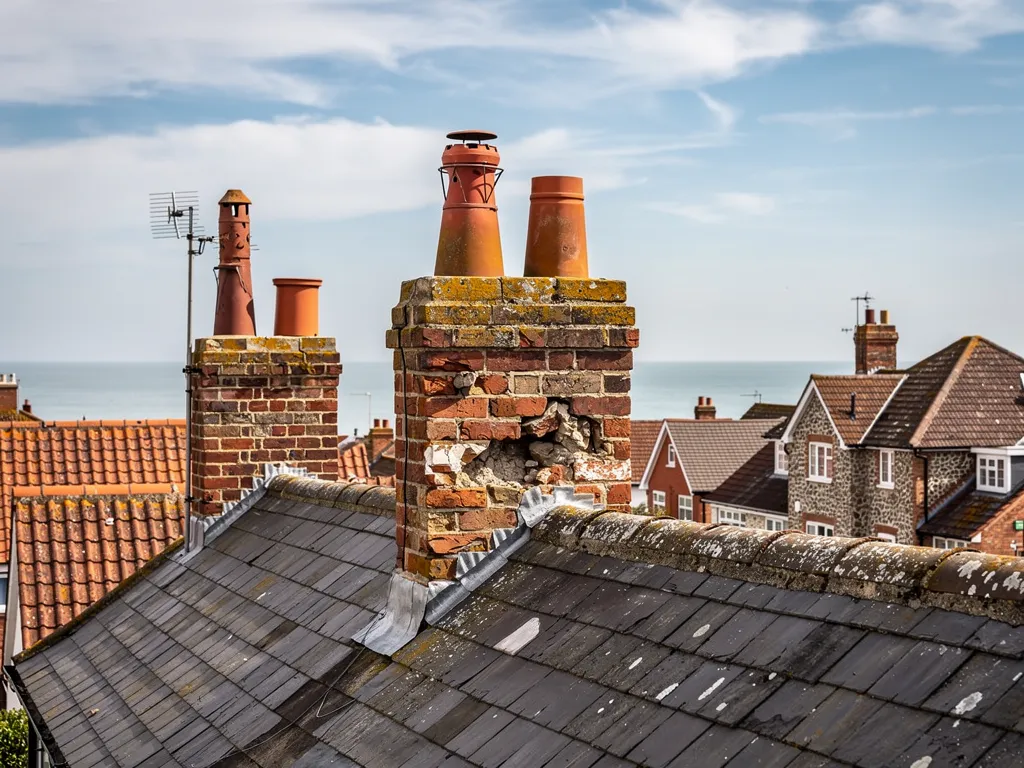
The usual slate repairs are slipped or cracked slates, nail sickness (where the fixing has rusted or worked loose), failed lead at a valley or chimney, and worn ridges. Our guides to slipped slates and nail sickness explain how each is dealt with. Lead work is a further cost: Checkatrade gives £80 to £120 per metre for stepped flashing, excluding VAT.
A repair fits a fault confined to one spot on a roof that is otherwise healthy. When the trouble spreads across a slope, repeated repairs add up, and re-slating becomes the cheaper course over the years. The survey shows which applies, and the recommendation goes into the written quote.

What moves a slate quote up or down
Within a range as wide as £100 to £180 per m², a few things decide where a roof falls. Most of them are visible at the survey.
Access. A single-storey roof might be worked from a ladder and a small platform. Tall Victorian terraces call for a complete scaffold, frequently with a licence. MyBuilder (updated 21/08/2026) lists around £850 to £1,200 as the usual outlay on a two-storey house, with chimney scaffold at £400 to £900.
The slate itself. Welsh, Spanish and man-made slate sit at different points, and the choice has knock-on effects for lifespan, appearance and what a conservation officer will accept. Our guides to Welsh against Spanish slate and natural against man-made slate go through them.
Re-use of existing slate. Sound slates can sometimes be sorted and laid again, which saves on material but adds sorting time. Matching old slates is a skill in itself.
Underlay, fixings and lead
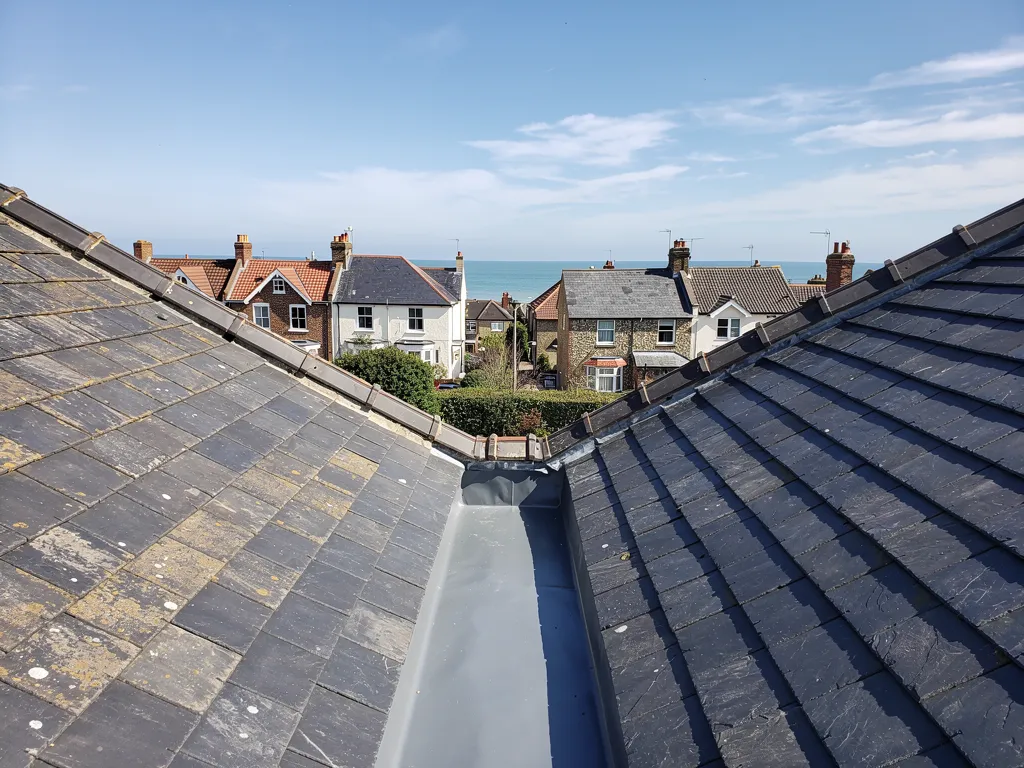
The layers beneath the slate are part of the job. A new underlay, or sarking (the lining laid under the slates), and new battens, the timber strips the slates hang from, are normal on a re-roof. Our page on slate underlay and sarking explains the choice. Lead flashings, valleys and soakers are renewed at the same time, and BS 5534 fixing of ridges and verges follows current practice. On the coast, how a slate is fixed matters as much as the slate.
Condition is the last factor. Rotten battens, damaged rafters and a perished chimney found on stripping add work that no survey from the outside can fully predict, and a good quote says what the survey has and has not seen.
A slate roof against a tile roof over the long run
A slate roof is dearer to lay than a concrete or clay tile roof, and the argument for it rests on how long it lasts. According to MyBuilder, a slate roof laid properly will see out 80 to 100 years or more, with Welsh slate frequently lasting beyond 100. It gives Spanish slate as 75 to 100 years. Checkatrade says the lifespan of a slate roof can be anything from 50 to 200 years, with most easily lasting over 100. For clay tiles, MyBuilder says replacement is needed after 40 to 60 years, and for concrete tiles after 30 to 50 years.
Treat these as typical spans shaped by exposure, workmanship and upkeep, never as promises. A slate roof laid badly or left alone with slipping slates will fail early, and a tile roof that is looked after can outlast the guide figure.
Cost spread over the years
If a slate roof lasts twice as long as a concrete tile roof, the annual cost of ownership can come out lower even though the price on day one is higher. That is a reason to weigh the option, not a certainty, because it depends on how long you will live in the house and on whether the roof is already slate. Many Worthing seafront terraces were roofed in Welsh slate originally, and a conservation area or listed building may rule out a change of material anyway. Our slate against tile cost page puts the two side by side.
Changing covering also raises a weight question. The Planning Portal lists a covering at least 15 per cent heavier than the old one as a trigger for approval, so a move from slate to a heavy concrete tile is not a like-for-like swap on paper.
Reading a slate roofing quote
A quote for slate work should tell you what was found, what is proposed and what it costs as one total. Ours is written, follows the survey and gives a single total, with pictures of your own slopes attached.
When you compare quotes, look for what each says, not just the figure. Does it say what covering is going on, and from which supplier? Does it say whether the old slates are being re-used? Does it cover the battens, the underlay and the lead? Is scaffold included, and who deals with the licence where it crosses a pavement? Does the price include VAT?
VAT and scaffold
The standard VAT rate is 20 per cent, and the Checkatrade repair figures quoted above are exclusive of VAT, so a quote that excludes it can be a fifth lower on paper than one that includes it. Ask each contractor to state it. The same goes for scaffold, which can run into four figures on a taller house. Scaffold set up on a public pavement needs the highway authority's permission, which the scaffolders arrange, and it takes some days of notice.
What is covered after the job
Ask what follows the work and who stands behind it. A written guarantee from any roofer is worth having, so check that it names the covering and the fixings, and who to call if a slate slips. Cover of that kind is only as good as the choice of covering beneath it, which is why the survey comes first. For help with the other decisions, see how long a slate roof lasts.
Deciding between repair and re-slate
The cost question usually becomes a repair or re-slate question. A repair is the smaller bill, but it only pays when the roof underneath is sound. We look at four things.
- How many slates are failing. A few slipped slates are a repair. Slates failing across a slope point to nail sickness or to slates that have simply aged out.
- The state of the battens and underlay. Slates are only as good as what they hang from.
- Whether the roof is exposed. A south-facing slope on the seafront takes more weather than one in a sheltered street, and fixings suffer for it.
- How many repairs there have been. Repeated call-outs on the same slope are a sign that the slope as a whole has aged.
A repair that fixes the cause costs less than a re-roof; one that patches around it costs more over time. Our advice is the lightest job that stops the fault for good. Where that is a repair, you hear it plainly. Where the covering has run its course, the photographs show why.
Next steps
If you have a slate roof and a quote in hand, send us a photograph of the slopes and any papers on previous work, and the survey will establish what sits behind the figure. For repair-by-repair costs see our guide to slate roof repairs, and for a full strip and re-lay our re-slating guide.