
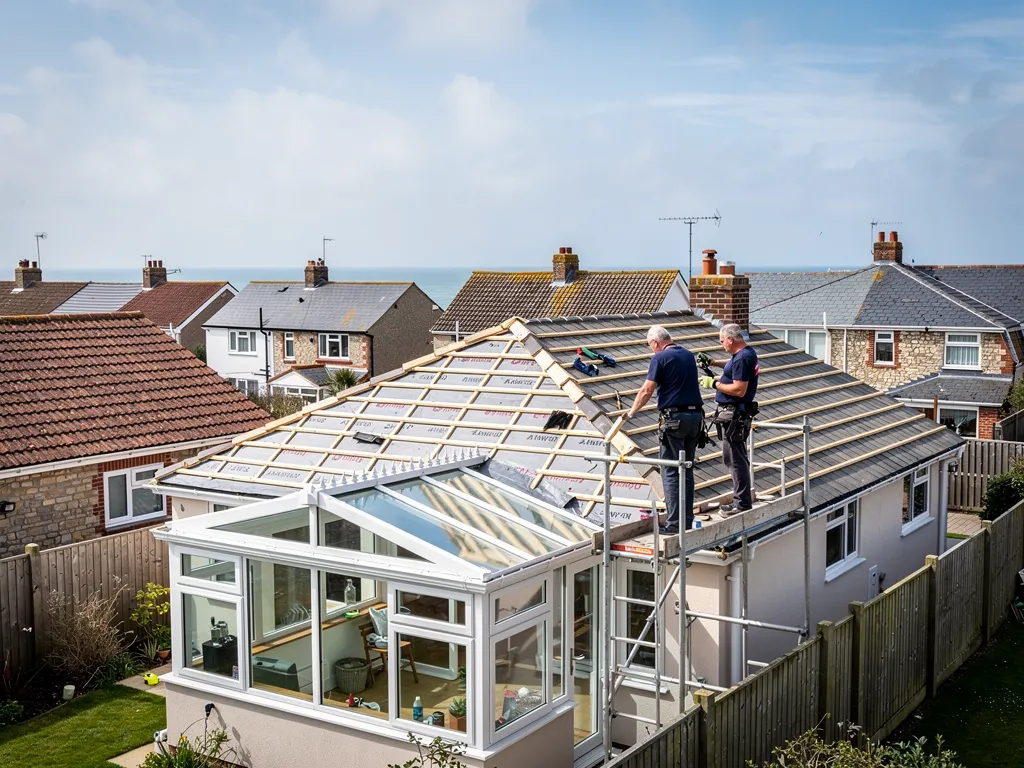
Roofers in Burpham

Burpham is a linear downland village under the Downs, with clay tile, slate, flint and a little thatch. Its roofs sit under National Park planning rules, which we explain before work starts.

Where Burpham roofs let the water in

  • A plain clay tile roof

    Plain clay tile, slate and thatch

    Arun's conservation guidance names plain clay tiles, natural slate, flint and brick as the village's principal materials, with some thatch.

    Read more about Plain clay tile, slate and thatch

    A slipped plain tile is often a rusted nail, not a bad tile, so we check the fixings beneath.

  • Lead flashing on a flint wall

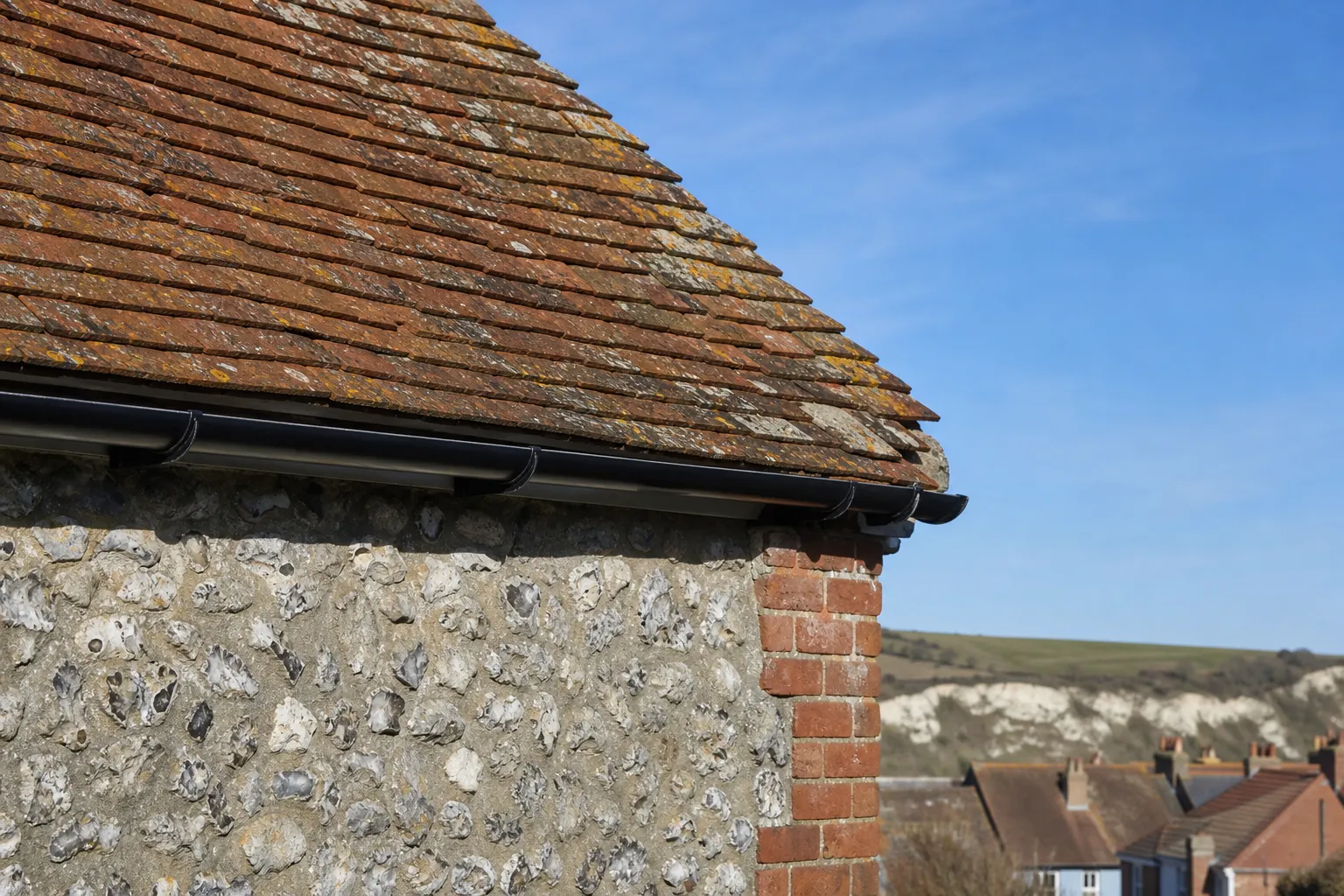
    Flint walls meeting roofs

    Flint boundary walls run through the village, and flint meets roofs at gables, chimneys and outbuildings. Lead flashing, a thin strip dressed over the join, seals each of those points, and it relies on a sound mortar joint to tuck into.

  • A long barn roof

    The Arundel Estate granary

    A former granary of the 1880s is one of several built in that period on the Duke of Norfolk's Arundel Estate.

    Read more about The Arundel Estate granary

    Farm buildings of that kind tend to have long, unbroken slopes, so one failed section can let water into a large space.

Street map of Burpham, north-west of central Worthing, with a pin on the town.

What to look up before a Burpham re-roof

Planning authority
South Downs National Park Authority
Councils
Arun District Council and West Sussex County Council
Conservation area
Burpham and Wepham Conservation Area
Article 4
Status to be confirmed with the South Downs National Park Authority
Listed example
Grade I: St Mary's Church
From central Worthing
11.9 road miles, north-west, about 21 minutes by car

Burpham roofs

Tile, slate and straw under the Downs

Roofing decisions that follow from the way Burpham was built and where it stands.

Chapter one

Plain tiles, slate and thatch along one street

The village grew in a line rather than around a green, and its roofs show clay, slate and thatch side by side.

Burpham developed in a linear pattern, and Arun District Council's conservation guidance names plain clay tiles, natural slate, flint and brick as its principal building materials, with some thatch among them. That mix shapes every survey here. One house may be tiled, the next slated and a third thatched, and each covering fails in its own way, so we begin by identifying exactly what is on the roof before we form a view on what is wrong with it.

At a glance

  • Plain clay tiles hang from timber battens
  • Slate slips when its fixings fail
  • Thatch is a separate craft from tiling
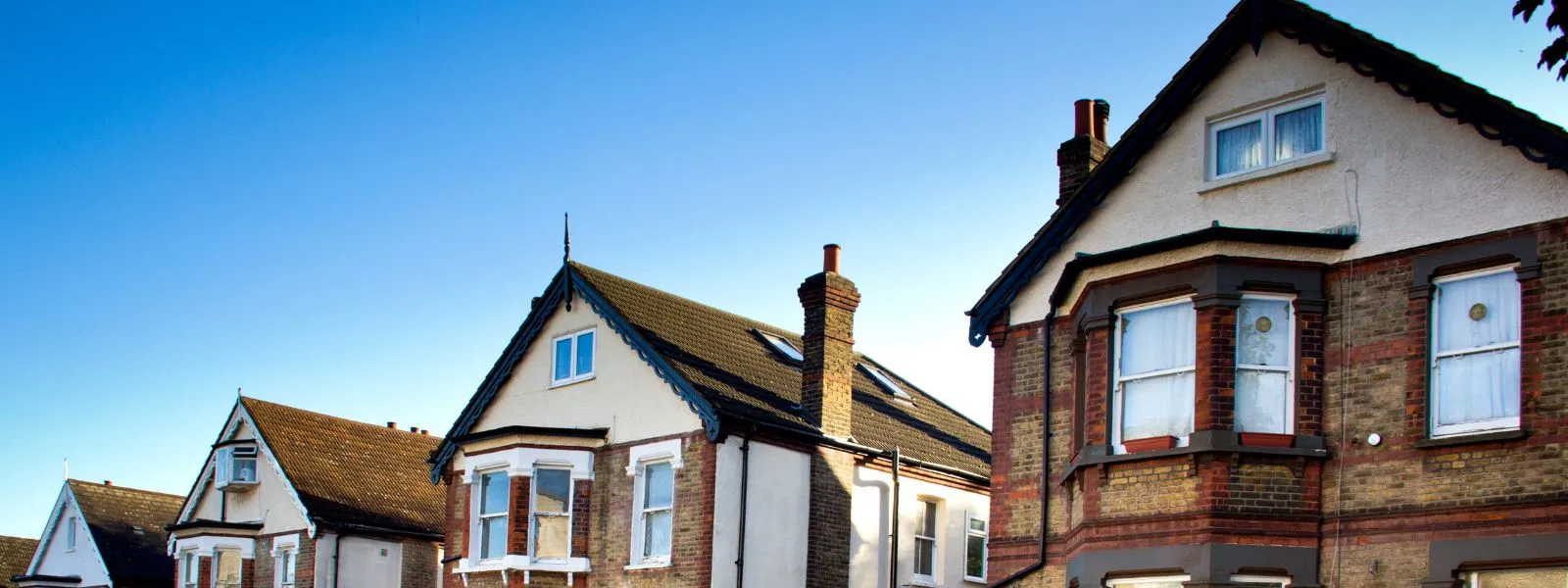
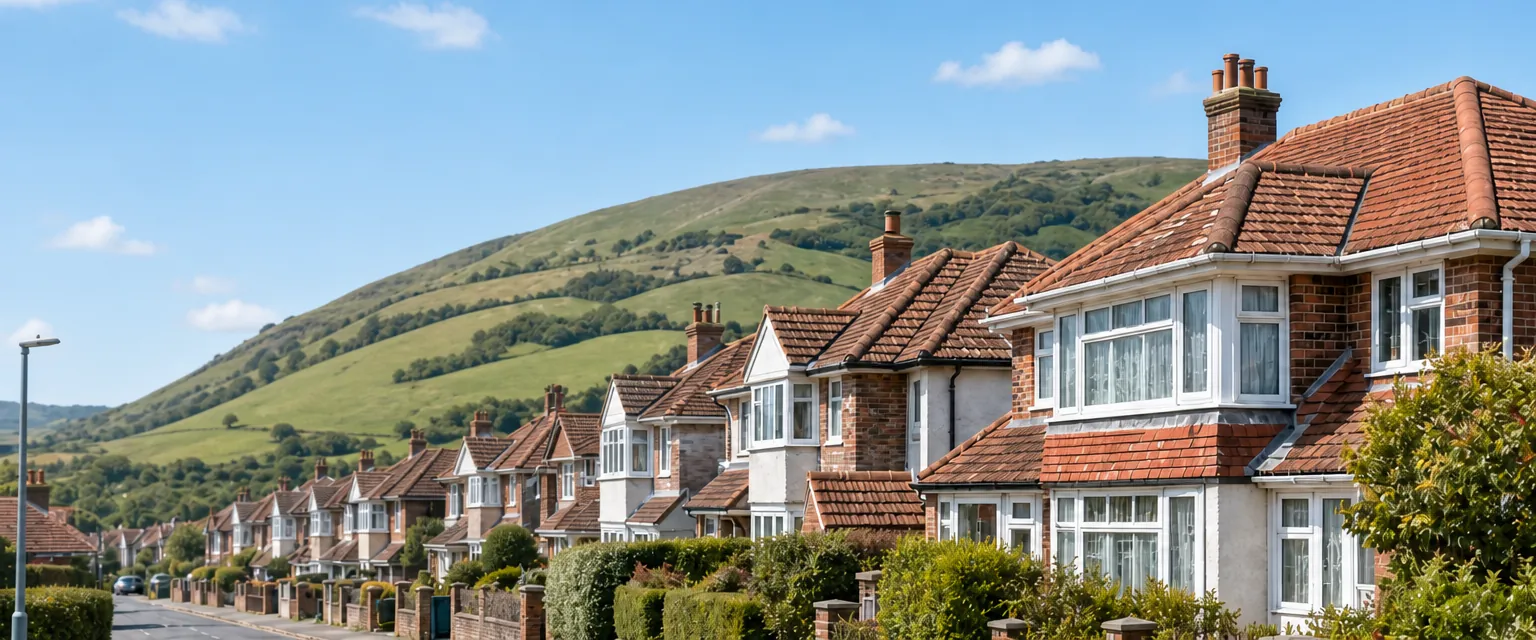
Edwardian semis with concrete tile roofs, brick chimneys, rooflights

1.1 Plain clay tiles

A plain tile is small, flat and slightly curved. Each one hangs from a timber batten, the slim lath that carries a course, by a nib on its top edge, and a nail or peg holds every second or third course. With so many overlapping joints a plain-tiled roof sheds water well, but the fixings carry the load. When a nail rusts through, the tile seldom breaks. It slides, and the first sign from the ground is a gap in the pattern. From inside the loft we watch for chinks of daylight and for damp along the underside of the battens. Where a few tiles have gone and the rest are sound, matching clay set in the right courses is all the job needs. Where a whole slope has lost its fixings, the answer is to recover the slope, and the evidence goes into the photographs that come with the written quote.

Edwardian semis with concrete tile roofs, brick chimneys, rooflights

1.2 Slate, and the thatch next door

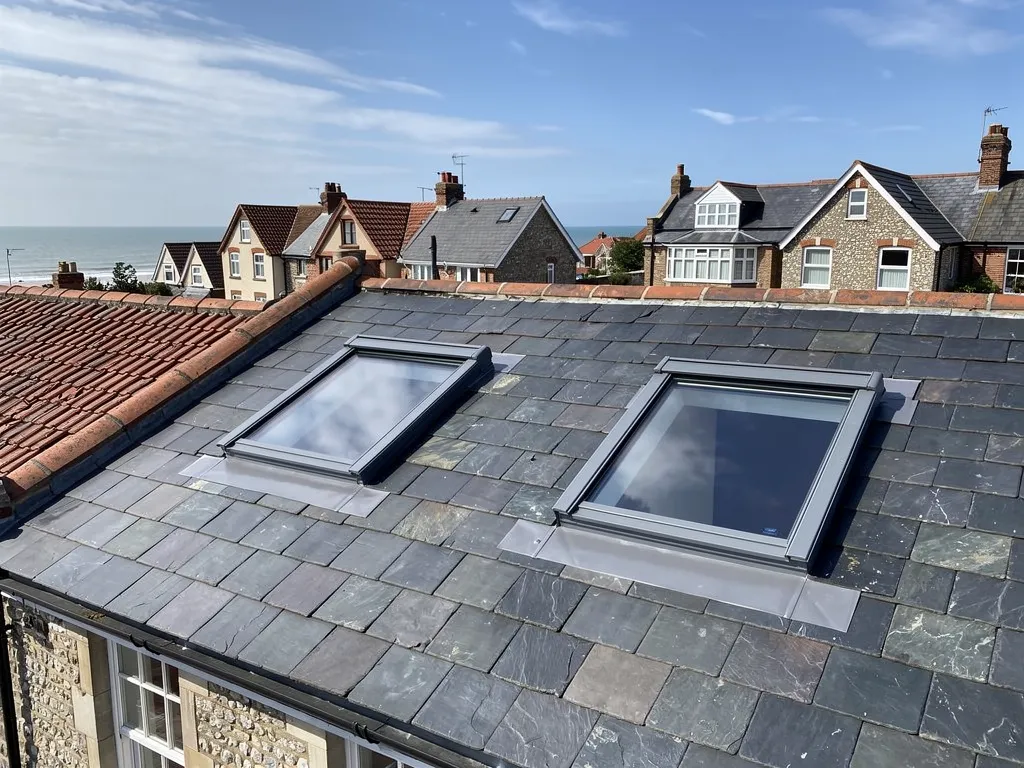
Natural slate is thin and brittle, and each slate is held by nails near its top edge. A slipped slate usually points to a corroded nail rather than a cracked stone. The repair is to re-fix it, or to slide in a replacement and hold it with a tingle, a small strip of metal turned over the slate's lower edge. Thatch is its own craft, with its own specialists, so where a tiled or slated roof here sits against a thatched one, our attention goes to the line between the two: the flashing, the gutter and the way water leaves one roof and lands on the other. We also agree access with the neighbour before any ladder goes up. Chimneys on cottages like these deserve the same scrutiny: a brick stack on a downland roof takes weather from every side, and failing pointing or a split lead tray lets water into the loft well below the stack. Our pitched roofing page covers tile repairs in more detail, and slate roofing explains how slates are fixed and replaced.
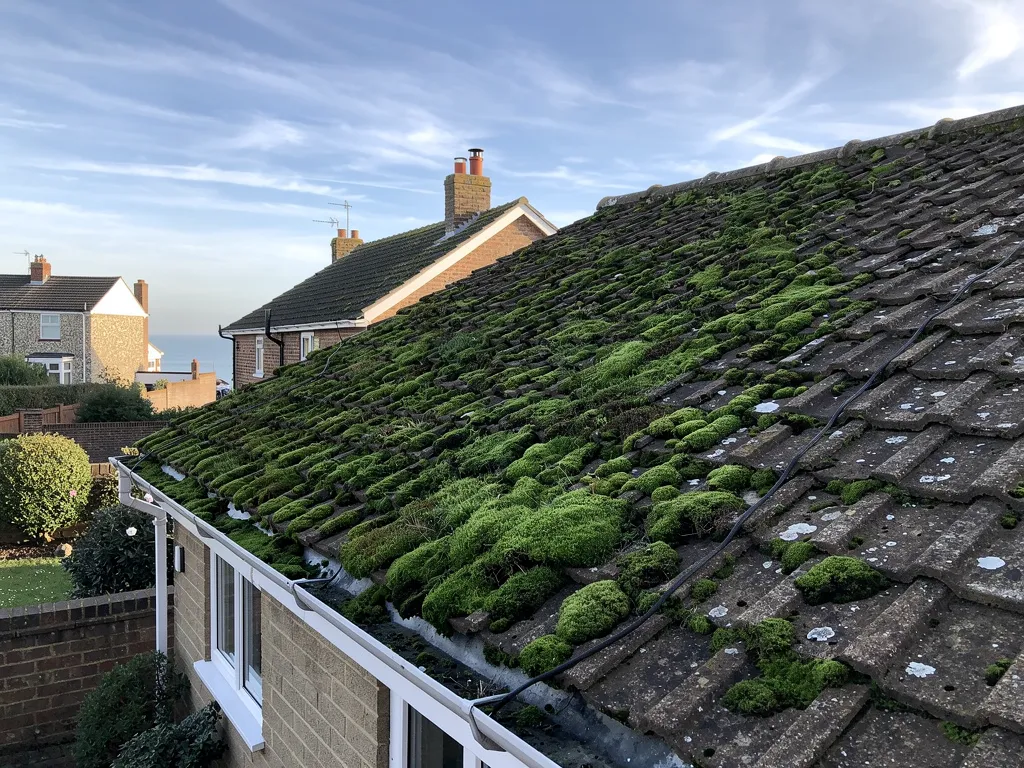
Bungalow roof heavily covered in green moss on its north-facing slope
Fig. 1.a On the survey Rusted nails let tiles slide out of their courses.
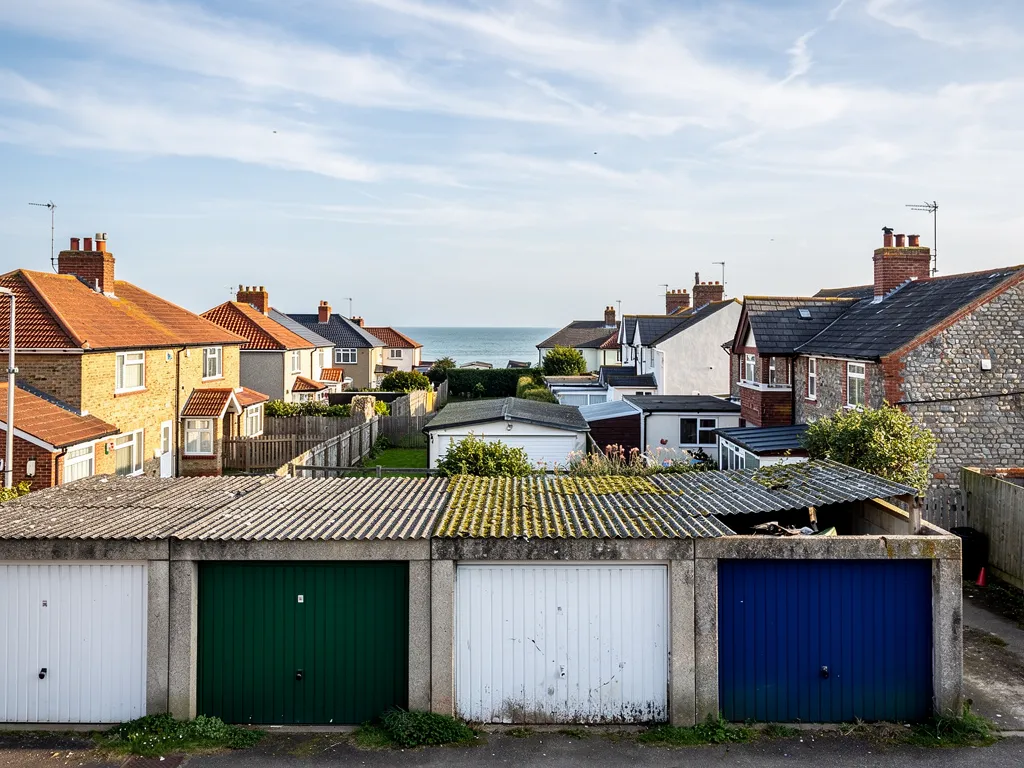
Row of concrete sectional garages with weathered grey corrugated roofs
Fig. 1.b Put right Matching tiles re-hung on sound battens.

Chapter two

St Mary's, the conservation area and the Park

Roof work here falls to the National Park's planning authority, and a Grade I church follows a route of its own.

Old clay tile roof over a flint wall in a downland village

St Mary's is a cruciform church with Norman work in its north transept, and when it was restored in 1868 and 1869 Sir Thomas Jackson rebuilt the south transept, south aisle and porch on their old foundations. It is listed Grade I and stands in the Burpham and Wepham Conservation Area. Because it is in use as a Church of England parish church, the ecclesiastical exemption applies, so any change to the roof is routed through the Church's own faculty process rather than the district council. A homeowner nearby is in a different position, and the first step is to know which of three situations applies: the house is listed, it lies in the conservation area, or it is simply inside the National Park.

At a glance

  • St Mary's is a partly Norman Grade I church
  • The Park Authority handles planning here
  • A church in use follows the faculty route
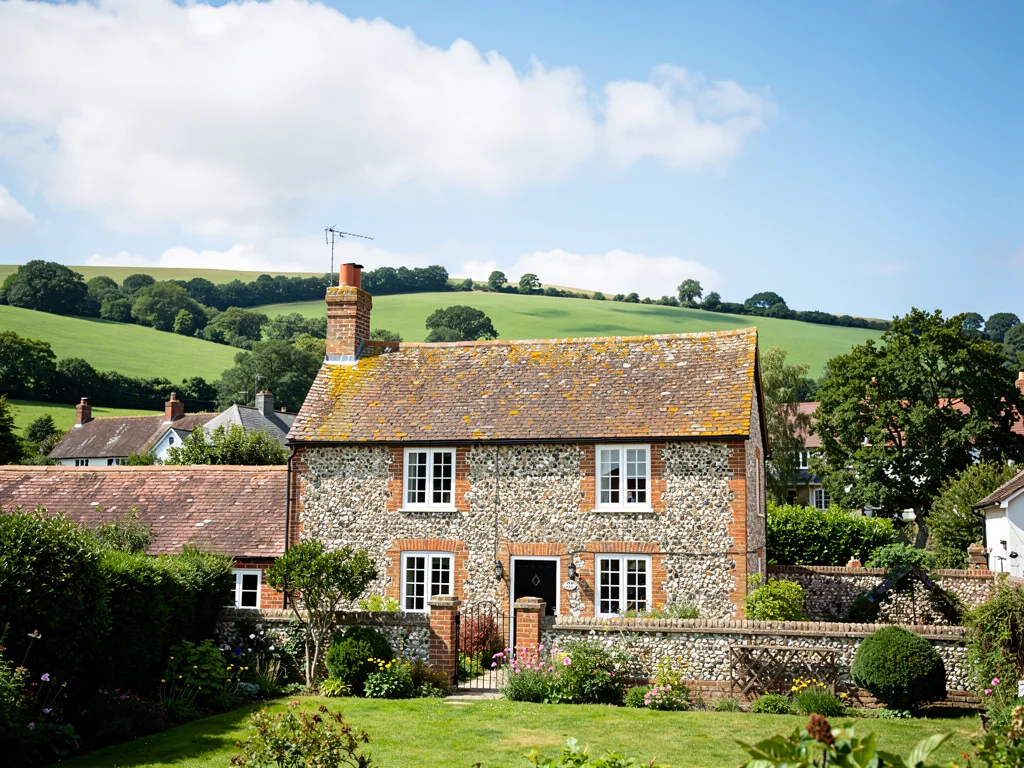
Flint-and-brick cottage in Findon with a clay tile roof under the Downs
Flint-and-brick cottage with a clay tile roof under the Downs

2.1 Who decides, and about what

Burpham lies inside the South Downs National Park, and in the part of Arun that the Park covers, the South Downs National Park Authority is the planning authority, not the district council. Its listed building page says routine upkeep and small repairs in matching material, made where the fabric stands, need no consent, while works that change or entirely renew original material do. For an unlisted house, matching what is already there does not normally call for planning permission, though a change of material is worth a call to the Park Authority before you order anything. Dormers and roof windows follow separate rules in the Park, set out in our South Downs planning answer.

Flint-and-brick cottage in Findon with a clay tile roof under the Downs
Flint-and-brick cottage with a clay tile roof under the Downs

2.2 What we do before we quote

Where an owner asks, we explain in plain terms what each choice of covering would change about the house as seen from the street. On a listed or conservation-area roof we photograph the existing covering, course by course, so the Park Authority can see what is there now and what we propose to match. Flint boundary walls and the flashings that meet them get the same attention, because a lead strip pulled out of a flint joint sends water down the inside of the wall, and the damp patch appears well away from the fault. Old village roofs attract roosting bats and nesting birds, which the law protects, and a check for either comes first, before anything is stripped. Wherever a gutter discharges onto a flint wall, the wall stays wet and its joints erode, so we trace each downpipe to its outlet and note where the water ends up, then put the findings in the written quote.

What people sayLiving inside the National Park means every re-roof needs the Park Authority's permission.

What is trueA like-for-like re-roof does not normally call for planning permission, whether or not the Park applies; listing, or a direction removing permitted development, is what changes that.

Chapter three

Estate barns and long roof runs: repair or recover

Where a roof runs long and plain, the question is whether one failing section justifies recovering the lot.

The Arundel Estate built several granaries in the 1880s, and one of them still stands in Burpham. Buildings of that kind, whether they are still working farm buildings or have been converted to homes, share a feature: the roof is long, plain and unbroken, with few valleys or dormers to interrupt it. That makes the survey simpler in one way, because there are fewer junctions where water can creep in. It makes it harder in another, because a failure at one end can run unseen along the timbers for metres before a stain shows.

At a glance

  • One failed section may be a repair
  • Bigger re-roofs may bring in building control
  • Scaffold and access move the total

3.1 Repair or recover

We count the faults before we recommend anything. Slipped or cracked tiles gathered in one area, a perished stretch of underlay or a single bad valley usually point to a repair. Fixings that have failed across every slope, battens that crumble when we press them and daylight showing through the roof boards point to recovering the roof. What you receive is a recommendation, the reasoning behind it and pictures of your own roof; a roof with one defect is not stripped. On a long roof we also check the ridge and the verges, the edges where the slope meets the gable wall, because a long run of both takes the full force of a gale. If the work is a re-cover, our roof replacement page explains the stages.

3.2 Building Regulations and the price

The Planning Portal puts the limit for re-covering without a building control application at less than 25 per cent of the total building envelope and less than 50 per cent of the roof. Exceed either figure, or choose a covering that is 15 per cent or more heavier, in which case approval is required, with a thermal upgrade possible under Part L. Inside the Park, building control is a separate matter from planning. Where work is notifiable, we handle the notification. On cost, the length of roof, the covering you choose, the scaffold and the state of what lies underneath all move the total. VAT at the standard rate applies to a re-roof, so find out whether the figure on any quote already includes it. The figures below come from national guides and are not our prices, which are good and fair. At the end of the job we clear the site and carry the waste off.

Typical UK costs for roof work

  • Moderate roof repair£500 to £1,000
  • Ridge re-bedding or replacement£300 to £600
  • Gable re-roof, semi£5,000 to £8,000
  • Hipped re-roof, semi£8,000 to £12,000

A written total follows the survey. If you hold another quote, find out whether VAT and scaffolding are counted in it. Source: MyBuilder roof repair and new roof price guides, updated 21/08/2026.

Burpham roof questions, from the street to the Downs

Can a thatched neighbour change how my tiled Burpham roof is repaired?

It can change how we reach it and what we check. Where tile or slate meets thatch, we look at the flashing, the gutter and where the water goes as it leaves one roof for the other. Thatch is its own craft, so we leave that roof to a thatcher and agree access with the neighbour first. Our survey photographs show the shared line before we quote, so the two owners can see the same evidence.

Does the Burpham and Wepham Conservation Area limit new roof tiles?

Repairs that match what is already there do not normally call for planning permission. A change of material, say from clay tile to concrete, is different, and because Burpham is inside the National Park, the South Downs National Park Authority is the body to ask. We match the existing tile or slate, and we photograph the roof first so the Authority can see the starting point if you do consult it.

What should I ask before re-covering a Burpham cottage in different tiles?

Ask first whether the house is listed, then whether the new covering is lighter or heavier than the old, because a new covering adding 15 per cent or more to the roof's weight brings building control into play. Ask the South Downs National Park Authority about any change of material. And ask your roofer for photographs of your own roof with a written quote, so you can see why each choice was made.

Do bats or nesting birds change when roof work can start in Burpham?

They can. Bats and wild birds are protected by law, and old tiled roofs, barns and outbuildings are places they use. Before we strip a covering we look for droppings, staining and nest material under the tiles and at the eaves. If we find signs, work stops while you take advice, and we tell you what we saw instead of carrying on.

Tell us about your roof

Describe what is happening and we will call you back to arrange a visit.

  • Photographs of what we find
  • A written quote with one total price
  • Or call 01903 299063

10-year workmanship guarantee, in writing.

Call Get a quote