
Chapter one
St Giles' Victorian roofs after 155 years
Woodyer's rebuild of 1870 and 1871 shows what a Victorian roof asks for, and what a church roof owes to its consent route.
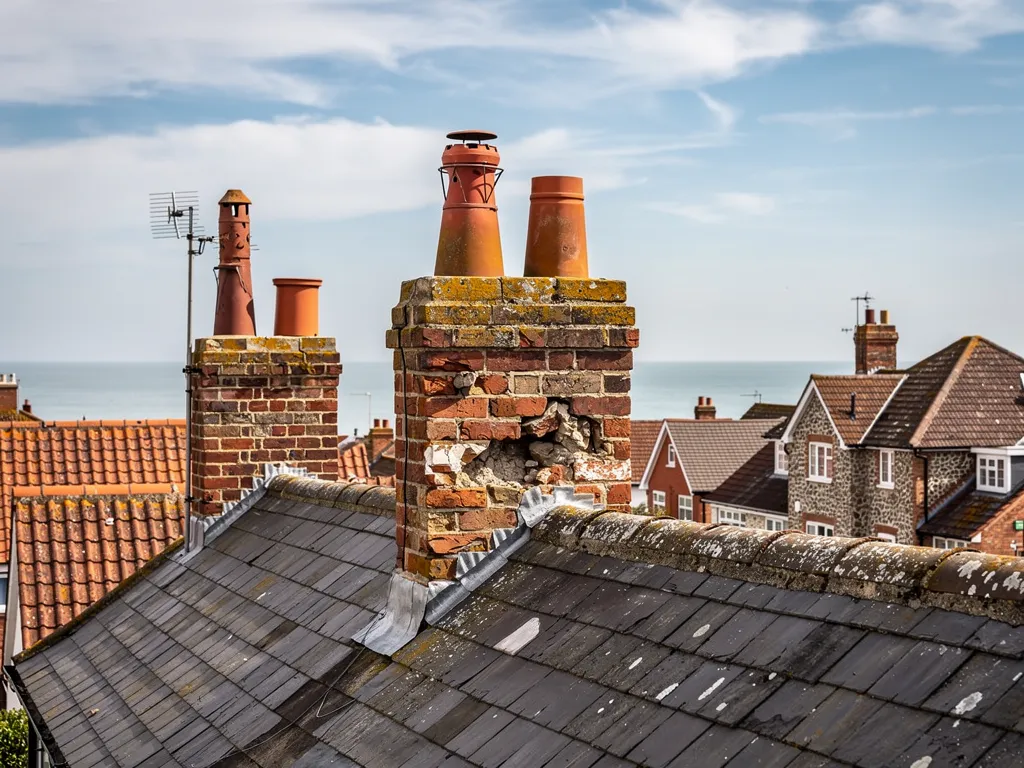
Henry Woodyer largely rebuilt St Giles' in 1870 and 1871, keeping the 12th-century tower and the 14th-century south arcade, and he rebuilt all the church roofs. That makes the oldest of them about 155 years old, and the building is listed Grade II*. A roof of that age is a useful guide to any Victorian house in the village. The Building Conservation Directory calls the usual 60-year figure an unreliable measure for old peg-tile roofs, which tells you that age alone does not condemn a clay roof. Condition does. A roof of that period was often laid without underlay, the waterproof sheet beneath modern tiles, and the battens under the tiles can be soft after a century and a half, since they are the slim timber strips each course is hung from. A survey looks at the nails, the battens, the lead and the framing, then reports what each can still do.
At a glance
- Woodyer rebuilt all the church roofs in 1870 and 1871
- St Giles' is listed Grade II*
- Lead flashing can last over 80 years
1.1 Lead is where the years show
On an old roof the valleys, flashings and gutters are often lead, and lead lasts a long time: MyJobQuote says flashing can last over 80 years, and over 100 for the higher codes. Leadworx lists Code 5 for general and vertical work and Code 6 for large roofs. MyJobQuote puts a chimney lead patch at £150 to £250 and full replacement at £350 to £460 without scaffold, or £700 to £920 with it. Even so, lead splits where it was dressed too tightly, lifts when its fixings rust, and gets smothered in sealant that hides the cause. We examine each run, lift the tiles beside it and say whether it needs re-dressing, a patch or a new sheet. Our lead roofing page explains the codes, and our roof inspections and surveys page describes the visit.
1.2 A church roof's consent route
As a Church of England building still in worship, St Giles' sits under the ecclesiastical exemption: the Church's own faculty system applies to it in place of listed building consent. Houses and cottages follow a different path. For a listed house, the South Downs National Park Authority says regular maintenance and small like-for-like jobs done in situ need no consent, but consent is required where historic fabric is replaced or altered in a way that touches the building's character. Whichever route applies, we photograph every stage so that the file shows what was found and what was done, and we put the likely cause and the smallest sound fix in writing before any work is ordered. If a quote for a listed or conservation-area roof does not say how the covering will be matched, ask.
What people sayA Grade II* listing means no roof repair can start without consent.
What is trueRoutine upkeep and small matching repairs done in place need no consent; replacing historic material that changes the building's character does.