
Chapter one
A church transept, a mausoleum and lead flashings
Where the Sheffield Mausoleum joins the north transept, two roofs meet a wall, and lead flashing decides whether it stays dry.
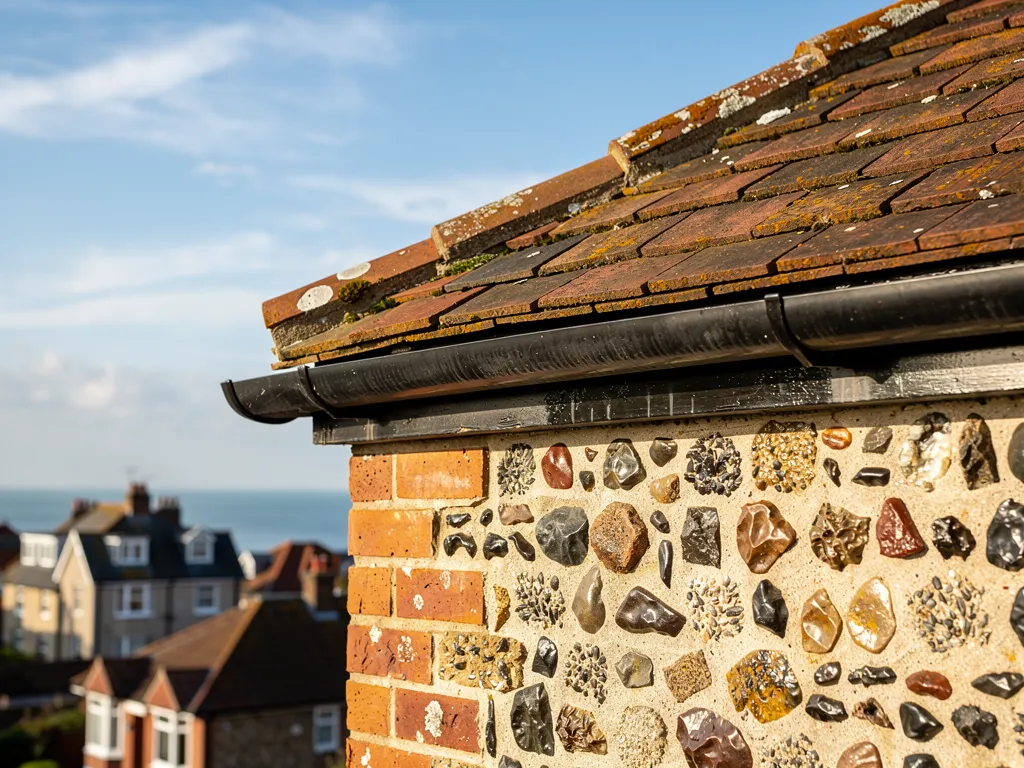
Fletching appears in the Domesday Book of 1086 as Flescinge, and the parish church of St Andrew and St Mary the Virgin dates from the twelfth century. The historian Edward Gibbon is buried in the Sheffield Mausoleum, which is attached to the church's north transept; he died while staying with his friend John Baker-Holroyd, 1st Earl of Sheffield. Whenever a newer structure leans against an older wall, the roofer inherits the hardest detail on the building: a slope or flat top that runs into a vertical face. Water has to be led away along that seam, and the strip that does the leading is the flashing, usually lead pressed into the wall and over the covering.
At a glance
- The Sheffield Mausoleum is attached to the north transept
- Lead sheet is sold by code, which means thickness
- Code 4 is the usual choice for general flashings
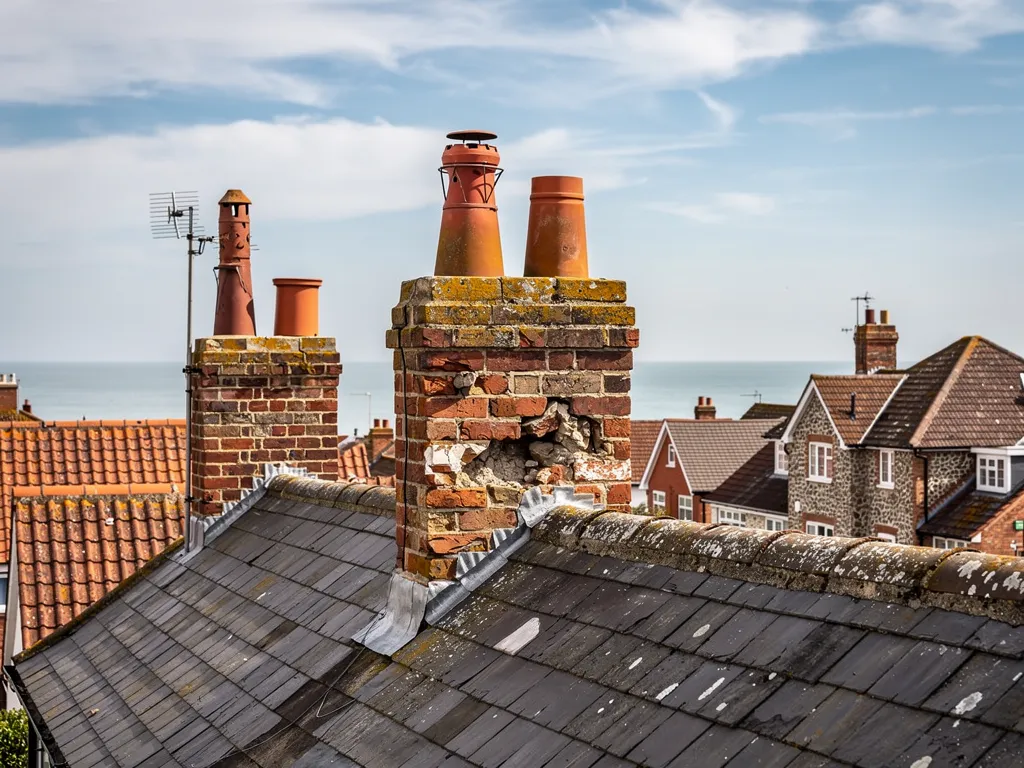
1.1 How a flashing lets go
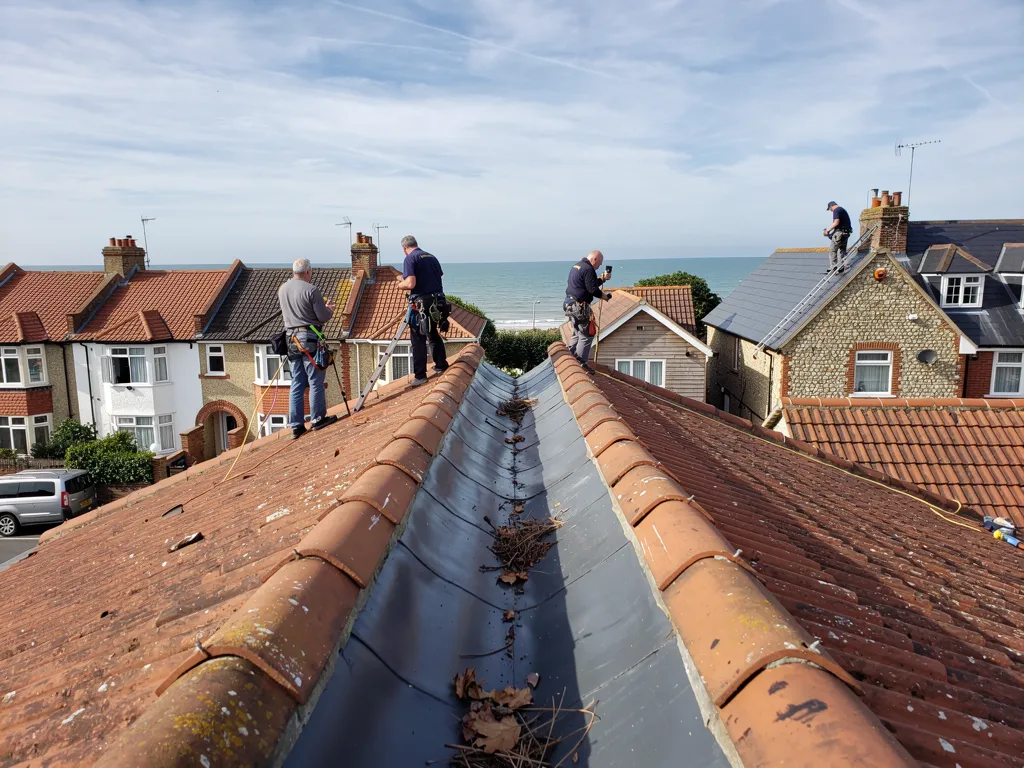
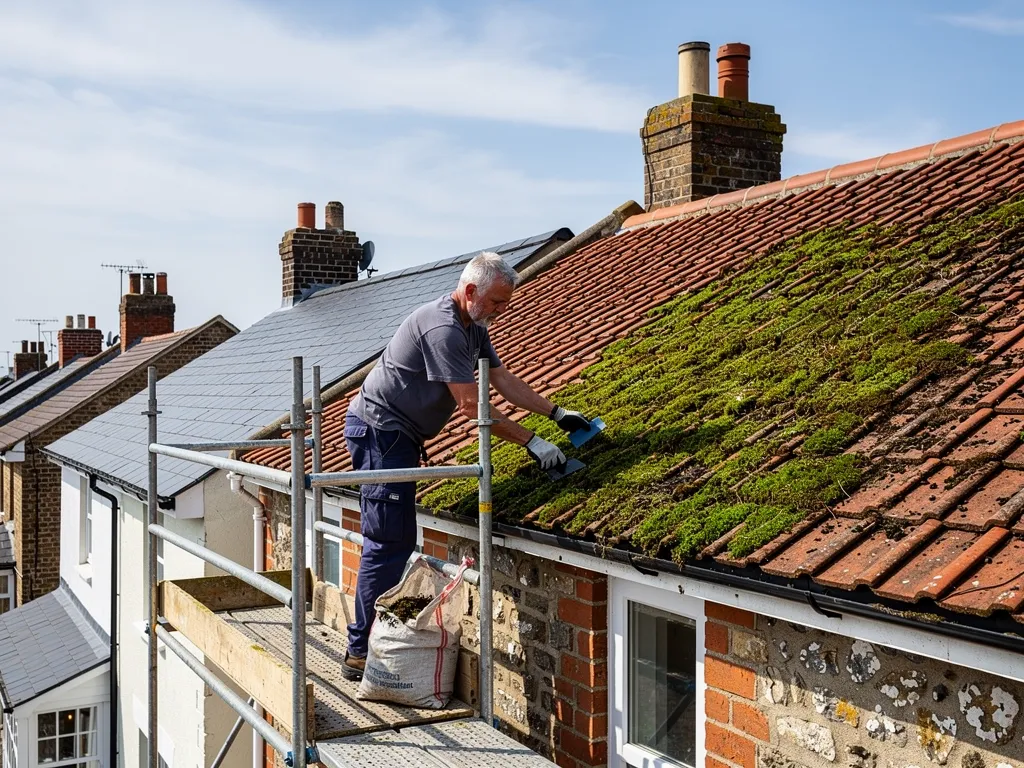
Lead expands and contracts with the seasons. Over decades it can crack along a fold or creep out of the joint it was tucked into, and the mortar gripping it can crumble. Once that happens rain slips behind the lead and into the wall, and the damp patch shows indoors some way from the actual fault. That is why we trace the water back before quoting anything. Against an old wall we also inspect the pointing around the lead, because fresh lead set into loose mortar will not stay put.
1.2 Choosing the lead code
Lead sheet is sold by code number, which is a thickness. Leadworx puts code 4 forward as the standard for everyday flashings and code 5 as suited to general and vertical use on pitched roofs, with code 6 for large roofs and code 3 recommended only for soakers, the small folded pieces that sit under tile courses beside a wall. We match the code to the length of the run and the exposure of the seam, and photograph the joint before and after. Works to the church itself go through the Church of England's faculty process under the ecclesiastical exemption. The same junction problem turns up on house extensions, porches and bays, which is where our work lies, and our lead roofing page explains dressing and replacement in more detail.
Lead codes for flashings
- Code 3, 1.32 mm
- Soakers only
- Code 4, 1.80 mm
- General flashing work
- Code 5, 2.24 mm
- General, vertical and pitched
- Code 6, 2.65 mm
- Large roofs
Source: Leadworx, Lead Sheet Codes Explained; Royston Lead, fetched October 2026