

Chapter one
Clay tile hips and gables in the village core
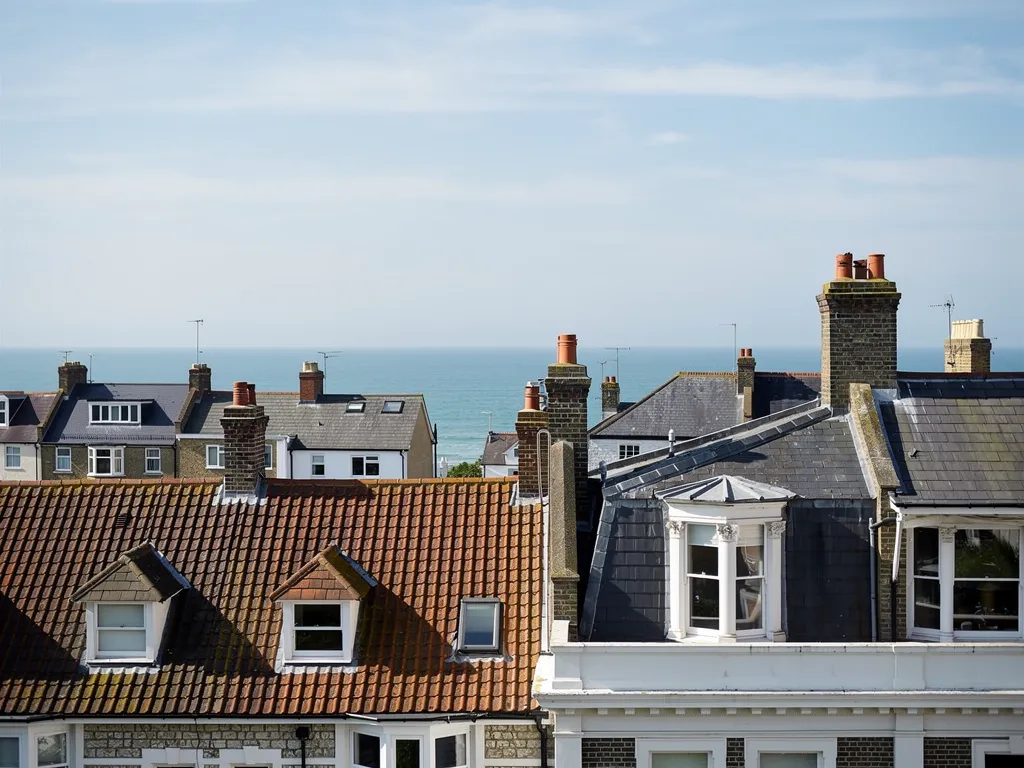
Brick walls, painted or rendered, carry hipped and gabled clay tile roofs, and the seams of those roofs are where wear shows.
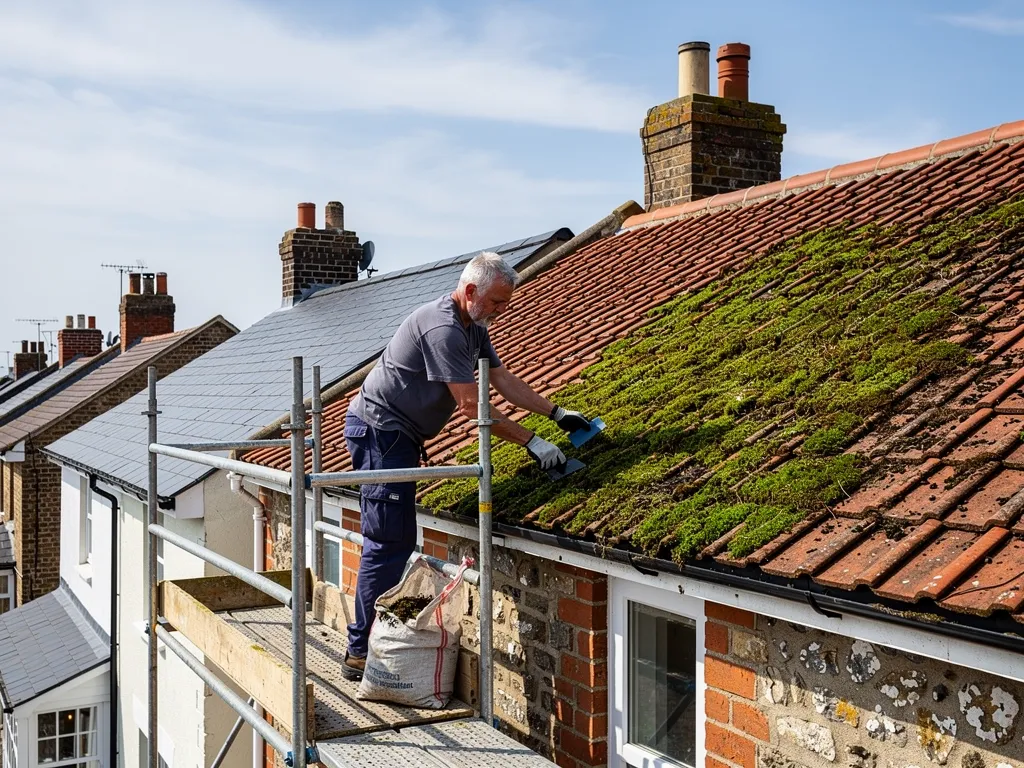
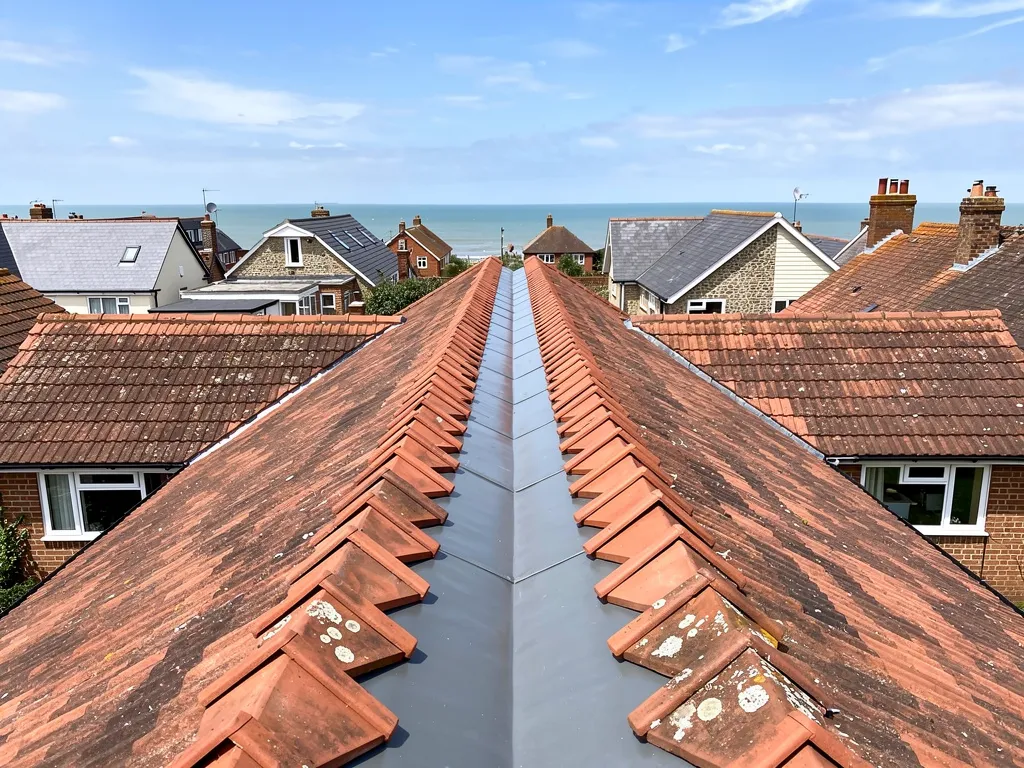
Wealden District Council's draft appraisal for the Maresfield Conservation Area describes the domestic buildings in the village core as two storeys and brick-built, painted and rendered in several instances, with hipped or gabled clay tile roofs. Each shape wears in its own way. A gabled roof ends at a wall, with a verge, the sloping edge of tiles beside the end gable, where wind works at the border. A hipped roof has no gable wall at all; a hip runs down every corner, and each of those diagonals is another long seam of ridge tiles whose bedding and fixings need to stay sound. We count cracked and slipped tiles slope by slope on a survey, then photograph each fault so you can compare what we say with what is on your own roof.
At a glance
- The draft appraisal describes hipped or gabled clay tile roofs
- Hips and verges carry the most exposed seams
- Bedded tiles now need fixings as well
1.1 Hips, verges and what holds them
Ridge and hip tiles that were once left to their mortar bed are now expected to be held by fixings as well. That has been the position of BS 5534 since its 2014 revision, and the mortar-free alternative, a dry-fix ridge built to BS 8612:2018, clips to a ventilated roll along the top of the roof. Neither route suits every roof. Mortar-bedded ridges tend to show their age first as hairline cracks and dark staining on the tiles beside them. On a clay roof with a good mortar bed, we may clean it, re-bed it and add the fixings. Where the bedding has failed along most of its length, a dry-fix ridge can be the neater answer. Our ridge tile repairs page sets out the choice, with typical national costs.
1.2 Brick, paint and render at the roof edge
Where a roof meets painted or rendered brick, the weak point is rarely the tile itself. Render cracks open as the wall moves, and paint can hide a damp patch until it has soaked deep. At the abutment, the junction where a slope meets a wall, a lead flashing dressed into the brick keeps the water out, and when it lifts, rain tracks behind it and appears inside, often well away from the junction. We follow a stain uphill before blaming the covering, then check the chimney flashings, the gable-end tiles and the render line above the roof. That way the repair is made where the water gets in, and not where it shows.
Published life figures for clay roof tiles
| Source | What it says |
|---|---|
| Marley | A minimum life of 60 years, as determined by the Building Research Establishment |
| MyBuilder | Clay tiles need replacing after 40 to 60 years |
| Building Conservation Directory | Calls 60 years a poor yardstick for old peg tile roofs |