

Roofers in Slindon

Slindon is a small estate village on the southern slope of the Downs, where flint walls carry clay tile and slate roofs. We survey gently and photograph any fault before lifting anything.

Estate cottage, thatch and slate: Slindon's roofs

  • A clay tile roof above flint

    Estate cottages in flint and clay tile

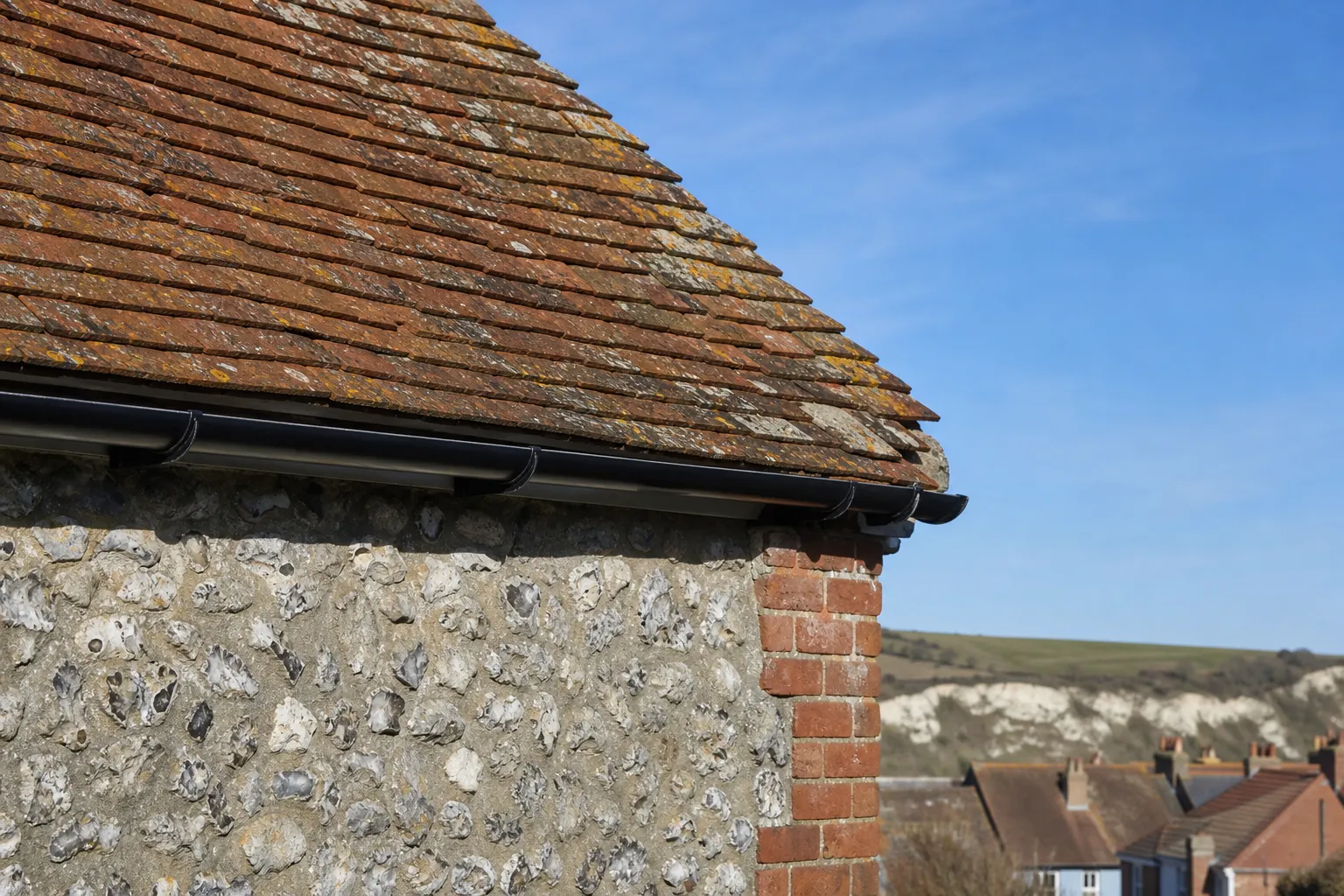
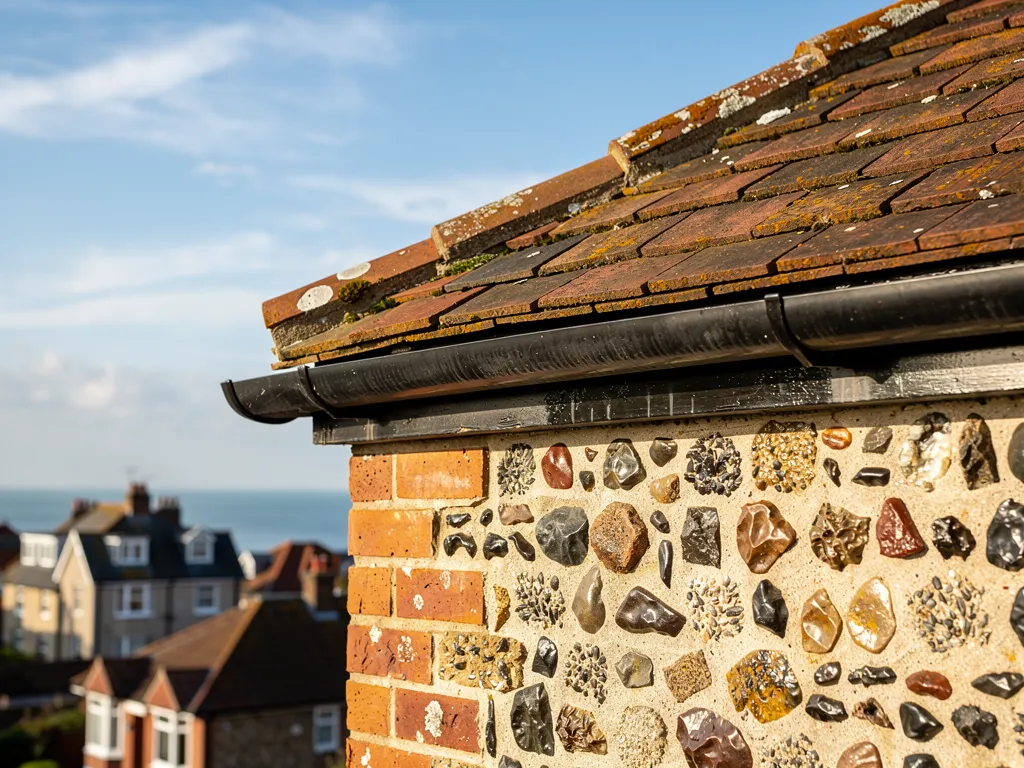
    Slindon is the heart of the National Trust's Slindon Estate, and its estate cottages share a consistent palette of flint and clay tiles.

    Read more about Estate cottages in flint and clay tile

    Matching that palette tile for tile matters more here than on an ordinary street.

  • A Welsh slate roof

    Surviving thatch and early slate

    Thatch survives on the old Post Office on Top Road, and old photographs show it was once much more common.

    Read more about Surviving thatch and early slate

    Slate is the other roofing material in the village and presumably arrived in the early 19th century.

  • Tiled roofs on a gentle hillside

    A village on the dip slope

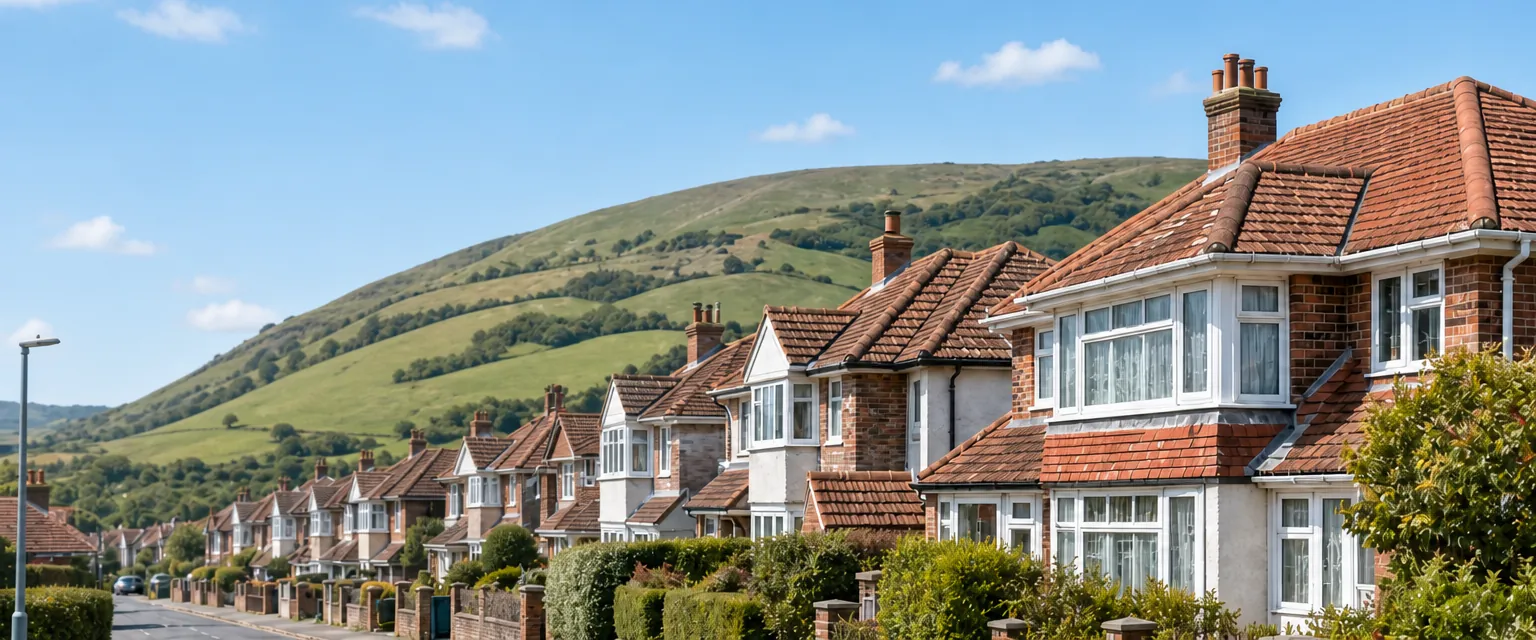
    Slindon lies on the southern dip slope of the Downs, with its northern end about 40 metres above its southern end.

    Read more about A village on the dip slope

    A roof at the top of the village and one at the bottom do not face the same site, so fixing follows the plot.

Street map of Slindon, west of central Worthing, with a pin on the town.

Slindon areas, listings and directions

Planning authority
South Downs National Park Authority
Councils
Arun District Council and West Sussex County Council
Conservation area
Slindon, first designated by Arun in February 1976; the South Downs National Park Authority is now the planning authority
Article 4
None in force; the appraisal floats a possible future direction
Listed buildings
Grade I for the parish church of St Mary; Grade II* for Slindon House, now Slindon College
From central Worthing
14.7 road miles, west, about 22 minutes by car

Slindon roofs

Estate cottages on the Downs' dip slope

Three roofing matters that come from Slindon's estate, its National Park status and the slope it stands on.

Chapter one

Matching clay tile and slate on estate cottages

The estate's flint cottages share one palette of clay tile and slate, and a good repair disappears into it.

The conservation area appraisal describes a village whose estate cottages share a consistent palette of materials, notably flint and clay tiles, because the village is the centre of the Slindon Estate, now owned by the National Trust. Slate is the other covering, and the appraisal suggests it arrived in the early 19th century. The aim on a roof like that is a repair nobody can find from the lane. That takes matching on four counts, which are the tile's size, its colour as weathered, its texture and the way it sits in its courses.

At a glance

  • Estate cottages share flint and clay tiles
  • Slate is the village's other roofing material
  • Slate has a minimum pitch under BS 5534
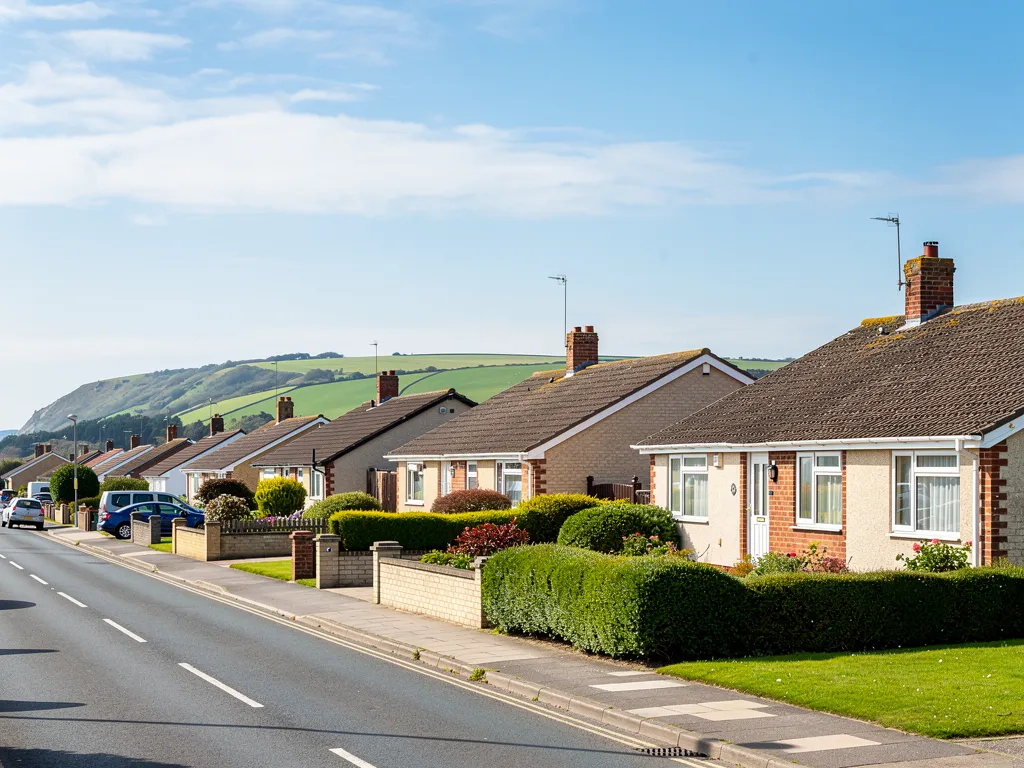
Row of post-war hipped bungalows with tiled roofs on a Worthing street
Row of post-war hipped bungalows with tiled roofs on a street

1.1 Reading clay tile

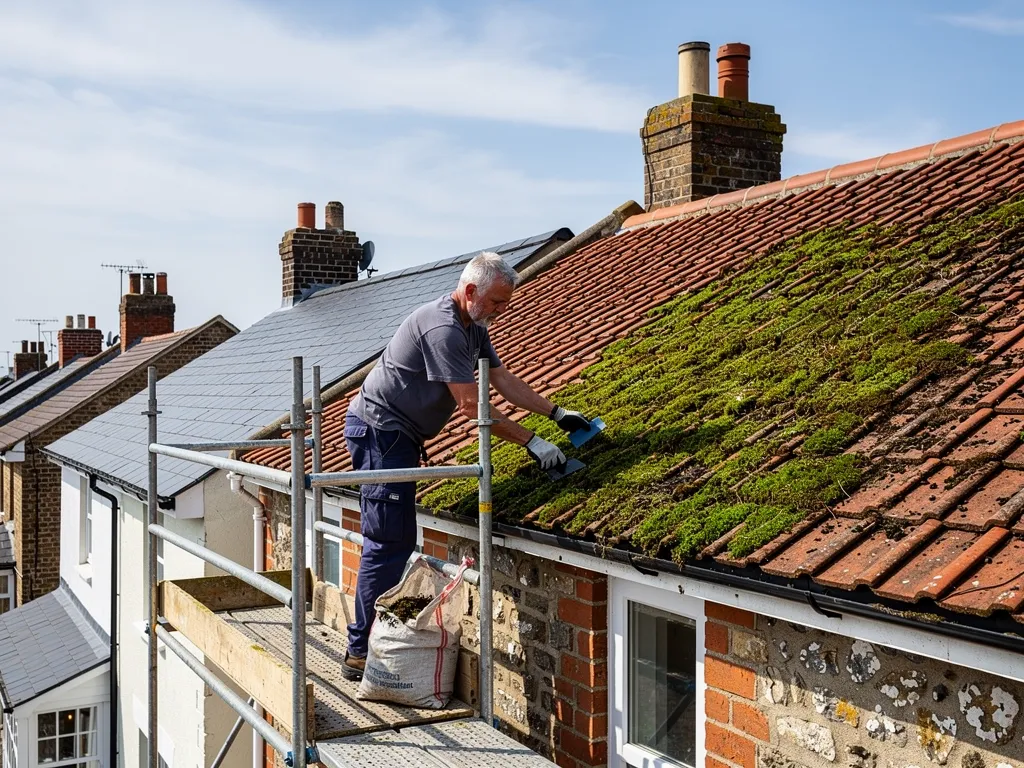
New clay tile often looks too bright against a roof that has weathered for decades. We therefore choose tiles to blend and, where there are sound ones to spare, reuse tiles from a hidden slope on the exposed one. Marley puts the minimum life expectancy of clay tiles at 60 years and attributes that number to the Building Research Establishment, though old roofs do not fit any such figure neatly, so each one is judged on what we find. Slipped tiles near the eaves, nibs that have snapped and battens gone soft are the usual causes. Our pitched roofing page explains the layers of a tiled roof.

Row of post-war hipped bungalows with tiled roofs on a Worthing street
Row of post-war hipped bungalows with tiled roofs on a street

1.2 Reading slate

Slate fails differently. The stone is long-lived, and a well-installed roof can last 80 to 100 years or more, but the fixings give up first. Iron nails rust through, and the slate slips down the roof while looking whole from the ground. Slate also needs enough pitch and overlap to shed water: BS 5534 indicates a minimum pitch of 20 degrees for a 500 mm slate, and Cupa's guidance rules out hook fixings anywhere under 25 degrees. So on a repair we swap the corroded nails for fixings that suit the pitch and put the sound slate back, a method set out on our slate roofing page.

For thatch, the village's old Post Office on Top Road is the surviving example the appraisal names. Where a tiled or slated roof sits against thatch, we take care with the junction, and a roof that borders a thatched neighbour is an access matter we plan at the survey. Ladders, scaffold and any hot work are kept well clear, and we agree where materials and tools will be set down so the neighbour's roof is not disturbed. On an estate cottage we also note who owns and manages the building, since a landlord's agent may need to see the survey photographs before approving the work.

Slate and clay facts for Slindon roofs

Natural slate life
80 to 100 years or more when well installed (MyBuilder)
Clay tile life
Minimum of 60 years (Marley); a loose guide for old roofs
Minimum slate pitch
20 degrees for 500 mm slate under BS 5534 (Cupa)
Hook fixings
Not below 25 degrees (Cupa)

Source: MyBuilder slate roof cost guide, updated 21/08/2026; Marley; Cupa Pizarras, fetched October 2026
Chapter two

A National Park village with two churches

Slindon answers to the South Downs National Park Authority, and its churches follow routes of their own.

Knapped flint wall meeting the eaves of an old clay tile roof

Slindon was first made a conservation area by Arun District Council in February 1976. When the South Downs National Park was created in April 2011, its Authority became the local planning authority, so questions about planning and conservation here go to the SDNPA rather than to the district. The appraisal floats a possible future Article 4 direction, which is a council order withdrawing particular permitted development rights, but none is in force. Put your address to the Authority before the covering is altered, and ask about building control through whichever body you choose.

At a glance

  • The SDNPA became planning authority in April 2011
  • St Mary's has been Grade I since 5 June 1958
  • No Article 4 direction is in force here

2.1 Listed buildings and repairs

St Mary's, the parish church, carries a Grade I listing dating from 5 June 1958. Its chancel dates from the 13th century, and Sir Thomas Jackson restored it in 1866, when the tower was added. Slindon House, now Slindon College, is Grade II*. The Authority's own guidance draws the line this way: routine upkeep and small repairs that match the original need no listed building consent, while work that changes or entirely renews old fabric affecting the building's character does. That is the line we work to. We lift, sort and relay what is sound, and bring in a replacement only where nothing else will do, with photographs of each stage.

2.2 The churches themselves

St Mary's is an Anglican building in current use, so work to its roof sits outside the council's listed building system and goes through the Church's own faculty process. The Roman Catholic church of St Richard, built in 1865 to a design by C. A. Buckler, is a separate case: a Catholic church in use is also exempt, following its own denomination's approval process where it is listed. If you are an owner or a churchwarden rather than a householder, ask the right body first and bring us in once the route is agreed.

Inside the Park a dormer or roof window is handled differently again, and our roof planning permission guide walks through it. The law protects roosting bats and active bird nests, and an old village roof can suit both, so we look for signs before any stripping.

What people sayNational Park status means a Slindon roof cannot be repaired.

What is trueRepairing a roof with matching materials is ordinary maintenance in the Park too; the checks are whether the building is listed and what the SDNPA says about your address.

Chapter three

Fixing roofs along a rising village

On a slope that rises 40 metres across the village, the right fixing depends on the plot as much as the tile.

The appraisal puts the village on the dip slope of the South Downs, with the northern end about 40 metres above the southern. For a roofer that means plots in different positions. Wienerberger explains that interlocking tiles are fixed to a plan drawn up for the particular site, which weighs where the building stands, its height and how exposed it is, with a mechanical fixing on every one. We follow the same logic on a repair. A roof near the high end of the village is not fixed on the same assumptions as one tucked low down, and where a tile maker will advise on a given address, we ask it.

At a glance

  • The village's north end is about 40 metres higher
  • Under 30 degrees, a windward slope can face suction
  • BS 5534 expects ridges to be fixed as well as bedded

3.1 Pitch, ridge and verge

Pitch matters too. Marley warns that a roof pitched under 30 degrees can be pulled hard along the slope the wind meets first. A low-pitched extension roof on a cottage can be pulled harder than the main slope beside it, so its fixings are checked separately. The same care applies to ridges and verges, the edges of a roof at a gable. Since the 2014 revision of BS 5534, the standard has not relied on bedding mortar alone for ridge and hip tiles; they are screwed or clipped down too. Where the original ridge is sound we reuse it, and where it has gone we match it, either bedded and fixed or as a dry-fix ridge.

3.2 Repair or re-roof

A cottage roof with one failed valley or a run of slipped tiles is a repair, however much more a full re-roof might earn us. Rusted fixings, perished underlay and trouble on every slope point to a re-roof instead. Anything that raises the weight of the covering by 15 per cent or more, or work that reaches 25 per cent of the building envelope or 50 per cent of the roof, moves into approval territory, and a thermal upgrade under Part L may follow. Our roof replacement page sets the steps out.

The costs below are third-party national figures, not our prices. Access, the covering, the pitch and what the survey finds decide yours.

National guide costs for slate and tile work

  • Slate re-roof cost, per m²£100 to £180
  • Moderate roof repair£500 to £1,000
  • Dry ridge, per metre£40 to £60

Slindon work is priced after a survey and arrives as one written total; look for a statement on VAT and scaffold in any other quote you hold. Source: MyBuilder slate roof and dry ridge price guides, updated 21/08/2026.

Slindon roof questions, from estate cottage to church

Can a Slindon estate cottage be re-roofed in a different tile?

Possibly, but a new tile alters a palette the appraisal describes as flint and clay tiles, in a conservation area where the South Downs National Park Authority decides. Ask the Authority before choosing a new covering, because planning, and listed building consent where the cottage is listed, may be involved. A matching clay tile is the simplest route, and a markedly heavier covering also needs a building control check.

Do I speak to Arun or the National Park about my Slindon roof?

On planning and conservation, the South Downs National Park Authority, which has been the local planning authority since April 2011. Arun remains the district council for other council services. For building control, use your chosen building control body. We explain which questions go where and handle the notification of any notifiable work, so you are not passed between offices.

Is there an Article 4 direction in the Slindon conservation area?

Not at present. The conservation area appraisal does float a possible direction for the future, so the position could change, and the Authority is the place to check for your address. A direction withdraws particular permitted development rights; it does not stop ordinary repairs. We photograph the roof as found so there is a clear record.

How does roof work differ for St Mary's compared with a Slindon cottage?

St Mary's is Grade I listed, and an Anglican church still used for services follows the Church's faculty process in place of the council's listed building consent. A listed cottage follows the National Park Authority's consent route, where minor like-for-like repair in place does not need consent but replacing historic fabric does. The approvals differ, but the method does not: find the cause, repair the least, and match what is there.

Tell us about your roof

Describe what is happening and we will call you back to arrange a visit.

  • Photographs of what we find
  • A written quote with one total price
  • Or call 01903 299063

10-year workmanship guarantee, in writing.

Call Get a quote