
Question answered
Bird proofing a commercial roof
The short answer
Bird proofing a commercial roof is lawful and sensible, but a nest that is being used or built is protected. Under GOV.UK's wild bird guidance, deliberately removing or wrecking an occupied or half-built nest is an offence, and no licence exists to allow it for building work. Proofing is therefore planned around active nests, then fitted without harming the roof covering.
Pigeons and gulls on a warehouse or shop roof cause fouling and blocked outlets, but the birds and their nests are protected. Timing and method decide whether proofing helps or causes a new problem.
What the nest offence covers
GOV.UK's wild bird guidance treats deliberately taking, damaging or destroying a nest as an offence while birds are using it or building it. It adds that nothing in the licensing system covers development or construction. Put plainly, a proofing or roofing contract gives nobody the right to clear a nest that is occupied.
The wording turns on the state of the nest, not on a calendar. The guidance sets no nesting-season dates, so no month can be assumed safe. The question on the day is simple: is anyone using or building this nest?
Bats are a separate protected group, and GOV.UK lists roof repair and replacement among the activities that can affect their roosts. An older building with timber eaves or a loft needs that asked before work starts. We check both matters at the survey, ahead of the written price, so the programme is realistic. The rest of our commercial roofing work follows the same approach.
Timing the work around nests
Because the offence concerns a nest in use, the best-planned jobs begin with a look. We check parapets, plant platforms, gutters and the gaps behind cladding for nests and for signs that birds are still using them. If a nest is active, that area waits and the rest of the programme moves around it.
The cleaner approach is to prevent birds settling in the first place. Proofing fitted while a ledge is empty means no nest is ever disturbed, and the roof does not need to be revisited. That is why proofing is often best combined with another visit, such as gutter clearing or an inspection, when the access is already arranged.
Owners sometimes ask for a quick clear-out ahead of a tenant inspection or a sale. A rushed removal is where trouble starts. Allow time for the check, and treat the schedule as something the birds can change. A short delay costs less than a dispute over a protected nest.
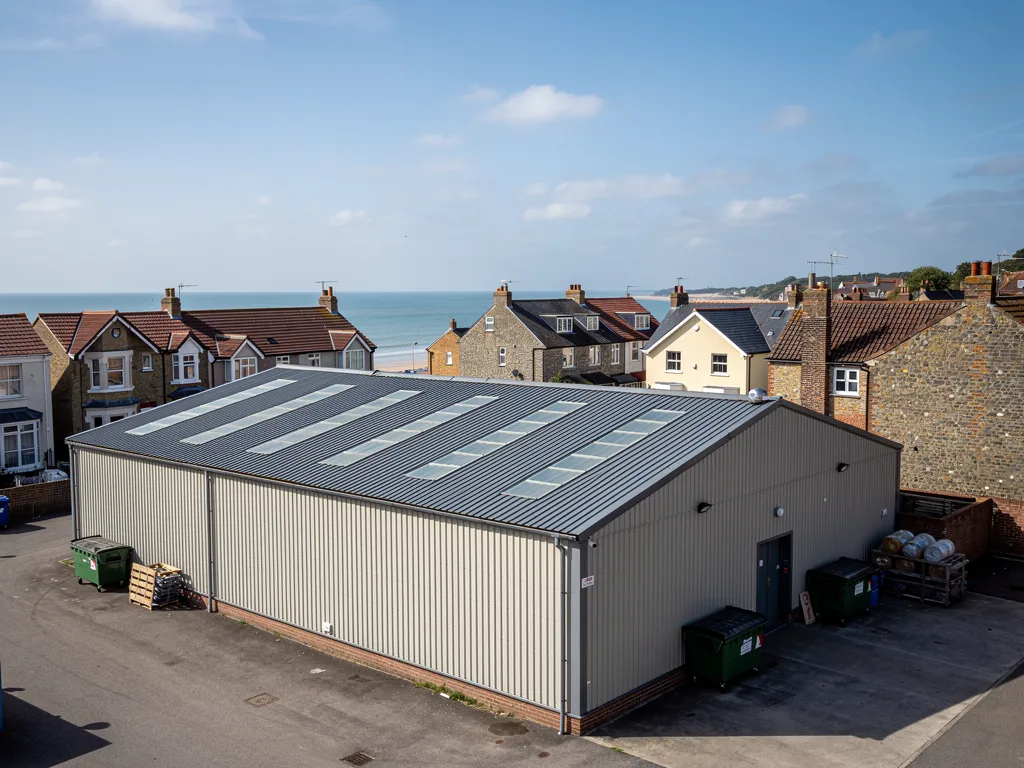
What birds do to a flat roof
Droppings make a roof surface slippery and unpleasant to work on, and they collect where water should flow. Nest material, feathers and food waste wash into outlets, gutters and the gaps behind parapets. Over a season that debris can block a drain completely, and a blocked outlet leaves water standing on the roof. Our page on blocked outlets on a commercial roof explains what follows.
Birds also favour sheltered ledges. Plant housings, the gap beneath a canopy, the back of a sign and the top of a box gutter all suit them. Each of those places is also somewhere a roofer needs to reach, so a nesting site can make a routine inspection slower and more awkward.
Fouling is a maintenance cost as well as an appearance issue. It is one more reason to treat bird activity as a roof condition to record at survey, in the same way as a cracked upstand or a lifted lap.
Proofing methods and the roof they sit on
Proofing falls into a few families. Spikes and wires stop birds landing on ledges. Netting closes off a void such as the gap beneath a canopy. Mesh seals the gaps around plant and pipework. Which one suits a building depends on the species, the ledge and the surface it must be fixed to, and the wrong choice can trap a bird or leave an easy gap.
The roof covering decides how it is fixed. Adhesive fixing leaves a membrane intact but depends on a clean, dry surface. Mechanical fixing is sturdier but goes through the covering. On a roof under a manufacturer's cover, ask the system maker before anything passes through the membrane; our page on manufacturer warranties explains why. The notes on single-ply membranes cover how those sheets are joined and sealed.
On older cement sheeting the stakes are higher. Drilling can disturb the material and the sheets are fragile, so read the duty to manage asbestos first.
Questions to settle before the work is booked
A few answers keep a proofing job tidy. First, are any nests in use or being built, and who will check that on the day? Second, which parts of the roof take fixings, and does any of that need manufacturer approval? Third, how will the roof be reached, and does the access suit a fragile surface?
Then the clean-up. Droppings and nest debris need removing safely, and the outlets and gutters should be cleared and checked once the proofing is in, because the debris you have just disturbed ends up there. Ask who takes the waste away, and expect it to be taken off site.
Finally, ask for the plan in writing with photographs of the problem areas on your own roof. A single written price comes after the survey. The pictures double as a record of where proofing went, which helps the next contractor and any later warranty discussion.
Proofing a working roof: two more questions
Can birds be moved on before proofing starts?
Birds that are simply perching can be discouraged, but an occupied or half-built nest is protected, as the GOV.UK guidance explains. We check for active nests at survey and leave those areas alone until the birds have finished with them. Proofing then goes on to the empty ledges.
Will fitting bird proofing affect a roof warranty?
It can if the fixings pass through the covering. Ask the manufacturer or the installer of the system before any hole is made, and keep the answer in writing. Adhesive or clamp fixings may suit some surfaces better than screws.
Tell us about your roof
Describe what is happening and we will call you back to arrange a visit.
- Photographs of what we find
- A written quote with one total price
- Or call 01903 299063
10-year workmanship guarantee, in writing.