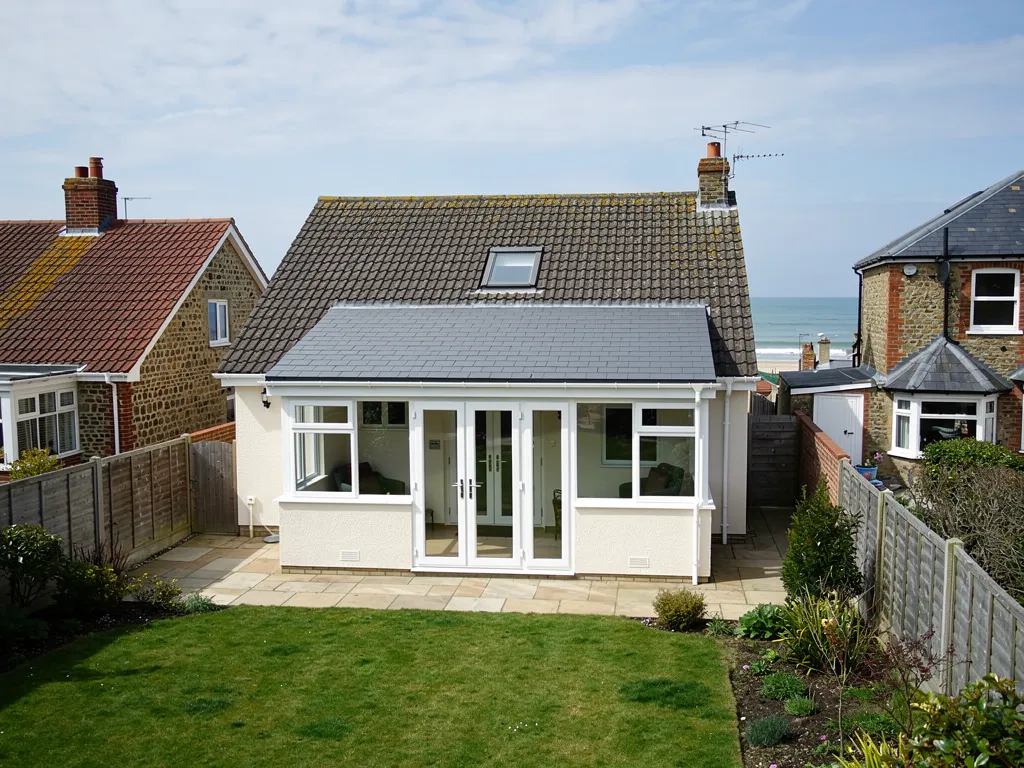
Few rooms in a house behave as badly as a conservatory with an old roof. In January you can see your breath by the French doors, and by July the same room is too hot to sit in until the evening. People tend to blame the glazing in the walls or the lack of a radiator, and sometimes they are right. More often the roof is doing most of the damage, because it is the biggest surface exposed to the sky and usually the thinnest part of the structure.
A roof of single-skin or thin multiwall sheet lets heat out quickly on a cold night and lets the sun in fully on a bright day. Fix the roof and the room changes character. Fix the wrong thing, such as buying a bigger heater, and you spend money heating the sky.
This guide starts with how to tell whether the roof is the cause, then covers each way of improving a conservatory roof, from cheap temporary measures to a full solid roof, and what each one changes in winter and summer. Along the way it flags the trade-offs, including the loss of light that comes with a solid roof, so you can choose with your eyes open rather than trade one complaint for another.
Why a conservatory roof swings between cold and hot
Heat moves through a roof in three ways, and a conservatory roof is poor at stopping any of them. It conducts, because thin glazing or sheet has little resistance and the warmth inside passes straight through. It lets radiant heat in, because clear or lightly tinted panels pass sunshine into a room with no mass to absorb it. And it leaks air at the bars, seals and eaves, so the room cannot hold warm air in winter or push hot air out in summer.
The shape of the room makes this worse. Against its floor, a conservatory carries a very big roof, and sun falls on the roof for much of the day. In winter, with the sun low, the room gains little useful heat and loses plenty after dark. In summer the roof catches the high sun and the air under it climbs, with nowhere to go unless there is ventilation.
What the covering does
An older polycarbonate roof may have yellowed or crazed, and its multiwall channels can collect dirt or damp, which cuts the light and the performance. Plain glass of the older kind passes heat both ways with little hindrance. Newer glazing carries coatings that reflect heat, which is why a modern glass roof can behave very differently from one fitted decades ago.
What the frame and seals do
The aluminium or uPVC bars are part of the story. Bars without a thermal break conduct cold into the room, and condensation can form on them. Perished gaskets and cappings let cold air whistle in. None of this is dramatic on its own, but across a whole roof it adds up to a draughty, uneven room.
Knowing which of these applies shapes the whole discussion that follows, which is why our survey starts with the existing roof and not with a product.
Ruling out the other causes first
A roof can be sound and the room still uncomfortable, so it pays to check the rest of the structure before spending on the top of it. A careful survey does this early, and you can do some of it yourself in an afternoon.
Doors, windows and the floor
Hold a hand or a lit candle near the door seals, window frames and the junction where the frame meets the floor. A moving flame shows a draught. Old double glazing with failed seals mists between the panes and loses its benefit, and tired door gaskets leak air all winter. The floor matters too: a concrete slab with no insulation under it feels cold underfoot, and the cold rises.
The wall to the house
If the conservatory is open to the main house, heat from the living room escapes into it through the opening. A closed door and a heated room behave differently from an open archway. Check whether the radiators of the house have been extended into the conservatory, since that can overload the heating and make the whole house feel chilly.
Condensation and damp
Water on the glass and bars on a cold morning is condensation, which comes from moisture in the room meeting a cold surface. It is a symptom of low surface temperature and poor ventilation, and a separate page on condensation on a conservatory roof deals with it fully. A leak is different, with water appearing during or after rain.
If the doors, windows and floor all check out, the roof is the likeliest cause, and the options below apply. If several problems show up, the order of fixing them matters. A new roof on a room with failed windows still leaves the windows to deal with, and we tell you in the survey rather than selling a roof as the cure for everything.

Cheaper steps before you replace anything
Replacement is the biggest step, so it is worth being clear about what smaller measures can and cannot do. Some are sensible whether or not you replace the roof later.
Blinds and film
Roof blinds cut the sun in summer and, when drawn at night, add a layer of trapped air in winter. They work best when fitted close under the glazing with a fabric that reflects light. Solar control film applied to the inside of glass reduces glare and heat gain, though it does little in winter and can be awkward to remove. Neither changes the fabric of the roof, so the result is modest.
Ventilation
Hot air rises, so a high-level opening is more use than a wide-open door. An opening roof vent or a window near the ridge lets the hottest air escape, and a low vent opposite draws in cooler air. We cover the ways to add one in the guide to roof windows for a conservatory, and the usual rules on ventilation still apply to a new roof.
Reseal, clean and repair
A roof with worn seals and dirty panels performs worse than the same roof in good order. Replacing gaskets, cleaning algae and renewing failed cappings can take the edge off draughts and restore some light. If the panels have yellowed or the bars have corroded, the repair stops being worth the money, and the choice becomes a proper one between repair and replacement, discussed in our guide to repairing or replacing a conservatory roof.
None of these steps is a bad idea. They are simply limited, because the roof itself stays thin.
Upgraded glass, polycarbonate or insulated panels
If the existing roof is the problem but you want to keep a bright room, a better glazed roof is the next step up. It changes the performance without changing the character of the space.
Modern glass
A glass roof today is a sealed double-glazed unit with coatings. A low-emissivity coating helps keep warmth inside in winter, and a solar control coating cuts heat gain in summer. The two work differently, so the choice depends on which complaint is worse in your room. A south-facing conservatory that overheats leans one way, and a north-facing one that stays cold leans the other. Many people want both, and a good fitter will explain how the coatings trade one against the other.
Self-cleaning coatings are an add-on that some choose to cut the effort of cleaning, and they are covered separately in the page on self-cleaning glass roofs.
Better polycarbonate
Not all polycarbonate is equal. Thicker multiwall sheet has more air channels and resists heat flow better than thin sheet, and tinted versions reduce glare. It is the lowest-cost route and keeps the roof light. Published guides put the typical life at around 10 to 15 years, which is shorter than glass.
Insulated panels
Some roofs use insulated panel systems that replace the glazing with a lined, solid-feeling unit. They sit between glass and a full tiled roof in both performance and appearance.
All of these keep the conservatory as a glazed room. Whether the structure can take a heavier glass roof depends on the frame, and the first job at survey is to check that. Our page on the choice between glass and polycarbonate compares the two in more detail.
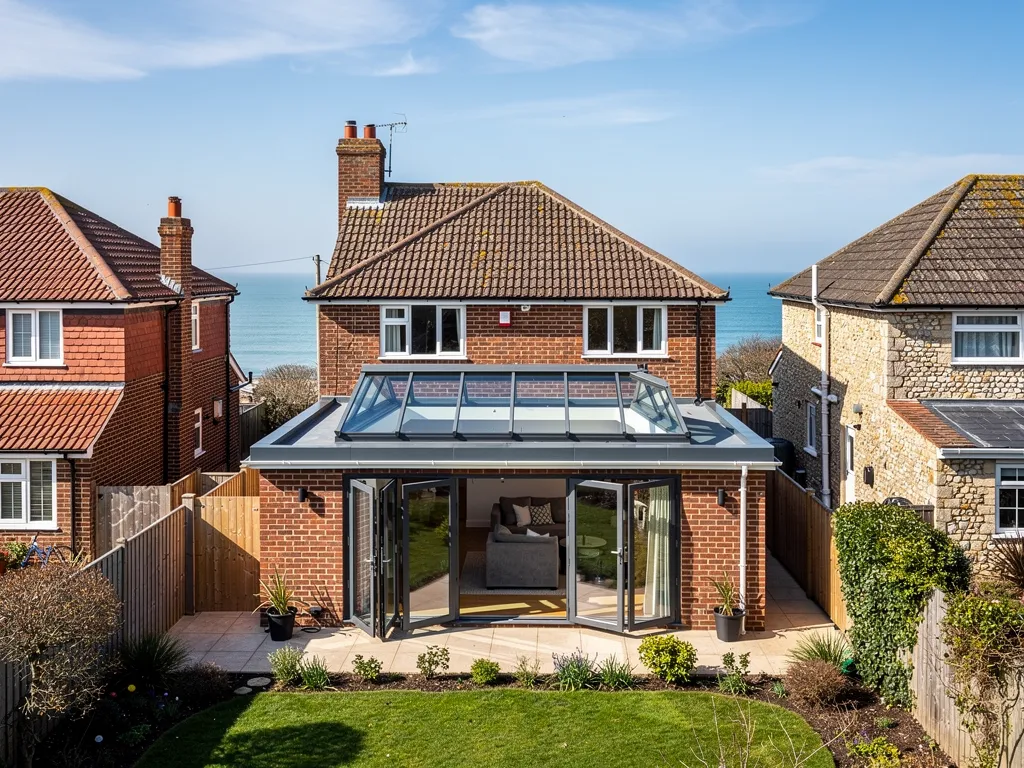
A solid roof: warmer in winter, and cooler in summer
The most complete answer is to replace the glazing with a solid, insulated roof, usually tiled or slated to match the house, with plastered ceiling and fitted lighting beneath. It turns the conservatory into something closer to an extension.
What changes
A solid roof has real insulation in its depth and a covering that does not pass sunshine into the room. In winter it holds heat far better than any glazed roof. In summer it stops the sun reaching the room, so the temperature stays more even through the day. Rain noise falls too, which many owners count among the best results, and the guide to rain noise on a conservatory roof explains why.
What you give up
You lose the overhead light, and for some people that changes the feel of the room more than they expect. Roof windows or lantern lights can win back some daylight, and a roof can be designed with them. It is worth standing in the room at different times of day and thinking about how you use it before deciding.
What it takes
Homebuilding & Renovating classes a solid replacement for the old conservatory roof as a material alteration, so a building control application follows. The frame and base must carry the extra weight, so a structural check comes first. Planning permission is separate, and our guide to planning for a conservatory roof sets out the usual position.
MyBuilder's guide (updated 21/08/2026) gives typical UK ranges of £5,000 to £10,000 for a solid roof, £3,000 to £8,000 for glass and £2,000 to £5,000 for polycarbonate, with structural reinforcement at £500 to £2,000 where needed.

Choosing between the options for your own room
There is no single right roof. The sensible one depends on how you use the room, what is wrong with it now and what the frame can carry.
Start from the complaint
If the worst problem is summer heat, solar control glass or a solid roof does the most, and blinds and ventilation help in between. If the worst is winter cold, a solid roof or low-emissivity glass makes the biggest difference, and an under-floor or wall fix may be needed too. For a year-round dining space or home office, a solid roof usually suits better than a glazed one. If you want a light garden room for summer, a good glazed roof with blinds is enough.
Think about the house
A conservatory that opens into a living room behaves as part of the house, so the roof matters more for heating bills. One that is closed off with a door can be allowed to run cooler. A listed house or a conservation area may limit the choices, and our guide to conservatory roofs in conservation areas shows how to check that.
Ask for the cause in writing
When we survey, we look at the roof, the frame, the seals and the other likely culprits, and photograph what we find. You then see the cause on your own conservatory before any figure is given. Our advice is the smallest change that properly cures the fault. That might be new seals and blinds, or a whole new roof.
Once we have seen the room, the figure arrives in writing as one total, and we price it fairly. The quote says what is included, such as the new roof, the insulation layer and the clearing of the site, so you can see what the single total covers before you decide.