
Question answered
Is self-cleaning glass worth it on a conservatory?
The short answer
It can be worth it, but not everywhere. The coating on the outer face reacts to daylight and lets rain wash loosened dirt away, so a roof in the open with a decent slope stays clearer between cleans. Under trees, on a shallow pitch or where bird droppings and sap land, it helps far less. Treat it as a way to clean less often, not never, and weigh the extra cost against how your roof sits.
Self-cleaning glass helps most on a sunny, well-pitched roof in the open, and least on a shaded or shallow one. It reduces the cleaning, but it does not remove it.
How the coating is meant to work
The glass carries a thin coating on its outer face. In daylight it breaks down organic dirt, and it also makes water spread into a sheet instead of beading. When rain runs down the slope, that sheet carries the loosened dirt away with it. Makers describe this as a two-stage action: the light loosens, then the rain rinses.
That description tells you what to expect. The glass needs daylight and it needs rain to finish the job. In a dry spell the dirt stays put, and on a roof that never sees much sun the first stage barely starts. Heavy deposits such as dried mud or paint splashes need removing by hand before the coating can do anything useful. It is a surface treatment, not a self-powered cleaner, and it works best when the glass was reasonably clean on the day it was fitted.
Where it earns its keep and where it falls short
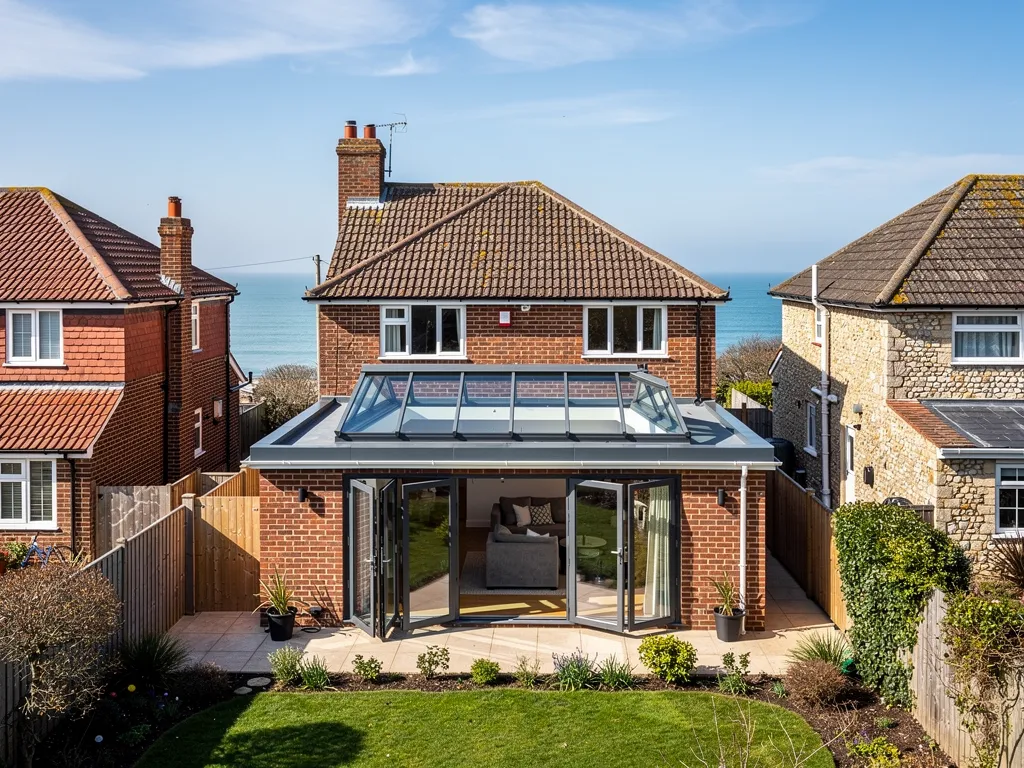
It pays its way on a south or west-facing roof with a decent slope and open sky, where rain and daylight both reach the glass. It also helps on a roof that is awkward to reach, where every cleaning visit costs money or carries risk. Our guide to cleaning a conservatory roof explains why access is the real cost.
It does less where a tree drops sap and leaves, where gulls leave droppings that bake on, or where the pitch is so shallow that water barely runs. In those places expect to clean the glass anyway, using the soft methods the coating needs, and expect the result to be a little better than uncoated glass rather than transformed. A north-facing slope shaded by a neighbouring house gets the least out of it.
What it cannot clean
The coating is on the glass, not on everything around it. The bars, cappings, gaskets and the underside of the roof are untouched. Green growth along the bar edges and inside the channel is the commonest grumble on conservatory roofs, and self-cleaning glass does nothing about it. Our page on conservatory bar cappings covers the part that actually leaks and stains.
Abrasive pads, harsh cleaners and some wipes can damage the coating, so follow the maker's cleaning instructions and keep any paperwork that came with the glass. If the instructions say to leave it to the rain for the first few weeks, do exactly that. Inside, the glass collects fingerprints, cooking film and condensation marks like any other pane, and the coating does not touch those. Dust gathers on the inner face of a flat roof especially, and an occasional wipe from a stable platform keeps the room bright.
Glass types and how they compare
Conservatory roof glass types differ in more than the coating. Some units add a solar-control layer to cut summer heat and glare, others add a low-emissivity layer to hold warmth in. Overhead glass is normally laminated or toughened for safety, so ask for the specification in writing instead of accepting a sales description. The paperwork should say how the glass is built, what coating it carries and what the heat and glare control is.
Compared with polycarbonate, glass is clearer, heavier and generally dearer. MyBuilder gives typical UK ranges of £3,000 to £8,000 for a glass conservatory roof and £2,000 to £5,000 for polycarbonate (guide updated 21 August 2026). Weight matters because older frames were often built for the lighter material, so a swap needs a check on the frame, the bars and the wall below. Thicker, laminated glass also changes how the roof sounds in rain, which some owners notice straight away. Our guide to glass versus polycarbonate weighs the two in more detail.
A fair way to decide
Ask how much the coating adds to the quote and how many cleans it is likely to save on your roof, then compare that saving with what a cleaner charges each visit. If the roof is in the open with a reasonable pitch, the extra spend can pay back in effort. If it sits under a tree or faces north, put the money into good cappings and easier access instead.
Whatever you pick, a visit to the roof comes before the glass. We study the frame, the slope and the shade, then send photographs with a written quote giving a single total, so the decision rests on your own roof and not on a brochure. If keeping the roof clean is a burden you would rather lose altogether, a solid roof needs no glass cleaning at all, and the conservatory roof replacement page explains how that route works, including the finishes available.
Coated glass: two things buyers ask
Can self-cleaning glass be fitted into my existing conservatory bars?
Often, if the bars and frame can carry the weight and the channel suits the glass thickness. That needs checking on site, since many older frames were built for polycarbonate. We assess the frame first, then say whether the glass can go into the bars you have or whether the structure needs help.
Does the coating stop a conservatory roof leaking?
No. Leaks come from seals, cappings and joints, not from dirty glass. The coating changes how dirt behaves, not how water gets in, so a leaking roof still needs the cause found and fixed, whatever the glass is made of.
Tell us about your roof
Describe what is happening and we will call you back to arrange a visit.
- Photographs of what we find
- A written quote with one total price
- Or call 01903 299063
10-year workmanship guarantee, in writing.