
Question answered
Does a solid roof make a conservatory dark?
The short answer
A solid roof makes a conservatory darker than a glass or polycarbonate one unless the design puts glazing back in. Roof windows, a lantern or glazed panels let daylight in from above, and good wall glazing keeps the sides bright. How dark the room feels depends on how much glazing you choose and where it sits. We plan the layout at the survey so you are not guessing.
A solid roof does cut light compared with glass, but it is a design choice, not a fixed penalty. Roof windows and glazed panels can bring plenty of daylight back.
What you gain and lose with a solid roof
A glazed roof lets light fall straight down, and that overhead light is why a conservatory feels so open. Replace it with a tiled or slated roof and the ceiling becomes a solid plane. The room can feel more like an extension, calmer and less glaring, but it will be dimmer.
That is not always a loss. Many glass conservatories are too bright and too hot in summer, with blinds drawn most of the afternoon. A solid roof gives control, so you choose where light enters instead of taking it everywhere at once.
The question is how much glazing the new roof keeps. A roof with no glazing at all will feel enclosed. A roof with two or three roof windows, set on the sunny slope, can be bright enough to need no electric light in the daytime.
It helps to picture the sun's path across your garden. A roof window facing the midday sun does more than one facing the neighbour's wall.
Roof windows and rooflights
The two terms mean different things in Approved Document L. A roof window lies flat in the roof slope, level with the covering around it. A rooflight sits up on a kerb or upstand, so it stands proud of the roof.
That difference matters for performance. Table 4.2 in Approved Document L Volume 1 gives a limiting U-value, the measure of heat loss, of 1.4 for windows including roof windows (or, as the alternative, a Band B rating on the Window Energy Rating scale), and 2.2 for rooflights. Building control tells you how those figures apply to your particular build.
In the room, a roof window lets you look up and see the sky, and one that opens also helps ventilation. A rooflight on a flat section brings in a lot of overhead light. Choose by position and use, not by price alone.
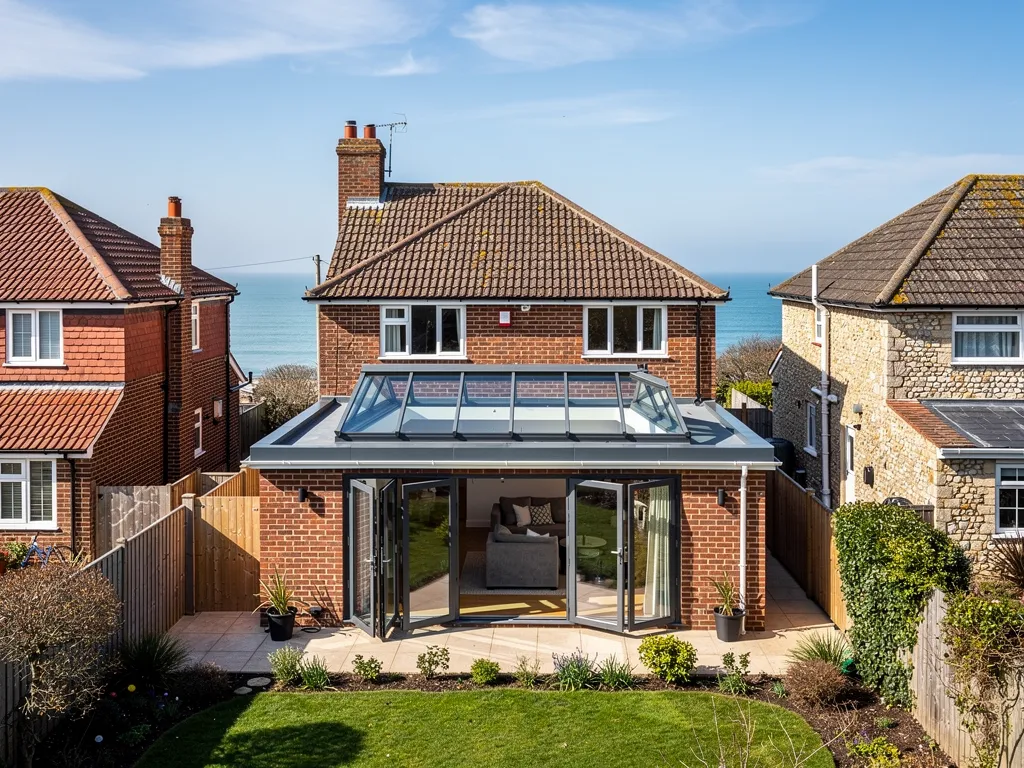
Glazed panels and lanterns
Glazed panels are factory-made sections of glass or high-performance glazing that sit within the roof structure, usually between rafters. They can be set into the slope in a line or in groups, keeping the solid look from the garden while lighting the room.
A lantern is a raised glazed feature on a flat or low-pitched section. It draws light down into the centre of the room and gives height. It is a design statement rather than a necessity, and it affects the roof's structure, so it should be planned from the start.
Panels and lanterns add cost and complexity, and each opening has to be detailed so that it stays watertight. We look at how many the frame can support and how the flashings will be dressed. Our page on conservatory roof noise in the rain explains what glazing does to the sound.
Where the frame cannot carry a large glazed lantern, several smaller panels are often the practical answer.
Making the room feel bright inside
Light is also a matter of finish. A white or pale ceiling reflects what comes in, and recessed spotlights supply light on grey days and evenings. Splayed reveals, the angled sides of a roof window opening, spread light much better than square ones.
Wall glazing contributes more than people expect. Full-height glass on two or three sides keeps the side light of the original conservatory. If you have dwarf walls, a glazed door and tall windows help the room stay bright without the roof doing all the work.
Think about the garden too. A south-facing room receives so much sun that a solid roof with a few well-placed windows is often a relief. A north-facing room benefits from more glazing overhead. We discuss the orientation at the survey, with your own roof in view.
Pale paint on the roof timbers and ceiling is the lowest-cost way to lift a room, and it is usually done last. A matt finish scatters light better than gloss.
Planning permission, value and next steps
Adding roof windows can affect whether the work is permitted development, and the answer depends on where you live and where the windows sit. Ask the Adur & Worthing planning team, or your own council's planners, and read our note on planning for a conservatory roof.
Many people also ask whether a solid roof helps or hurts the property; see whether a solid conservatory roof adds value.
Describe how the room is used and what bothers you about its light now. We survey the frame, mark the possible window positions on photographs of your roof, and provide a written quote. The main conservatory roof replacement page lists the choices.
That way the position of each opening is agreed before any timber is cut, and not changed on the day.
Light under a solid roof: two more questions
How many roof windows should a solid conservatory roof have?
There is no fixed number. It depends on the room's size, its direction and how much glazing is in the walls. A small south-facing room may need one or two, a large north-facing room more. We mark the options on photographs at the survey.
Will roof windows make the room too hot?
Less than a fully glazed roof does, because the glazed area is smaller. Roof windows that open release hot air from the top of the room, and blinds on the windows give you control when the sun is high.
Tell us about your roof
Describe what is happening and we will call you back to arrange a visit.
- Photographs of what we find
- A written quote with one total price
- Or call 01903 299063
10-year workmanship guarantee, in writing.