Many people know that a contract signed at home can be cancelled within 14 days. Fewer know that the rule has an exception for the situation a leaking roof creates. When you phone a roofer because water is coming in and ask them to come out to stop it, you are not in the usual cooling-off position, and it helps to know that before the visit rather than after the invoice.
The exception is narrow. It rests on one thing: that you specifically asked for the visit, for the purpose of urgent repairs or maintenance. It does not cover work the roofer proposes after they arrive, and it does not remove the law's expectation that work is done with reasonable care and skill. A good roofer will explain which part of the job falls where, in writing, and will not use the urgency of a storm to push you into a larger contract.
This guide explains the rule in plain English, shows how the exception works in practice, covers extra work, early starts and what stays protected, and lists what to ask for before anyone starts. It is a general guide and not legal advice.
The normal rule: 14 days to change your mind
The Consumer Contracts (Information, Cancellation and Additional Charges) Regulations 2013 give you the right to cancel certain contracts that were not made at the trader's own premises. A contract signed at your kitchen table after a survey is an off-premises contract, defined as one made with both of you present in a place that is not the trader's business premises. Most roofing quotes accepted at home fall into this group.
How long you have
For services, the cancellation period ends at the end of 14 days after the day on which the contract is entered into. You can cancel at any time in that period without giving a reason. If the trader did not give you the required cancellation information, the period can extend by up to 12 months after the day it would otherwise have ended. If you cancel, the trader must reimburse your payments.
What this means for a planned job
If you have a survey, take a written quote and decide to go ahead with a re-roof, a ridge rebuild or a flat roof replacement, that 14-day right will usually apply. A roofer who wants to start sooner needs your express request, made on paper or by email, and if you then cancel, you owe a share matching the work already done. Our emergency roof repair cost page explains how urgent work is priced, while the cancellation period itself depends on how the contract came about, not on how big the job is.
The urgent-repair exception below changes this picture, but only for the repair you asked for.
The urgent repair exception in regulation 28
Regulation 28(1)(e) of the same regulations takes out of the cancellation rules a contract that follows a visit you have asked the trader to make, specifically so that urgent repairs or maintenance can be carried out. That is the rule behind the point that there is no cooling-off period on a requested urgent repair visit.
Read it as a rule about what you asked for. A phone call or message saying that water is coming in and asking someone to attend is what the wording describes.
Why the exception exists
A cooling-off period makes sense for a purchase you have time to think about. It works badly when water is running down your wall. Without it, an urgent call-out would need the same written early-start request as a planned re-roof before anyone could stop the leak. The exception allows a roofer to attend and stop the damage without that delay.
What the exception needs
Three things need to be true. You must have asked for the visit yourself, rather than the roofer calling at your door unprompted. The visit must be for repairs or maintenance, not a new roof or an improvement. And the repair must really be urgent. A roofer who knocks after a storm and says your roof needs attention is not responding to your request, and the exception does not apply in the same way. The Regulations themselves are on legislation.gov.uk.
Keeping your own record
Keep the text, call log or email in which you asked for the urgent visit. It shows who initiated the contact and what you asked for, and it helps if the scope of the work is questioned later.
Extra work sold on the same visit
The most important limit is in regulation 28(2). The exception covers the urgent repair you requested, but it does not cover other services or goods that the trader sells you during the visit which you did not specifically request. For those, the normal cancellation rules apply, including the 14-day period.
How it works on a real roof
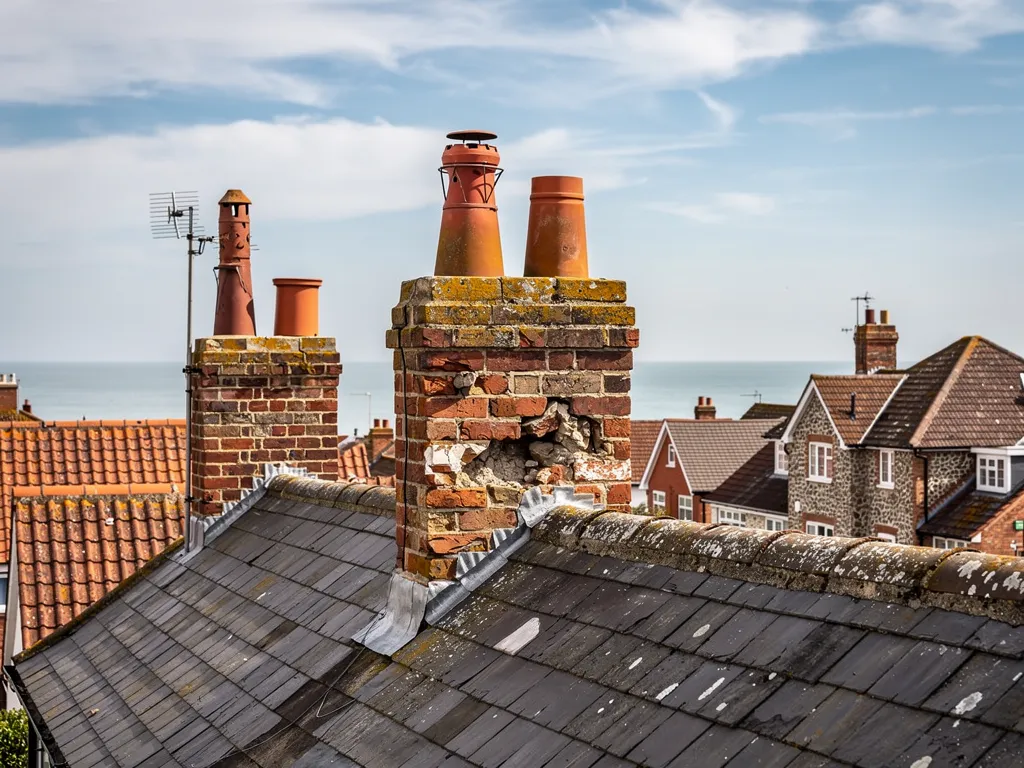
Suppose you ring because a storm has stripped tiles above a bedroom and water is coming in. The roofer replaces the tiles, refixes the ridge and makes the ceiling safe. That is the urgent repair. While on site, they say the whole slope is tired and offer to recover it, or suggest replacing the gutters and fascias. That extra work is a separate sale. You have the right to think about it, and the cancellation period applies to it.
A fair roofer separates the two in writing. The urgent repair is described with its price and scope. The proposed extra work is described as a separate matter, with its own written quote after a survey, its own date and the cancellation information. You are free to accept, to wait, or to ask another roofer to look at the same roof.
Warning signs
Be cautious if someone insists the whole roof must be done today, refuses to put the scope in writing, will not leave the quote with you or asks for a large payment in cash before any work is done. Asking questions is not rude, and a roofer who is confident in the work will answer them. If you are not sure whether a job is urgent, our guide to what to do when a roof is leaking and the page on when a roof problem is an emergency help you judge.
Starting early, paying and stopping part-way
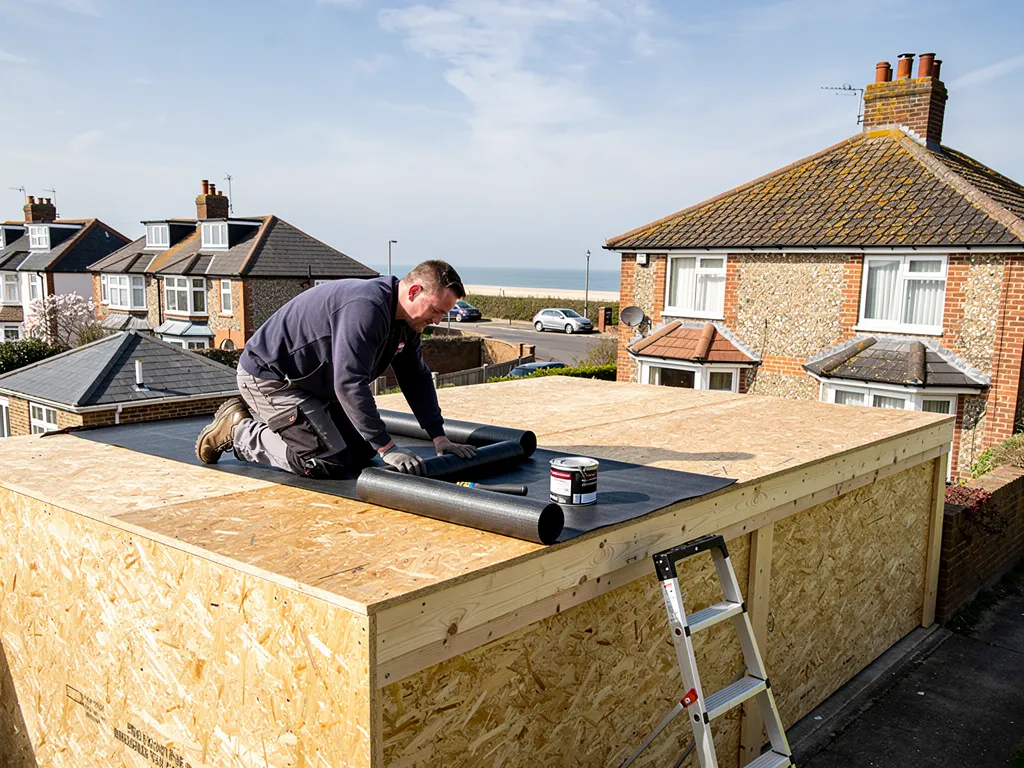
Outside the urgent-repair exception, a roofer who wants to start within the 14-day period needs more than a nod. For an off-premises contract, you must have made an express request to start early on paper or by email, which the regulations call a durable medium. If you then cancel, the charge is a share matching the work already carried out.
The right can also be lost on full performance. That happens only if you asked for the work to start within the period and acknowledged that you would lose the right to cancel once the contract was fully performed.
What this means in practice
You do not need to hurry a decision because of the weather. If rain is forecast, a make-safe can be agreed as the urgent repair, and the larger job can wait until you have seen a written quote with photographs of your own roof. That is how we work: the opening that lets water in is dealt with first, then we trace the cause, and the lasting repair follows with its own written quote, priced as one figure.
Payment and paperwork
Ask for a written description of what is being done and what it will cost before work starts, even if it is brief on an urgent job. Check whether the price includes VAT and any scaffolding, because a make-safe can need access equipment. Ask for a receipt when you pay.
Snow, ice and the damage they leave behind often prompt a call at short notice. Our guide to snow damage to a roof explains what to look for once the thaw comes.
The rights that stay with you in any emergency
The urgent-repair exception removes one specific right, the cancellation period for that visit. It does not remove the rest of your consumer protection, and it does not excuse poor work.
Reasonable care and skill
Under section 49 of the Consumer Rights Act 2015, the roofer has to carry out the service with reasonable care and skill, and that applies to an emergency make-safe in exactly the same way as to a planned re-roof. A repair that fails because it was badly done is a breach, whatever the urgency of the original call.
Repeat performance
Section 54 sets out remedies when a service does not meet that standard, including the right to require repeat performance. In practical terms, that means asking the trader to do the work again properly.
Information and complaints
When a trader gives you the outcome of a complaint, section 308 of the Digital Markets, Competition and Consumers Act 2024 requires them to point you to any dispute-resolution route or similar arrangement open to you if you remain unhappy. That has been in force since 6 April 2026.
Cover in writing
Any written workmanship guarantee a roofer offers sits on top of these rights and does not replace them. Whoever gives you one, read what it covers, who stands behind it and for how long, and keep it with your quote and receipt. Photographs of the roof before and after make any later conversation about the work simpler for everyone.
Wet rooms, damaged contents and insulation are a separate topic, and drying out after a roof leak explains how to deal with them.
What to ask for before the work starts
A short, clear conversation at the start prevents most disputes. You do not need to be an expert. You need a few facts in writing, and the roofer should be glad to give them.
A checklist for the call and the visit
- What exactly will be done tonight or today? The make-safe should be described: sheeting, refixing tiles, boarding or clearing a valley.
- What will it cost? Ask for the price of the urgent repair as a single figure and whether it includes VAT and any scaffolding.
- Is this the urgent repair or extra work? Ask for any extra work to be described separately, with its own quote.
- What follows? A survey, pictures of the fault itself and a written quote for the lasting repair. Our emergency roof repairs page shows how that sequence runs.
- What cover comes with the work, and in what form? Ask to see it on paper.
Afterwards
Keep your messages, receipts and photographs together in one folder, and note the date and method of any payment, since those details settle most arguments about what was agreed. If something goes wrong, raise it with the trader straight away, in writing, and describe what you want done. If you are not satisfied with their reply, the 2024 Act's complaint rules mean they must tell you what dispute route is available.
If you are considering a claim on your home insurance, tell your insurer early and keep evidence of the damage before repairs. We explain how the process runs in our guides on the cost of urgent work and on what counts as an emergency.