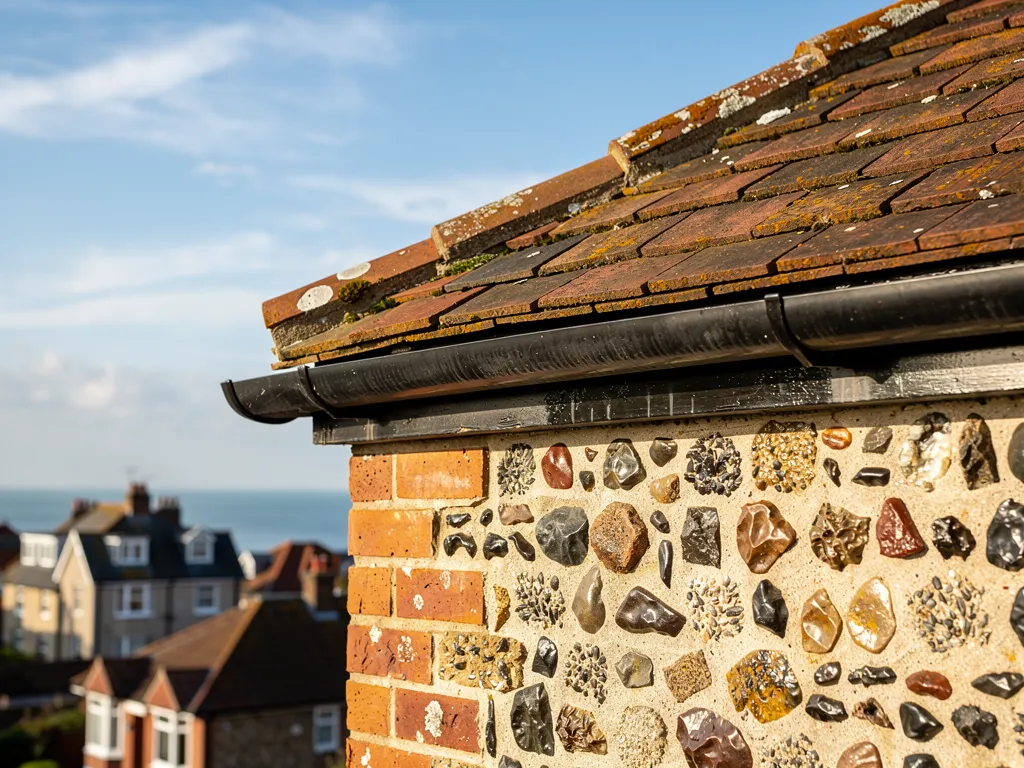
A Horsham stone roof is easy to spot once you have seen one: thick, uneven sandstone slabs in a soft grey-brown, laid in rows that get smaller as they climb towards the ridge, at the very peak of the roof. What is harder to know is which villages still have them. Nobody keeps a register of every stone roof in the county, so the best evidence comes from conservation area appraisals, the studies a council writes when it walks a historic village street by street.
Those documents describe the roofs in plain terms, and they are the source for this guide. They also teach an owner something practical. How common stone is in a place changes how your roof is judged. In one village a slab roof is an ordinary part of the street scene. In another it is a rare survivor that the council picks out by name.
We cover Steyning, Henfield and Storrington in the Weald and Downs, then Old Shoreham, Kingston Buci and North Lancing in Adur. For the material itself, start with what Horsham stone is, and for the work we do, see our Horsham stone roofing page.
Why the council appraisals are the best map
A conservation area appraisal is a survey carried out before a council sets rules for an area. An officer records what each building is made from and which materials give the place its character. When stone is mentioned, it is mentioned because someone looked up and saw it, which makes these documents better evidence than any estate agent's description.
The stone has a local origin. Horsham District Council's appraisal for its own town places the source in pockets of land close to the town, on the edge of the clay vales of the Sussex Weald. That explains why the roofing turns up across West Sussex instead of in a single pocket. A trade report from 2019 added that the roofs cluster around Horsham itself and extend into neighbouring parts of Surrey and East Sussex.
What an appraisal cannot tell you
An appraisal describes a village, not your house. It cannot say whether the cottage you own still has its first stone, a later clay covering or a patchwork of both. Roofs here have been mended for centuries, and the Horsham appraisal remarks that old repairs left some roofs laid partly in double lap and partly in single lap, with shadow slates filling gaps where stone ran short. A shadow slate is a sliver of Welsh slate set in mortar beneath a joint to shed water. Whether your own roof is stone is a question only a survey answers.
Treat the appraisals as a map of likelihood. They show which streets deserve a close look, and they hint at how much weight a planning officer may give the roof if you ever apply for consent.
Steyning, where the slabs outlast the fashion
Steyning is the clearest case in our area. The 2018 appraisal for the conservation area groups two coverings for its older buildings, Horsham slabs and clay peg tiles, and says the slab roofs are still present in large numbers. That is a firm, sourced statement, and it means an owner in the old part of the village should treat a stone roof as a real possibility.
Many of those roofs are hipped, meaning they slope on every side, with hips running down the corners. On stone this is skilled work, because each slab at a hip has to be cut and shaped so the courses turn the corner without a gap. When we survey one, the hip is where we look first. It shows whether an earlier repairer understood the material, and it is the spot where bad repairs show up first.
The Steyning appraisal also takes a firm line on repair. It calls the relaying of slab roofs with mortared joints inappropriate. Put plainly, gluing courses together with mortar is not what the council wants to see on a stone roof in this village. The older method relies on the weight and fit of the slabs, with mortar used sparingly and only where tradition calls for it. We go further into the method in our guide to relaying a stone slate roof.
The date matters too. The Steyning document is from 2018, and roofs change in the years after a council writes about them: a stripped section, a swapped covering or a new extension can alter what a street offers today. Use the appraisal as a starting point, then let a survey confirm what is on your own roof. A roof facing the street is seen by everyone who walks past, so speak to the council's planners before you alter the covering. Our stone roof consent guide explains when permission is needed.
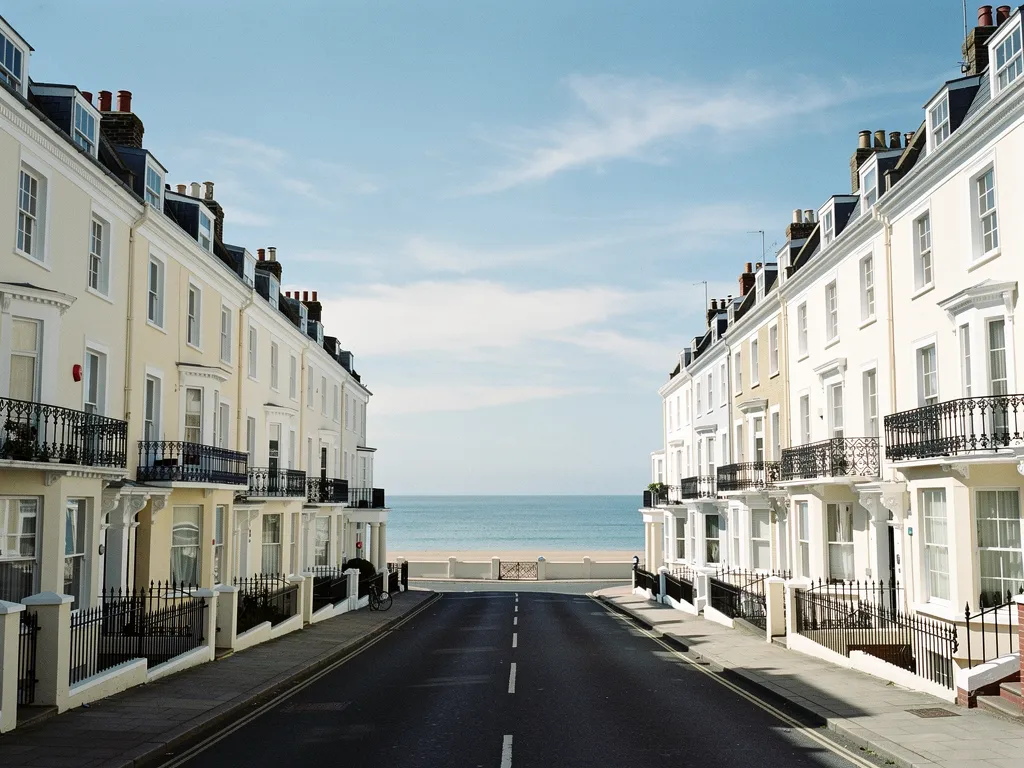
Henfield, where stone sits among peg tile and thatch
Henfield tells a different story. Its appraisal, also from 2018, says peg tiles are the usual roof covering, with Horsham stone slates found less often and thatch rarer still. Stone is therefore the second choice here, a minority covering that sits alongside clay and straw.
The document lists buildings that carry stone, among them Cedar View, Old Mill House and Parsonage House, along with the parish church of St Peter. A church that is still in use follows a separate approval route from the one a house follows. Our guide to church roofs in Horsham stone sets out how that works.
What this means on a Henfield roof
With peg tile, stone and thatch all in the village, next-door houses can need very different treatment. A peg tile is a little clay tile that hangs from a nib on the back of each tile and overlaps its neighbours in a regular pattern, quite unlike random-sized stone. If your house lost its stone long ago and was recovered in clay, that change may now be old enough to be part of the building's story, and the story deserves a look before any decision.
If your roof is one of the stone ones, expect the survey to spend time on the timber underneath. Stone is heavy, and the rafters and battens, the thin timber strips the slabs hang from, carry that load for generations. When the timber beneath starts to move, the whole covering can slip out of line, and the rows of slabs look wavy from the road. That is a structural problem to be dealt with before any slab is touched.
Storrington and the stone on Church Street
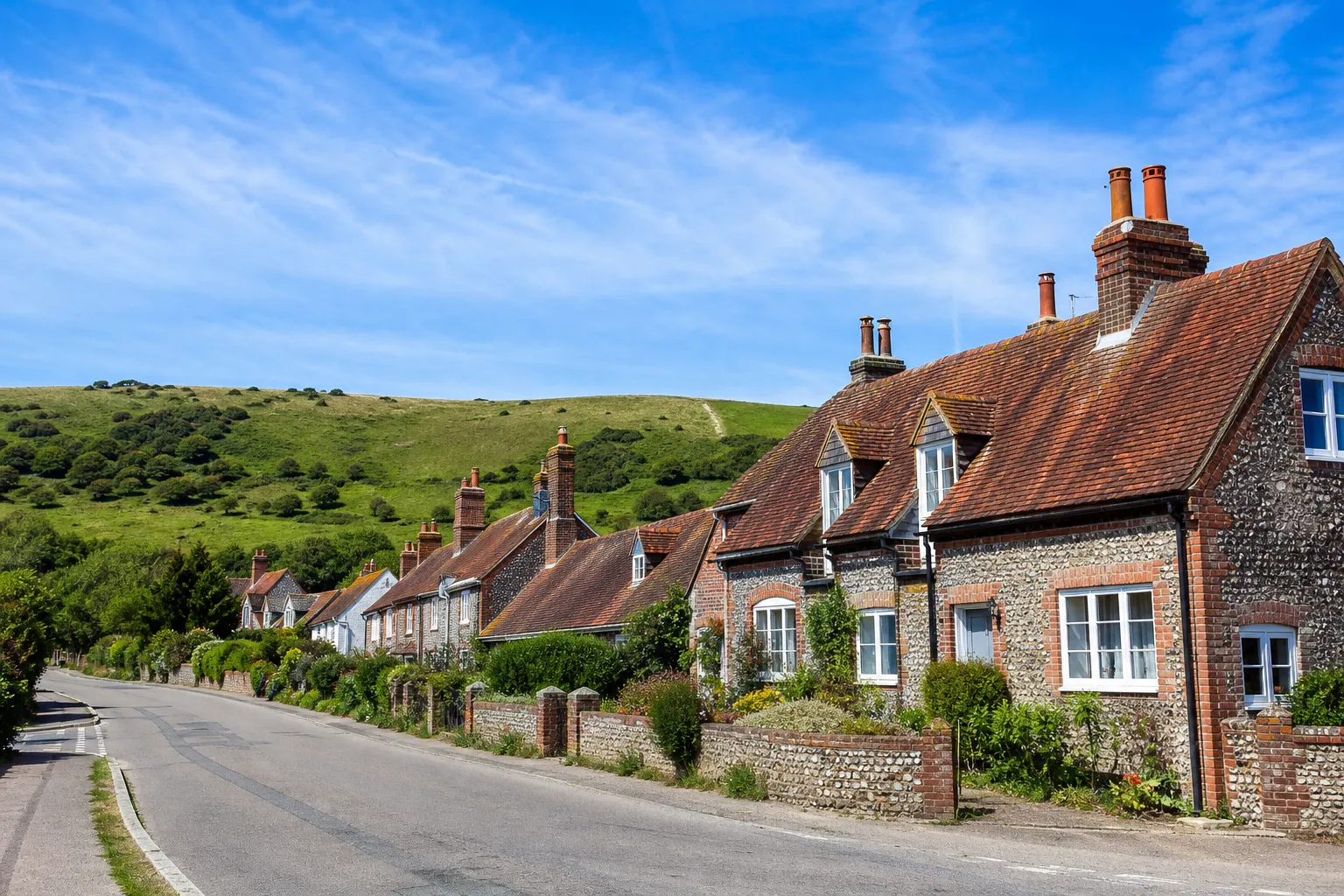
The Storrington appraisal, written in 2018, sketches a village of Sussex brick and flint where a little Horsham slab stone sits beside plenty of local clay tiles in many varieties. It names Church Street as home to roofs of this type. The wording is guarded: a little stone, and a large selection of clay. That suits a village where the covering changes from one house to the next.
The description helps because it lists the neighbours. Brick, flint and tile are all common along the foot of the Downs, and a stone roof is one voice among them. A flint wall under a stone roof is a pairing owners prize, and what people notice from the road depends on it.
Matching on a mixed street
On a street with several coverings, the question we hear is whether a repair should match the neighbours. It should match your own roof. If the house is stone, repairs use stone. If a previous owner switched to clay, repairs follow the clay unless you are choosing to put the original covering back. Either way, the survey establishes what the roof is made of today, and the quote follows from that.
Where some stone is lost, the aim is to relay the slabs already in place. The Stone Roofing Association puts reuse of existing slates first for good reason, and our guide to alternatives when Horsham stone is unavailable covers the choices once the roof's own stone is not enough.
A Storrington owner can ask the Horsham District Council planning team about consent before work begins, which avoids surprises later.

The Adur villages: Old Shoreham, Kingston Buci, North Lancing
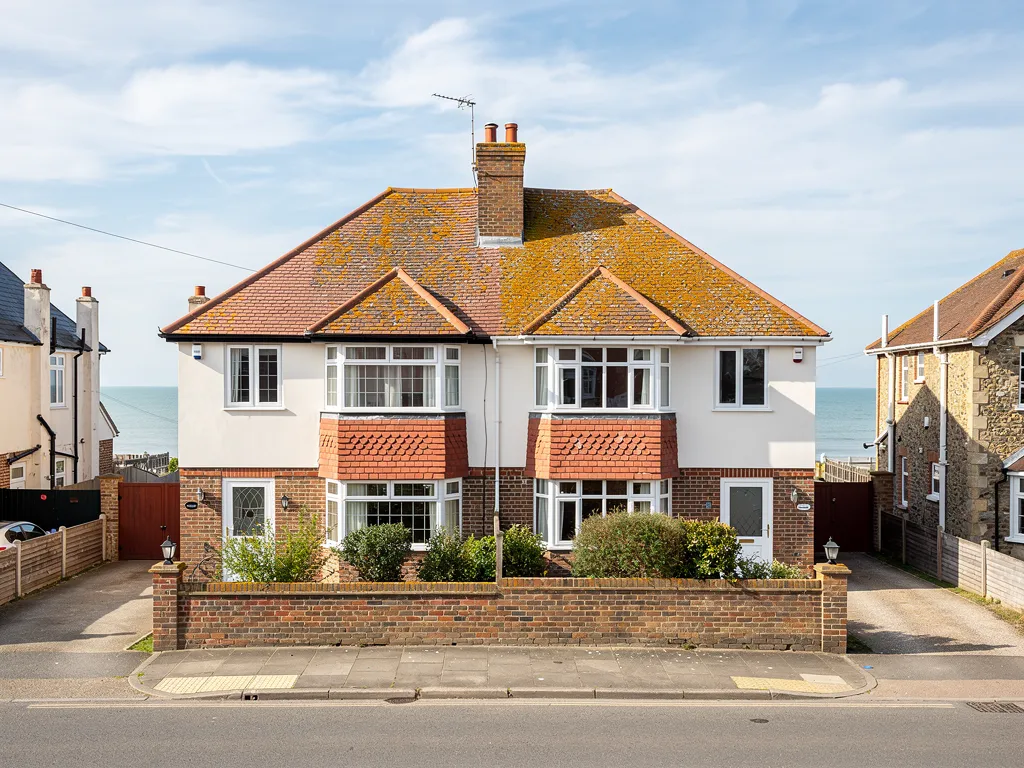
Adur sits on the coast, and stone roofs are scarcer here. The Kingston Buci appraisal of 2021 calls the Old Rectory roof a substantial one in Horsham slab, a material it describes as found across West Sussex but unusual in Adur. That is the most exact local statement available, and it says a stone roof near the river is rare enough to be remarked on.
The Old Shoreham appraisal, also 2021, records tile and thatch as the usual coverings, with slate and Horsham slab as further examples. North Lancing's appraisal, adopted in August 2024, reports slab roofing in a few places only, with Grant's Manor and the church's north aisle as its two examples. Localised here means a few buildings, never a whole street.
Article 4 in Old Shoreham and Kingston Buci
Both villages have an Article 4 direction. These remove permitted development rights that would normally apply. For a house that faces a road or public path, the direction takes away the right to alter a roof, roof coverings included, so a planning application is needed. In both places a chimney, flue or soil pipe cannot be altered or replaced without one. The Old Shoreham direction took effect in January 2023 and the Kingston Buci one in February that year.
For a stone roof that means a change of covering in either village starts with a conversation with the Adur & Worthing planning team. A direction does not forbid work. It decides which jobs need an application, and the team can confirm if your project is covered. Check before you order materials.
Next steps for a house in these villages
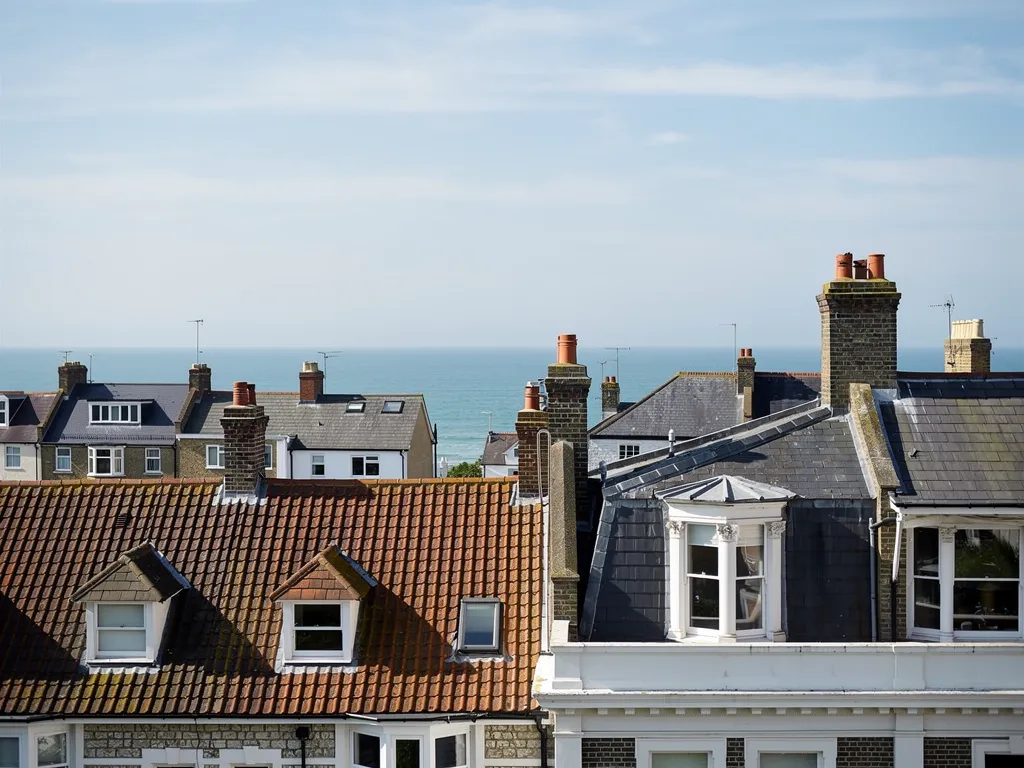
Start with the roof itself. From the road, look at colour and texture. Stone slabs are thick and uneven, often carrying lichen in patches, and they lie in rough rows with big pieces low down and small ones near the top. If that matches what you see, you are probably looking at stone.
Then find out what protection applies. A conservation area, a listed building or an Article 4 direction each change which work needs permission, and one house can sit under more than one. The Adur & Worthing planning team covers the Adur villages and Horsham District Council covers Steyning, Henfield and Storrington. The South Downs National Park Authority says work on a listed building that alters its character needs listed building consent, while ordinary upkeep and small repairs that match what is there do not.
What happens on our survey
We go into the loft first and read the underside of the stone, the battens and the rafters. Outside, we inspect from a ladder or a camera on a pole and photograph each fault on your roof. You receive those photographs with a written quote, a single total price. What moves that price is the access needed, how much stone can be saved, the condition of the timbers and the size of the roof.
We suggest the smallest job that will properly cure the fault. If a handful of slabs have slipped, that is a repair. If the timbers have given way, you will hear that straight, with the photographs beside it. Village lanes are often narrow, so we plan where the skip and any scaffold will stand before work begins, and we leave the site clear of rubbish.