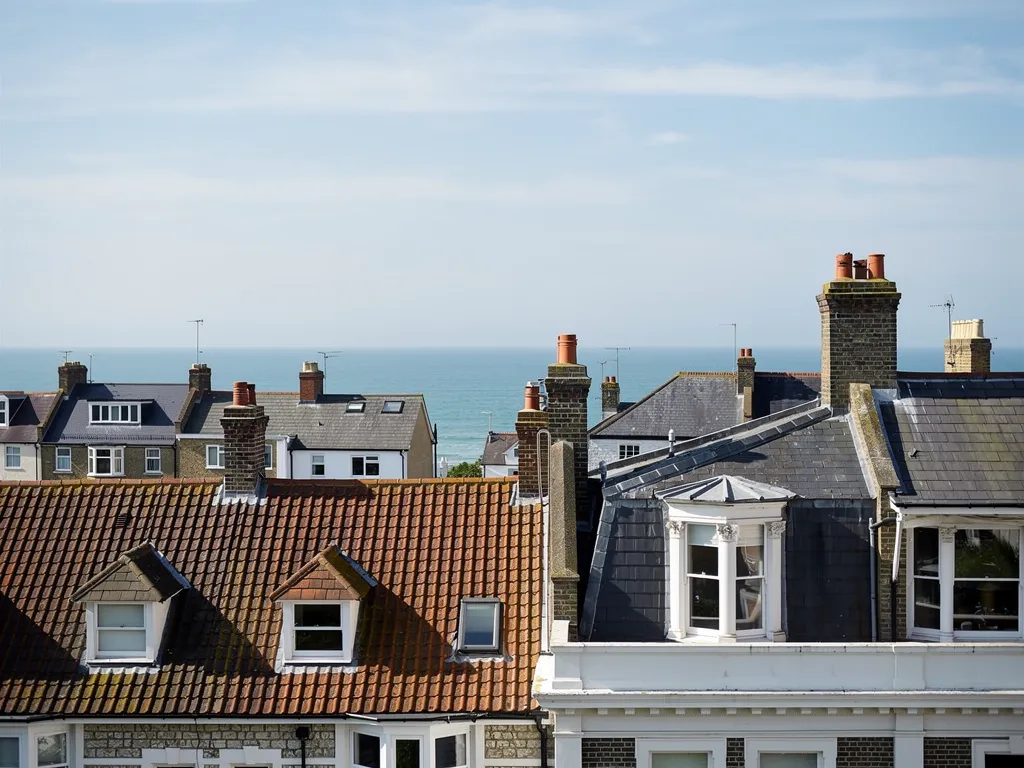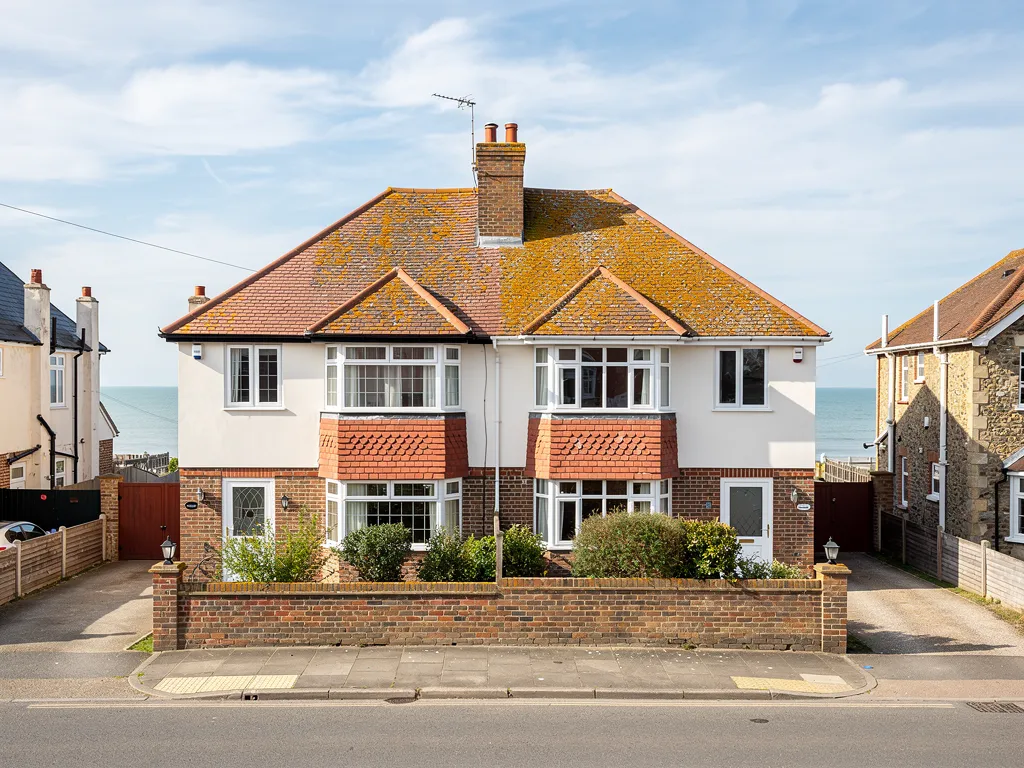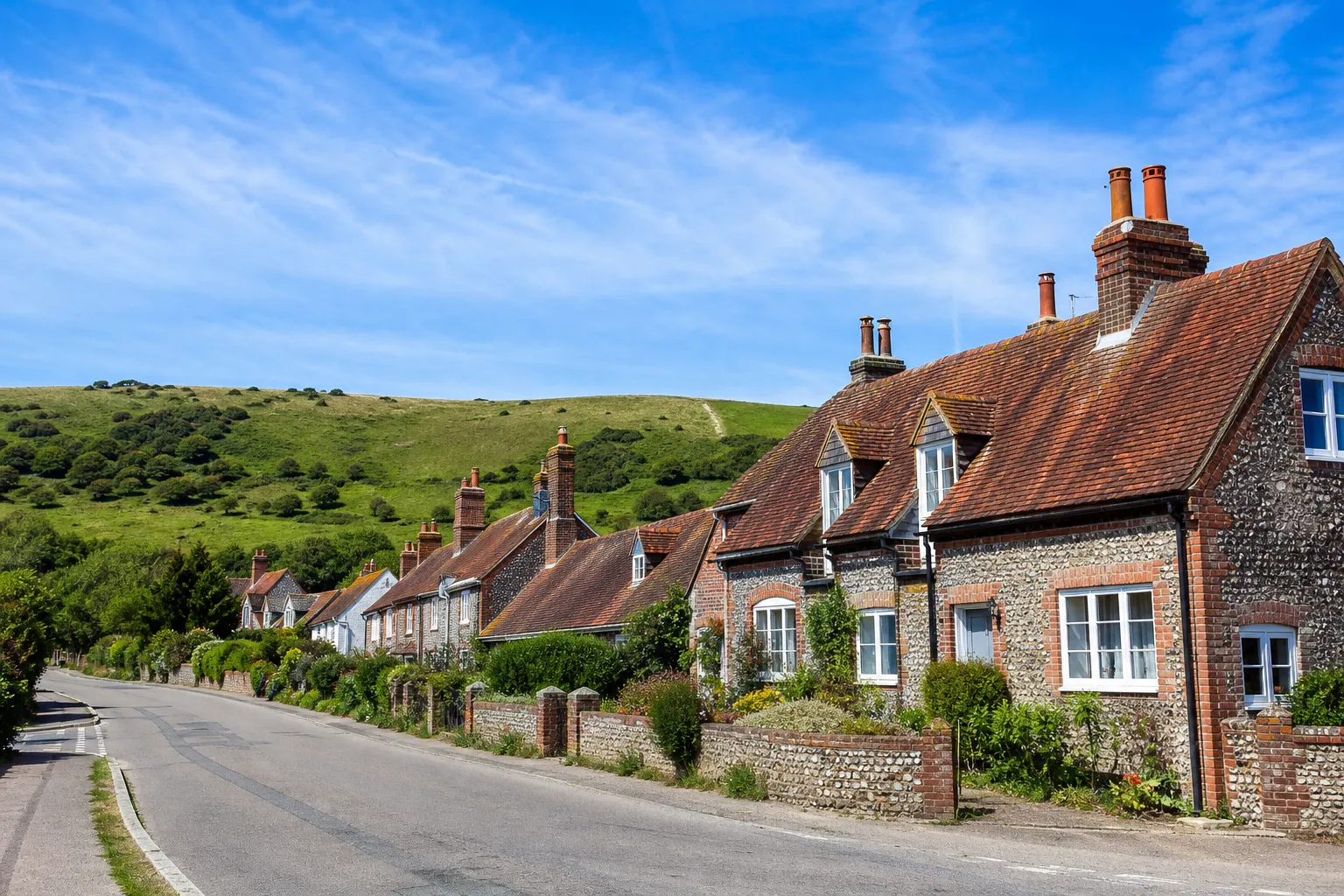
Listing protects a building as a whole, and the roof is usually a large part of why. A Horsham stone covering gives a house much of its character, so councils look closely at anything that alters it. The question owners ask is a practical one: can a leak be mended without a formal application, or must one go in first?
The law draws its line at works that would affect the building's character. Careful upkeep, and repair in the same material done where it lies, sits on one side. Changing the material, rebuilding in a different pattern or replacing historic stone wholesale sits on the other. Most real jobs fall in between, which is why the wording of the Act, and the guidance of the councils that apply it, repay a slow read.
This page sets out the rules in plain terms, then covers conservation areas, churches and the practical steps. It belongs to our Horsham stone roofing work and explains rather than replaces the advice of your planning authority, which decides for your building.
What the 1990 Act says about roofs
The Planning (Listed Buildings and Conservation Areas) Act 1990 is the starting point. Section 7 forbids demolishing a listed building, and also forbids changes or extensions that would harm what makes the building significant, unless the works are authorised. Section 9 makes contravening section 7 an offence.
Two features of that wording matter for a roof. The first is that it is not limited to large projects. Any alteration that touches the building's character is caught, whatever its size or cost. The second is that the test is character, not scale. A small change to the covering of a listed roof can affect character more than a big repair that simply restores what was there.
The South Downs National Park Authority adds a warning for owners: unauthorised works to a listed building have no time limit on enforcement of the kind that protects other unauthorised building work, so a change made years ago can still be put right if it comes to light, perhaps when a house is sold.
What the Act does not say
It does not say that every roofing job on a listed building needs an application. The Adur & Worthing guide takes the same line: an owner doing sensible upkeep and ordinary repairs need do nothing special, and the question of consent arises when alterations are wanted. The practical line therefore falls between upkeep and alteration, and the next sections explain how it is drawn for stone slate roofs.
Planning permission is a separate matter from consent for a listed building. Re-covering in kind rarely raises a planning question at all, but a listed building brings the further requirements described here.
Matching materials and repair where it lies
The councils whose guidance applies around Worthing and the Downs put the principle in similar terms. The Adur & Worthing guide lists, among examples of work needing consent, repairs carried out in a different material to the original. The South Downs National Park Authority says routine maintenance and small repairs that restore what is already there, made in situ, need no consent. Together they give a clear rule of thumb: repair with the same material, in the same spot and in the same way, and consent is generally not required.
For a stone slate roof, matching has real content. A replacement slab should be the same kind of stone as the one it replaces, not merely something that resembles it. The Stone Roofing Association warns against laying limestone slates among sandstones, and Horsham stone is a flaggy sandstone. The new stone should also go into the right course, with the right lap and the same detail at the joints, a subject explained in our guide to diminishing courses.
Why in place matters
The words in situ carry weight because stripping a slope, taking the stone away and bringing it back is a different operation from resetting a slab where it lies. Taking a roof apart can lose stone, scramble the order of courses and expose the structure. A careful relay using the stone the roof already has, laid back in sequence, may still count as repair, but it is a grey area, and we advise checking with the conservation team before it starts.
When in doubt about a particular job, email the council a short description and photographs. The pictures from our survey are taken with that purpose in mind: they show the fault, and the extent of what is proposed.

Repair, replacement and the point where consent applies
The South Downs National Park Authority draws a useful contrast. Consent is needed once repairs turn into alterations, or into wholesale replacement of old fabric or features that would change what the building is like. Between resetting one slab and replacing a roof lies a range of jobs, and each calls for judgement.
At the repair end sit resetting slipped slabs, replacing a few cracked ones with matching stone, renewing a failed fixing and clearing gutters and valleys. At the other end sit a change of covering, such as clay tiles instead of stone, and stripping a slope for renewal in new or different material. In the middle are larger relays, a shift from single lap to double lap, and the replacement of much of the stone with reclaimed or substitute slabs.
The Stone Roofing Association is specific about the change of lap. The guide notes that turning a roof laid single lap into a double lap one calls for a new assessment of the weight and the frame, plus building control approval, and a church faculty where one applies. If such changes are proposed for listed buildings, the association says listed building consent will be required from the local authority.
Substitutes and alternatives
If stone cannot be found, owners look at other options. A different material on a listed roof is generally an alteration. Our page on alternatives to Horsham stone explains the choices, and its recurring message applies here: ask before you buy anything.
The scarcity of new stone, reported in 2019, is one reason repairs lean on reuse. Reusing stone from the roof itself also keeps consent questions simple, because the material, size and appearance stay as they were.
Conservation areas, and the Adur and Worthing Article 4 areas
A conservation area is a different thing from listing. Many stone roofs sit in one, and a house can be both listed and inside one. Conservation area status alone does not mean planning permission is always needed for a new roof covering. Repair and re-covering in the same material generally need none. What changes is the framework around larger alterations, and the council can tell you which rules apply.
Some councils go further with Article 4 directions, which take named permitted development rights away from a set area. Adur and Worthing have used them in certain conservation areas to remove normal rights for alterations to houses, including replacing roof tiles and windows. Two directions made in 2023, covering Old Shoreham and Kingston Buci respectively, take away the permitted right to change a house roof facing a road or other highway, coverings included, and the right to alter a chimney or flue anywhere on the plot. The Warwick Gardens direction in Worthing reaches roof slopes that face a highway or open space, and the Western Row direction is recorded as removing the permitted development rights of dwellinghouses.
Horsham stone does occur in these places. The council's appraisal describes the Old Rectory at Kingston Buci as having a substantial roof of Horsham slab stone, and records Horsham slab roofing at North Lancing and in Old Shoreham.
What this means for you
In one of these areas, a change of roof material may need an application even where the building is not listed. A repair in matching stone generally does not. For a home inside the National Park, the Park Authority acts as planning authority and is the first body to ask.
Our guide to stone roofs in a conservation area goes into this at more length.
Church roofs and scheduled monuments
Some Horsham stone roofs cover churches, and for a church in use the route is different. Section 60 of the 1990 Act sets the listed building provisions aside for an ecclesiastical building that is currently used for ecclesiastical purposes, and the Ecclesiastical Exemption Order 2010 decides which denominations qualify. For the Church of England the route is a faculty, and each of the other denominations named in the Order has its own approval process.
The exemption has limits. Other faiths and denominations sit outside it, so their buildings go to the council for listed building consent. It also ends once a church stops holding regular worship, and from that point the normal controls return. And a church that is exempt from listed building control is still subject to planning rules for development affecting its exterior.
Scheduled monuments
A scheduled monument is a separate category with a separate consent. Any work to repair, remove or alter one needs scheduled monument consent, which comes from the Secretary of State. The ecclesiastical exemption never reaches it, and a feature in a churchyard can be scheduled even where the church is not.
Churchwardens and parish councils
If you are a churchwarden or sit on a parochial church council, your first contact is the faculty process, and then the denomination's own guidance for anything beyond it. We supply photographs, a written description of the fault and a quote that follows the survey, whichever application is needed.
The person who knows which route applies to your building is the one who looks after its approvals, so ask them before the survey and pass on what they say.
Planning the job: who to ask and what we provide
Begin by finding out the building's status. Is it listed, and at what grade? Is it in a conservation area, or within the South Downs National Park? For Worthing and Adur, the single planning team serving both councils can answer. Within the National Park, the Park Authority itself decides planning matters. Elsewhere, ask the council for your area.
Then put the question to the conservation officer, in writing and with photographs: does the specific work you have in mind need consent? A written reply is worth having, and so is a copy kept with the house papers, since a future buyer's solicitor may ask to see it. If consent is needed, an application takes time, so plan for it before the weather turns, and ask about temporary protection if water is already coming in.
Consent is explained to you as part of the survey. Where the work is notifiable under the Building Regulations, we handle that notification as well. Survey photographs record the roof course by course, so the council sees exactly what is proposed. Our written quote then arrives as one price for the whole job. Our advice is the repair that matches the fault, which is usually also the one least likely to need consent.
Cost and next steps
Price turns on access, the area affected, the sourcing of replacement stone and what the survey reveals underneath. Photograph each course as it is relaid, so a record of what went back where stays with the house.
For the villages where these roofs stand around Steyning and Storrington, see Horsham stone in the Sussex villages. To arrange a survey, phone 01903 299063, send a WhatsApp message or fill in the enquiry form.