
Question answered
What causes slipped roof tiles, and can they be refixed?
The short answer
Slipped roof tiles are usually caused by fatigued or rusted nails, rotten battens, frost damage and wind. If the batten is sound and only the fixing has failed, the tile can be refixed with a new nail or clip. If the batten is soft or a group of tiles has moved together, the repair has to be wider. The cause is checked in the loft and on the roof before anything is put back.
A slipped tile is a symptom. Something has stopped holding it, and the cause decides whether a quick refix will do or the repair needs to reach further along the slope.
Nail fatigue lets the tile creep
Most clay and concrete tiles are hung from the batten by a small nib at the top and held by a nail or two. On an older roof the nails may be iron, and iron rusts in damp air. A nail that has thinned in the shank or pulled loose in its hole stops gripping, and the tile starts to creep downhill under its own weight, helped by wind rocking it and by the warm and cold swings that move it a fraction each day.
The standard asks for more now. Wienerberger describes a mechanical fixing on each single-lap tile as the minimum today, and Marley says BS 5534 has the outer edge of a roof fixed twice over. Many older roofs rely on weight and nibs alone, so it is no surprise that tiles on them start to move after decades of weather.
Batten rot takes away the thing the nail grips
A nail is only as good as the timber around it. Battens are narrow strips of softwood, and where water gets to them they soften, split along the grain and let the nail head pull through. The source of the water is often the underlay: a perished strip at the eaves, a torn patch beside a chimney or a dip that holds rain. The tile slips, but the real fault sits underneath it.
From the loft, rotten battens show as dark, soft or crumbling timber, often with a stained patch of underlay above. Pressing a screwdriver into the wood tells you in a second. A refixed tile on a rotten batten is back on the ground within a season, so we always check before putting a nail anywhere. A weathered, broken tile beside the slip is a clue as well, and a cracked tile of that kind is covered in replacing one cracked roof tile.
Frost and wind finish what age starts
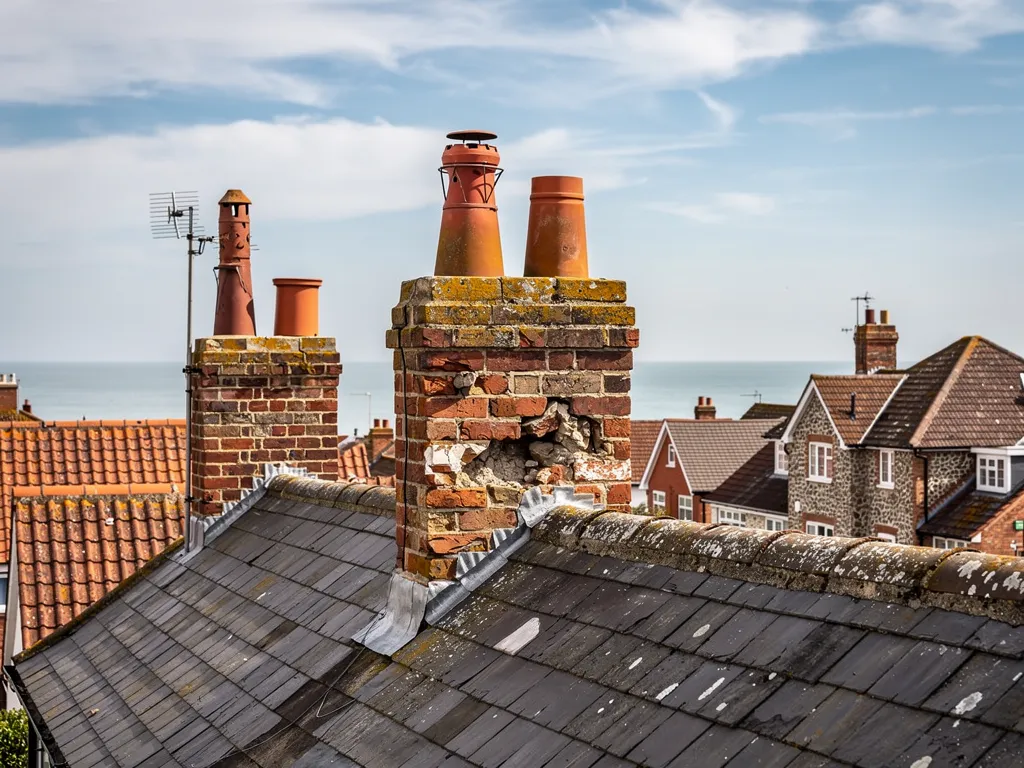
Frost does its work through moisture. A porous tile that has soaked up water can flake or split when that water freezes, and a damaged tile with a widening nail hole loses its grip sooner. Moss makes it worse by keeping the surface wet for longer, especially on slopes the sun does not reach.
Wind works the other way. It pushes on the windward slope and pulls on the lee, and Marley says the suction can be severe on pitches under 30°. A loose tile moves a little with every gust, and each movement enlarges the hole. On the coast the edges take the hardest knocks, which is why verges, ridges and hips are the first places we check after a gale. If the slope is shallower than the covering was designed for, the problem is baked in from the start, and the question is dealt with in the minimum pitch for roof tiles.
When the frame itself is moving
Sometimes tiles slip because the roof beneath them has shifted. Rafters that have sagged, a ridge that has dropped or walls pushed outward by the thrust of a heavy roof change the spacing between battens, and tiles that were snug start to ride up or slide. The slip is then a sign of structure, not of fixings, and a tile pushed back into place will move again.
Look for a dip along the ridge line, a bulge in a slope and tiles that have slipped in a pattern, such as a line running from the ridge to the eaves. How a pitched roof is built, and where it can move, is set out in how a pitched roof is constructed. A structural cause means the roof needs more than a refix, and we explain this plainly, with photographs, before quoting. The full range of tiled roof work is on the pitched roofing hub.
Refix, relay a section, or strip the slope
Where only a tile or two has slipped and the timber and underlay under it are in good order, a refix is the right repair. The roofer lifts the neighbouring tiles, fits a new nail or clip, and sets the tile back in its course. MyBuilder gives a typical UK range of £100 to £300 for a minor roof repair, and the written quote follows the survey, whatever the scale.
If the battens are rotten, the work widens. The section is stripped, the damaged battens renewed, the underlay patched and the same tiles relaid with proper fixings. If a whole slope is moving, it is cheaper to say so now than to chase slips for years. Until then, keep people away from the area beneath, stay off the roof, and photograph the gap from the ground. A bare patch of underlay lets rain through quickly, so we prioritise leaks and make the roof safe first.
Slipped tiles in practice
Is one slipped tile an emergency?
Not usually, but it should not wait long. A loose tile can fall, and the gap leaves only the underlay between the rooms and the next storm. Keep clear of the area below, note where it is, and have it checked before the next spell of bad weather.
Do several slipped tiles mean the whole roof is failing?
Not necessarily. Scattered slips on a sound roof often point to a few old nails or one damp patch of batten. A pattern, such as a whole line or one slope, suggests a wider cause. The loft inspection and the survey photographs show which of the two you have.
Tell us about your roof
Describe what is happening and we will call you back to arrange a visit.
- Photographs of what we find
- A written quote with one total price
- Or call 01903 299063
10-year workmanship guarantee, in writing.