
Question answered
Will roofing felt stop rain on its own?
The short answer
No. Roofing felt will not stop rain on its own for long. In the UK it is a secondary barrier, laid under tiles or slates to catch spray blown under the laps and condensation, and it is not made to be the weather surface. Exposed, it tears, lifts in the wind and perishes, so a stripped roof is covered again as soon as the weather allows.
Roofing underlay slows rain down, but it is a back-up layer under the tiles, not a roof covering. Left exposed it copes for a short while only, and an opened roof needs covering again quickly.
Why underlay sits beneath the covering
On a British pitched roof the tiles or slates do the main work. They shed rain by overlap, and the underlay beneath deals with whatever gets past them: spray driven under the laps in a gale, melting snow, and the condensation that forms on the underside of the covering. Older roofs carry bitumen felt, a black fibre sheet soaked in bitumen. Newer ones usually have a synthetic breathable membrane. Either way it is laid in strips across the rafters, each strip lapped over the one below, then pinned down by the battens, narrow timber strips which the tiles hang on.
That is why it counts as a secondary barrier. It is built to pass water down to the gutter, not to sit under open sky. Every lap is a joint, and every batten nail is a hole through it. As a back-up beneath a covering that works well. As the only protection against a week of weather it does not.
What undoes underlay once it is exposed
Makers print a maximum exposure period for each product on the roll label or data sheet, and that is the number to follow. It differs between products, so there is no single figure worth quoting. What does not differ is the way an uncovered sheet fails.
Sunlight dries bitumen felt and makes it brittle. Wind finds the unweighted laps, lifts them and flaps the sheet until it tears at the nails. A tear lets water straight onto the rafters and the loft insulation below. Foot traffic from the work itself scuffs and punctures it. Where the sheet sags between rafters, rain collects in the dip and soaks through at the weakest point, often at a lap or a nail.
Wet felt does not dissolve overnight, which is why people trust it. The damage is quiet. Laps loosen, fibres weaken, and the leak shows up in the first proper storm rather than the first shower.
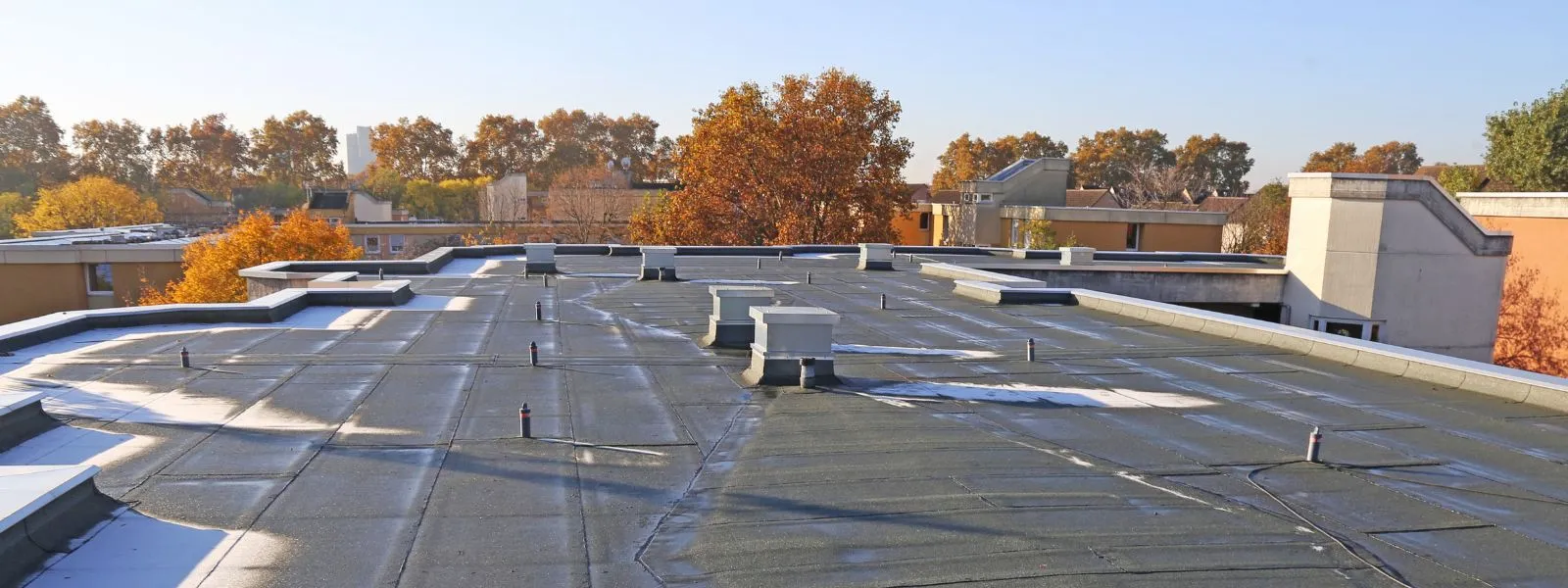
Why the tiles go back quickly
When a slope is stripped, the underlay and battens are all that stand between the rooms and the weather. For that reason a sensible job opens up no more roof than can be closed again before conditions turn. We check the forecast, work slope by slope and sheet any gap that has to stay open overnight.
Stripping also shows what the old covering was hiding. Battens that seemed fine when viewed from the loft prove rotten along the nail line, and eaves felt has gone brittle where it dips into the gutter. Better to find that with the tiles in a pile and fix it than to lay new tiles over it. The wider picture of what a full re-cover involves is in our pitched roof cost guide.
Good tiles and a tight underlay work as a pair. Remove either one for long and the roof loses most of what it was designed to do.
Where tired felt lets water in behind sound tiles
A roof can look perfect from the road and still leak because the underlay has given up. The usual places are the eaves, where felt perishes first, the line of a valley, and around chimneys and roof windows where it was cut and patched. In a valley with no proper trough beneath the tiles, the underlay is the only thing between the channel and the loft, which is why our note on the dry valley trough matters to this question.
The clues are in the loft. Daylight at the eaves, brittle black flakes on the insulation, battens dark with damp and tide marks that reach across a rafter all point to a failed layer. The damp patch indoors may sit far from the real defect, because water travels along the top of the felt and only drops where it finds a way through.
How long a covering and its underlay last together is covered in how long a tiled roof lasts.
Repair a patch or renew the whole slope
We trace the fault from the loft first, then match it to the outside. If the underlay has failed in one place, lifting a few courses and fitting a new strip of membrane, lapped correctly under the course above, is often all it takes. If it has gone brittle across a whole slope, patching only moves the problem to the next lap, and a full re-cover of that slope is the right job.
The choice should never be a guess. Photographs of the underside and of the lifted courses show whether the membrane is sound, and the written quote arrives after the survey has settled which job it is. A neat patch on a roof with a good sheet beneath is the smaller job, and it only makes sense when the evidence says the rest of the sheet will hold. If it will not, you are shown why.
Whichever route suits, the new layer needs the same care: laps facing the right way, battens fixed through it cleanly and the eaves detail left open to drain. More on tiled roof work is on the pitched roofing hub.
Underlay on a stripped or ageing roof
Can a stripped roof wait over a weekend under felt alone?
Only when the underlay is whole, lapped, battened down and the weather is settled, and even then a gale can lift it. If gaps have to stay open, they should be sheeted and weighted. Ask the roofer how they will protect the house if the forecast changes, before the first tile comes off.
Is a breathable membrane waterproof?
It sheds liquid water and lets water vapour through, which helps a cold roof dry out. It is still a secondary layer with its own maximum exposure period, so it should be covered by tiles or slates on the schedule the maker gives, not left as the roof.
Tell us about your roof
Describe what is happening and we will call you back to arrange a visit.
- Photographs of what we find
- A written quote with one total price
- Or call 01903 299063
10-year workmanship guarantee, in writing.