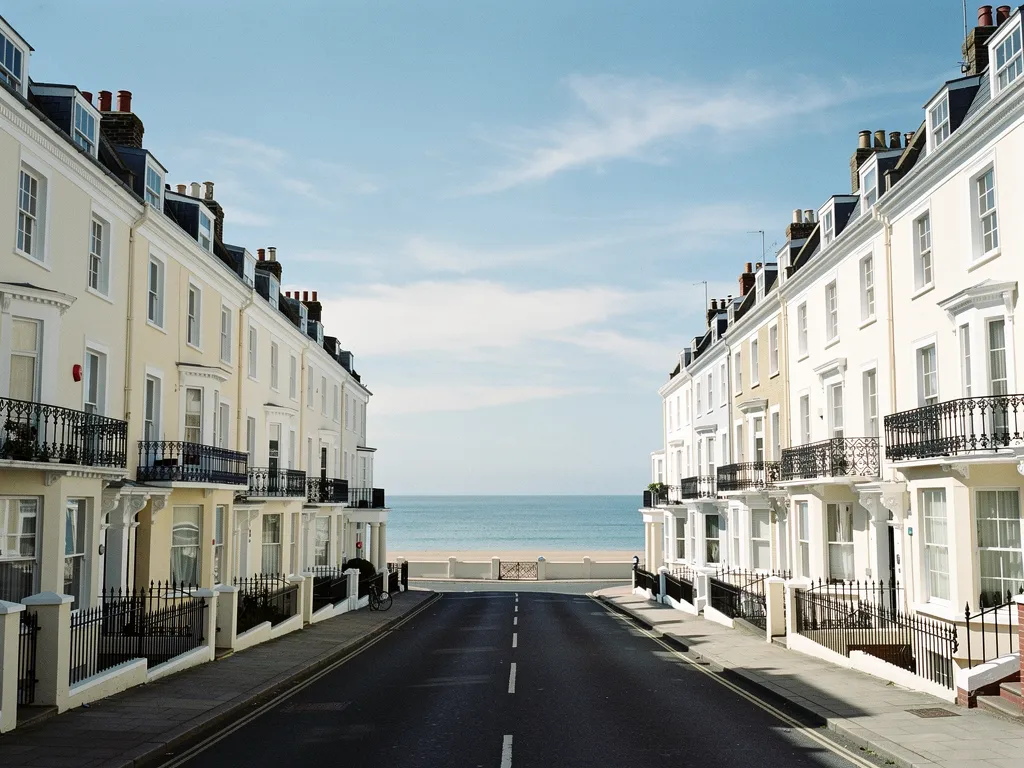
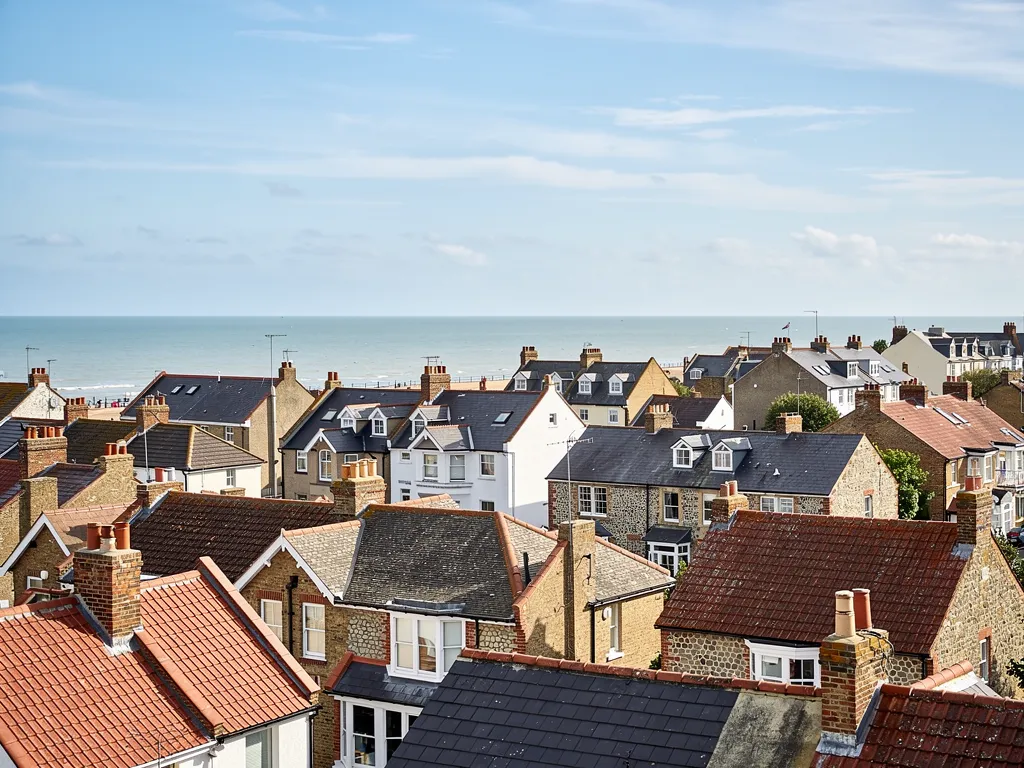
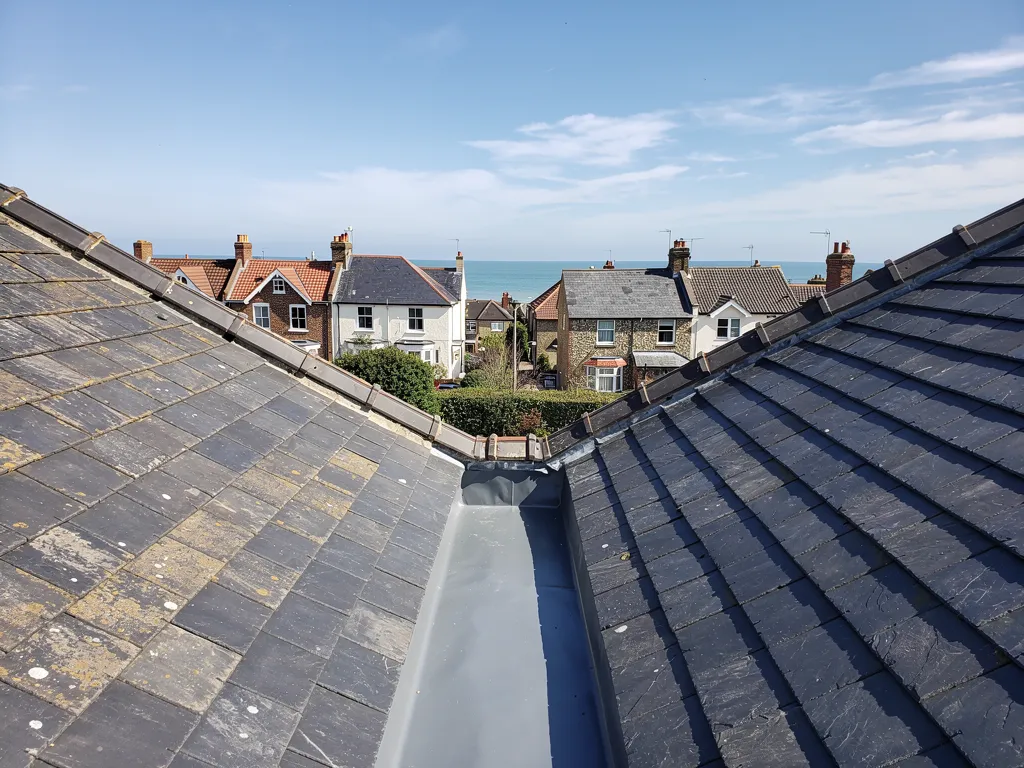
Two different sets of rules touch a slate roof in a protected setting, and people often mix them up. A conservation area protects the character of a whole street or neighbourhood, and the council can take away certain permitted development rights there. Listing protects one particular building, and any work that affects its special character needs listed building consent from the planning authority.
For a roofer, the practical question is usually smaller than either: if the old slate has to be repaired, what can be used, and who needs to be asked? The short route is that a repair in matching slate, using the same laps, sizes and detailing, is the easiest to defend and the least likely to need an application. A change of material, a change of slate size or a different roof form is where consent questions begin.
Worthing has 27 designated conservation areas according to the councils, and Adur has seven. Some sit inside the South Downs National Park, where the Park Authority, not the council, is the planning authority. Below we cover how a conservation area affects re-roofing, what the local Article 4 directions take away, how listed building consent works, how to match slate properly and how we handle the paperwork side of a job like this.
What a conservation area changes for a roof repair
The starting point is reassuring. In planning terms, alterations that leave the external appearance of a building materially as it was are not development. In practice a straight swap of slate for the same slate seldom needs planning consent, and repairing a roof in slate of matching size, colour and laying pattern is the textbook case. Living in a conservation area does not alter that by itself.
What a conservation area does change is the surrounding rules. It counts as what planning law calls article 2(3) land, which affects some larger alterations such as adding dormers. It also gives the council the power to serve Article 4 directions, and several Adur and Worthing conservation areas have them. A direction does not ban anything outright. The councils describe the effect as limited to the matters named in the direction, which then need an application.
The councils add that in some conservation areas their directions withdraw the usual rights to alter houses, including swapping roof tiles and windows. So a house in a conservation area without a direction can usually be re-slated like for like without an application, while a house in one with a roof-related direction may need a decision from the council if the covering changes.
The safest habit is to treat the question as street by street: the same town can have one road under a roof direction and the next road without one.
If you are unsure which applies, ask the Adur & Worthing planning team before work starts. We are happy to point you to the right question at the survey.
The local Article 4 directions and what they remove
Adur has nine directions on the councils’ list and Worthing has eight. We have read the roof-relevant parts of the following, and the table shows what each takes away. Several others are older, site-specific directions that we have not read, so it is worth asking the council about any not shown here.
| Direction | Roof rights removed |
|---|---|
| Old Shoreham (ADC09), in force 20 January 2023 | Where the roof fronts a street or public path, Class C is removed, so covering changes, rooflights and solar panels need an application. Chimney, flue and soil pipe work is removed across the whole property |
| Kingston Buci (ADC08), in force 10 February 2023 | The same pattern: Class C including roof coverings, plus chimney and flue work |
| Warwick Gardens, Worthing (WBC08), made 2001 | Building, altering or removing a chimney. For a house fronting a road or open space, reshaping or re-covering a roof slope |
| Warwick Place, Worthing (WBC06), made 1997 | Where the property fronts Warwick Place, alteration of a dwellinghouse roof under Class C |
| Western Row, Worthing (WBC04), made 1978 | Annotated as all dwellinghouse permitted development rights, including enlargement and alteration |
Ambrose Place and Cowper Road, also in Worthing, carry no roof rights. Those directions concern hard surfaces and means of enclosure.
In the first two, the phrase that matters is roof coverings. If your house fronts the road in Old Shoreham or Kingston Buci and you want to swap natural slate for another covering, you would need an application. A straight repair is a separate question, though confirm it with the council rather than assume. Being outside the listed areas does not mean no limits apply, so ask about your own road.
Listed buildings and listed building consent
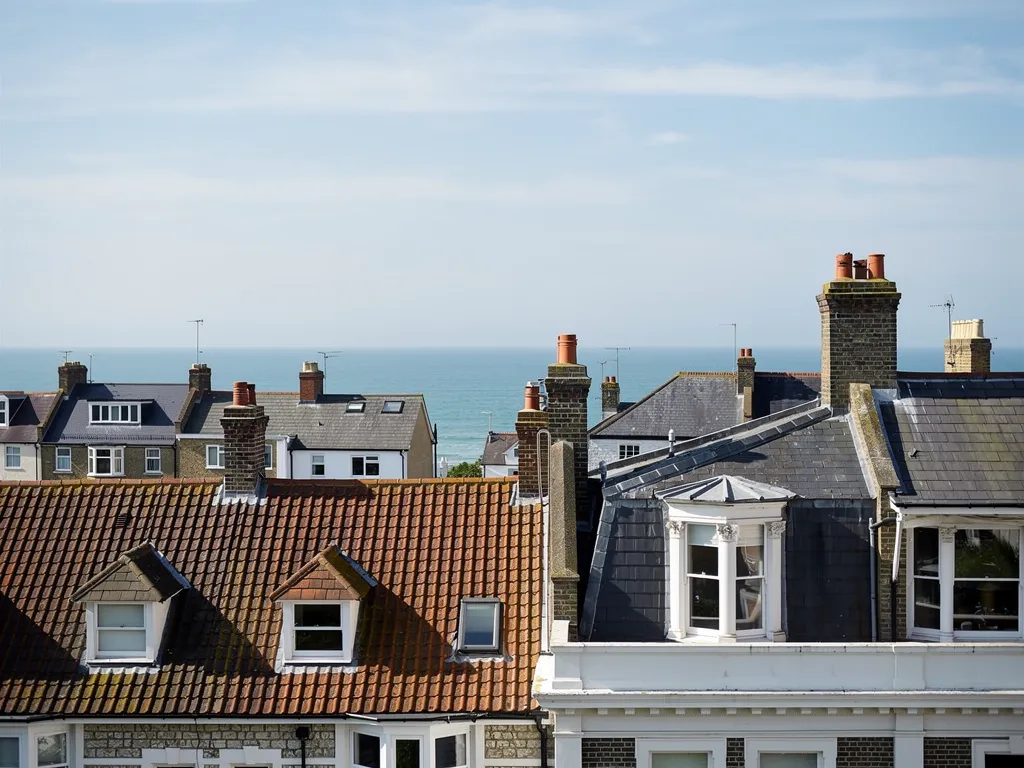
The rule for a listed house is stricter, and it applies whether or not the house is in a conservation area. The 1990 Listed Buildings Act bars any work that would change what makes a listed building special, architecturally or historically, unless it has been authorised. Carrying them out without consent is an offence, and there is no four-year time limit on enforcement against unauthorised works to a listed building.
That sounds severe, but it is aimed at alteration, not upkeep. Adur & Worthing's listed building guide treats a repair in the wrong materials as consent territory; ordinary upkeep and general repair are left alone unless the owner is making alterations. Inside the National Park, its Authority sets the boundary alike. Everyday maintenance and minor repairs made on the spot in original material pass without consent, but altering or wholly replacing historic fabric so that the building's character shifts brings consent into play.
For a slate roof, that draws a rough line. Re-fixing slipped slates, replacing a few broken ones with matching slate and repairing lead in the same pattern are repairs. Stripping the whole roof and re-covering it in a different slate, a different size or a different laying pattern is likely to be an alteration, and the council or Park Authority will decide.
Who decides
The local planning authority decides listed building consent. Inside the South Downs National Park, that is the Park Authority. Do not rely on a quick phone call: ask for the decision in writing and keep it with the roof file. If you are unsure, we can describe what the application should contain, with photographs and a description of the proposed slate.
Chapels, churchyards and scheduled monuments
Some protected roofs follow a different route altogether. Churches in use for worship are often covered by the ecclesiastical exemption, which takes them out of the normal listed building consent system. The Church of England uses faculties, and the other covered denominations manage changes through their own documented procedures.
The exemption is narrower than people expect. It does not cover other faiths or denominations, so a Unitarian or Quaker meeting house needs listed building consent in the usual way. It ends when a church closes, so a redundant church is subject to the normal listed building and conservation area controls from then on. And it never removes the need for scheduled monument consent, which comes from the Secretary of State. If a roof sits within a scheduled monument, for example in a churchyard, that consent applies on top of anything else.
The Department for Culture, Media and Sport's guidance adds a limit: the exemption does not waive planning permission for outward changes to a listed place of worship. Ask early which route a given roof job follows, and if the building is a hall or chapel no longer used for worship, ask the council whether it is listed before any roof work is planned.
For slate roofs on chapels, halls and church buildings, the practical advice is to start with whoever manages the building. Ask whether it falls under a denominational process or the council, and get the answer in writing before ordering slate. We can provide roof details, photographs and a proposed specification for that conversation.
Matching the slate so the repair belongs
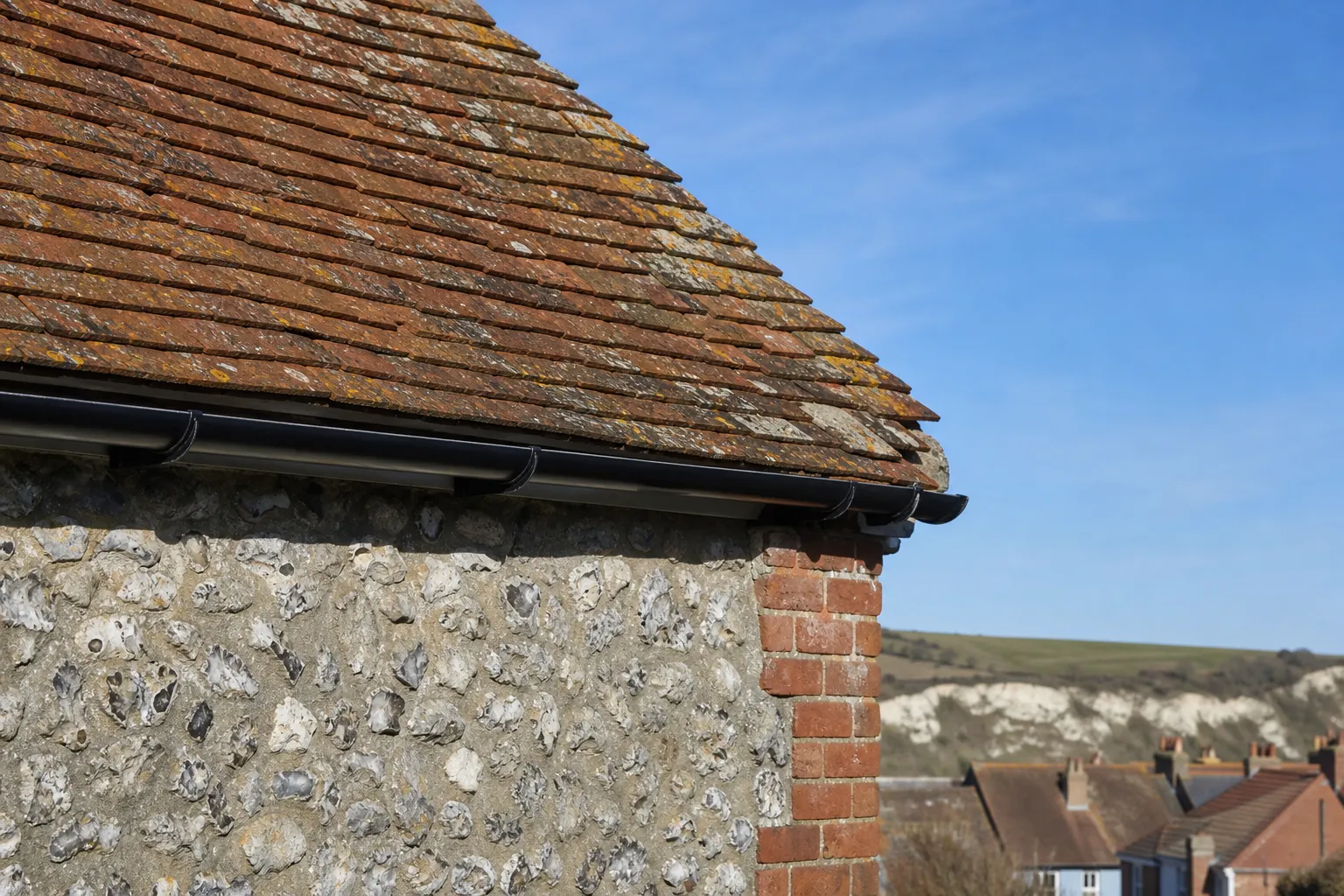
Whatever the consent position, the test a planning officer and a conservation officer use is whether the repair looks as though it belongs. That comes down to four things: the type of stone, the size of the slates, the way they are laid, and what holds them.
Welsh slate, Spanish slate and man-made slates look different, and not just in colour. Natural slate has an uneven, split face that catches the light, while man-made slates are usually flatter and more uniform. On a roof that has weathered for a century or more, new slate also stands out by being darker and sharper edged for several years. Reclaimed slate of the right size solves much of that, and our guide to Victorian and Edwardian slate roofs looks at the details that give these roofs their look.
Size and coursing matter just as much. Some period roofs use slates that get smaller towards the ridge. Replacing them with uniform courses changes the profile, and a planner may object.
Fixings and the heritage note
Fixings are the part nobody sees. BS 5534 is the code of practice for slating, and its A2:2018 amendment makes clear how far it reaches on heritage roofs, and warning that the code can sit awkwardly with older roofs, so you consult the planning authority and conservation advisers first. Rusting iron nails are the commonest cause of slipped slates, as nail sickness explains, and a repair that leaves the old nails in place will fail again. We choose fixings to suit the exposure, and our guide to fixing slates in exposed sites explains how.
How we handle the consent side of the job
Our job is to find out what applies and tell you before work starts, so nobody is surprised halfway through. At survey we photograph the slate, laps, lead and ridge, and note the details a planner would want to see. If your road might be under an Article 4 direction, we point you to the planning team to confirm it. We do not guess.
Where consent is needed, the application needs a clear description of what is being replaced, in what material, and why. Photographs of the existing roof and a note of the proposed slate, laps and fixings make that easy to write. We can supply the roof detail. The owner usually makes the application, and the planning authority decides.
Building Regulations are a separate question. Re-covering a roof usually avoids a building control application while under 25 per cent of the total building envelope and under 50 per cent of the roof is affected; where work is notifiable, we explain what applies and file the notification for you.
After the survey you receive a quote in writing, with one total, and pictures of the slates in question. Access, how much slate is replaced, how much of the original can stay and any lead or chimney work set the figure, and our prices are kept good and fair. The site is left clear afterwards. Our slate roofing page gives the wider picture. For ongoing care once the roof is repaired, read our guide to slate roof maintenance.