Roofers in Chiddingfold

Chiddingfold sits on deep Wealden Clay among woodland, with a past in tile and brick making. We survey its tile, stone and timber-framed roofs and show you each fault on photographs of your own.

Three Chiddingfold roofs, from tile works to king-post

  • A clay tile roof under trees

    Tile country under the trees

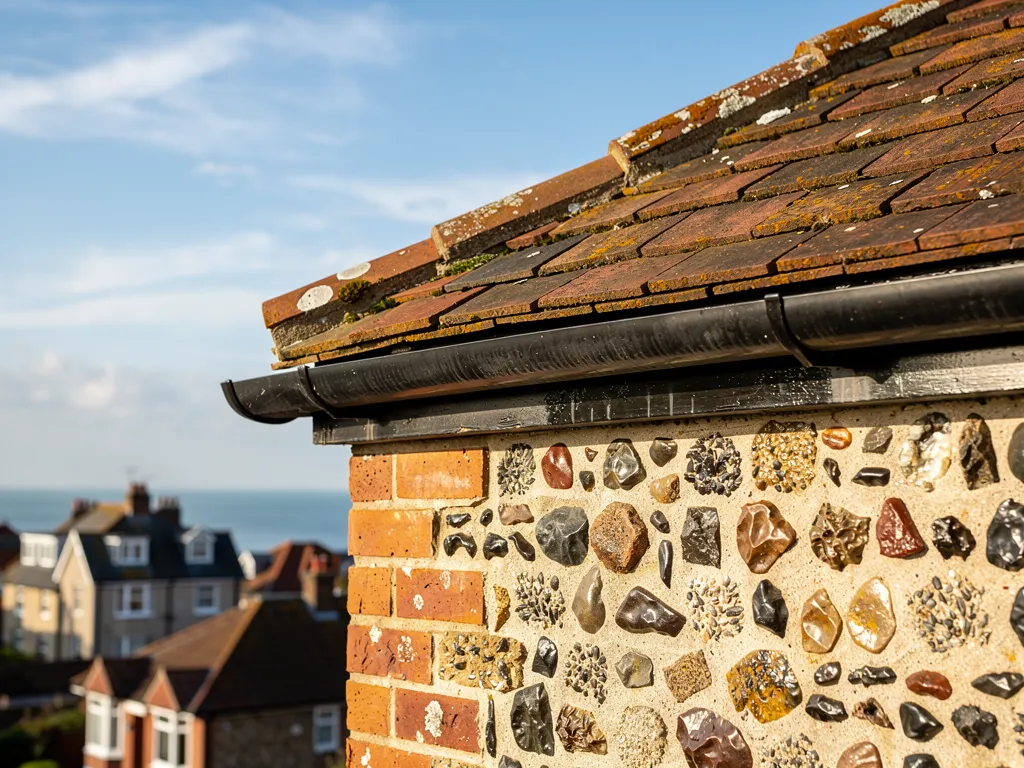
    The Victoria County History records tile and brick works in this well-wooded parish. Under tree cover, tiles hold moss and leaf litter in their overlaps, so we clear the roof by hand first and judge the real faults afterwards.

  • Stone slabs along an eaves line

    Bargate stone and the last Horsham slabs

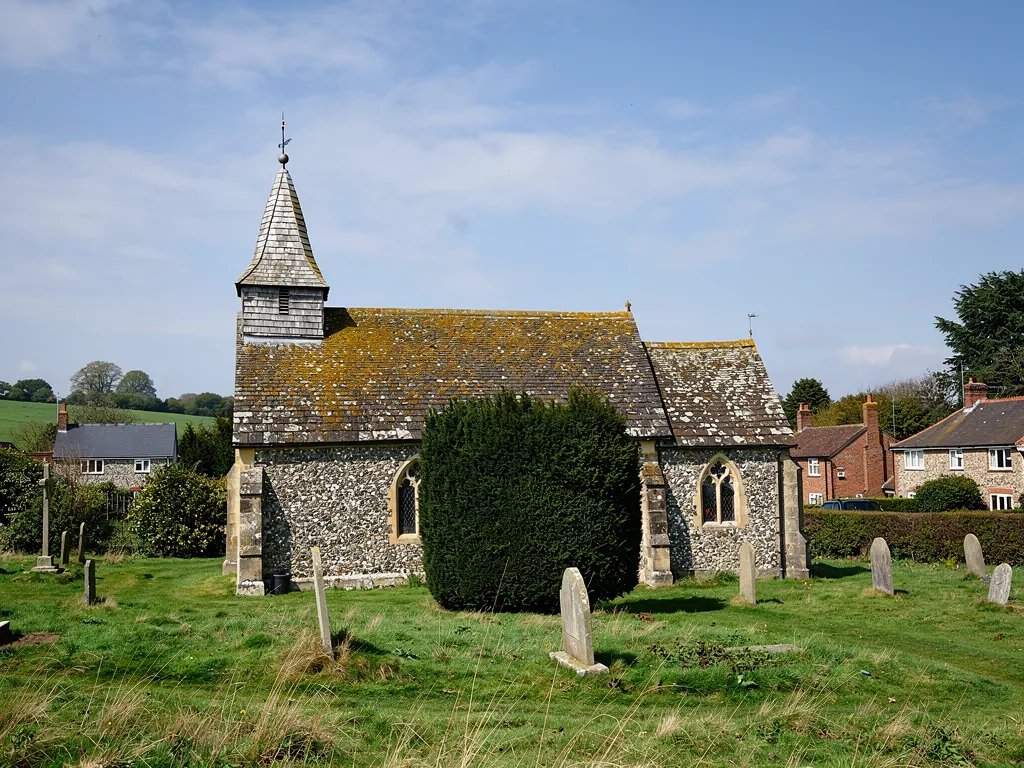
    St Mary's church is Bargate stone rubble. Horsham slabs once covered most of its roofs, but most were removed, leaving an edging at the eaves.

    Read more about Bargate stone and the last Horsham slabs

    Any repair there starts from what survives, never from a catalogue.

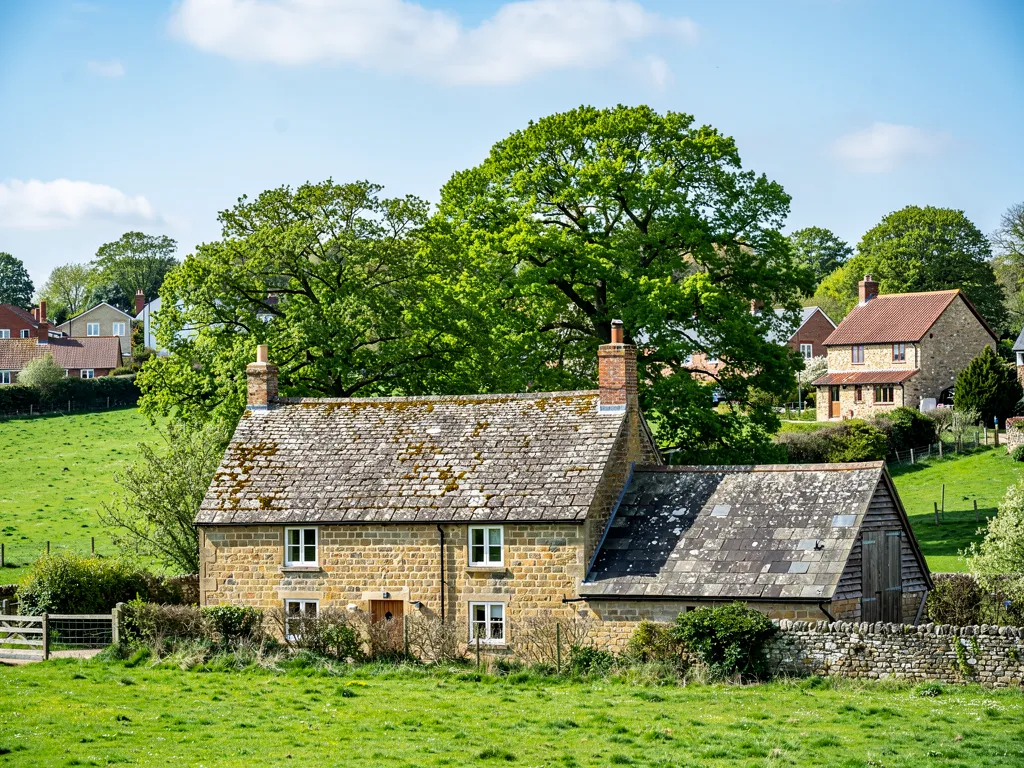
  • A timber-framed house roof

    Timber frames and a 14th-century roof

    The Crown Inn keeps a 14th-century king-post roof over its original open hall, and the Victoria County History names Lythe Hill Farm and Hallands among the timber-framed houses.

    Read more about Timber frames and a 14th-century roof

    Roof work on a frame is slow, careful work, planned around the old timbers.

Street map of Chiddingfold, north-west of central Worthing, with a pin on the town.

Planning facts for roofs

Planning authority
Waverley Borough Council
Councils
Waverley Borough Council and Surrey County Council
Conservation area
Chiddingfold Conservation Area, designated 2007 when Waverley merged the Chiddingfold and Northbridge areas
Article 4
No Article 4 direction is named for Chiddingfold on Waverley's conservation areas page
Church
St Mary's, Church of England; chancel about 1230, aisle and chapel roofs renewed in 1870
From central Worthing
29.3 road miles, north-west, about 48 minutes by car

Chiddingfold roofs

Tile, Bargate stone and a king-post

Clay, woodland and some very old buildings raise three separate roofing questions in this parish.

Chapter one

Old clay tiles under the trees

In a parish with tile works in its past, the fixings and the trees overhead matter more than the tile itself.

The 1911 Victoria County History describes Chiddingfold as a well-wooded parish on Wealden Clay, "very deep and tenacious in wet weather", and records tile and brick works there. We cannot say what a given roof is made of until we are standing on it, but a parish with a tile-making past is a good reason to begin with how clay tiles age and what keeps them on.

At a glance

  • Nails and pegs fail before the clay does
  • Moss and leaves hold water in the overlaps
  • Sound old tiles are lifted and relaid
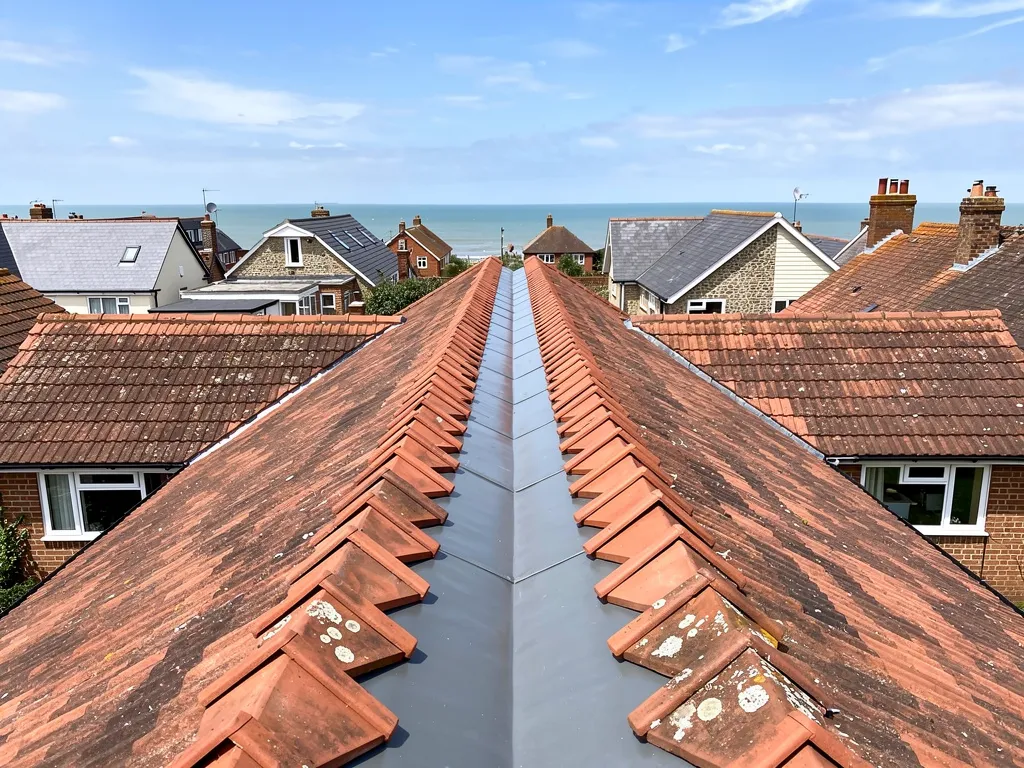
Lead-lined valley where two clay-tiled roof slopes meet

1.1 Why the fixings go first

Each plain clay tile is hooked over a batten, a thin timber strip nailed across the rafters, by two small nibs on its back, and every few courses a nail or peg holds it down as well. The clay itself is hard and slow to wear. The fixings are what give up: nails rust through, pegs rot, and tiles slip a little at a time until one course leans on the next. Cracked tiles show as flaking faces and chipped edges, and frost does the rest, splitting the clay where water has soaked in. We check the shaded slopes first, because moss keeps them wet the longest.

Lead-lined valley where two clay-tiled roof slopes meet

1.2 Moss, leaves and valleys

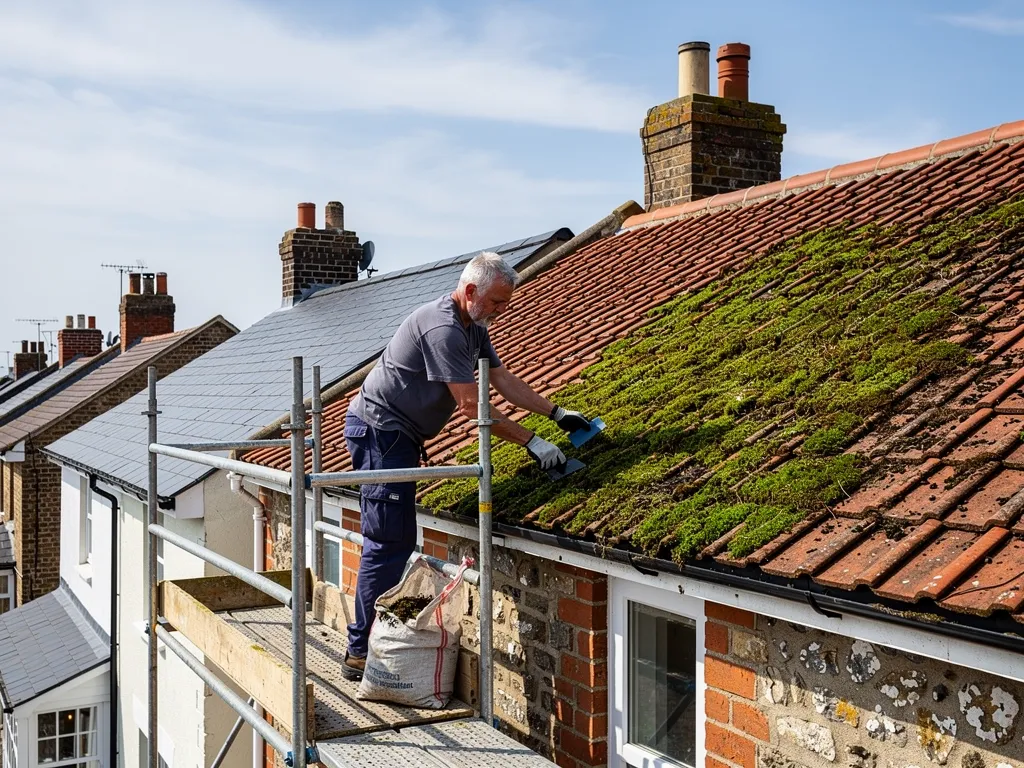
Under tree cover, moss builds up in the overlaps between tiles and holds water against them. Leaves pack into valleys, the angled channels where two slopes meet, and behind chimneys, and a blocked valley can overflow under the tiles and stain a ceiling a long way from the cause. From the ground it looks like failed tiles, which is why we clear the roof by hand before judging anything. Pressure washing can damage delicate tiles, so we scrape moss off where we can. For a simple pitched roof, our pitched roofing page sets out the work.

1.3 Relay or replace

Old tiles that are sound are worth keeping. We lift them, sort them, renew the fixings and any soft battens beneath, and lay them back, making up the gaps with new tiles chosen to match the size and colour. That keeps the look of the roof and avoids paying for a covering that still has years left in it. Replacing everything becomes the better answer when tiles are failing across every slope, not in one patch. The age figures below are published guides, not promises, and the Building Conservation Directory cautions against leaning on a 60-year figure for roofs of old peg tiles. What the survey finds decides it, not the calendar.

How long tiles and slates are reported to last

Clay tile (Marley)
A minimum life expectancy of 60 years was determined by the Building Research Establishment
Clay tile (MyBuilder)
Replaced after 40 to 60 years
Old peg-tile roofs
Treat a 60-year figure with caution
Natural slate (MyBuilder)
80 to 100 years or more when well installed

Source: Marley; MyBuilder (updated 21/08/2026); Building Conservation Directory, fetched October 2026
Chapter two

St Mary's slabs, the Crown Inn, the conservation area

Around the church and the old inn, the first question is what the roof is made of and who must agree to change it.

Knapped flint wall meeting the eaves of an old clay tile roof

St Mary's, the parish church, is built of Bargate stone rubble. The Victoria County History says Horsham slabs once covered most of its roofs, but most were taken off, leaving an edging of slabs at the eaves. The chancel dates from about 1230, and the aisle and chapel roofs were renewed in 1870 in a restoration the history calls "of an exceptionally destructive character". A roof with that past teaches one lesson before we touch it: what survives is evidence, so we photograph it before anything moves.

At a glance

  • St Mary's is Bargate stone rubble
  • Chancel about 1230; aisle roofs renewed 1870
  • The conservation area dates from 2007
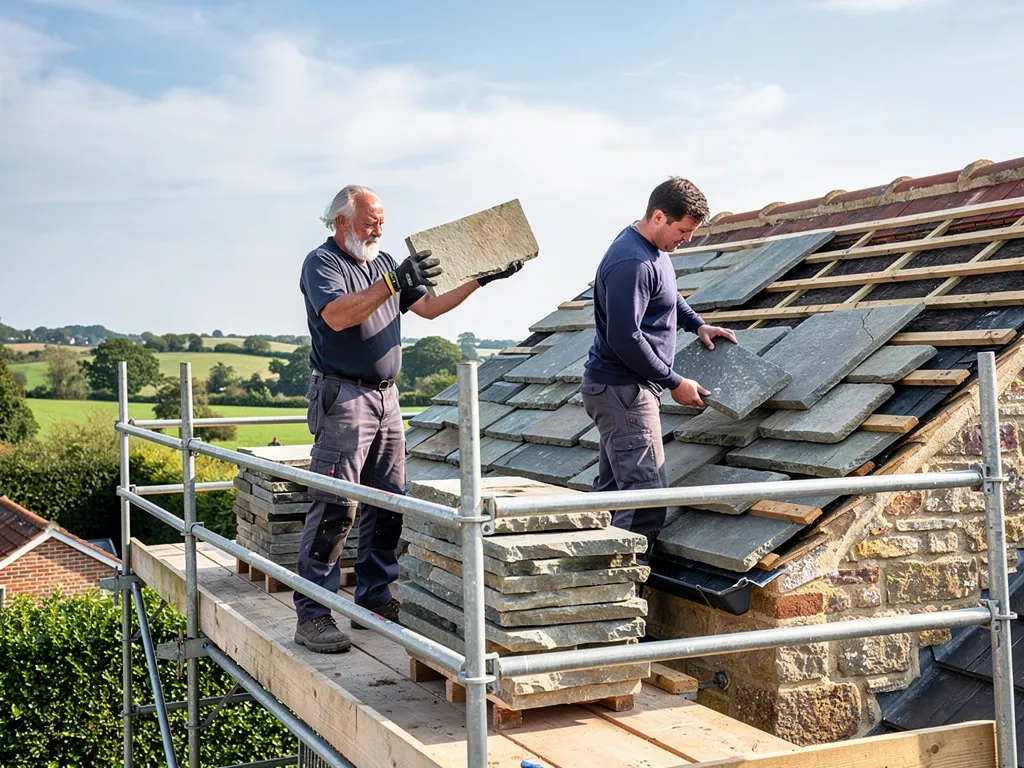
Two roofers on a scaffold relaying reclaimed Horsham stone slabs on a cottage roof
Two roofers on a scaffold relaying reclaimed stone slabs on a cottage roof

2.1 Stone slabs, and where more might come from

Horsham slabs are heavy sandstone flags, graded so that the big ones sit low on the roof and the small ones near the top. The Stone Roofing Association wants the slabs already on a roof reused first, and discourages stone lifted from other buildings because that encourages the destruction of historic roofs. Our Horsham stone roofing page covers lifting, sorting and relaying them.

Two roofers on a scaffold relaying reclaimed Horsham stone slabs on a cottage roof
Two roofers on a scaffold relaying reclaimed stone slabs on a cottage roof

2.2 Timber frames and the Crown Inn

The Crown Inn, opposite the church, keeps a 14th-century king-post roof over what was its open hall. A king-post is the upright timber that stands on a cross beam and carries the ridge. The history also names Lythe Hill Farm and Hallands among the houses with massive timber framing. On a frame like that, the covering rests on old timbers that were never sized for a heavy modern load, so we avoid a covering noticeably heavier than the one it replaces. Per the Planning Portal, approval is needed when a new covering makes the roof heavier by 15 per cent or more. Water does its worst damage where the rafters meet the wall plate, the timber laid along the top of the wall, so that is where we look first.

2.3 Who has to agree

Waverley gives the Chiddingfold Conservation Area as designated in 2007, when the Chiddingfold and Northbridge areas were merged and an appraisal was adopted on 16 October 2007. Planning consent is seldom needed when a repair restores the covering already on the roof. Swapping to a different one, or working on a listed building, is another matter, and Waverley is the body to ask before you start. Its page names no Article 4 direction for Chiddingfold. Works to a listed Church of England church in use go through the Church's own faculty process. Roosting bats and active nests have legal protection, which is one reason we inspect old timber roofs for them before stripping anything. Our roof planning permission guide covers roof windows in protected areas.

What people sayA stone roof with missing slabs can be patched with whatever old stone is nearest to hand.

What is trueThe Stone Roofing Association wants a roof's own slabs reused first and discourages stone stripped from other buildings.

Chapter three

Repair or re-roof among Chiddingfold's trees

Gutters, valleys and moss tell us whether a roof needs patching or stripping, and the rules depend on how much we touch.

On a wooded clay parish the repair-or-replace question is a practical one, not a matter of age alone. We look at how the faults are spread. Slipped tiles along one slope, a split valley, a gap beside a chimney: those usually point to a repair. Fixings failing across every slope, battens soft with damp and tiles flaking everywhere point to a re-roof. Our recommendation comes with its reason, your own roof in photographs and a written quote. One failed valley on an otherwise healthy roof is a valley job, not a strip.

At a glance

  • Blocked valleys often mimic failed tiles
  • Small repairs rarely need a building control application
  • Check any quote for scaffold and VAT
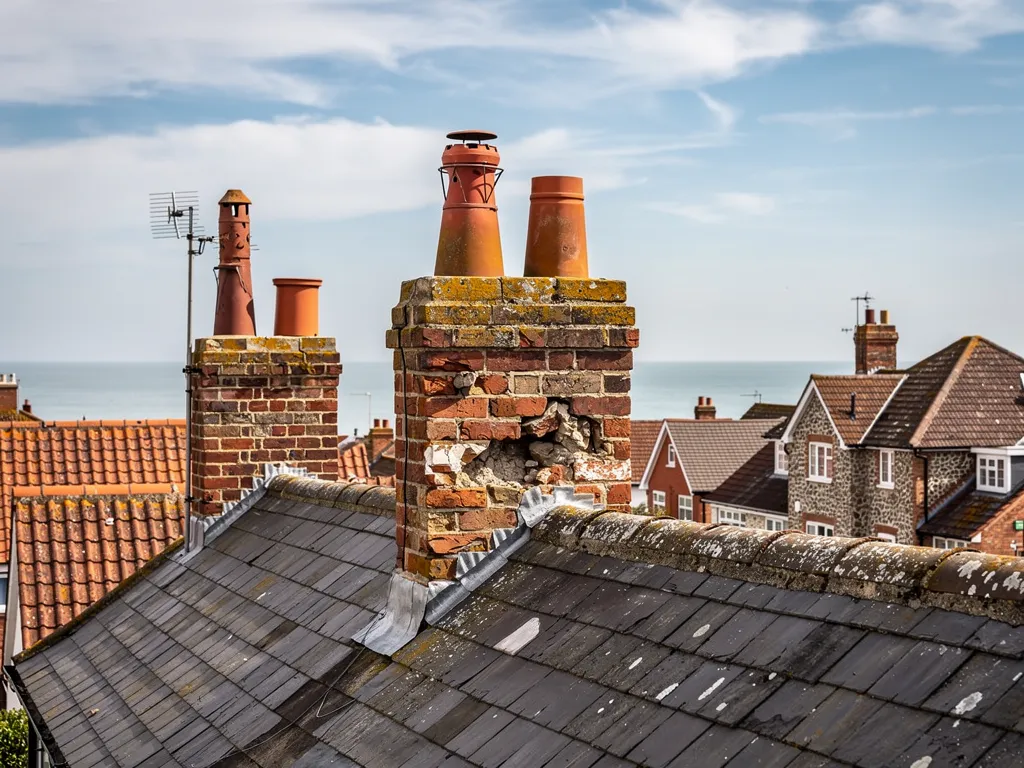
Victorian terrace chimney stacks with spalled bricks and old lead flashing

3.1 Gutters under trees

Leaf fall is the quiet cause of many a stain here. A gutter packed with leaves overflows down the wall or back over the eaves, and soaked fascia boards and rafter ends follow. During a survey we clear the gutters and downpipes, check the falls, the gentle slope towards each outlet, and look at the fascia behind them. Overhanging branches matter too: they scratch tiles, drop weight on lead flashings and knock gutters out of line, so we note them in the report.

Victorian terrace chimney stacks with spalled bricks and old lead flashing

3.2 When the rules apply

The Planning Portal says repair or re-covering normally needs no building control application when less than 25 per cent of the total building envelope and less than 50 per cent of the roof is affected. Cross either limit, change the structure, or pick a covering 15 per cent or more heavier, and an application follows, with a thermal upgrade under Part L a possibility. Your council's building control team and any registered building control approver can both take the application. Where work is notifiable, we handle the notification. Our roof replacement page takes a full strip and re-cover step by step.

3.3 What moves the price

Access, the covering chosen, the roof's size and pitch, and the state of the timber under the old tiles each move the figure. A re-roof attracts VAT at 20 per cent, the standard rate, and on a wooded plot the cost of keeping branches clear of the scaffold can count too. The figures below come from national price guides rather than from us; our own pricing is good and fair.

Published UK roof repair and re-roof costs

  • Minor roof repair£100 to £300
  • Moderate roof repair£500 to £1,000
  • Storm damage fixes£500 to £1,500
  • Gable re-roof, semi£5,000 to £8,000

A single written total for your own roof follows the survey; when weighing other offers, look for VAT and scaffold in each. Source: MyBuilder roof repair and new roof price guides, updated 21/08/2026.

Chiddingfold roof questions, from the green to the woods

Why do tile roofs under Chiddingfold's trees need clearing before a repair?

Moss, leaf litter and blocked valleys can mimic failed tiles from the ground, and a repair made over them fails again. We clear the roof by hand first, scraping moss rather than pressure washing, because pressure washing can damage delicate tiles. Only then can we see which tiles have really cracked, slipped or lost their fixings, and quote for those. The photographs sent with the quote show the roof after clearing, so the faults are plain to see.

Does the Chiddingfold Conservation Area mean Waverley must approve a re-tile?

Rarely, if the same tile goes back. Trouble starts when the covering changes, from clay to concrete for example, or if the house carries a listing. Waverley's conservation areas page names no Article 4 direction for the village, yet a call to Waverley Borough Council's planning team costs nothing and settles it before work begins. We match the existing tile or stone and take photographs of the roof beforehand to show what stood there.

How do you repair a roof over timber framing like the Crown Inn's?

Slowly, and from the outside in. Old frames carry the roof through joints and pegs, not modern fixings, so we avoid levering against them and avoid a heavier covering. We look at the rafter feet and the wall plate for rot, repair only what the survey shows, and keep the original timbers where they are sound. On a listed building, listed building consent covers whatever goes past a like-for-like repair, and we confirm the position with the council before starting.

Which body signs off a Chiddingfold re-roof under the Building Regulations?

Your council's building control team, or a registered building control approver of your choosing. Whether anyone needs to check at all turns on the extent of the work: under the Planning Portal's limits of 25 per cent of the envelope and 50 per cent of the roof, normally nobody. Past them, or with a much heavier covering, an application follows. We explain which route suits and handle the notification when the work is notifiable.

Roofers near Chiddingfold

Tell us about your roof

Describe what is happening and we will call you back to arrange a visit.

  • Photographs of what we find
  • A written quote with one total price
  • Or call 01903 299063

10-year workmanship guarantee, in writing.

Call Get a quote