

Chapter one
Ridges and hips on seaside bungalows
A bungalow carries its whole roof in the open, and a hipped one gives the sea wind a ridge and four hips to test.
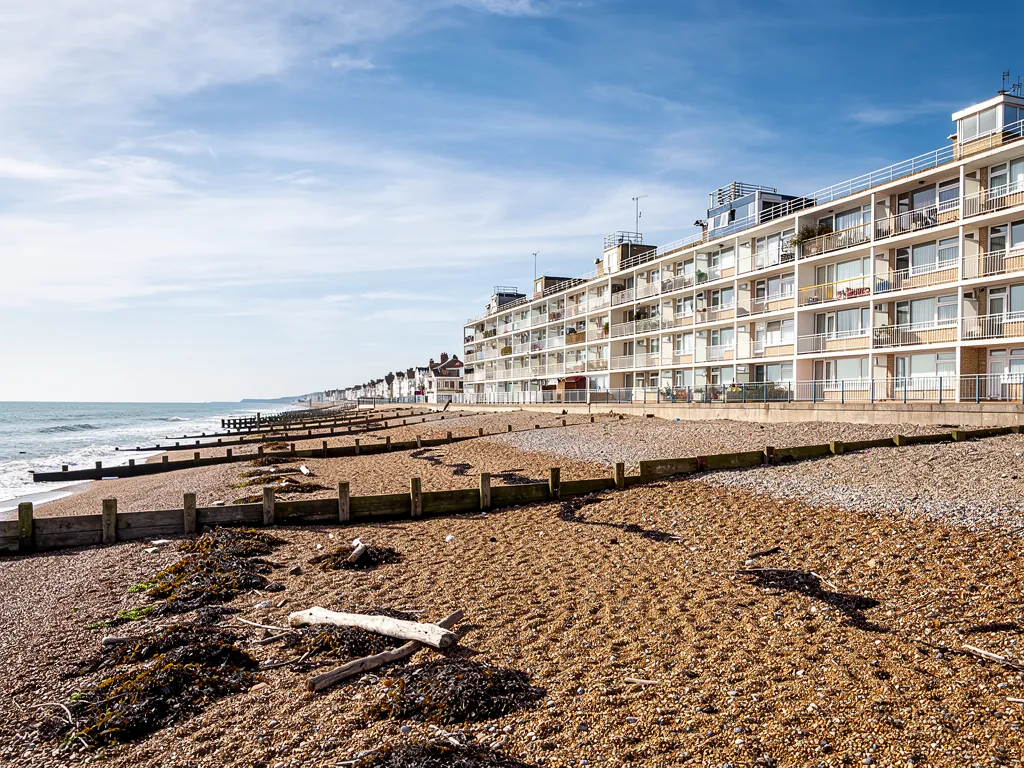
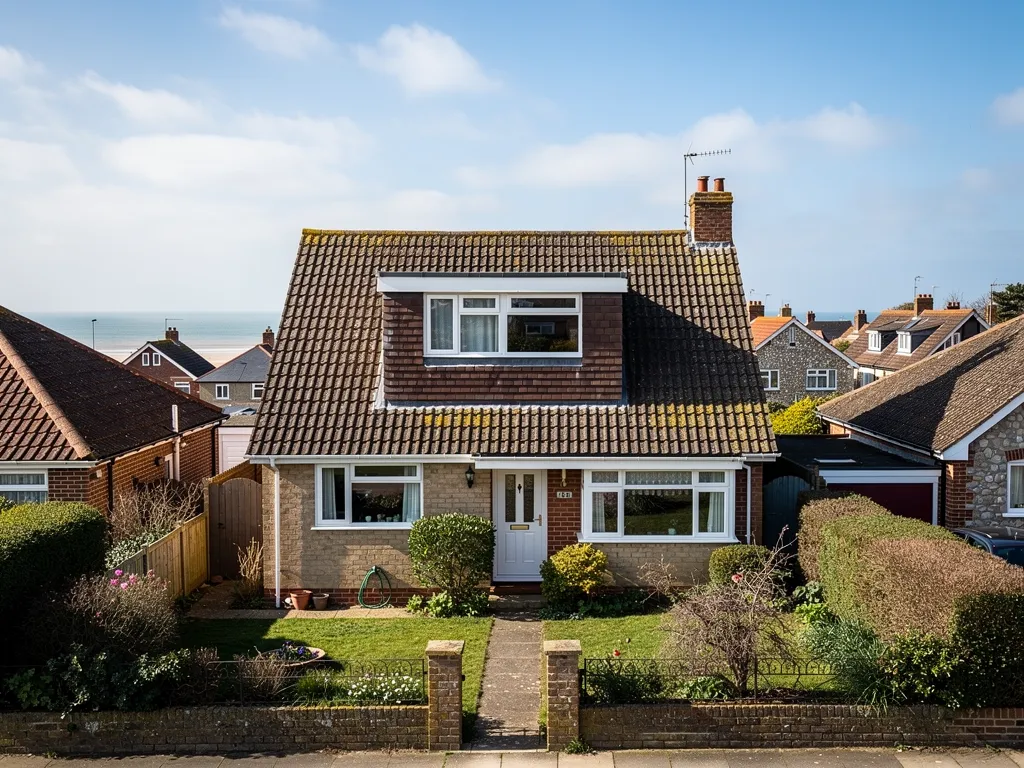
East Wittering is a place of bungalows. The Victoria County History says the coastal district, once the separate parish of Bracklesham, suffered severe erosion and is now largely occupied by modern bungalows and small houses. A bungalow puts all of its roof in front of the weather. There is no upper storey to shelter any of it, and a hipped design, with a ridge along the top and a hip running down to each corner, gives sea wind plenty of joints to pull at.
At a glance
- Water finds junctions before it finds open slopes
- Mortar by itself no longer holds a ridge
- Dry-fix ridges are tested to BS 8612:2018
1.1 Where the first leak starts
On a bungalow it is rarely the middle of a slope. Water finds the junctions: the ridge, the hips, the valley where an extension meets the main roof, the lead around a small chimney, and the gutter that runs just above a window. We start at the top and follow the water down, because a stain on a lounge ceiling can sit metres from the break. Up in the roof space we check for chinks of daylight along the ridge, wet timber, and underlay that is torn or missing altogether.
1.2 Fixed to today's standard
Ridge and hip tiles used to be set in a bed of mortar and left alone. Since the 2014 revision of BS 5534, mortar by itself is not relied on to hold them, and they are mechanically fixed as well. Dry-fix is the alternative. There, ridge tiles sit on clips over a ventilated roll, with no mortar bed at all, and BS 8612:2018 is the specification those systems are tested against. Mortar is not banned. Sound original tiles can be cleaned, re-bedded and screwed back. We also check the metal strap at the foot of each hip that stops the bottom tile creeping off, since it is easy to miss from the ground.
1.3 Choosing the ridge repair
A short run of loose ridge tiles may need only re-bedding and fixing. A ridge that is cracked along its length, or has been patched in mortar year after year, is usually better replaced with a dry-fix line, which also ventilates the roof void. Our ridge tile repairs page lays out the options. Our recommendation comes with photographs of your own ridge and a single written price once the survey is done.