

Chapter one
Salt on the soffits at the sea edge
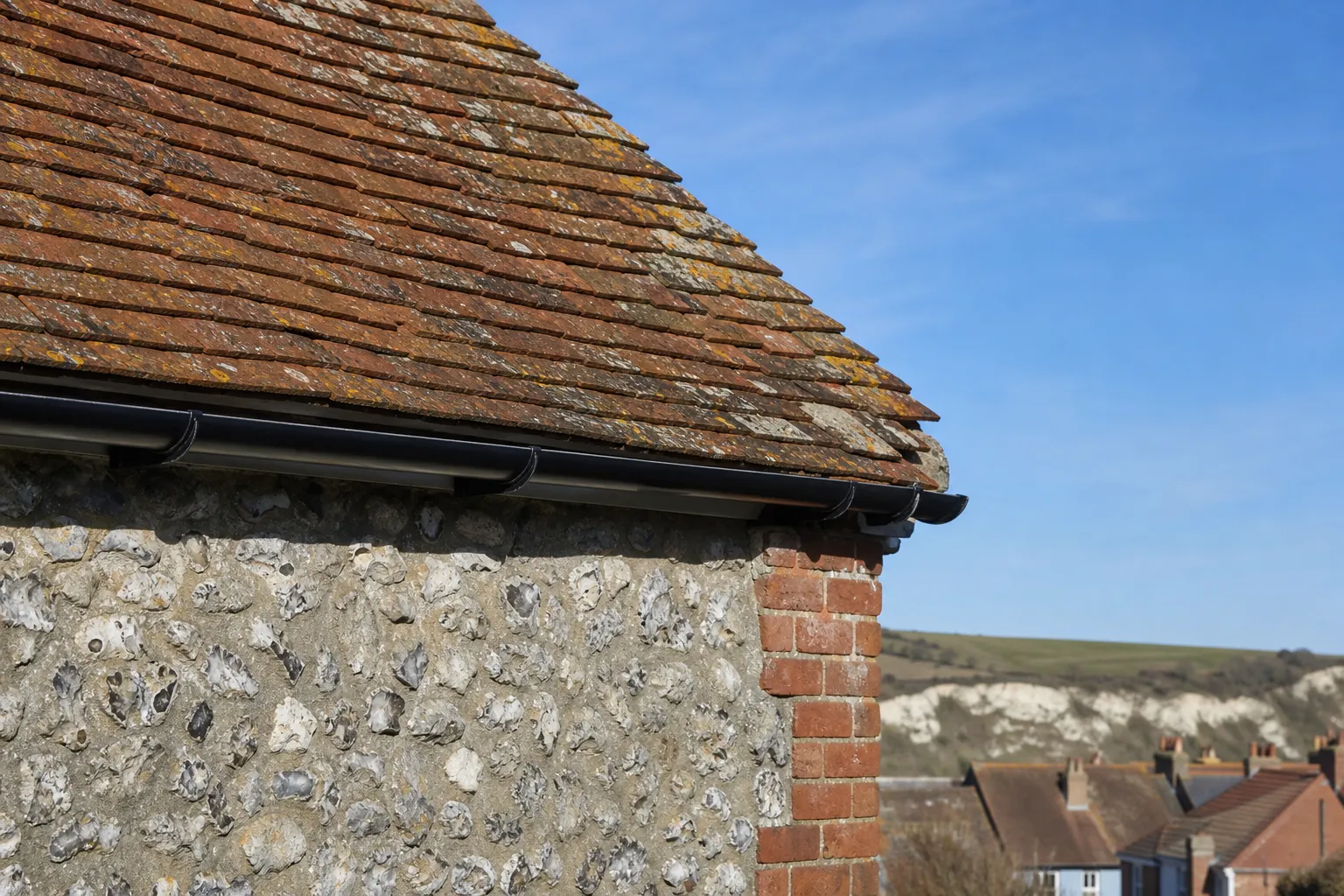
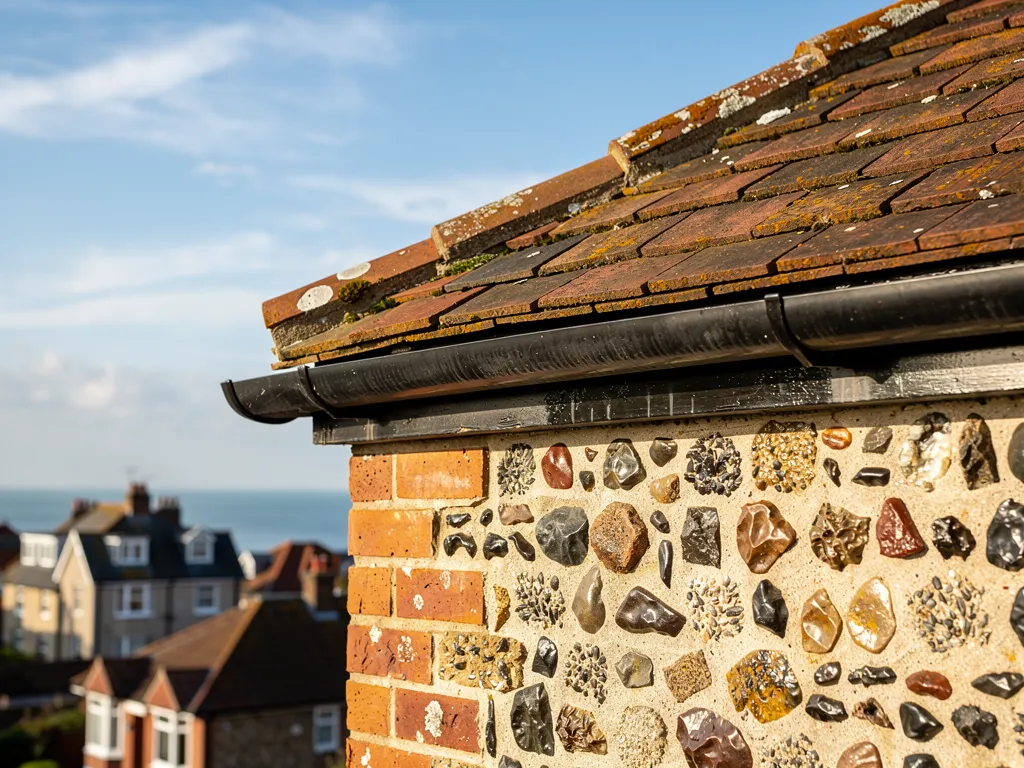
Eaves tuck under the roof where rain cannot wash them, so Felpham's salt air does its slow work there first.
Felpham lies on the south coast, east of Bognor Regis and within sight of the South Downs, and the parish coastline was low chalk cliffs with a short stretch of sea wall and promenade by the 1930s. A roof here does its work in a marine environment. HomeBuilding observes that marine air holds a significant amount of salt, so some metal surfaces may stain or corrode, and that the boards under the eaves collect salt from the air in spots where rain cannot clean them. That is the part of the house we look at hardest, and on a sea-edge house it often tells us more than the tiles do.
At a glance
- Salt collects under the eaves, out of the rain
- Paint and timber at the roof edge fail first
- Gutters need a steady fall towards the outlet
1.1 What salt does to the roofline
Soffits and fascias sit under the eaves, sheltered from rain, so the deposits build up and are not rinsed off. Paint blisters and flakes, timber behind it takes damp, and a fascia that rots at the rafter ends can no longer hold the gutter or the bottom course of tiles. MyBuilder puts the usual replacement interval for fascias and soffits at between 10 and 20 years. A rinse with clean water from a hose or a long brush once or twice a year costs little and keeps the deposits down, and we look at fixings, brackets and exposed metal while we are there.
1.2 Gutters that drain properly
A gutter does nothing useful unless it falls to the outlet. Brett Martin's guidance is a drop of 1 mm in every 600 mm, with supports no more than 900 mm apart, and FloPlast's MiniFlo guide gives 1:350 for its system. We check the run with a level, look for pooled water and rust or splits at the joints, and trace any damp patch on a wall to the leak above it. Our gutters, soffits and fascias page describes the options for repair and renewal.
A roof edge also tells us about the rest of the roof. Moss, loose tiles and a lifted verge often trace back to the same wind-washed corner, so one ladder visit covers all of it, and everything we find is photographed for you. If a fascia has to come off, we check the ends of the rafters behind it before a new board goes on, because fixing fresh timber to rotten ends only hides the problem for a season or two. The written quote then describes the whole run of roofline work as one total.
Roofline facts for the Felpham coast
- Fascia and soffit renewal
- Typically every 10 to 20 years (MyBuilder)
- Gutter fall
- 1 mm per 600 mm (Brett Martin); 1:350 for MiniFlo (FloPlast)
- Gutter supports
- No more than 900 mm apart (Brett Martin)
- Marine air
- Salty deposits collect where rain cannot reach (HomeBuilding)
Source: MyBuilder gutter, fascia and soffit guide, updated 21/08/2026; Brett Martin; FloPlast; HomeBuilding, fetched October 2026