Chapter one
Hand-made clay tiles on Midhurst's older roofs
The conservation area appraisal puts hand-made clay tiles first and says they usually sit at about 40 degrees.
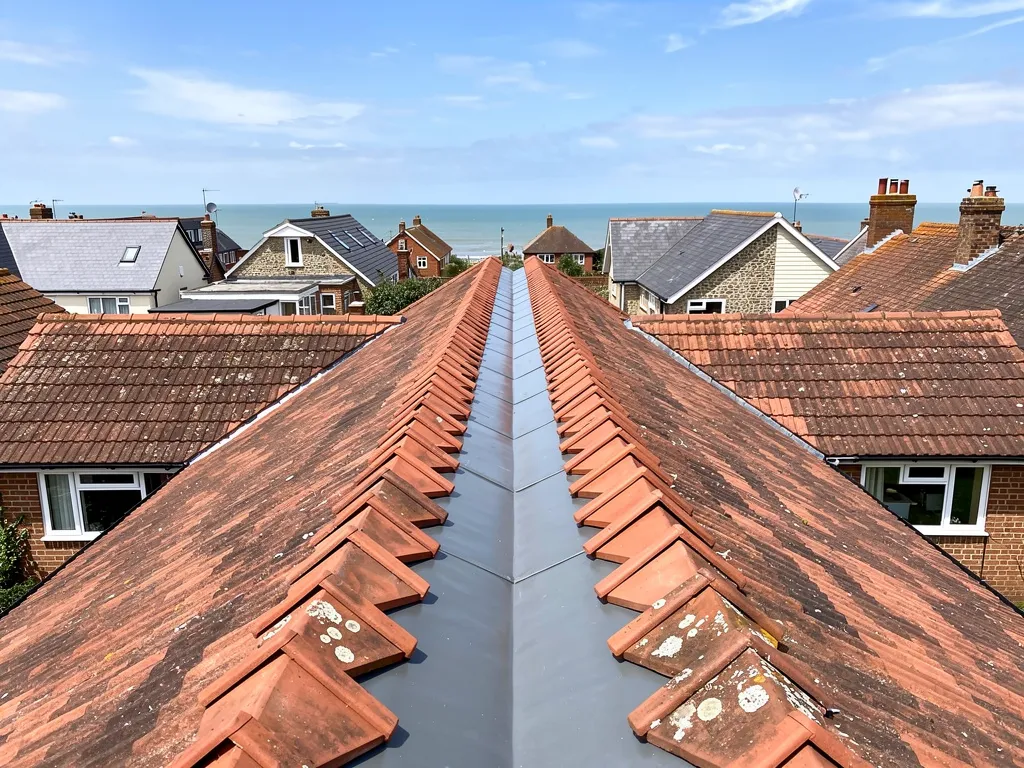
When the South Downs National Park Authority appraised Midhurst's conservation area, it found clay tiles on the roofs, as you would expect in the Weald, with some replacement in Welsh slate. Hand-made clay tiles are by far the most popular covering, and the appraisal says concrete tiles and pantiles are not characteristic of the town. That tells a roofer what to do before a single tile is ordered. A replacement has to read as clay from the street, with a colour, texture and size that sit comfortably beside the tiles next door. Clay for both tiles and bricks is among the materials the appraisal names as local, so the roofs and the walls beneath them share a source. Hand-made tiles vary a little in colour and camber, which is part of why old roofs look as they do, and why a handful of mismatched new tiles stands out from the pavement.
At a glance
- Clay tiles are the conservation area's usual roofing
- Concrete tiles and pantiles are not characteristic there
- Hand-made tiles usually sit at about 40 degrees
1.1 Why the pitch limits the choice
A roof laid at about 40 degrees can take most plain tiles, but the angle is a limit as well as a feature. Marley publishes a minimum pitch for each of its clay plain tiles: Canterbury 40 degrees, Ashdowne 35, and Hawkins and Acme Single Camber 30. A tile chosen to match the street has to be one that is allowed to work at the slope in front of you, so we read the pitch off the roof before suggesting a product. The covering is hung on battens, narrow timber strips running across the rafters, and each course is nailed, so the nails and battens are tested along with the clay.
1.2 How long a clay roof lasts
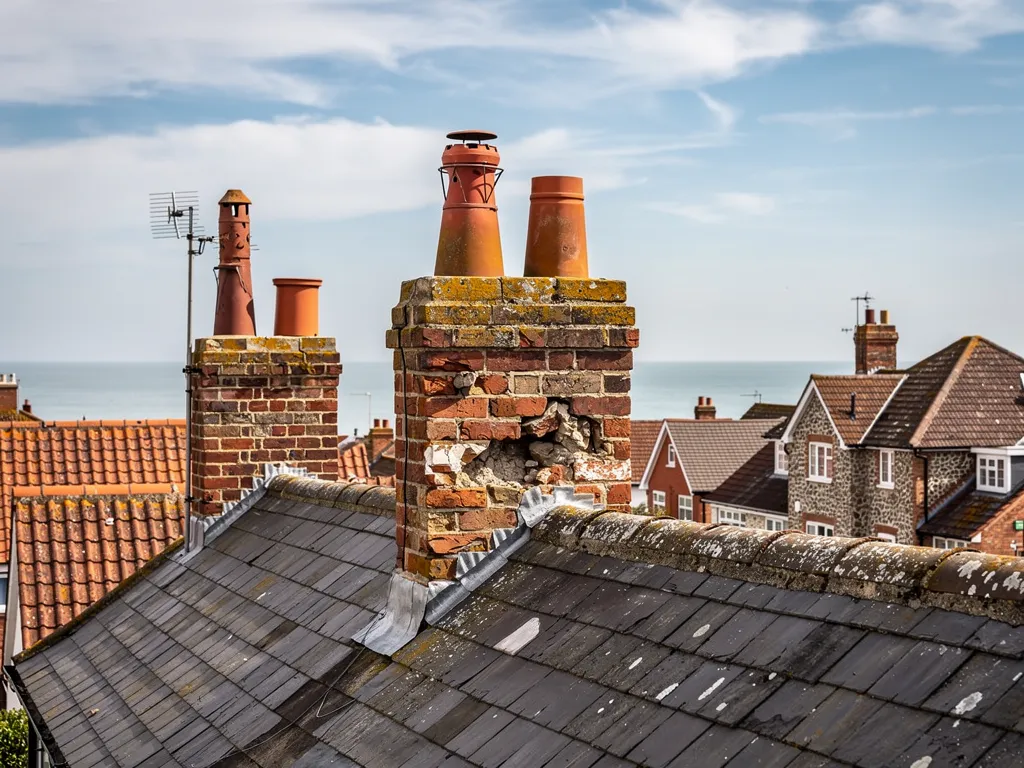
Marley reports that the Building Research Establishment assessed clay tiles at a minimum life expectancy of 60 years, a typical figure and no pledge. The Building Conservation Directory warns that the 60-year number cannot be trusted on an old peg-tile roof, which means the date a roof went on does not settle whether it should come off. A century-old roof with sound tiles and a few rusted nails wants repair, not replacement, while a younger roof with a failing underlay, the membrane beneath the tiles, may not. Our pitched roofing page explains how we decide. The ridge is checked too, because since the 2014 revision of BS 5534 bedded ridge tiles are mechanically fixed as well as mortared, and an older ridge may predate that. Our survey pictures come with the quote, showing you the same defects we saw from the ladder.
Minimum pitches for Marley clay plain tiles
| Tile | Minimum pitch |
|---|---|
| Canterbury | 40 degrees |
| Ashdowne | 35 degrees |
| Hawkins | 30 degrees |
| Acme Single Camber | 30 degrees |