
Chapter one
Rubble walls, priory remains and St Mary's tiles
Roofs beside rubble stone depend on the join with the wall, and on knowing which consent route governs which building.
Easebourne's church of St Mary was once the priory church as well, and it stands at the gate of Cowdray Park. The Victoria County History gives its tower as rubble and its roofs as tiled, and Historic England lists it Grade I. South of the church, considerable remains of the priory survive, among them a 13th-century east range. A roof beside walls like these has a demanding task. It has to stay tight against rough stone, where no two blocks present the same face, and it has to go on looking right from the park gate.
At a glance
- St Mary's has a rubble tower and tiled roofs
- Priory remains include a 13th-century range
- Church, house and closed church follow different consent routes
1.1 Why rubble is harder to flash than brick
The line where a roof slope meets a wall is where a roof is most likely to let go, and rubble makes it worse. Lead flashing bridges that join, but it cannot sit flat on stones that bulge and dip, so it is cut into the wall's mortar joints and then pointed over. We probe the pointing around old lead, because crumbled mortar behind the lead lets water find a route behind it and down the stonework, and the stain surfaces on a ceiling several feet from the cause. That is why a damp patch is where we start asking questions, not where we start repairing.
1.2 What the tiles ask for
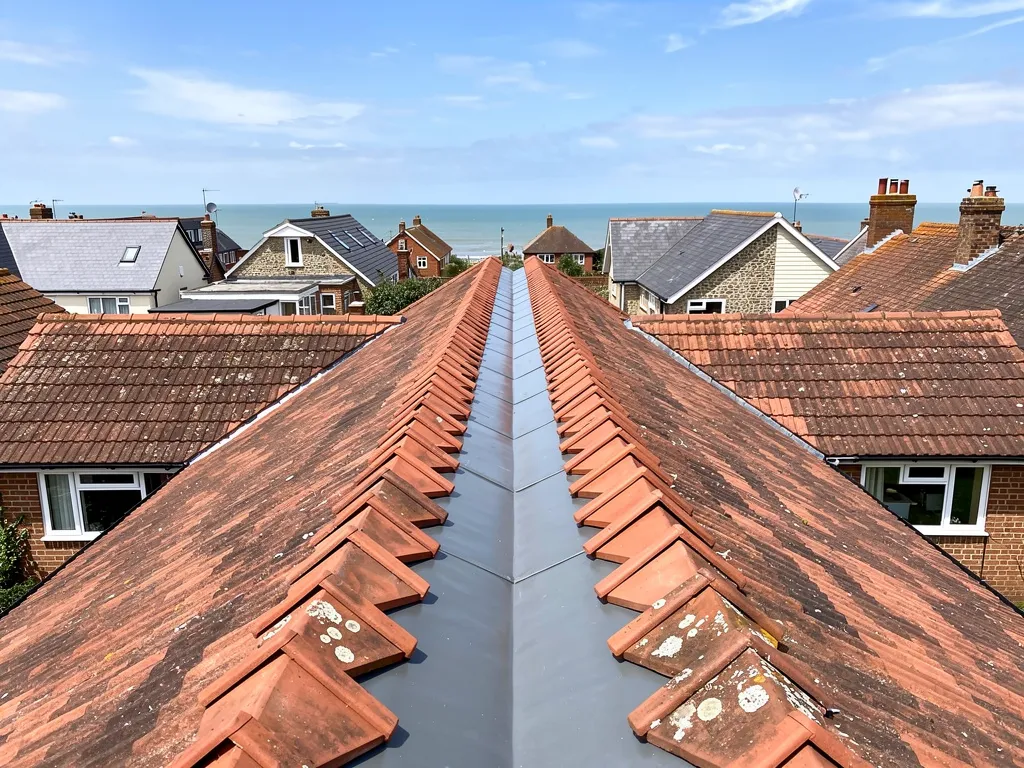
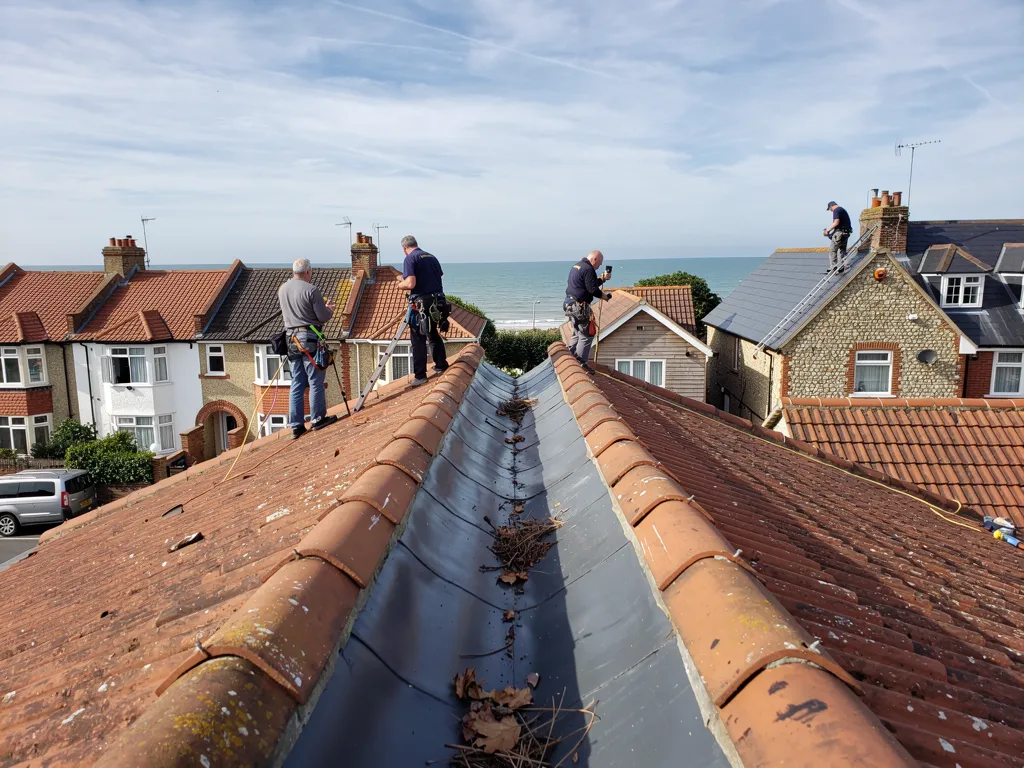
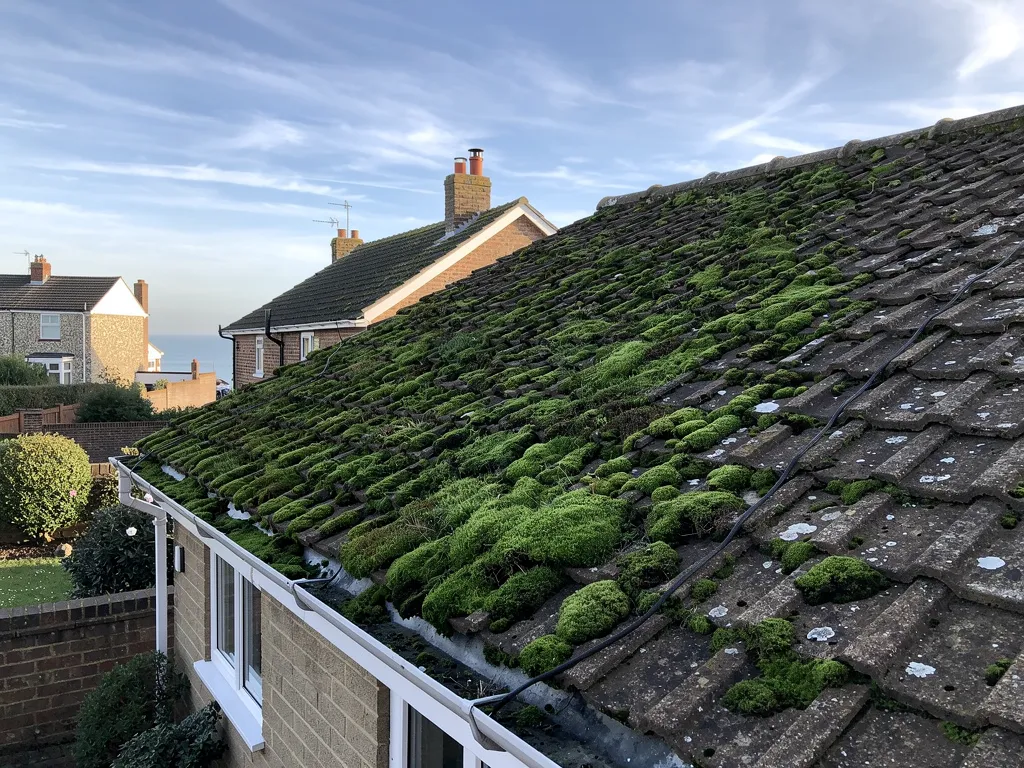
On a long tiled roof, the first signs of age are slipped tiles, cracked tiles and daylight showing through at the ridge when you look up from the loft. We count them, test the nails and battens beneath, check the underlay where we can reach it, look at how each hip and valley has been finished, and photograph what we find, so the quote rests on pictures of your roof and not on guesswork. Our pitched roofing page describes how a tiled slope is stripped and re-laid when repair is no longer enough.
1.3 Which route for which building
Not every old building follows the same consent path. A Church of England church still in use for worship sits outside listed building consent, under the ecclesiastical exemption, and goes through the Church's faculty process. A church that has closed needs consent from the planning authority, and so does a listed house once the work goes past like-for-like repair. Easebourne's planning authority is the National Park Authority, which leaves applications from its Chichester district area to Chichester District Council. We ask early which applies, because it shapes everything from the choice of tile to the timing of the job. The photographs from the survey go into whichever application is needed, so the decision-makers see the actual roof.
Consent route for roof works to a listed building
| Building | Route for works |
|---|---|
| Parish church in use (Church of England) | Church of England faculty process |
| Roman Catholic church still used for worship | Its own approval procedure |
| Closed or redundant church | Listed building consent from the planning authority |
| Listed house | Listed building consent where the work goes beyond like-for-like repair |