
Roofers in Selsey

Selsey sits on the Bill with the sea on two sides, and its roofs take whatever the Channel sends. We survey rooflines, old High Street coverings and storm damage, with photographs of each fault.

What salt and storms do to a Selsey roof

  • Eaves, fascia and gutter detail

    Rooflines the rain cannot rinse

    Selsey Bill is bounded by the sea on the south and east. HomeBuilding notes that soffits and fascias in salty air collect deposits which rain cannot reach to wash away, so we inspect under the eaves as closely as on top.

  • Slate and clay tile roofs

    Thatch, slate and handmade clay

    Chichester District Council's 2012 appraisal describes roofs in the conservation area as thatched, slated or handmade clay tiled. Where a repair touches a covering like that, matching it matters more than finishing quickly.

  • A church roof in tile and stone

    A church roof that has moved once

    St Peter's was taken down at Church Norton and re-erected on the High Street in 1864, with the old roof re-used.

    Read more about A church roof that has moved once

    Any roof that has moved once deserves a careful look at the point where old meets new.

Street map of Selsey, west of central Worthing, with a pin on the town.

What the map says about Selsey

Planning authority
Chichester District Council
Councils
Chichester District Council and West Sussex County Council
Conservation area
Selsey Conservation Area, designated 21 July 1975 and based on the High Street
Listed buildings
41 in the conservation area, all grade II, including St Peter's and the Methodist church
Article 4
Chichester District Council can say if one applies to a given street
From central Worthing
29.7 road miles, west, about 44 minutes by car

Selsey roofs

Salt, slate and storms on the Bill

What a headland with the sea on two sides asks of a roof.

Chapter one

Salt air and the Selsey roofline

On a headland bounded by sea on two sides, fascias, soffits and gutters gather salt that rain never reaches.

The Victoria County History says Selsey was once an island, and that about half a mile of land has been washed away from the point since Domesday. Today the Bill is bounded by the sea to the south and east. Salt reaches every part of a house here, but it lingers longest where rain cannot wash it off. HomeBuilding makes the point for soffits and fascias in marine air: they pick up salty deposits, the rain misses them, and staining or corrosion of some metal surfaces becomes a possibility. Sheltered spots collect the most, such as the underside of a porch overhang or the board hidden behind a gutter, which is why our survey photographs include them.

At a glance

  • Rain cannot rinse the underside of the eaves
  • Houses built before 2000 may hold asbestos
  • Gutters slope slightly towards their outlet

1.1 Washing, painting and what lasts

The fascia is the upright board along the eaves carrying the gutter, and the soffit is the flat panel underneath the overhang. In coastal air timber wants repainting on a regular cycle and plastic wants washing. The zinc maker VM Zinc advises a rinse in clean water two or more times a year, which matters on extensions and dormers clad in zinc, and it classes the first kilometre from the shore as its harshest zone. MyBuilder's guide gives 10 to 20 years as the typical gap between fascia and soffit replacements, though retailers claim longer. Lifespan depends on exposure, installation and upkeep, and no figure is a promise.

1.2 Gutters, and what hides behind the board

A run of gutter should slope slightly towards its outlet. Manufacturers commonly recommend somewhere between 1:600 and 1:350 depending on the system, and one maker asks for brackets at 900 mm centres or closer. When a gutter sags we check the fascia behind it, since rot or loose fixings there are often the cause, and we check that downpipes discharge clear of the wall. MyBuilder's guides, updated 21 August 2026, give £30 to £70 per metre for guttering and £80 to £150 per metre for fascia.

1.3 A word on soffits and asbestos

HSE guidance is blunt about older buildings: if the place was built or refurbished before 2000, treat it as containing asbestos until shown otherwise. External soffits are one of the places it lists. Asbestos insulating board is hard to tell from modern board by eye, and removing it is mostly licensed work. Where a soffit could be that material, work halts until we know what it is. Our gutters, soffits and fascias page sets out the repair and replacement options.

Salt exposure bands for zinc

Nearest the shore
First kilometre: the harshest zone
Middle band
1 to 3 km inland
Further back
3 to 20 km: low maritime influence
Rinsing
Clean water, two or more times a year

Source: VM Zinc FAQ, fetched October 2026
Chapter two

Thatch, slate and clay in the High Street

Selsey's conservation area follows the High Street, where roofs are thatched, slated or covered in handmade clay tile.

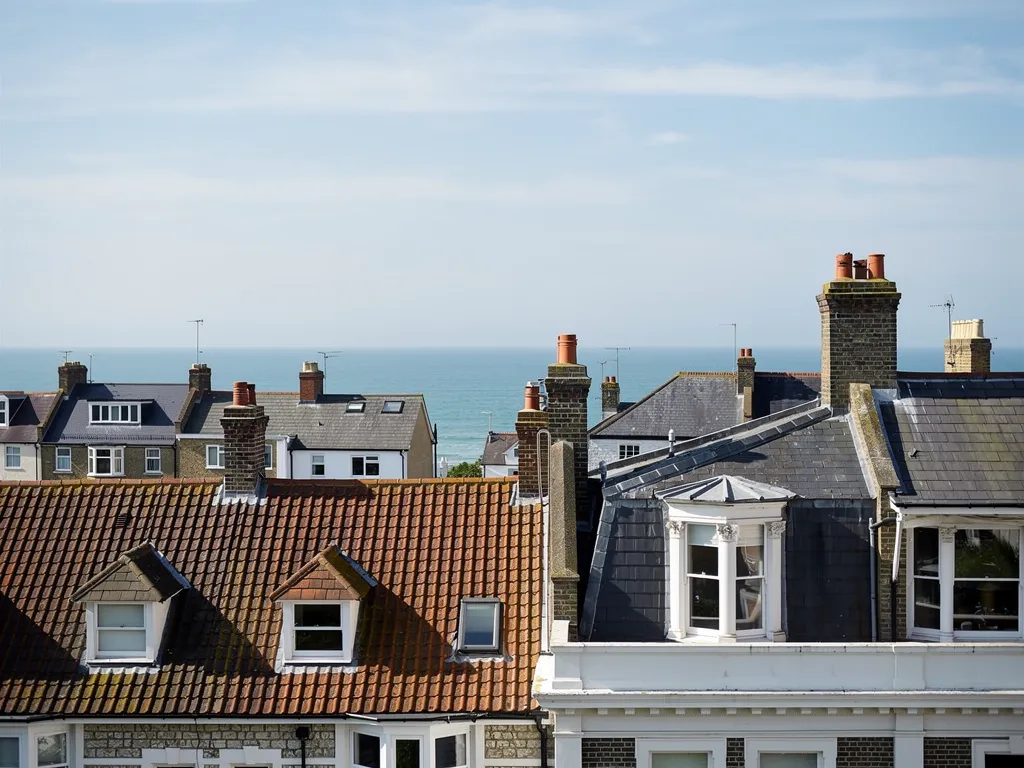
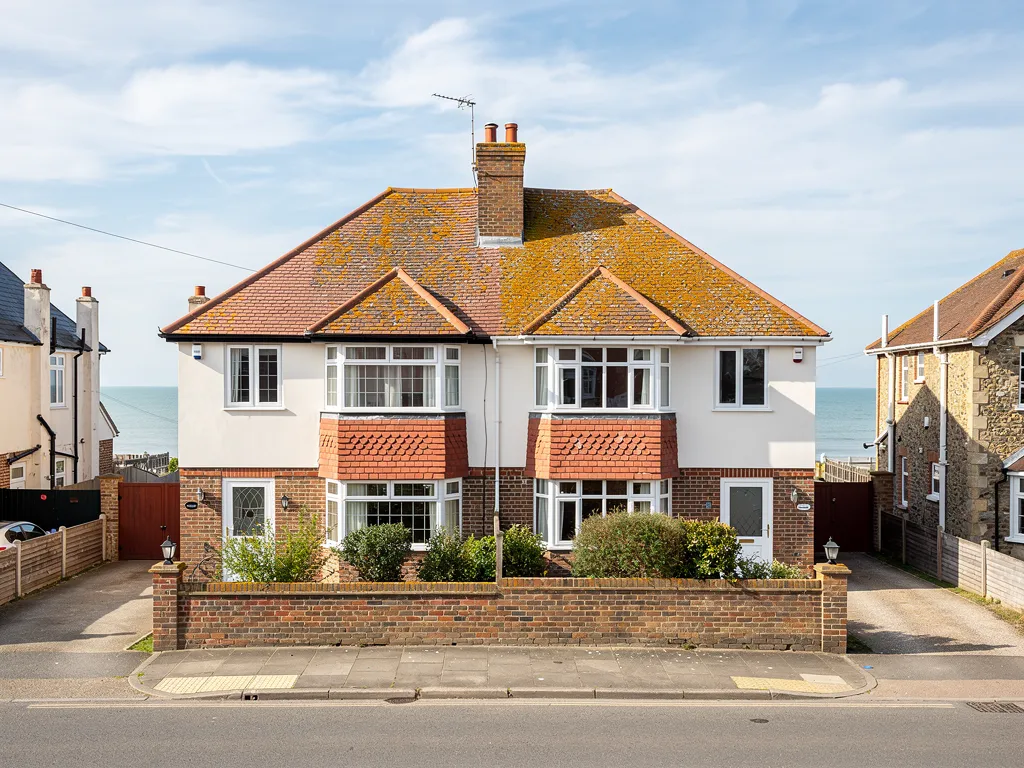
Pair of 1930s semis in Durrington with weathered clay tile roofs
Pair of 1930s semis with weathered clay tile roofs

Chichester District Council's 2012 character appraisal says the conservation area was designated on 21 July 1975 and is centred on the High Street. Roofs there are thatched, slated or handmade clay tiled; walls are Mixen stone, sandstone, red brick or beach flint with galletting, small stones pressed into the mortar joints. Mixen stone was once excavated from an offshore reef. Flint walls make flashing work fussy. Flashing, the lead dressed over the junction of roof and wall, must be tucked into a mortar joint that is seldom level, so we check that it is still tight and has not lifted.

At a glance

  • The conservation area dates from 21 July 1975
  • It holds 41 listed buildings, all grade II
  • St Peter's carries the roof from Church Norton
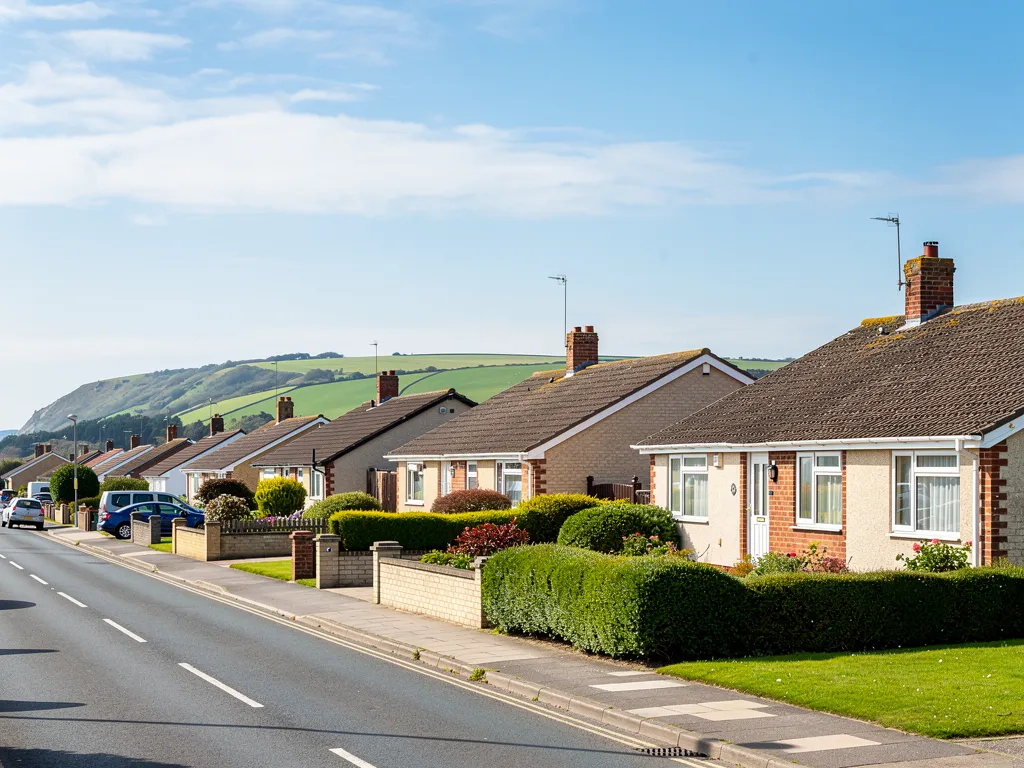
Row of post-war hipped bungalows with tiled roofs on a Worthing street
Row of post-war hipped bungalows with tiled roofs on a street

2.1 Forty-one listed buildings

The appraisal counts 41 listed buildings in the area, all grade II, St Peter's and the Methodist church among them. On a listed house, repair in a different material can count as works needing consent, so we photograph the roof and ask the council before choosing a replacement. Churches in use are another matter. St Peter's, as a Church of England church, is exempt from listed building consent while it is in use and answers to the faculty system instead. A Methodist church in use also sits outside the council's consent regime, following its own denominational procedure. Both lose that route once worship stops.

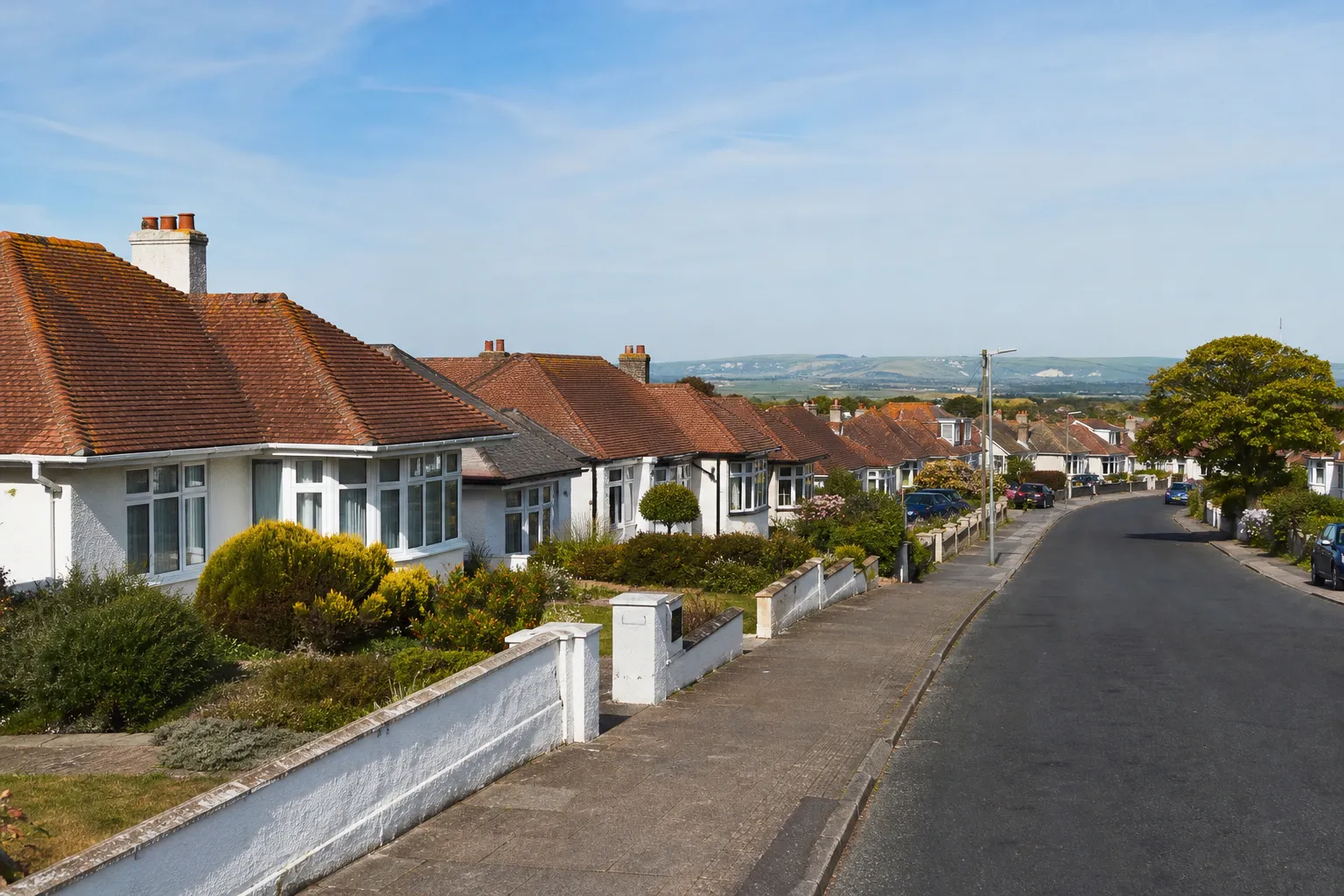
Row of post-war hipped bungalows with tiled roofs on a Worthing street
Row of post-war hipped bungalows with tiled roofs on a street

2.2 St Peter's roof, moved in 1864

The Victoria County History records that the body of the old church at Church Norton was taken down in 1864 and re-erected at the north end of the High Street as St Peter's, the Church Norton roof being re-used. That belongs to the parish. For ordinary houses in the area, putting back what was there seldom needs planning permission, whereas changing the material is another matter. The planning team can tell you early on if an Article 4 direction reaches your road. Photographs taken before a job begins also show the planners what the roof looked like. Our roof planning permission guide covers roof windows and dormers, and the slate roofing page covers repairs to slate.

What people sayA listed church roof always needs listed building consent from the council.

What is trueAnglican and Methodist churches still in use answer to their own denominations' procedures, and lose that route when worship stops.

Chapter three

After a gale on Selsey Bill

Storm damage and wear look alike from the pavement, so what you record straight away matters.

Selsey takes weather from two sides, and a gale can leave slipped tiles, a lifted ridge or a gutter pulled from its brackets. The first job is safety: stay off the roof, and if water is coming in, catch it and move belongings. From the ground, take dated photographs of anything visible. Ours is to make the roof safe and trace the real way in, which is not always where the damage looks worst. MyBuilder puts storm fixes at £500 to £1,500.

At a glance

  • Insurers ask whether a storm caused the damage
  • Gradual damage is often excluded from cover
  • Photographs record the cause, not just the stain

3.1 Make-safe, then repair

A make-safe is a stopgap: a sheet or board fixed over an opening, or loose tiles secured, so that no more water enters while the permanent repair is planned. Any sheet goes onto sound timber, never over loose tiles, and it is never the end of the job. The survey still has to find where the water got in, and that may be a flashing or valley some way from the visible damage. Inside the loft, wet insulation, dark rafters and daylight at the ridge all help to tell a recent storm hole from slow failure.

3.2 What an insurer will look for

Insurers and the Financial Ombudsman Service look for the same thing: whether a storm, rather than slow decay, did the harm. The Ombudsman's checklist runs from the date of the damage, through whether it looks like storm damage, to whether weather was the main cause or the roof would have failed anyway. Many policies carve out damage that crept up over time, which is why a dated photograph and a cause on paper carry weight. Which? reported in November 2025, using Financial Conduct Authority figures, that only 32 per cent of storm-related claims made in 2024 ended in a payout; its example of wear and tear is rain coming through a roof that was poorly maintained.

3.3 What our survey adds

No contractor can promise what an insurer will decide. What we provide is a plain record. Photographs show the cause, whether a lifted tile, a split flashing or a rotted batten, and the quote that follows is a single written total. That leaves you with facts to set against the policy wording. We clear the site and remove the old materials when the repair is finished. Our emergency roof repairs page explains how a make-safe works.

After the gale

  1. Stay safe Keep off the roof and move belongings out of the wet.
  2. Photograph Record the damage from the ground, with the date showing.
  3. Read the policy Check what it says about storms and about gradual damage.
  4. Trace the cause A survey finds where the water entered, and the written quote follows.

Selsey roof questions, from the old church to the sea

Does sea salt shorten the life of a roofline on Selsey Bill?

HomeBuilding says soffits and fascias in marine air attract salty deposits that rain cannot clean, and that metal can stain or corrode as a result. Guides disagree on lifespan, with MyBuilder giving 10 to 20 years for fascias and soffits and one retailer claiming more, and none of it is a promise. Rinsing helps. When we replace a roofline we check the board behind the gutter first.

Can the roof of St Peter's, rebuilt from Church Norton, be repaired without the council?

While it remains in use, a Church of England church such as St Peter's is repaired through the Church's faculty system, not the council's listed building process. That route closes if the church stops holding regular worship. The Methodist church works the same way under its own denomination. Houses in the High Street are different, and the council's planning team should hear about any change of material.

Is a slate or clay roof in the Selsey Conservation Area repaired differently?

The aim is to match what is there: the same slate or tile, laid in the same pattern, with the flashings dressed to suit. A matching repair generally sits outside planning control, though Chichester District Council can confirm whether any Article 4 direction applies. A listed house is stricter, because non-matching repair materials can need consent, so we photograph first and the council's view comes before anything is ordered.

Will home insurance pay for a roof damaged in a gale on the Bill?

Nobody can promise that. The Ombudsman's test starts from the date of the damage and asks whether weather was the main cause, or whether the roof was failing already. Gradual damage is often excluded, so wear and storm damage need telling apart. Dated photographs and a survey that traces the cause give you facts to compare with your policy, and a complaint route exists if you disagree with the answer.

Tell us about your roof

Describe what is happening and we will call you back to arrange a visit.

  • Photographs of what we find
  • A written quote with one total price
  • Or call 01903 299063

10-year workmanship guarantee, in writing.

Call Get a quote