
Roofers in Sompting

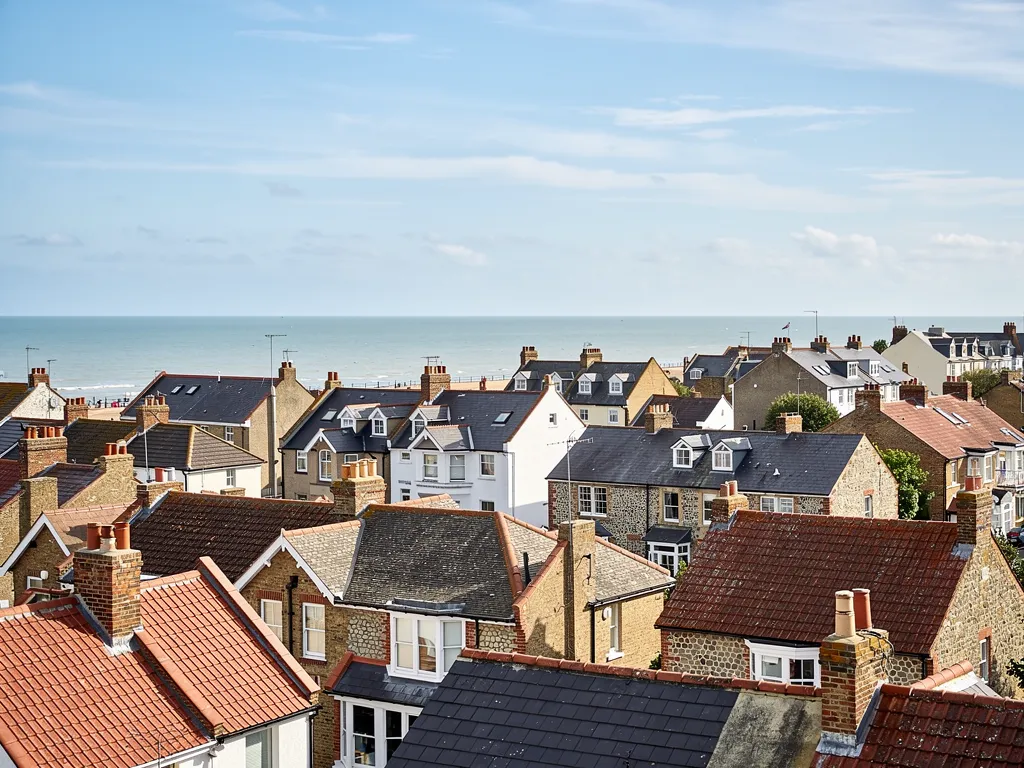
Sompting sits where the Downs meet the coastal plain, a flint-walled village whose heart is a Grade I church. We survey its older roofs and the houses around them, with photographs.

Sompting's roofs, from nursery walls to the A27

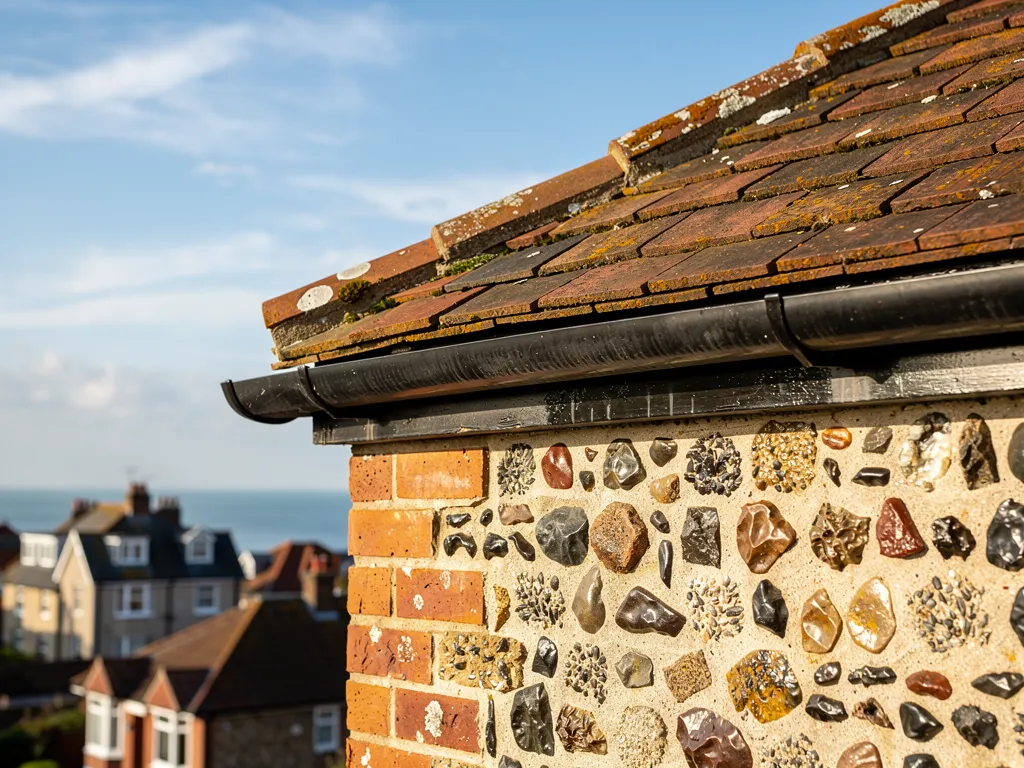
  • A flint wall beside a tiled roof

    Flint-walled village roofs

    The conservation area appraisal says flint is used extensively in Sompting's buildings and boundary walls, with clay tiles and slates on the roofs.

    Read more about Flint-walled village roofs

    At a flint wall the lead flashing takes the weather, so that junction is the first thing we inspect.

  • A church tower with a pointed spire

    Roofs around St Mary's church

    St Mary's is a Grade I church with a Rhenish helm roof, a form very rare in Britain, and flint walls with Caen stone dressings.

    Read more about Roofs around St Mary's church

    Houses near it share that setting, so any repair begins by reading what the neighbouring roofs are covered with.

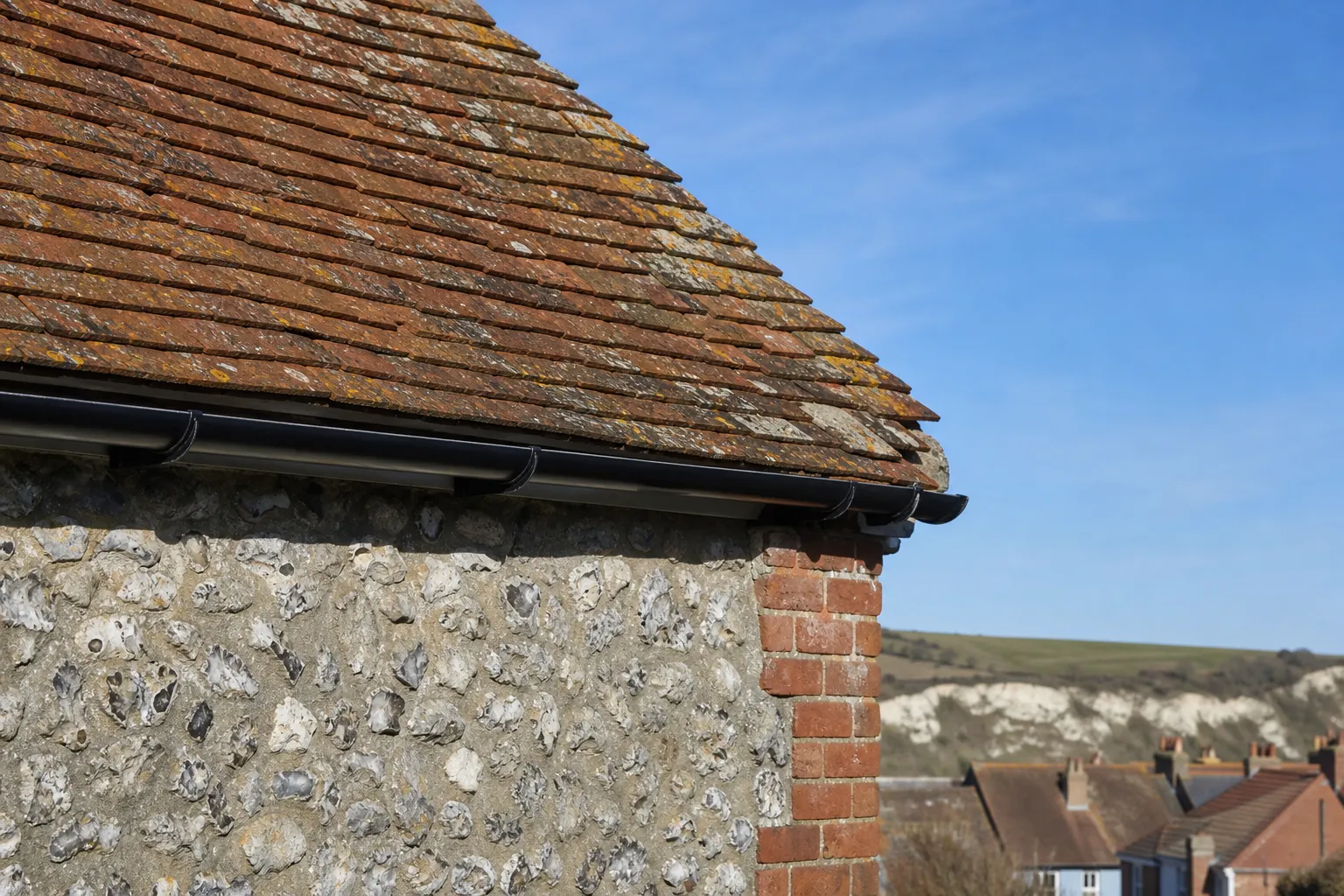
  • Tiled roofs below a chalk down

    Houses either side of the A27

    The southern half of the village lies on the coastal plain and the northern part on the Downs dip slope.

    Read more about Houses either side of the A27

    The roof is the same job on both sides of the A27, but the planning authority is not, so we check which applies.

Street map of Sompting, north-east of central Worthing, with a pin on the town.

What the council records for Sompting

Planning authority
Adur District Council
Councils
Adur District Council and West Sussex County Council
Conservation area
Sompting Conservation Area, first designated in March 1976; appraisal updated in 2024
Article 4
None in force; the 2024 appraisal suggests one be considered south of the A27
Listed examples
Grade I church of St Mary; Sompting Abbotts, Grade II, rebuilt in 1856
From central Worthing
2.2 road miles, north-east, about 6 minutes by car

Sompting roofs

Flint, glasshouses and the A27

Sompting's walls, its church and its planning line each change how a roof repair is done here.

Chapter one

Flint walls, nurseries and tiled roofs

The walls that once enclosed Sompting's glasshouse nurseries still shape how roofs meet them, and how a repair should look.

Sompting grew around a market garden and glasshouse industry that began in the early 19th century, and the very high flint walls north of West Street were built to enclose those nurseries. The conservation area appraisal names flint as the village's most characteristic material, used in houses and boundary walls alike, with clay tiles and slates covering the roofs. For a roofer that mix matters in two ways. The covering is old enough that matching it takes thought, and the joint between a tiled slope and a flint wall is hard to keep dry. Chimney stacks beside flint gables share the problem, so on the same visit we check the stack flashings and the flaunching, the cement crown that seats the chimney pots.

At a glance

  • Flint is used extensively in walls and buildings
  • Roofs include both clay tiles and slates
  • Lead flashings seal tiles to flint walls
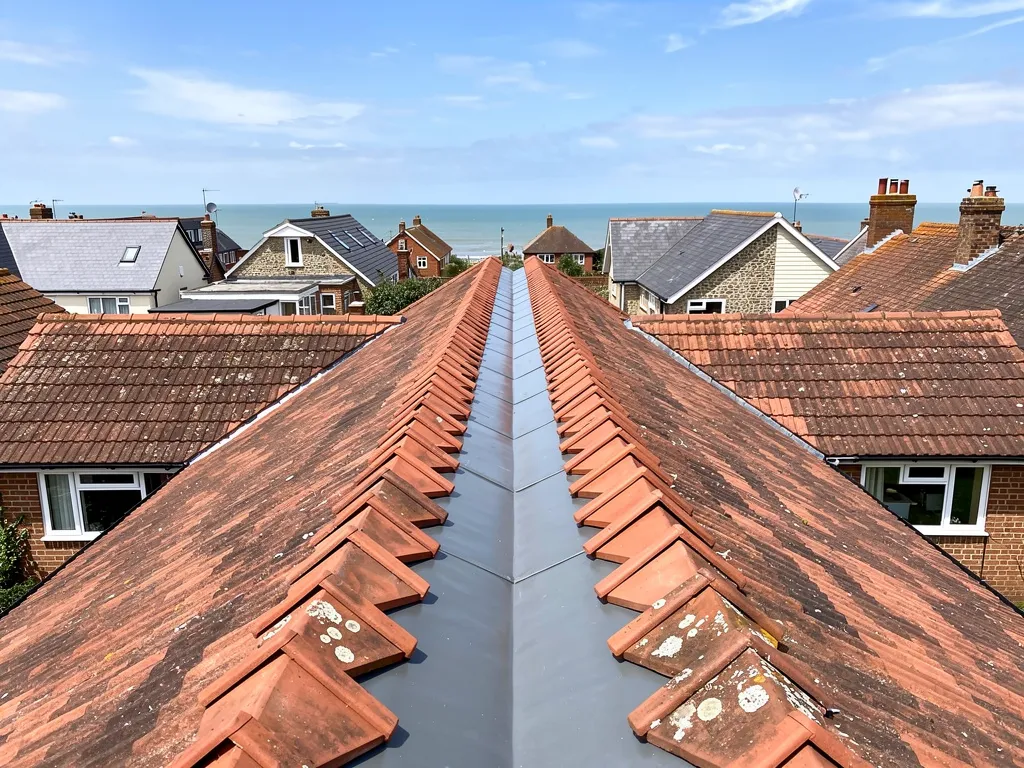
Lead-lined valley where two clay-tiled roof slopes meet

1.1 Where the roof meets the flint

Flint presents a rough, uneven face, so the lead flashing, the strip dressed over the join between slope and wall, must be let into a raked-out joint. Over the years that mortar crumbles and the lead lifts, and rain then runs behind it into the wall. The stain turns up on a bedroom ceiling or a chimney breast, often well away from the real fault. We follow the damp back to the junction, photograph it and show you the exact length that has failed. Where the lead is sound, we re-point the joint and dress it back. Where it has split, our lead roofing work replaces it with new sheet sized to the position and shaped to move with the roof.

Lead-lined valley where two clay-tiled roof slopes meet

1.2 Matching clay and slate

Because the appraisal records both clay tiles and slates, a repair has to follow whichever covering the roof already carries. A clay tile in the wrong size or shade stands out from the road, and a slate of a different thickness sits proud of its neighbours and lets the wind under. We lift one to check its size, its headlap, which is how far each slate overlaps the course two below it, and the nails beneath. Sompting Abbotts, rebuilt in 1856 in the gothic style and listed Grade II, is the sort of building where this matters most, because the Adur & Worthing guide to listed building consent includes repairs made with different materials. Sompting Abbotts and St Mary's both stand north of the A27, inside the National Park, so for a listed house there the South Downs National Park Authority is the one to ask before any covering is ordered. Deep eaves and small gaps in old flint buildings can hold roosting bats or nesting birds, both of which the law protects, and we look before any covering comes off.
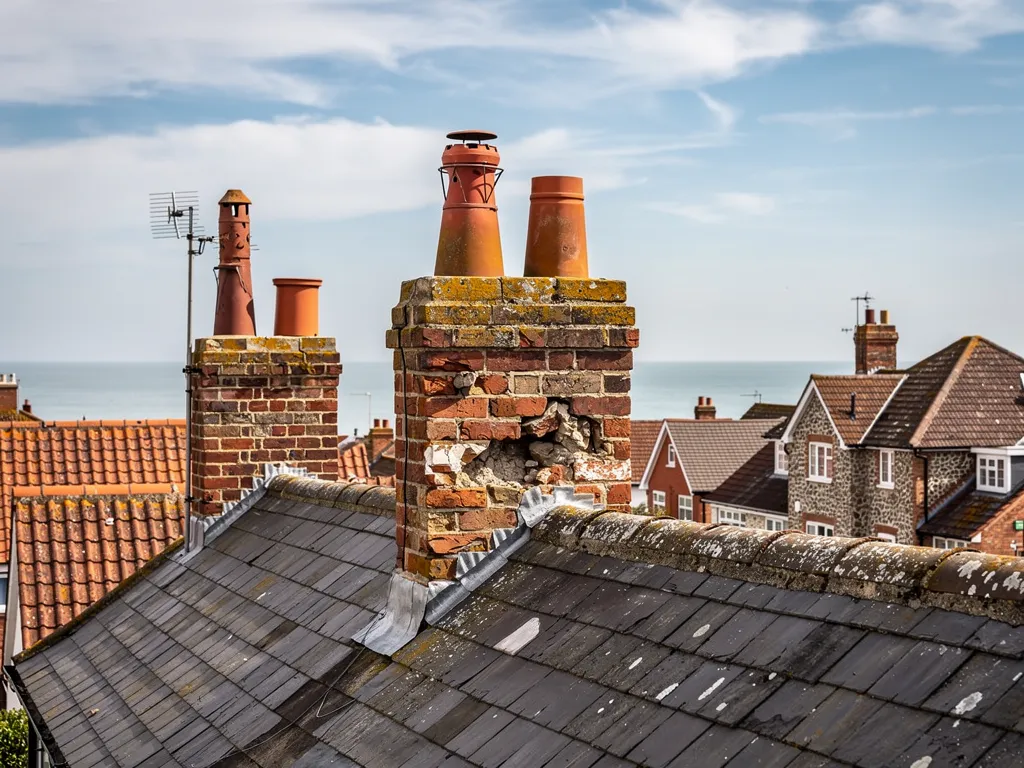
Victorian terrace chimney stacks with spalled bricks and old lead flashing

Fig. 1 On the survey Lead lifted away from a flint wall
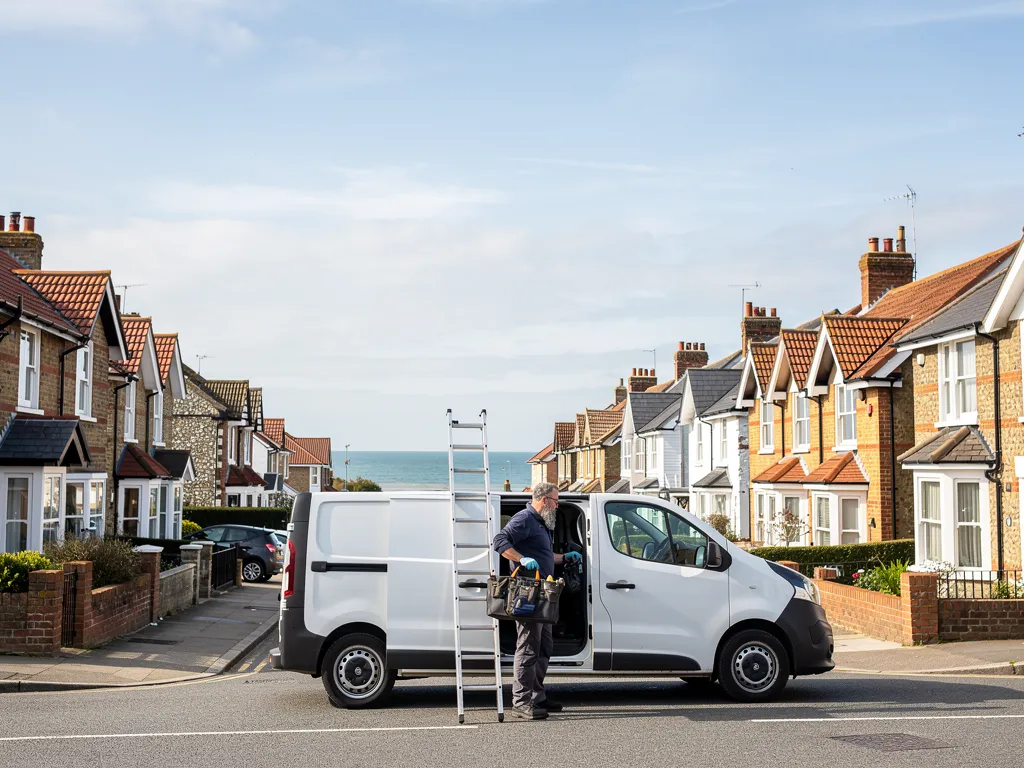
Roofer unloading tools from a plain white van on a residential street

Chapter two

One village, two planning authorities

The A27 divides Sompting's planning, so who decides on a roof change depends on which side of the road you live.

Sompting sits in two planning areas. Since the South Downs National Park Authority was created in April 2011, it has been the planning authority for the part of the conservation area north of the A27, while Adur District Council remains the authority for the village south of the road. Both parts share one conservation area, which the district council first designated in March 1976, so the character is judged the same way even though two offices apply it. A house on one side of the road can therefore answer to different planners from its neighbour across it, while both read the same appraisal.

At a glance

  • South of the A27, Adur District Council decides
  • North of it, the National Park Authority decides
  • No Article 4 direction is in force in Sompting

2.1 Like for like, and the Article 4 question

Where the new covering copies the old and the building looks the same afterwards, planning permission is seldom needed. The usual caveats are a listed building and an Article 4 direction, which withdraws permitted development rights in a defined area. No such direction is in force in Sompting today. The 2024 appraisal does suggest that one be considered south of the A27, aimed at roof alterations, from re-covering to rooflights and solar panels, and that is worth knowing if you are thinking of changing material. Swapping clay for concrete, or slate for tile, is exactly the kind of change to raise with the planning authority for your side of the A27 before anything is ordered.

2.2 Evidence for the planners

When a change needs a conversation with planners, they want to see the roof as it stands today. Before any work, we photograph the covering, the ridge, the verges and the flashing details, so the file you send shows the starting point. Loft conversions raise separate questions about roof windows and dormers, which our roof planning permission guide covers, and your planning authority confirms the position for your address. Building Regulations apply whichever authority handles planning, so ask your building control body whether a re-roof or conversion is notifiable. Where it is, we handle the notification, and at the survey we tell you whether your job is on the notifiable side. Whichever authority is involved, clear photographs and a short note of the planned materials make the conversation quicker, and we supply both with the written quote.

What people sayAnywhere near the Downs, the National Park Authority decides every roof change.

What is trueOnly the part of the conservation area north of the A27 falls to the South Downs National Park Authority; south of the road, Adur District Council is the planning authority.

Chapter three

Fixing a roof near Shoreham airport

Part of Sompting may sit close enough to the airfield that the tile maker's own fixing advice is worth asking for.

The south of Sompting lies on the coastal plain and the north on the gentle back slope of the South Downs, so roofs in the village meet the weather from open ground on more than one side. Low-pitched additions at the back of older houses get the same scrutiny as the main slopes. Shoreham airport is not far away. Marley says roofs near airports can feel local wind forces from the air vortices of large aircraft taking off and landing, greater than the loads calculated to BS 5534, and for a site within 6km of an airport it asks you to ring its technical advisory team for guidance on fixings. Part of Sompting could lie within that distance. For a re-roof we ask for the tile maker's specification rather than guess at one.

At a glance

  • Marley wants a call from sites within 6km of an airport
  • Each single-lap tile is mechanically fixed
  • Below 30 degrees, wind suction on the windward slope rises

3.1 What a fixing specification settles

Wienerberger describes it as a document drawn up for one address, reflecting its location, its altitude and its wind exposure. For a roof it settles how many nails or clips each tile takes and which courses are fixed twice. Single-lap tiles interlock with their neighbours sideways, and each must take a mechanical fixing; Marley adds that tiles along the roof edges are fixed twice. A smaller repair is simpler: replacement tiles are fixed to follow the courses beside them and the rest of the roof stays as it is. Between the main house and any extension the right fixing can differ, so the survey notes pitch, exposure and covering for each roof separately.

3.2 Ridges, verges and low pitches

Ridge and hip tiles are where wind does most harm. Since the 2014 revision of BS 5534, a mortar bed on its own no longer carries them, and they take mechanical fixings too. A dry-fix ridge sits on clips over a vented roll instead of a mortar bed, and such systems are tested to BS 8612:2018. Pitch counts as well: under 30 degrees, Marley warns that the windward face of the roof can suffer heavy suction. Lean-to and extension roofs are often shallower than the main house, so we check them separately. Our ridge tile repairs page sets out the options. When the work is finished we leave the site clear, with the waste gone.

Fixing facts for a Sompting roof

Code of practice
BS 5534:2014+A2:2018
Interlocking tiles
A mechanical fixing on each, at least one (Wienerberger)
Mechanical dry-fix systems
Covered by BS 8612:2018
Pitch under 30 degrees
Wind-facing slope can suffer severe suction (Marley)
Within 6km of an airport
Contact the tile maker's technical team (Marley)

Source: BSI; Marley; Wienerberger, fetched October 2026

Sompting roof questions, from flint wall to airfield

How is lead renewed where a Sompting roof meets a flint wall?

We follow any damp back to its junction, since the stain is rarely where the water gets in. Sound lead is re-pointed and dressed back into a fresh joint. Split or lifted lead is replaced with new sheet. A short length of failed lead is a small job, and a run along a whole wall is quoted as exactly that. The uneven flint face means the joint is cut to follow it, not run straight, and we photograph the old and new work so you can see both.

Does the A27 change who approves a roof job in Sompting?

For planning, yes. North of the road the planning authority is the South Downs National Park Authority, and south of it the authority is Adur District Council. Copying the existing covering rarely needs planning permission on either side, but a listed building or a change of material can. Ask the authority for your side of the A27 first.

Is a clay tile roof near St Mary's repaired differently from one on a newer street?

The method is the same: lift, test the fixings, replace only what has failed. What differs is the matching and the consent. The appraisal records clay tiles and slates in the older village, so replacements are chosen to suit in size, shade and thickness. Where a building is listed, as Sompting Abbotts is at Grade II, check with the South Downs National Park Authority, which handles planning north of the A27, before using any different material.

Why does the Sompting appraisal mention a future Article 4 direction?

The 2024 appraisal recommends the council consider one for the area south of the A27, to control changes such as re-covering, rooflights and solar panels. None is in force today. If one were made, changing a covering on a house inside it would need an application first. Until then, normal rules apply, and we photograph your existing roof so any later application starts from a clear record.

Tell us about your roof

Describe what is happening and we will call you back to arrange a visit.

  • Photographs of what we find
  • A written quote with one total price
  • Or call 01903 299063

10-year workmanship guarantee, in writing.

Call Get a quote