A chimney is often the most visible piece of history a house has. It is also the part that weathers fastest, so repairs come round sooner than owners expect. For an ordinary house the only question is who to hire. For a protected one there is another question first: what can be done without asking the council? Our chimney repairs hub covers the wider work.
Two separate systems are involved, and they are easy to confuse. Listed building consent concerns works to a building of special interest. An Article 4 direction is a planning tool that withdraws certain permitted development rights across a defined area. Inside one, the listed matters need a planning application first, though nothing is banned outright. A house can sit under either, both or neither.
Below we cover the line between repair and alteration, the chimney rules for the two Adur villages, the Worthing directions that touch chimneys and roofs, how to keep a repair in matching materials, and how churches differ. We explain consent and help you put the right question to the council. We cannot give legal advice, and the council decides.
Where a repair ends and an alteration begins
Under the Planning (Listed Buildings and Conservation Areas) Act 1990, altering a listed building in a way that changes its special interest needs consent, and doing so without it is an offence. Adur & Worthing Councils' own listed building guide is gentler about everyday upkeep. Ordinary maintenance and routine repair need no special step. Using materials that differ from the originals, however, appears among the cases that do call for consent.
The South Downs National Park Authority takes the same line. Small repairs that restore what was already there need no consent. A repair that swaps out old features or old material wholesale, and so changes how the building reads, does need it. The Authority adds that unauthorised listed building works have no four-year enforcement cut-off.
What that means on a stack
In practice the line tends to fall as follows. Repointing in a matching mortar, resetting a loose pot and swapping a few spalled bricks for matching ones are repairs. Rebuilding a stack in new brick, changing its height or shape, choosing a different pot, fitting a cowl that alters the profile, or taking the stack down are alterations. Where a job sits between the two, ask.
Asking costs little. A short email to the council's conservation team, with photographs and a note of the work, usually brings a clear answer. Homes inside the South Downs National Park answer to the Park Authority for planning, and Castle Goring and Highdown are the Worthing conservation areas inside it for that purpose.
Old Shoreham and Kingston Buci: the Class G chimney rule
Adur District Council made two directions in early 2023. The Old Shoreham direction (ADC09) took effect on 20 January 2023 and was confirmed on 22 February 2023. The Kingston Buci direction (ADC08) took effect on 10 February 2023 and was also confirmed on 22 February 2023. Both follow one pattern for roofs and chimneys.
For chimney work, Class G is the part to know. It is the class that lets owners install, alter or replace a chimney, a flue or a soil pipe. The Old Shoreham direction takes that right away across the whole of a house, not just the street side, and Kingston Buci follows suit. Altering or replacing a chimney or flue there therefore needs a planning application, where elsewhere it might not.
What else the direction takes away
In Old Shoreham, on parts of a house that look onto a highway or public path, the direction also removes Class A alterations, Class C and Class D porches. Class C is the one for other roof alterations, roof coverings among them, as well as rooflights and solar panels. Changing the covering on a street-facing slope there is therefore a planning matter, whereas a straight repair is not what the direction was written to catch.
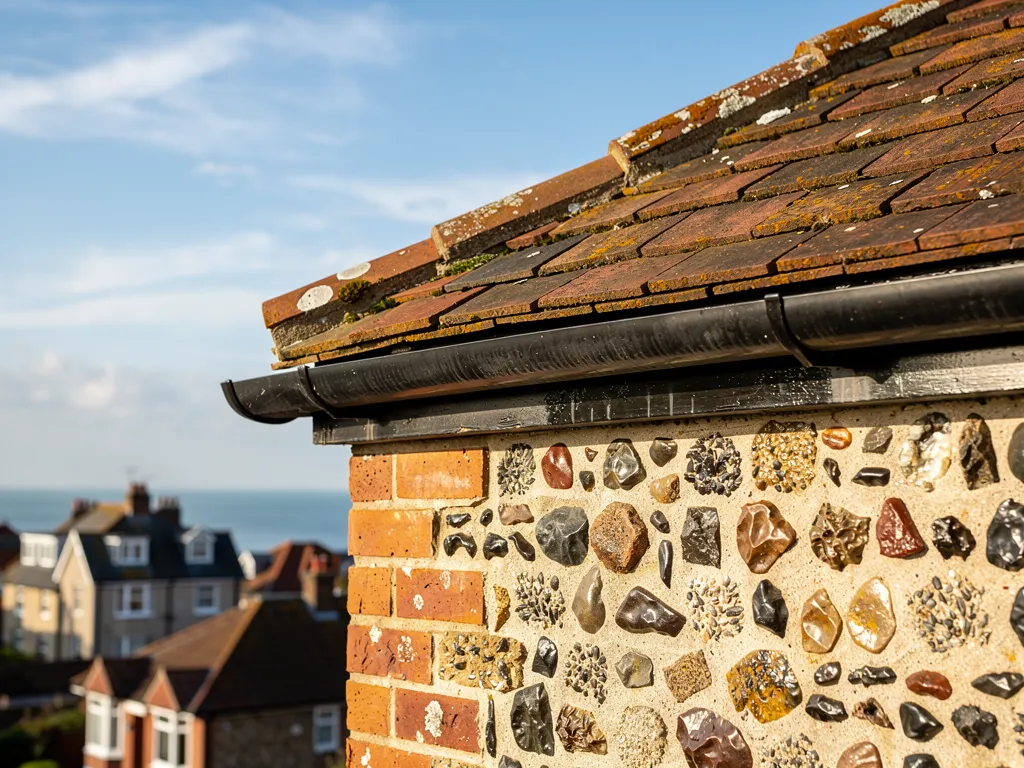
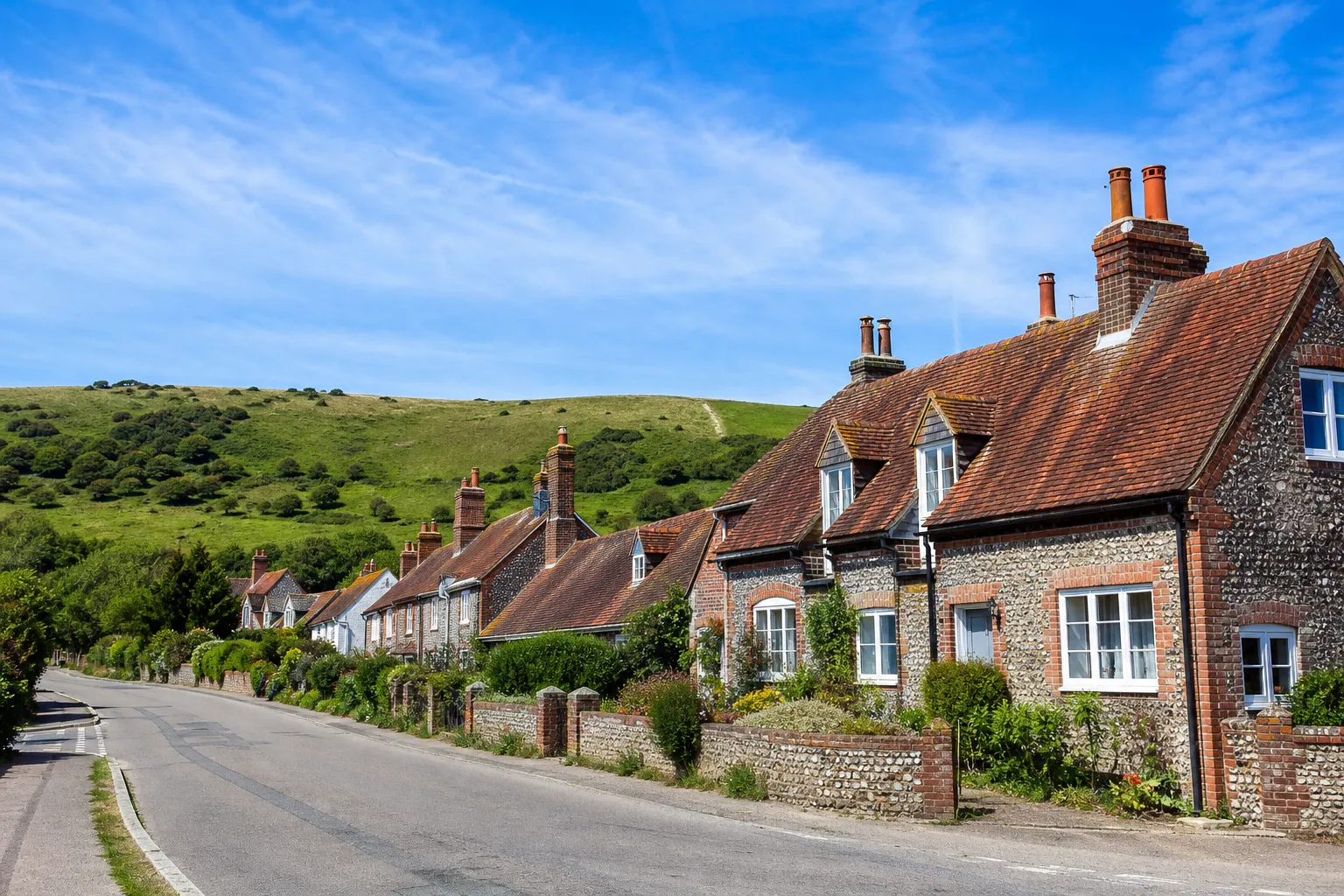
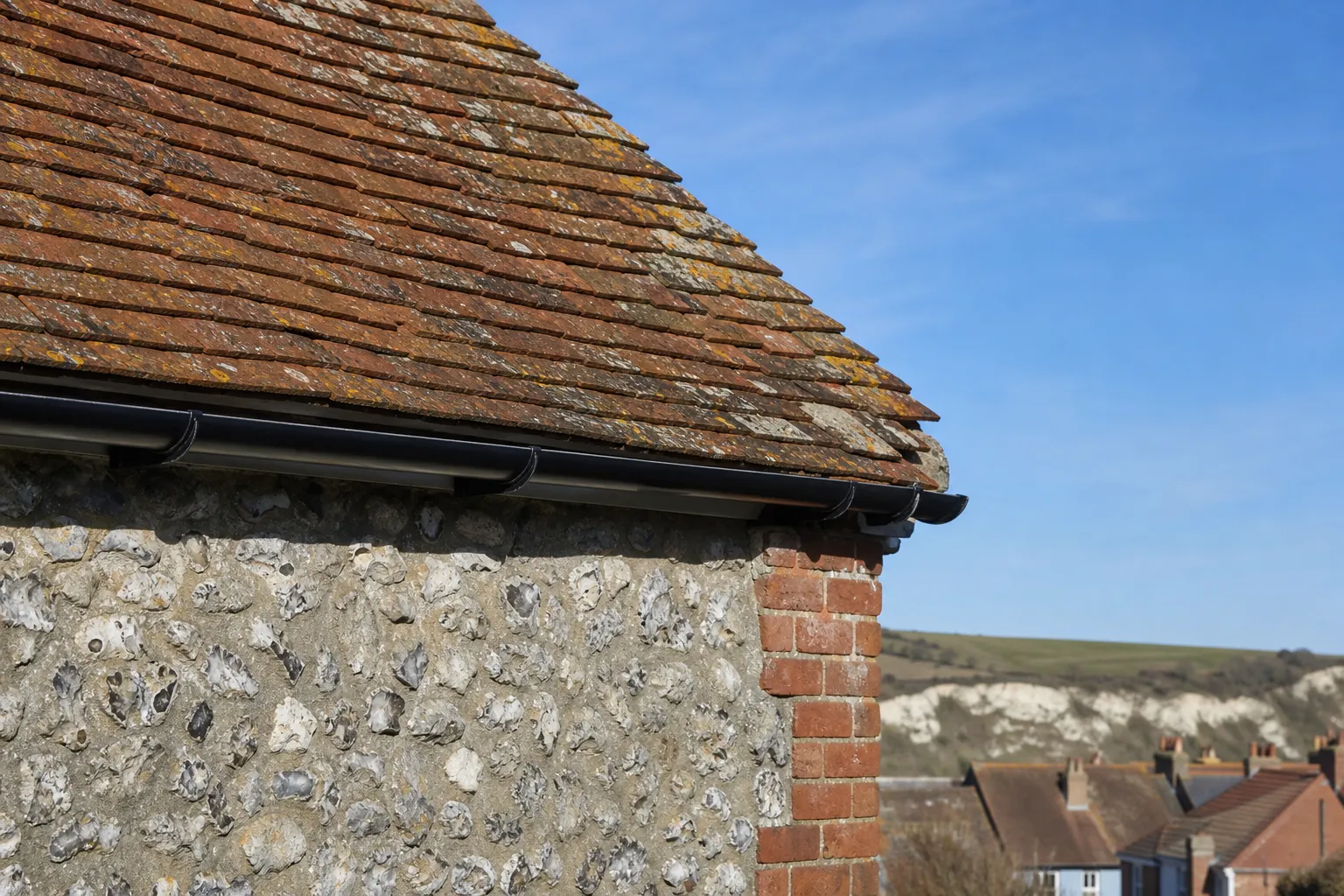
Old Shoreham is an old village, and its appraisal describes eighteenth-century houses in local flint, with tile and thatch the usual roofs and some slate and Horsham slab. Kingston Buci has coursed and knapped flint and a Horsham slab roof on the Old Rectory. A stack on one of these is rarely a plain brick box, and matching it takes care.
Both directions are published in full on the Article 4 page of Adur & Worthing Councils. Read yours, and check with the Adur & Worthing planning team before you commit to altering a chimney.
Warwick Gardens and the other Worthing directions
Worthing has its own set, made under the borough council and made far earlier. Their wording differs, so each is read on its own terms.
The Warwick Gardens direction (WBC08) was made on 29 March 2001 and confirmed on 12 June 2001. It withdraws the right to erect, alter or remove a chimney, which makes the chimney rule there stricter than in the Adur areas, since removal is named. For houses facing a road or open space it also withdraws the right to change a slope's shape or material, and the right to paint a wall or roof.
The Warwick Place direction (WBC06) was made on 20 August 1997 and confirmed on 13 January 1998. It applies where houses front Warwick Place, and removes Class A alterations and roof alterations under Class C. The Western Row direction (WBC04) dates from 1 December 1978, approved on 3 April 1979, under the old 1977 rules. The direction is annotated as taking away every dwellinghouse permitted development right, and its schedule names the enlargement, improvement or other alteration of a dwellinghouse.
Two Worthing directions that leave roofs alone
Not every direction reaches the roof. The Ambrose Place direction (WBC05) deals with curtilage buildings, hard surfaces and means of enclosure. The Cowper Road direction (WBC07) deals with hard surfaces and means of enclosure only. Neither takes roof rights, so living on a street with a direction does not automatically restrict the chimney.
The councils list further directions, and we do not guess at those. Worthing has 27 conservation areas and Adur seven, and a direction binds only the area it names. Ask the planning team to confirm the position for your own address before work starts.
Keeping the repair in matching materials
Whether consent is needed or not, a repair to a protected chimney should look and behave like the original. Three things go wrong most often: mortar, bricks and metalwork.
Mortar leads the list. Many older stacks were built in lime, which is softer and more open than modern cement. Repoint a lime-built stack in hard cement and the moisture that gets in can no longer escape through the joints. It leaves through the brick faces instead, and they flake. Our page on lime mortar for chimneys explains why, and our guide to repointing a chimney stack describes the work. Joint colour and profile count too, because a flush modern finish on a stack that had recessed joints looks wrong from the street.
Bricks, pots and lead
Replacement bricks should echo the originals in size, tone and texture, and reclaimed ones from a similar period tend to blend best. Sound pots are worth keeping, and any new pot should copy the old profile. Flashings are lead, and renewing them in lead preserves the character; our guide to chimney flashing covers the detail.
Timing and age
Old brick and old mortar are most at risk in a wet winter, when repair is least pleasant. Our guide to frost damage to chimneys shows how to time the work. Fresh lime mortar needs a mild, dry spell to cure, so a repair is best planned for the right season, with a temporary cover over a stack that cannot wait.
On a protected stack the written quote describes the work in terms a conservation officer can read: which mortar, which joints, which pots stay. Photographs of the stack before work begins give the conservation officer something to check against.

Churches, chapels and scheduled monuments
Some of the oldest stacks and flues in the area belong to churches, halls and monuments, and the route to consent differs for them. Under the ecclesiastical exemption, certain places of worship in use do not need listed building consent from the council. They use the denomination's own system.
For a Church of England building the route is a faculty. Catholic, Methodist, Baptist and United Reformed churches each run an approval process of their own, and for the Baptist and United Reformed buildings the exemption turns on how the building is held. In every case it applies only while the building is in use for worship.
Where the exemption stops
Other faiths and denominations fall outside it. A Unitarian or Quaker meeting house, for instance, still needs listed building consent from the local planning authority. It also ends once a church closes or becomes redundant, when the usual listed building and conservation area controls take over. Government guidance is clear that planning permission still applies under the exemption when development alters the exterior of a listed place of worship.
Scheduled monuments are separate again. Any repair or alteration to one needs scheduled monument consent, which the Secretary of State grants. The ecclesiastical exemption can never stand in for it, even in a churchyard.
You do not need to untangle this in advance. If the building is a church, chapel or hall, tell us who owns it and whether it is in use for worship, and we will explain the likely route. The body holding the consent power decides, and we work to what it approves. Where a stack serves a vestry or hall beside a church, ask whether it counts as part of the exempt building.
How we handle a protected chimney
On a protected chimney the survey comes first, as always. We photograph the stack, pots, flaunching, flashings and joints, from the ground and from a tower or scaffold, and work out what has failed and why. Frost damage, a failed flashing and open pointing can look alike from below, and each has its own repair.
Next we write the work up as the least that will properly cure the fault. That means naming the mortar, saying which bricks stay and which go, and showing that the profile and height will not change. A conservation officer wants to see that level of detail. If consent is needed, you or your agent submit it and we explain what the council is asking for. Where building control is involved, we handle the notification.
Shared stacks and neighbours
Terraces and semis often share a stack on a party wall. Mending your half is one thing, but removing a chimney from a party wall brings a notice to the neighbour. GOV.UK says it goes between 2 months and a year before building work starts, and silence is not agreement. Our page on the shared chimney stack shows how this plays out.
Cost and grants
Once we have surveyed the stack, the written quote arrives as a single total that includes everything a careful matching repair requires. Whether any grant exists for work on a listed home is a question for the council's conservation team, and we would rather you asked them than rely on our guess.
Keep photographs of the stack before and after. A surveyor will ask what was done when the house is sold.