Most commercial roof problems start small. A blocked outlet leaves a few centimetres of water on a flat roof. A lap in a metal sheet opens a fraction. A flashing lifts where a service pipe passes through. None is dramatic, and each can sit unnoticed for a year or more because nobody goes up unless something goes wrong. Then a storm arrives, the water finds the weakness and the first sign is a stain on a ceiling or a drip onto stock.
A maintenance plan changes the order of events. Instead of reacting to the leak, the owner arranges for the roof to be inspected on a regular pattern, for the small faults to be dealt with while they are still small and for a record to be kept that shows how the roof has aged.
This guide takes the main parts of a plan in turn: the inspection itself, drainage, the covering, the coast and the add-ons that are now common on commercial roofs, such as solar panels and planted areas. It applies to warehouses, workshops, shops and offices alike, and it sits alongside our page on types of commercial roof.
What a maintenance plan is actually for
A plan has three jobs. It finds faults early, it keeps the drainage working and it produces a written record. The third is the one owners tend to undervalue. A dated report with photographs, repeated each year, shows the roof's condition over time. It tells you whether a patch is holding, which area is deteriorating fastest and when a refurbishment is likely to be needed. It is also useful evidence when a landlord, a tenant or a surveyor asks about the state of the building.
The pattern of visits depends on the roof. A simple sheeted shed in a quiet spot may need one proper inspection a year. A flat roof with plant on it, a site next to trees or a building with a record of blocked outlets does better with a visit in autumn and another in spring, because leaf fall and winter storms are the two moments when drainage is tested hardest. After a major gale, an extra look is sensible.
What you should expect to receive
A good visit ends with a written report: the date, the areas covered, photographs of anything found, what was done on the day and what needs attention later. Urgent items are marked as such, and the rest are listed with a suggested timescale. The report is the product. A roofer who spends an hour on the roof and leaves with a verbal summary has given you a conversation, which does not build a history.
The same records show when repeated repairs have stopped paying, so a refurbishment can be budgeted for in good time.
The inspection: what is checked and how
An inspection starts from the ground. We note the overall condition, any sagging or bowing of sheets, staining down walls that suggests an overflow and the state of the gutters and downpipes. Next comes the roof itself, reached safely, or viewed from a platform, ladder or drone where walking on it would be unwise.
On the covering, we are looking for movement and wear: slipped, cracked or corroded sheets, lifted laps, rusting fixings and washers that have perished, blistering or splitting in membranes, and places where felt has cracked or bubbled. At every junction, such as a wall, a parapet, a rooflight or a plant base, we check the flashing, which is the strip of metal or membrane that seals the joint. Sealants dry out and crack with age, and a fresh bead of mastic is a cheap fix when it is caught in time.
Rooflights, fragile areas and plant
Rooflights deserve special attention. They age faster than the roof around them, yellow, become brittle and can be hidden by moss or dirt. A fragile rooflight is an accident waiting to happen to anyone who walks on it, so we mark them and check the guards or covers. Plant such as extract fans and air handlers needs its own look, since pipes and cables that pass through the roof are common leak points.
Technology can help where access is hard. MyBuilder (updated 21/08/2026) gives a typical UK range of £150 to £250 for a standard roof inspection, £200 to £400 for a drone survey and £300 to £500 for a thermal survey. A thermal survey picks out soaked insulation beneath a membrane that looks perfectly dry from above. Those are national figures for ordinary jobs, and a large building takes longer.
A walk through the building underneath, looking for stained ceilings, daylight at laps and damp near walls, often points to a fault the roof-level check misses.
Gutters, outlets and drainage come first
If a roof maintenance plan could cover only one thing, it would be drainage. Water that cannot leave the roof sits on it, finds weak points and adds weight. Gutters and outlets clog with leaves, silt, moss, bird nests and windblown rubbish, and the warning signs, overflow staining or water lying at the roof edge, are hard to spot from the yard.
Guttering has to fall gently towards the outlet to drain. Makers of gutter systems tend to specify roughly 1:600 to 1:350 depending on the product, and Brett Martin advises brackets no more than 900mm apart so the run does not sag. A gutter that has dipped in the middle holds water and silt, which speeds corrosion in metal gutters and strains the brackets in plastic ones. On a big commercial building the guttering is long, so a small error multiplies.
Parapets, box gutters and outlets
Many commercial roofs drain into a parapet gutter or a box gutter between two slopes, where a blockage floods quickly and the overflow runs into the building. These need clearing more often than eaves gutters and are worth checking after every big storm. Outlets and grates should be clear, with spare overflow routes where the design includes them. Where there is a lining, we check it for splits and for ponding that lingers after rain.
Birds are part of the story. Nests block outlets and fouling stains the roof, but nesting birds are protected, so any clearing has to be planned around the season. Our page on commercial roof drainage describes the options.
We treat clearing as the first job of every visit.
Flat roofs: ponding, falls and the membrane itself
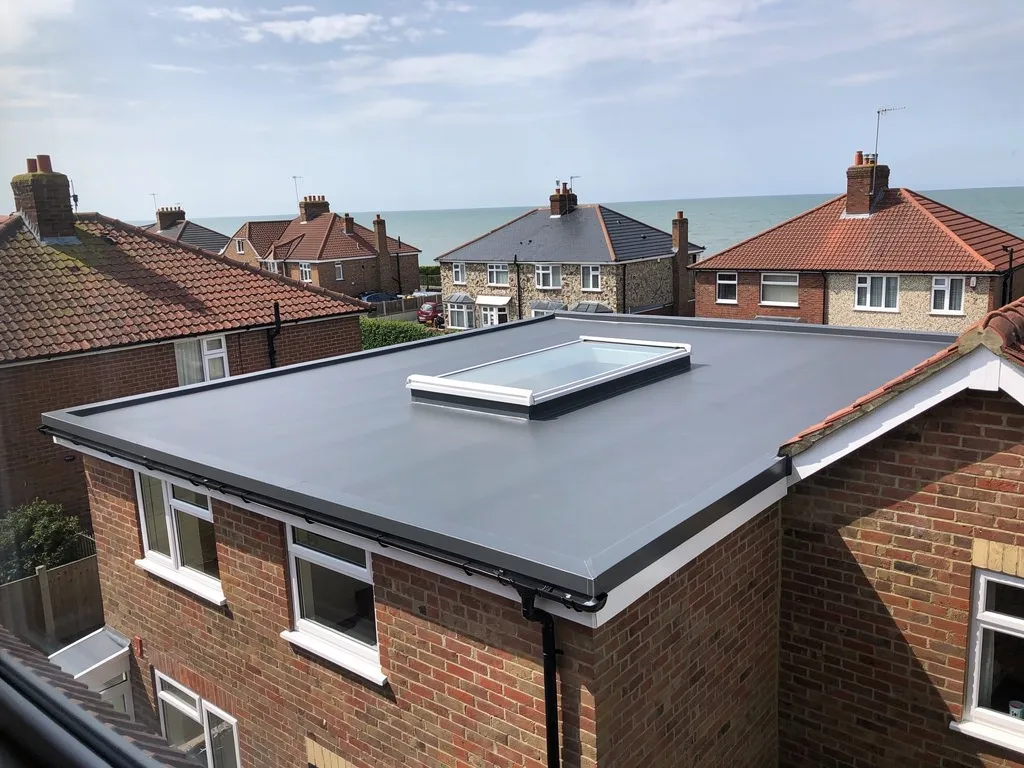
Even a roof called flat is built with a slight slope towards its outlets. IKO, citing the 2018 edition of BS 6229 (since revised), recommends a minimum finished fall of 1:80 and says to design for 1:40 to allow for tolerances and deflection. Over the years, decks sag, insulation compresses and the water that should run off lingers in shallow ponds. A pond does not always mean a leak, but it adds load, collects dirt and speeds the ageing of the covering beneath it.
During an inspection we look for where water is standing a day or more after rain, since that marks the low points. We check the surface for cracking, blistering and crazing, which suggest the material is aging, and for punctures from tools, foot traffic or debris dropped from above. At upstands and corners, where membranes are folded and welded or felt is lapped, we look for splits and lifting. Then we test the details around outlets and penetrations, which are the likeliest leak sites.
Lifespans on a flat roof
MyBuilder (updated 21/08/2026) says a flat roof typically lasts 15 to 30 years. Less puts torch-on felt at 10 to 20 years, and GreenSpec gives EPDM 20 to 30 years or more. Ranges like these are typical, never promises, and upkeep moves a roof within them. A felt roof that is cleared and patched promptly can reach the top of its range, while one that is left alone may fail early. Our page on single-ply membranes explains how the newer systems age.
Service engineers tread the same path to the plant again and again, so a protective layer along that route saves the membrane from wear.
Metal roofs and the coast
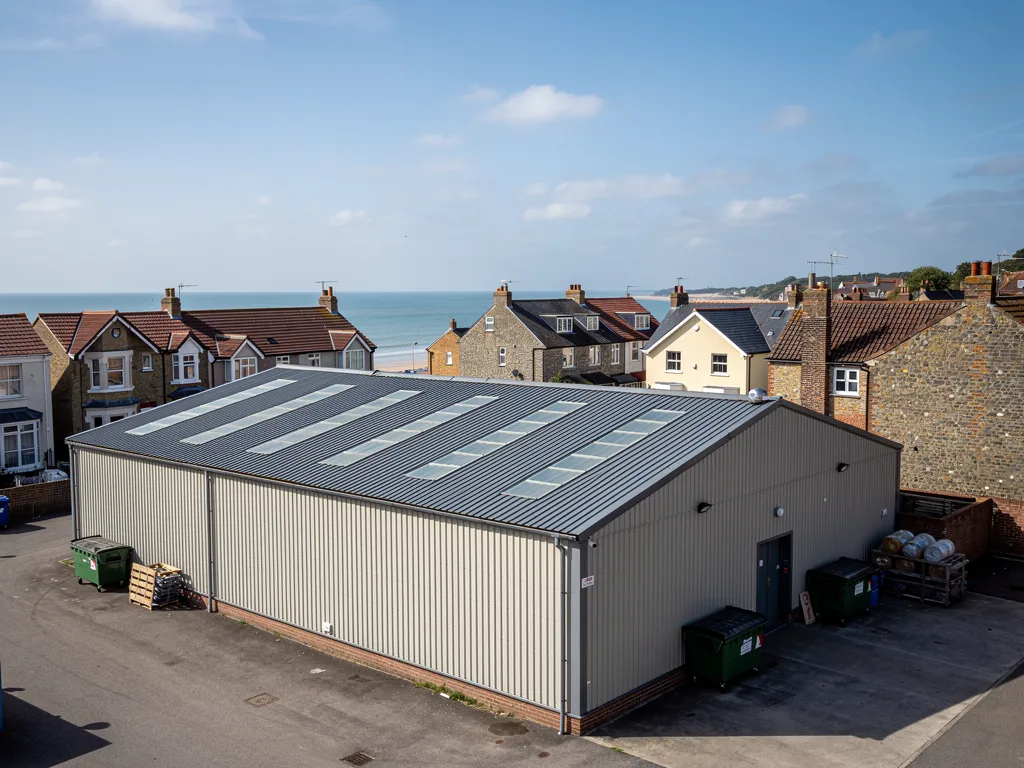
Sheeted roofs have their own pattern of wear. The fixings are the first to go, since screws loosen as the roof expands and contracts, washers perish and the holes enlarge. Laps between sheets can open where fixings have eased, letting wind-driven rain past. Sealants in the ridge and at flashings harden over the years. We check these on each visit and tighten or replace what is needed, which is a modest job when done early.
The coating is another focus. Cut edges and scratches can start to corrode, and the rust spreads under the paint. Catching it early lets the area be cleaned, treated and sealed; leaving it can mean the sheet fails at the edge. Our page on roofing systems for warehouses, workshops and offices compares the main types and their weak points.
Sea air and what to look for
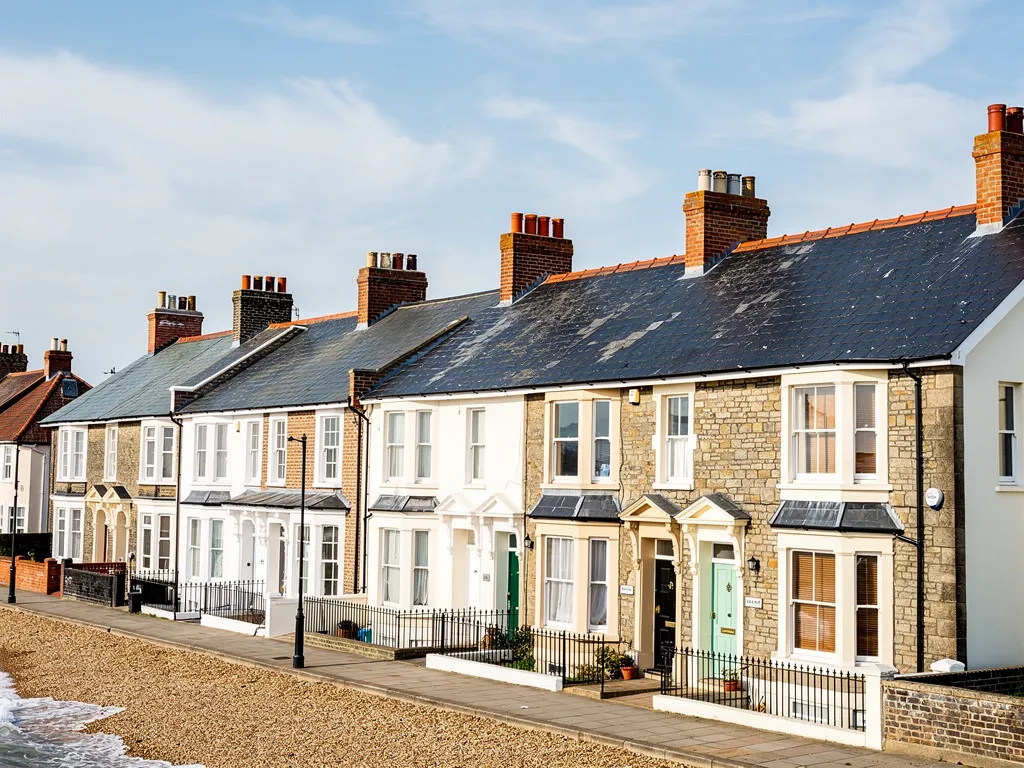
Buildings by the sea take salt, driving rain and gales. Salt air tests coatings and fixings harder, and gutters and flashings repay more frequent looks. We check the roof edges, the verge details and ridge cappings, which take the most wind, and make sure trims are tight and fixings are not backing out.
Where an inland roof might be inspected once a year, an exposed coastal site benefits from a second look after the winter, to mend what the gales moved.
If the roof does leak between visits, our page on roof leaks in a business building explains how we trace the fault and keep the premises running while it is fixed.
Green roofs, solar panels and what they add
Green roofs and solar panels are now common on commercial buildings, and each changes the maintenance picture. A green roof is a waterproof roof with a growing layer on top, planted with sedum or other low plants. It looks good, helps with drainage and protects the membrane from sunlight, but it hides the surface. A leak can be harder to locate, because water travels under the soil layer. That makes the quality of the waterproofing beneath it, and the records kept about it, especially important.
Planted roofs need their own routine. Roots and seedlings in the wrong place can block outlets and lift edges, so outlets and their margins are kept clear of growth, irrigation is checked where fitted, and the structure has to carry the planting when it is saturated.
Solar panels on the roof
Panels add weight and penetrations. Their fixings pass through or clamp onto the roof, and every fixing is a possible leak point. Cables run across the surface and through it. When a roofer inspects a roof with panels, access around and beneath them is limited, so some checks need the array to be isolated or lifted by the installer. Plan for that before the first inspection, and ask the installer for details of the fixings and the waterproofing at them.
It also pays to agree beforehand who is responsible for what. The roofer looks after the weathering layer, while the installer looks after the electrics, and a clear record of who can lift the panels for access saves delay. Our commercial roofing page sets out the services we offer to commercial owners.
Tell the roofer what is on the roof or planned, and the inspection can be built around it.