
Question answered
Liquid coatings for metal roofs
The short answer
A liquid coating suits a metal roof whose sheets are structurally sound but weathered, with surface rust, failing sealant at the laps or loose fixings that can be put right. It does not suit sheets rusted through, a sagging structure or an unknown asbestos cement roof. Preparation decides how long the coating lasts, so cleaning, rust treatment and fixings come first.
A liquid coating can seal and protect an ageing metal roof without stripping it. It only works on sheets that are still sound, so the survey decides whether coating, repair or replacement is the right answer.
What a coating does and what it cannot
A liquid coating is a waterproof skin, rolled or sprayed on in coats and left to cure into a continuous membrane. It seals the laps and fixings, covers surface rust and adds a protective layer. On the right roof it can extend the life of the covering and avoid stripping, disposal and the disruption of a re-roof.
What it cannot do is give strength back to metal that has lost it. A coating applied over a sheet that has rusted through will hide the hole for a while and then fail. It also cannot cure a fault in the structure, a sagging purlin or a roof that ponds because the falls are wrong.
The rule is simple: if the sheet and its fixings can be made sound, a coating is worth pricing. If not, patching or replacement is the honest answer. A survey tells you which, and the written quote follows it. For wider background on metal industrial roofs, see our page on commercial roofing.
Roofs where coating suits
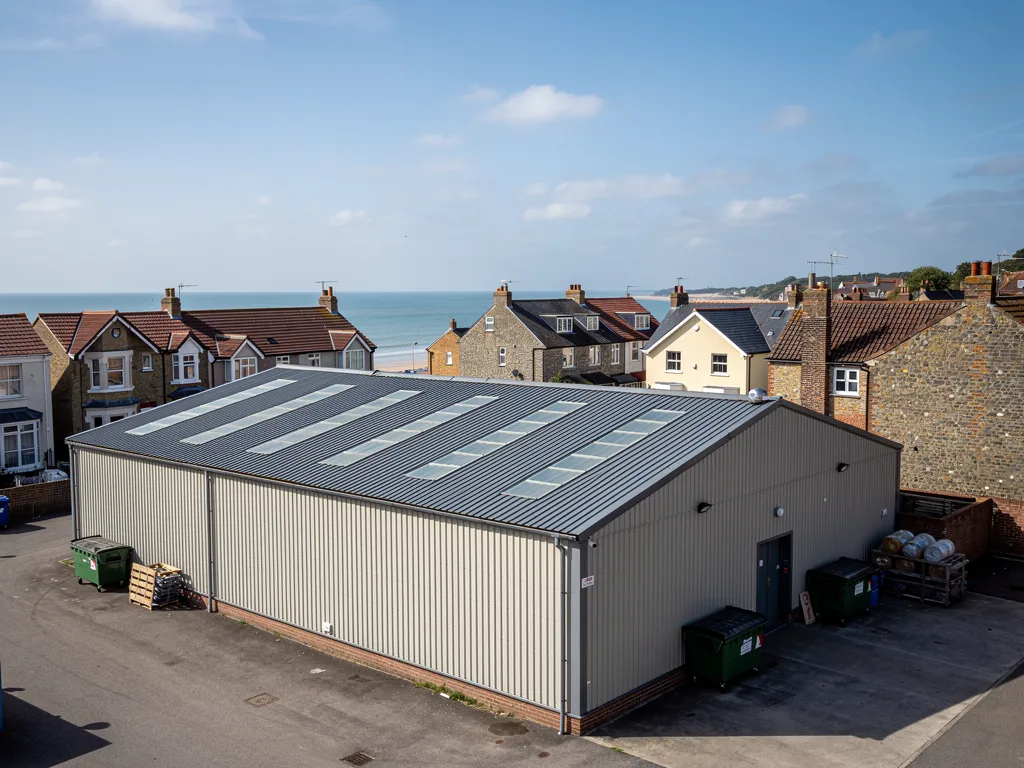
Coatings fit best on profiled steel and aluminium sheets, standing-seam roofs and old built-up metal roofs with a sound substrate. Typical candidates are warehouses, units and workshops where the sheets are weathered, the paint has faded or chalked, and the laps leak at the fixings but the metal underneath is still firm.
The roof's shape matters. Low-pitched profiled roofs have many laps and fixings where leaks begin, and a coating can seal all of them in one operation. A roof with large areas of rust-through, or with sheets that flex under a person's weight in a way they should not, is a candidate for replacement or overcladding. Our page on overcladding a metal roof deals with that choice.
Be careful with older cement-based sheets. A roof built or refurbished before 2000 may contain asbestos, and HSE advises assuming it does until it is tested. Coating such a roof is a separate question, and our page on industrial asbestos roofs is the place to start.
Preparation decides how long it lasts
Most coating failures begin with poor preparation. The roof has to be cleaned of dirt, moss and chalking paint, and the surface should be dry and free from loose material. Surface rust is wire-brushed or ground back to sound metal, then treated and primed. Salt deposits, which are common near the sea, are washed off with clean water before any coating goes on, because the coating cannot hold to a surface that is contaminated.
Fixings come next. Loose screws are replaced or tightened, missing ones are renewed and every head is sealed. Laps are sealed with mastic or tape and reinforced with fabric where the movement is greatest. Rusted-out fixings are a warning sign that the roof is further gone than it looks.
Ask the contractor to describe the preparation in writing, and to show photographs of the roof before the first coat. The next layers cover over everything underneath, so a fault that is not fixed first will come back. If the corrosion is concentrated at the cut edges of the sheets, read about cut-edge corrosion.
Choosing a system and reading the paperwork
Coating systems differ in chemistry and in how they are applied, from acrylics and polyurethanes to bitumen-based and silicone types. Rather than choosing by name, ask for the manufacturer's data sheet for the exact system, which will say what substrates it suits, how many coats and what thickness it needs, and what the weather conditions must be during application.
Application conditions matter. Most systems cannot go on in rain, on a damp surface or when the temperature is too low or the dew too heavy, so a contractor who promises to work in any weather is a warning. Allow for the programme to move.
Guarantees need reading. A coating manufacturer's guarantee covers the product when it has been applied to its specification. Whoever you hire, ask what any guarantee covers, for how long, whether it is in writing and in what circumstances it lapses.
On a building where the roof is also a plant platform or a walkway, see air conditioning units on a flat roof, since coatings need protection where people and equipment walk.
Coating compared with repair, replacement and neighbouring work
A coating sits between patching and replacement, in both effort and disruption. A patch deals with a single fault, a coating treats the whole roof surface, and a replacement renews the structure. The right choice depends on how far the roof has deteriorated, how long you need it to last and what the building is used for.
If you rent the building, a coating may be a sensible way to meet a repairing covenant without a full renewal, though what the lease requires is a matter for you and your landlord; our page on roof dilapidations at the end of a lease sets out practical steps. On the shop side, shop flat roof repairs deals with mixed-use buildings.
Choosing a contractor deserves care; see choosing a commercial roofer for the questions to ask.
Coatings: two more questions
Can a metal roof be coated while the building is in use?
Usually, because the work stays on the outside and the building below carries on. Fumes from some systems and the noise of preparation need planning, and you should ask the contractor to describe them. Weather decides the days, so the programme needs some slack.
Will a coating make an old metal roof last another decade?
It depends on the roof and the system, and any number offered should come from the manufacturer's data and your own survey, not a promise. A well-prepared coating on sound sheets can add useful life, while one over tired metal may only delay a replacement.
Tell us about your roof
Describe what is happening and we will call you back to arrange a visit.
- Photographs of what we find
- A written quote with one total price
- Or call 01903 299063
10-year workmanship guarantee, in writing.