
Question answered
Replacing one garage roof sheet
The short answer
Replacing one garage roof sheet is straightforward when the sheets are modern and a like-for-like panel fits, but it needs care when the roof is old cement sheeting. Built before 2000, treat it as asbestos until tested. A new sheet must match the profile, length, thickness and overlaps of its neighbours, and nobody should stand on the roof or drop the old sheet.
One cracked or missing sheet on a garage roof looks like a small job. Whether it is depends on what the sheets are made of, and that has to be settled before anyone picks up a ladder.
Find out what the sheet is before anything else
A garage built or refurbished before 2000 should be treated as containing asbestos, according to HSE. Corrugated cement sheets on garages of that age are among the likeliest places to find it, and you cannot tell by eye whether a given sheet is asbestos cement or a later fibre or metal substitute. Newer sheets can look almost identical from the ground.
So the first step is identification, not a trip to the builders' merchant. If the sheets turn out to be asbestos cement, everything below about handling applies. If they are metal, plastic or non-asbestos fibre cement, the job is far simpler. Our page on whether your garage roof is asbestos sets out how to find out safely, and a result should be in hand before any quote is accepted. Labels, stamps on the underside or paperwork from the build can help, but a lab result is firmer.
Why one cement sheet is not a small job
HSE describes cement roofs as always fragile, so the first rule is that nobody walks on the sheets. Lifting a sheet off with care, in one piece, counts as non-licensed work. If a sheet is badly damaged or fragments, the job becomes notifiable non-licensed work, which means notice to the regulator before it starts and health records kept for 40 years.
Big fragments come down by hand and are never thrown or chuted. HSE also wants the waste double-wrapped and labelled, with the sheeting going into a lockable skip. A contractor taking asbestos waste from a home completes the consignment note as the producer of that waste. A cracked sheet is already part-way to breaking, which is why the removal method matters more than the size of the hole. Nothing about that suits a quick weekend repair from a ladder, and the paperwork alone is a reason to let an experienced firm handle it.
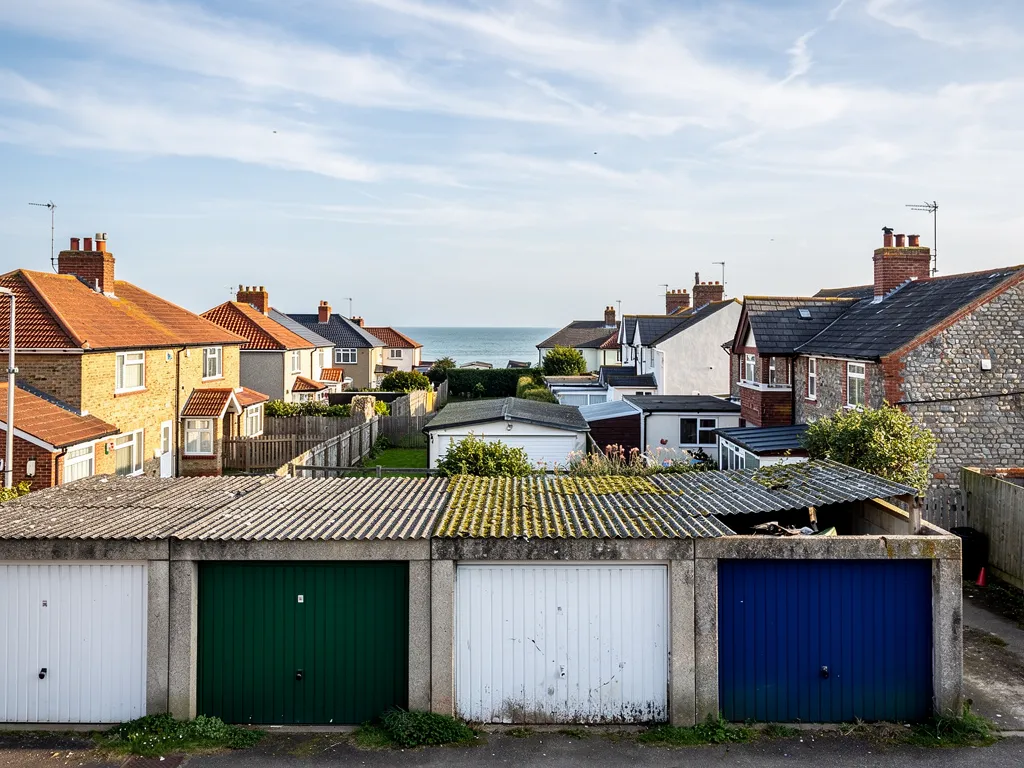
Matching the new sheet to its neighbours
A replacement sheet has to share the profile of the roof, meaning the width and depth of the corrugation, or it will not nest against its neighbours and water gets through the lap. Length and thickness matter as well, because a shorter sheet shifts the end lap and a thinner one sits proud or low on the rails. Measure the sheet width, the side lap and the height of a corrugation, and photograph both edges.
Side laps should follow the maker's instructions for the exposure of the site, and the end lap should be at least the maker's stated minimum. Fixings go through the crest of the profile with sealing washers into the purlin below. A new sheet will look different from its weathered neighbours for a few years, but that is a matter of colour only. A mismatched profile, however, leaves a gap that no sealant fixes for long, and a bead of mastic applied to hide it simply traps water.
Cost, and when one sheet means more
MyBuilder (updated 21/08/2026) gives typical UK ranges of £350 to £1,295 for removing a single garage roof and £650 to £1,800 for a double. Those figures cover a whole roof, not one sheet, but they show the scale of the job. When a repair to an old cement roof would eat a good share of the cost of replacing it, it is fair to ask whether the roof is nearly finished.
Our approach is the smallest job that fixes the fault properly, and sometimes that is one sheet. If the survey shows more cracking, a rotten purlin or failing fixings, we explain it with pictures taken on your roof. For the wider choice see choosing a garage roof on price, and for an open-sided structure the carport roof page. A full replacement may bring Building Regulations questions that a single sheet does not.
What to note from the ground
Stay off the roof if the sheet is cracked, and keep ladders off it too. From the ground or from inside the garage, note where the damage is, whether the crack runs along a purlin, whether other sheets show lines or stains, and whether light shows through at the laps. If you can reach it safely, photograph the inside face too.
Whether the work needs Building Regulations approval depends on its scope, and our page on garage roof building regulations explains the usual thresholds. If you send us pictures, we can say whether one sheet is realistic. Our own survey photographs sit alongside the written quote. For the broader service, see the garage roof replacement page.
Single garage roof sheets: two more points
Can I swap a cracked cement sheet myself?
We would not advise it. The sheet may be asbestos, the roof is fragile to stand on, and any broken pieces count as asbestos waste. Get the material identified first, and if it is asbestos cement, have the work planned and the waste handled by people who do it regularly and know the paperwork.
Will sealant hold a crack in a roof sheet?
Sealant may ease a drip for a time, but a crack in a cement sheet signals fragility, and a bead over it does not restore strength. Cleaning the sheet before sealing can also disturb it. Treat sealant as a stopgap while the proper repair is arranged.
Tell us about your roof
Describe what is happening and we will call you back to arrange a visit.
- Photographs of what we find
- A written quote with one total price
- Or call 01903 299063
10-year workmanship guarantee, in writing.