
Question answered
What is notifiable non-licensed asbestos work?
The short answer
Notifiable non-licensed work is HSE's middle category: no licence is needed, but notice must go in before the job starts. On a garage roof it applies once asbestos cement sheeting has been badly damaged or reduced to fragments, for instance by dropping the roof. Workers then need medical checks no less than three years apart, and the job records are kept for 40 years.
It is the middle category of asbestos work: no licence, but an advance notice and extra duties. A garage roof can slip into it quickly if the cement sheets are damaged or broken up.
Where the middle category sits
HSE divides asbestos work into three groups. At one end is licensed work, covering the higher-risk jobs, among them taking out asbestos insulating board in most cases. At the other is non-licensed work, which takes in careful handling of cement products like roof sheeting. Between them sits the notifiable group, the subject of this page.
The idea is simple. The contractor needs no licence, yet must tell the regulator before starting, and must meet extra requirements for the people doing the work. The group exists because some jobs carry more risk than plain non-licensed work without reaching the level of licensed work. The label can sound alarming, but it is mainly about paperwork and worker protection.
What decides the category for a garage roof is the condition of the sheets and how they are handled, rather than how big the job is. A tidy removal of whole sheets is non-licensed. The same roof, with brittle broken sheets or a method that smashes them, may not be. The page on whether you need a licence to remove an asbestos roof covers the licence question itself, and our garage roof replacement page outlines the work we do.
When a garage roof job tips into it
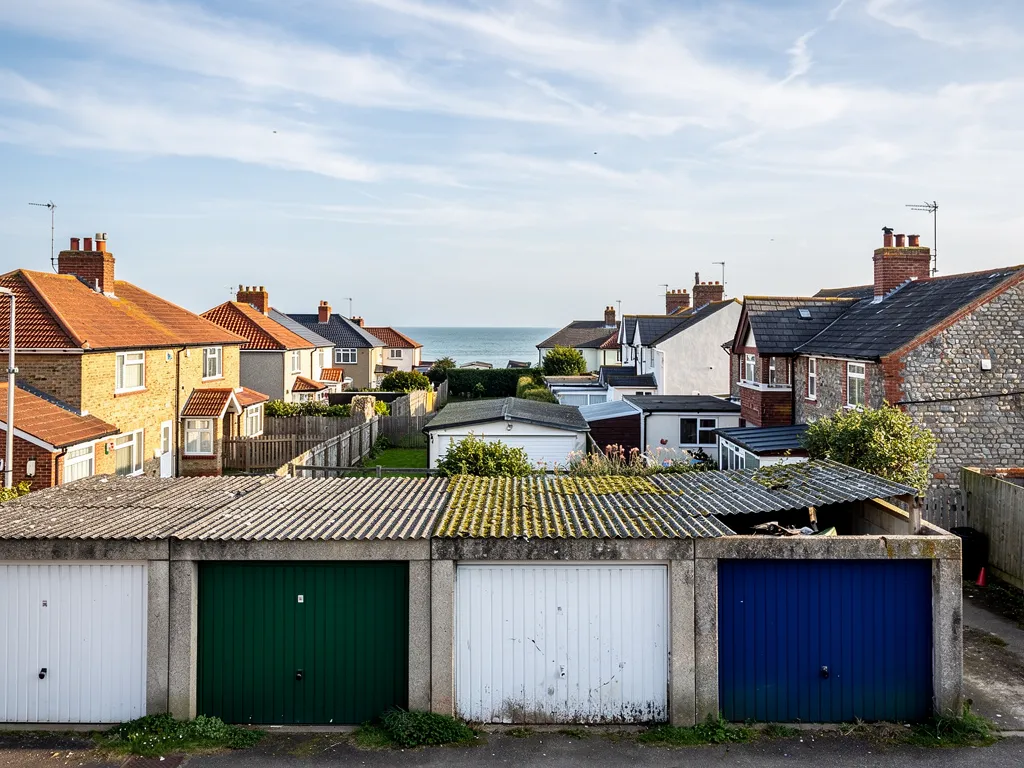
On HSE's list is cement roof sheeting that has taken serious damage or been reduced to pieces, with the example of an entire roof being dropped. Its roofing guidance adds a second trigger: if the sheets begin to shed a significant amount of dust as they are worked, the job joins the notifiable group.
In practice the condition of the roof at the start matters. Sheets that have cracked through along the corrugations, or crumbled at the edges, are more likely to break as they are lifted, and the same goes for sheets already hit by a fallen branch or a failed repair.
Method matters as well. Lowering sheets whole keeps the work in the ordinary group. Throwing them down, snapping them or running them down a chute does not, and HSE tells contractors to lower big pieces to the ground under control. Because the sheets are fragile, nobody should walk on them, and proper access arrangements must be in place before any work begins. See the page on the asbestos sample test for how the material is identified first.
Notice, medicals and records
For notifiable jobs, HSE says the regulator must hear about it ahead of the start, with no minimum waiting period. That duty belongs to the contractor doing the job. As the householder you do not file it, but you can ask whether it has been done, and a contractor who works properly will tell you.
The people doing the work need medical checks no less than every three years. This is a worker protection rule, so you are unlikely to see the paperwork, but it shows the group is taken seriously.
Registers of the work, which HSE calls health records, must be kept for 40 years. The long period is deliberate, since illnesses linked to asbestos can take decades to appear. A householder benefits indirectly, because a contractor who works this way leaves a trail showing that the job took place.
None of these duties applies to plain non-licensed removal. They are why a contractor who can keep the sheets whole has an easier, quieter job than one who cannot. Your own papers, the sample result and the waste consignment note, should still be filed with the house documents.
Waste, access and what it does to the price
Whichever group the work falls into, what comes off the roof is asbestos waste. HSE says it should be wrapped twice and labelled, carried in a lockable skip when it is cement sheet, and kept apart from other waste. GOV.UK says the contractor taking asbestos out of a house is the one who consigns it, filling in the consignment note as producer. The page on asbestos waste disposal covers where it ends up.
Extra duties cost time. A job in the notifiable group usually costs more than one outside it, because of the notice, the preparation and the handling of broken material. MyBuilder's asbestos removal guide (updated 21 August 2026) gives a typical UK range of £350 to £1,295 for a single garage roof and £650 to £1,800 for a double. Where a particular garage falls depends on the survey, which comes first, then a written quote with a single total. Ask any contractor whether their price assumes whole sheets or allows for breakage, because that tells you which group they expect to work in.
If the roof still has years in it, the sensible question is whether it needs to come off yet at all. How long a garage roof lasts and garage roof materials help you plan that.
Notifiable asbestos work: two more questions
Do I have to notify anyone myself if my garage roof sheets crack during removal?
The duty to give notice sits with the contractor doing notifiable work, not the householder. If sheets break unexpectedly, stop, keep people away and speak to the contractor about what the break means for the job. Do not clear fragments yourself, because disturbing them is what creates the dust.
Is notifiable the same as licensed?
No. Licensed work needs a licence from HSE, and most removal of asbestos insulating board falls there. Notifiable non-licensed work needs no licence but does need notice, medicals and records. Plain careful removal of whole cement sheets needs neither the licence nor the notice.
Tell us about your roof
Describe what is happening and we will call you back to arrange a visit.
- Photographs of what we find
- A written quote with one total price
- Or call 01903 299063
10-year workmanship guarantee, in writing.