Corrugated cement sheets were a standard garage roof for decades, and many of them contain asbestos. When one is cracked, stained or leaking, there are two broad ways forward. The sheets can be taken off and disposed of, or a new covering can be fitted over the top and the old roof left in place beneath it. That second route is called overcladding, or overlaying.
It is not a fringe idea. HSE's guidance on working with asbestos cement raises the question of overlaying the old sheets with a material that contains no asbestos, rather than taking them off. That marks undisturbed sheets as a recognised option where the structure and the sheets allow it. It is not automatically the cheaper, simpler or safer one, though, and it hands a decision to whoever owns the garage next.
This guide sets out what overcladding involves, the case for it, the case against it, and the practical questions about fixings, weight and approval that decide whether it is sensible on your roof. It assumes you already know, or have tested, that the sheets are asbestos cement; if you are not sure, start with how to test a garage roof for asbestos.
What overcladding actually involves
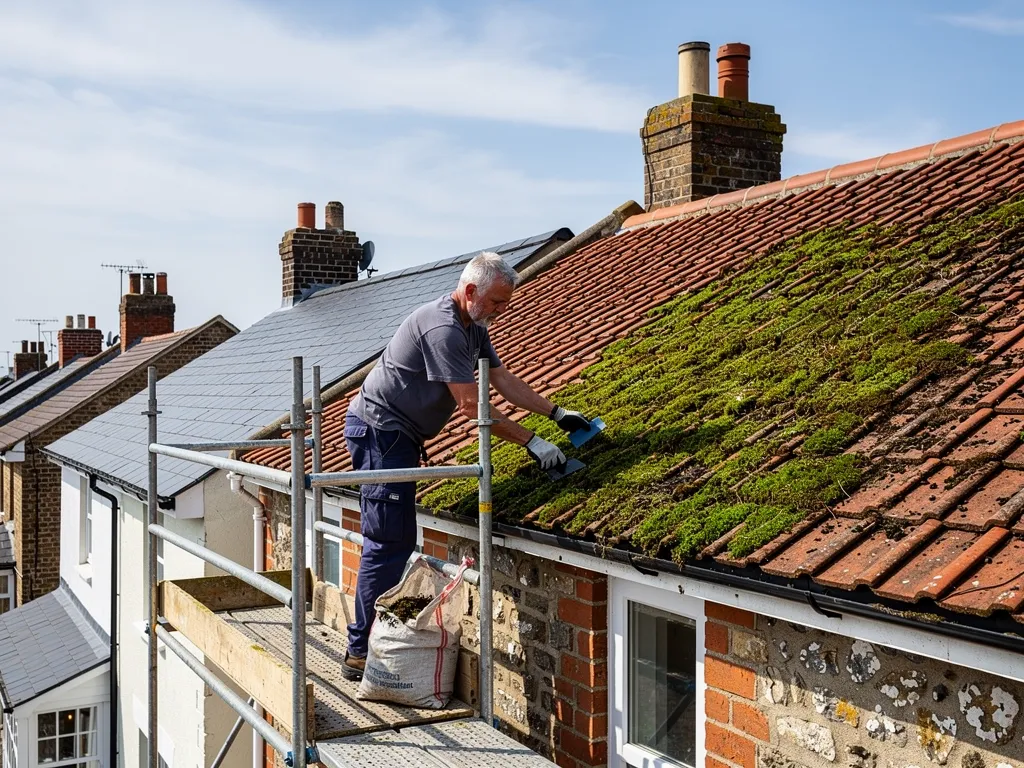
Overcladding means putting a new weatherproof roof over an existing one. On a garage the new layer is usually profiled sheeting in a non-asbestos material, such as coated steel or a lightweight composite, carried on new supports or fixed down to the existing framework. The old sheets stay where they are, becoming a hidden layer beneath the new roof.
The attraction is plain. Asbestos cement is at its most hazardous when it is broken, drilled, sanded or smashed, and a method that avoids all of that has obvious appeal. Under HSE's A14 guidance, a cement roof of this kind is fragile every time, so any plan that reduces the time people spend working on and beside brittle sheets is worth weighing seriously.
What it does not do
Overcladding does not remove the asbestos, make it safe in any permanent sense or change the legal position of the building. For a building constructed or refurbished before 2000, HSE says to assume asbestos is present, and that assumption carries on after the new roof goes on. The material is simply covered.
It also does not repair the old roof. Any leaking sheets, cracked ridges or failed gutters still need to be dealt with, and the framework underneath has to be strong enough to take a second roof. The survey covers it, from inside the garage and from outside, and we note the state of the purlins (the horizontal beams the sheets rest on) before suggesting anything.
Our job at this stage is to tell you plainly whether the roof is a candidate. Some are not, and the reasons follow.
The case for leaving the sheets in place
The first advantage is the least disturbance to a material that is only a risk when it breaks up. Under HSE's rules, lifting sheets off carefully is non-licensed work. Once sheets are smashed or crumbling the job moves up a category to notifiable non-licensed work, with notice going in beforehand. An overclad job that never breaks a sheet avoids that second category altogether.
The second advantage is waste. Removal produces sheets that have to be handled whole, double-wrapped, labelled and taken in a lockable skip, and the waste must travel with a consignment note, which the contractor fills in as the producer of the waste. Overcladding creates none of that and no journey to a disposal site, which is part of why it can come out cheaper on a larger roof.
Speed, weather and security
A well-planned overclad is often quicker than strip-and-replace, because there is no moment when the garage is open to the sky. The contents stay dry, and the structure is not exposed while a replacement is arranged. That matters for a garage holding a car, tools, or stored furniture.
It can also suit a roof that is stable but tired. A garage whose sheets are intact, with no major cracks and good supports beneath, may only need a new weathering layer, and some owners choose overcladding as a holding measure that buys time before a later full replacement. If you do go that way, treat it as a deliberate decision, not a way of forgetting the problem.
Overcladding can also carry a thermal or condensation benefit when the new layer is an insulated sheet. Our page on garage roof condensation explains why a cold metal roof over a warm room needs thought.
The case against: what stays on the property
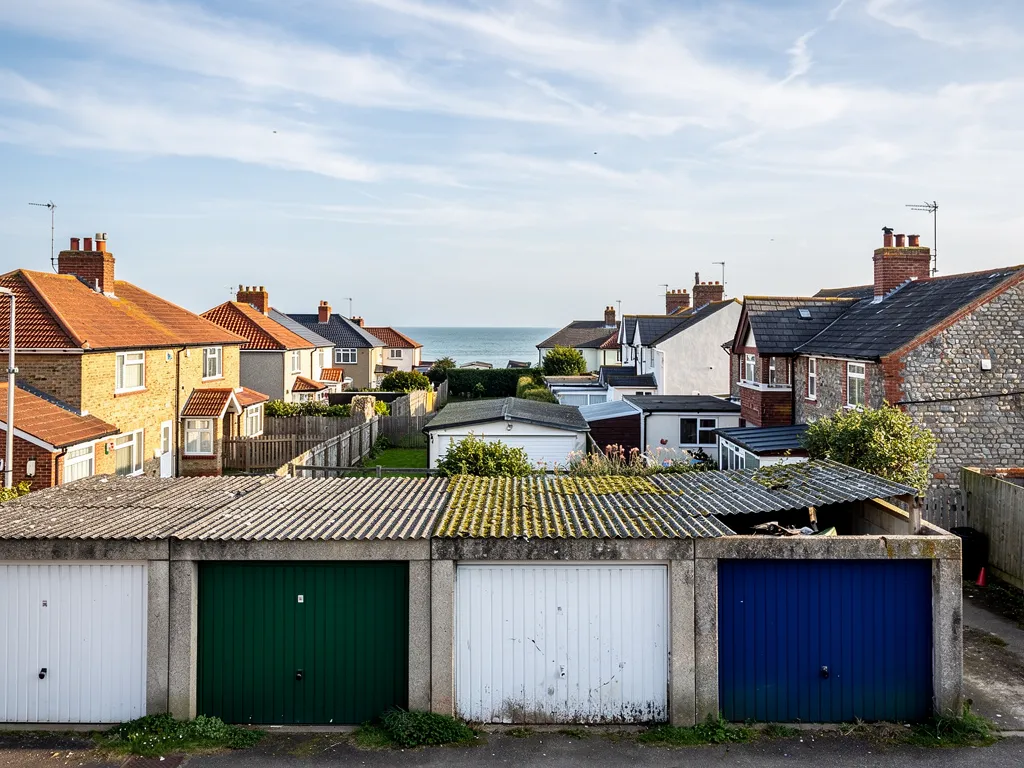
The strongest objection is simple: the asbestos is still there. Every future owner, builder and surveyor of that garage will meet a roof with two layers and a hazardous one underneath. Any later work on the structure, from fitting a rooflight to knocking down the garage, brings the buried sheets back into play, and by then they may be older, more brittle and harder to reach.
Removal later is usually harder, not easier. The new covering has to come off first, and the old sheets lie beneath it with the fixings of both roofs in the way. A job that was a straightforward lift-off when the sheets were exposed becomes a slower, more awkward one. So overcladding often defers the cost of removal rather than cancelling it.
Hidden condition and trapped moisture
Once covered, the old sheets cannot be inspected, and the gap between the two layers can hold moisture and dirt. A small leak that would have been obvious from inside the garage may be masked for months. Bird nests, leaves and condensation can build up in the void, and nobody sees it.
There is also the question of what a buyer or lender makes of it. A buyer's surveyor may well note a covered asbestos roof, and some buyers will want it dealt with. We would sooner you knew that now, before a decision is made.
Fixings, weight and the fragile roof underneath
How the new roof is held down is the heart of the matter, and it deserves a direct question to any contractor. If the new sheets are screwed through the old ones, every fixing is a hole drilled in asbestos cement, which creates dust and risks cracking the sheet. A better design carries the new covering on its own supports that do not pierce the old roof, or is fixed in a way that avoids drilling the old sheets wherever the design allows. Ask exactly where each fixing goes and what touches the old sheets.
Weight is the second concern. A second roof adds load to a structure that was designed for one light covering. The Planning Portal lists a covering that adds 15 per cent or more to the roof covering's weight among the triggers for approval, and its re-roofing page sends owners to a structural engineer or a surveyor if the replacement is much heavier. A steel profile is usually light, but a heavy tile or a double layer of sheeting may not be.
Working on a brittle roof
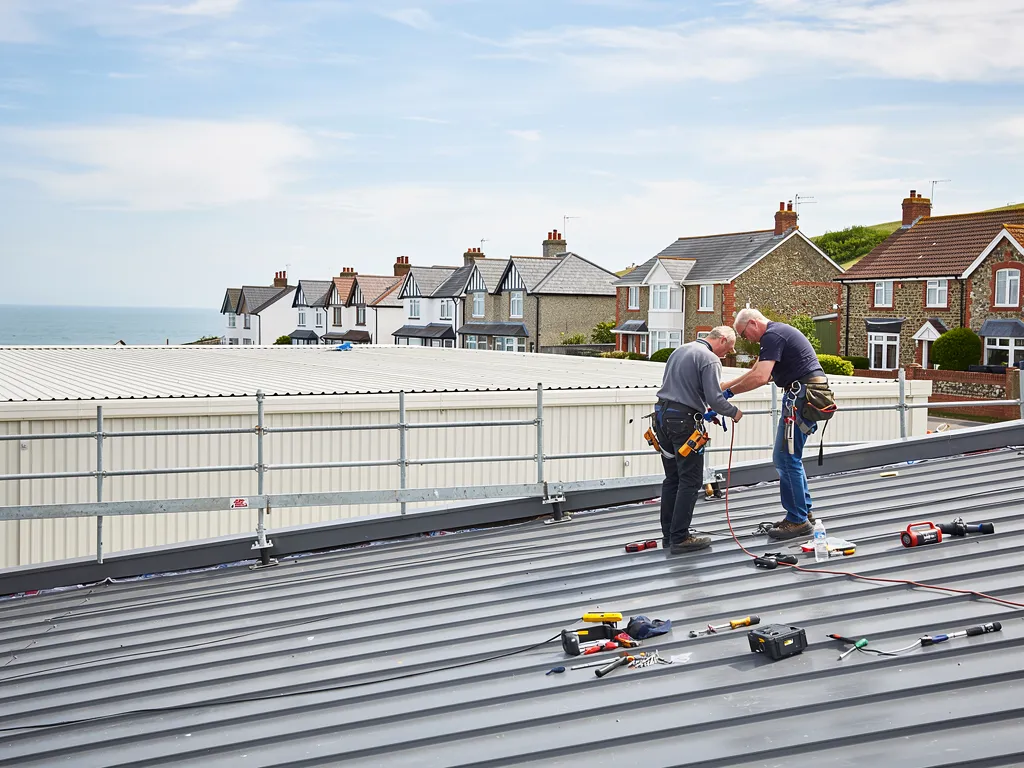
Asbestos cement roofs are always fragile, in HSE's words, and the sheets can fail without warning under a person's weight even when they look sound. Overcladding does not remove that hazard during the work. Roof ladders or crawling boards, edge protection and catch nets must be arranged before anyone steps out, and nobody should walk on the old sheets. This is the reason we never recommend DIY overcladding, and it is the reason a garage roof is not a casual weekend job.
If sheets are cracked or sagging between purlins, the framework below may be failing too. In that case a new roof on top will carry on moving, and the better answer is usually to take it all off.
Approval and rules for a new covering over old
A new covering is a re-roofing job, and the Building Regulations questions are the usual ones. On the Planning Portal's test, repairs and re-covering need no building control application where under 25 per cent of the total building envelope and under 50 per cent of the roof is affected. Complete overcladding of a garage roof can exceed the roof half of that test, and the Portal lists other triggers too, including structural alterations and a replacement that would behave quite differently in a fire.
Which way the rules fall on an attached or detached garage is a matter for your building control body, not for us to guess. Our guide to Building Regulations for garage roofs explains the thresholds and who to ask. Adur & Worthing Councils run one building control team at Worthing Town Hall, and private registered building control approvers also operate in England. Where an application is needed, we talk you through the consent and deal with the Building Regulations notification ourselves.
Planning and the neighbours
A like-for-like re-cover that does not materially affect the building's appearance does not usually need planning permission. Changing a flat or shallow-pitched roof for a visibly different profile, or fitting an obviously different colour, may. Listed buildings and conservation areas carry caveats, and Article 4 directions can remove rights that normally apply, so check with the Adur & Worthing planning team if yours is anywhere near either.
Where the garage is shared or joined to a neighbour's, the roof edge and the wall between the garages raise issues of their own. We cover those in our page on shared garage roofs. Wildlife is the final consideration. The law protects bats and nesting birds, and an old garage roof can suit either, so mention any you have seen.
Costs against removal, and how to decide
Published guide prices for typical UK jobs sit side by side below, since the choice so often turns on money and risk together.
| Item | Published range | Source |
|---|---|---|
| Asbestos roof removal, average | around £2,000, or £50 per m² as a starting rate | MyBuilder, updated 21/08/2026 |
| Single garage roof removal | £350 to £1,295 | MyBuilder, updated 21/08/2026 |
| Double garage roof removal | £650 to £1,800 | MyBuilder, updated 21/08/2026 |
| Removal and disposal | £950 to £3,750 | Checkatrade, October 2026 |
Those figures cover taking the old roof off, not putting a new one on. What overcladding costs depends on the sheeting, the supports and the structure beneath, so it is priced after the survey. Our quote is a single total figure, and you should ask each firm to confirm that VAT and scaffold are inside the total.
A way to decide
Overcladding tends to suit a stable roof, sound framing, a light new covering and an owner who wants to avoid disturbance and accepts that the sheets remain. Removal tends to suit sheets that are already broken, a failing frame, a plan to build on or convert the garage, or a wish to sell without the question mark. Our guide to the lifespan of garage roofs helps with the timing, and converting a flat garage roof to pitched covers a different structural route.
If removal is not needed, we will not push it. Pictures of your own roof support the advice, and the written quote sets out what is and is not included. More on the wider choices sits on our garage roof replacement page.