
Question answered
What time of year is best to remove moss from a roof?
The short answer
The best time to remove moss from a roof is a dry, calm spell outside the nesting period, which usually points to September and early autumn. Moss that is still wet and heavy comes off less cleanly, and frost makes the roof slippery and brittle. Nesting birds and roosting bats are protected, so a check for them comes before any scraping begins.
Timing depends on weather and on what lives in the roof, not on one magic month. A settled dry spell and a quick check for nests matter more than the calendar.
Why dry weather beats a particular month
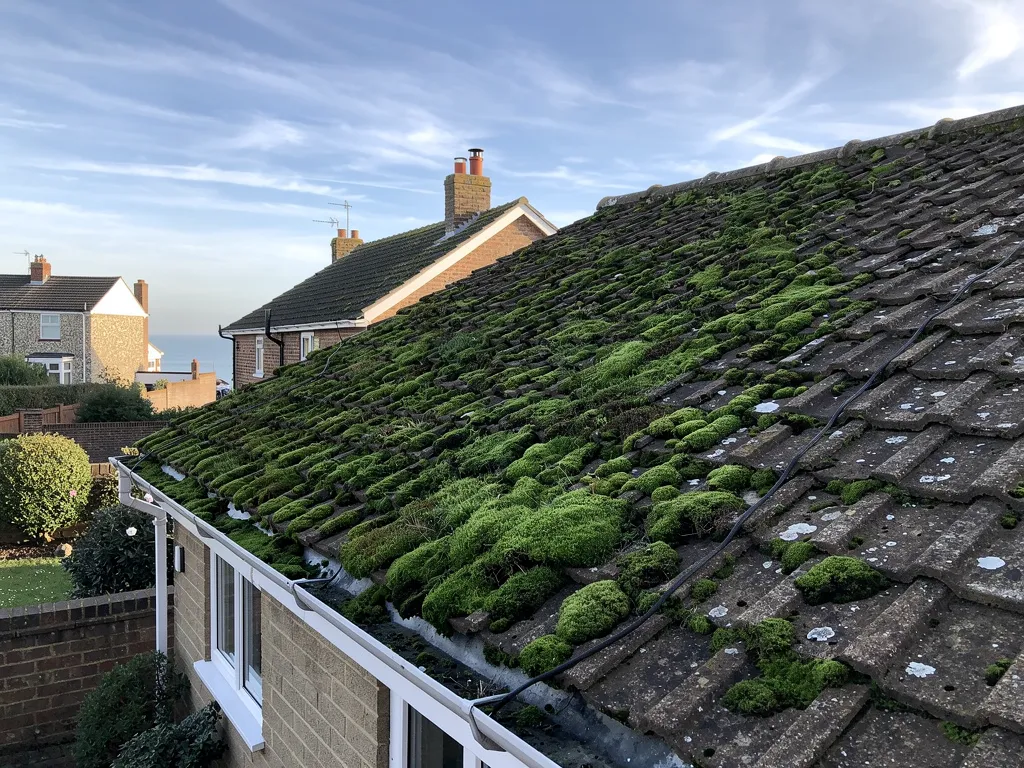
Moss comes off most easily when it is dry and has begun to shrink back. In wet weather it is heavy and slimy, tiles are slippery, and loosened moss simply smears into the gutters instead of dropping clear. On a damp day any treatment applied afterwards is also at risk of being rinsed away before it works.
A run of settled days is therefore better than a date on the calendar. On the Sussex coast, a dry spell can turn up in any season, and a calm day in early spring is often better for the job than a blustery one in July. Gusty wind makes ladders and roof access harder, and it blows debris onto neighbours' cars and windows.
Frost is the other thing to avoid. A frozen roof is dangerous underfoot, and tiles that are brittle with cold can crack under a boot or a scraper. A cold, bright morning is not the same as a safe working day, and a roofer who insists otherwise is taking a risk with your tiles.
Checking for nests and bats before work starts
Roofs are homes as well as shelter. Wild birds' nests are protected by law while they are being built or lived in, and GOV.UK treats every bat species and its roosts as fully protected. Among the work that can disturb bats, the same guidance names roof repair and replacement.
In practice that means looking before anything is scraped. Gaps under ridge tiles, the eaves and the gable ends are the usual places. If a nest is in use, the sensible thing is to leave that part alone until the birds have finished. If you suspect bats, stop and take advice before going on.
This is one reason why spring and early summer, when birds are most likely to be building, are not always the best moment to disturb a roof edge. Late summer into early autumn often suits both the wildlife and the weather, though the check still comes first every time.
Spring, summer, autumn and winter compared
Spring brings growing weather, which is why moss looks its worst by April. It is also when birds start to build, so checks matter most then. Summer gives the driest roofs and the longest days, but a hot, bright slope can be uncomfortable for the crew, and a treatment can dry too fast to soak in.
Early autumn is often a sensible compromise. The roof is dry, the nesting is mostly over, and you can have the gutters cleared before leaf fall, which stops moss and new leaves blocking them together. If you clean in late autumn, expect more rain, shorter days and a smaller window of dry weather to work in.
Winter is the hardest season. Cold, wet and frost all work against a good job, and a treatment struggles to take. An urgent problem such as moss pushing into a valley may still justify going ahead, but a routine clean is better left until it is mild and dry.
Timing around gutters, leaves and treatment
Moss that has been scraped off ends up somewhere. Cleaning the gutters first and again afterwards stops it clogging the outlets. Timing the job before leaf fall means the gutters are not full of both at once, and the downpipes have a better chance of running clear through the first autumn storms.
If a biocide treatment follows the clean, it needs a dry spell afterwards so that it stays on the surface long enough to act. Our guide to roof cleaning methods explains what each approach involves and how long it needs to settle.
If you are tempted to do it yourself on the first dry weekend, read whether you can remove roof moss yourself before you climb anything. A dry day is better for the job, but it does not make a ladder any safer.
When not to wait for the right season
Waiting for ideal weather makes sense for a routine clean. It does not if moss is blocking a valley, spilling out of a gutter or sitting against a flashing and leaking into the house. In that case the roof is already failing, and the question is how to make it safe first. A good contractor will clear the problem area and come back for the full clean when conditions allow.
If you are weighing up cost against urgency, our page on whether a roof clean is worth it helps you decide how soon it needs doing. For the wider service, see roof cleaning and moss removal.
Either way, the written quote follows an inspection of your own slopes, and the photographs show what is growing where, so you can judge the urgency for yourself.
More on timing
Can moss be removed in winter?
It can, but it is rarely the best choice. Frost, wet tiles and short daylight make the work riskier and less effective, so we would normally wait for a mild dry spell unless moss is causing a leak or a blockage.
What if I find a bird's nest on the roof?
Leave it alone while it is in use, because a nest in use cannot lawfully be damaged or removed. The clean for that part of the roof has to wait until the birds have gone. Tell your contractor before work begins so the area can be left until it is clear.
Tell us about your roof
Describe what is happening and we will call you back to arrange a visit.
- Photographs of what we find
- A written quote with one total price
- Or call 01903 299063
10-year workmanship guarantee, in writing.