
Question answered
Can you remove roof moss yourself?
The short answer
You can remove roof moss yourself, but it is rarely a good idea to go up on the roof to do it. Falls from ladders and roofs are the main danger, and scraping, brushing or jetting can crack tiles, strip their surface and push water under them. Safer options are ground-level work, clearing gutters, and having a contractor deal with the slopes.
You can, but the roof itself is the dangerous part and the tiles are easy to damage. Most of what helps can be done from the ground without climbing at all.
The real danger is the fall
The risk with a do-it-yourself clean is not the moss. It is a wet, sloping surface covered in a slippery green layer, with the ground a long way below. Moss that is damp is slick underfoot, and loose tiles can shift under a boot. A ladder leaned on a gutter, which is not designed to take weight, can bend it or slide.
Roof work is also a job where a small mistake becomes a serious injury. Pitched roofs, hips and valleys are awkward to cross, and a bungalow roof can feel low enough to seem harmless. It is not. If you are not used to working at height, the sensible position is to stay off the roof and off any ladder that is not footed and tied.
Never walk on a roof you think might contain fragile sheets, such as old garage or outbuilding roofs. If the covering might be asbestos cement, do not touch it. Read our note on asbestos roofs and cleaning first.
How scraping, brushing and jetting damage tiles
Concrete and clay tiles have a surface that protects them. A stiff brush or scraper pulled across can wear that surface away and leave it rougher, which actually gives moss more to hold on to next time. Metal scrapers can chip the edges of slates and break old tiles that were already fragile.
A pressure washer is even worse for the unwary. A strong jet can blow the fine grains out of the surface, force spray beneath the tiles and into the loft, and dislodge bedding on ridges and verges. MyBuilder's roof cleaning guide warns that this method may damage delicate tiles, and it is why we steer owners away from it.
Damaged tiles can be hard to spot afterwards. A hairline crack does not show from the ground, but it will let water through when the next storm blows in. The mess can also wash down onto your own windows, paths and cars, and into drains that were never meant to take it.
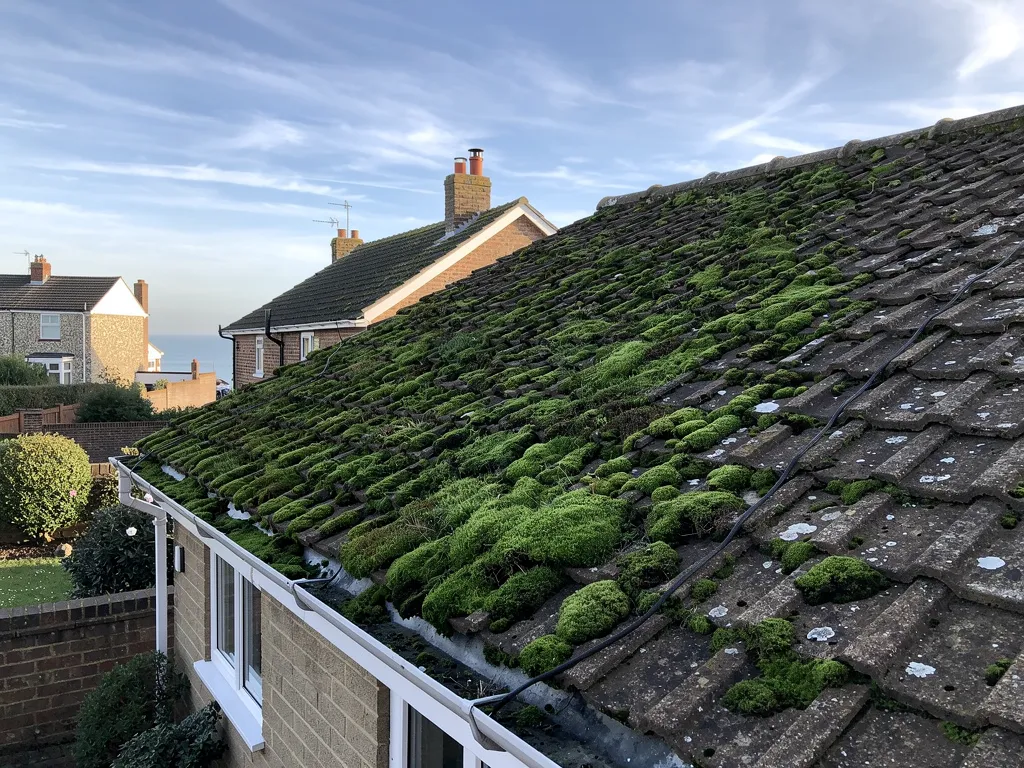
Jobs you can do without leaving the ground
Quite a lot. Clear gutters from a stable stepladder or from a platform designed for the job, and clear the moss that has already fallen. Trim back branches that shade the roof or drop leaves on it, since that removes the cause rather than the symptom. Keep the ground under the roof clear so that falling debris does not land on a path.
You can also use a long-handled soft brush on low outbuilding roofs, provided you can reach from firm ground and the roof is plainly sound. If you want to treat the roof, an applied treatment is a way to slow growth without scrubbing. Our page on whether roof moss killers work explains what they do and what they leave behind.
Whatever you choose, work in dry, still weather and keep people and pets out from under the eaves. Stop at once if anything on the roof moves or cracks.
Home remedies that cause trouble
Household bleach, washing-up liquid and homemade mixtures are the usual shortcuts. Bleach can kill plants in the borders below, stain the roof and corrode fittings, and none of these mixtures is designed for the job. We cover this in can you use bleach on roof tiles.
Another common mistake is knocking moss off in clumps and leaving it. It lands in the gutters and valleys, then blocks them and leaks into the house in the next storm. A roof that has been scraped but not rinsed or treated is often greener again in the following season.
Wire brushes, garden spades and metal tools are also best left in the shed. They leave scratches that hold water, and they chip the glaze or the coloured finish on the tile.
When to hand it over
If the moss is thick, if the roof is steep or high, if you would need a scaffold, or if you are not sure what the covering is, a professional visit is safer and often cheaper than a mistake. A contractor can inspect first, then choose a method that suits the tiles. That inspection also shows whether cleaning is the right job at all.
You can ask for the quote to say what is included: cleaning, gutters, treatment and tidying. If you are unsure how soon it is needed, our page on how often a house roof should be cleaned gives a sense of when to ask. Our roof cleaning and moss removal page explains how we approach it.
You will get photographs of your own slopes with the written quote, which saves you climbing up to look. Whatever you decide, a second pair of eyes at the foot of the ladder is a minimum, and a professional inspection is a better one.
Before you pick up a brush
Is it safe to clean a bungalow roof myself?
A low roof still has the same slippery surface and the same fall risk. The ground may be closer, but it is hard, and a ladder still needs to be secure. Treat it with the same caution as any other roof.
Can I just spray the roof from the ground?
Spraying a treatment from the ground can work on low roofs, but you cannot see the result or check the covering. Read the label, protect plants and drains, and expect to brush off the dead moss later.
Tell us about your roof
Describe what is happening and we will call you back to arrange a visit.
- Photographs of what we find
- A written quote with one total price
- Or call 01903 299063
10-year workmanship guarantee, in writing.