
Question answered
Can an asbestos cement roof be cleaned?
The short answer
An asbestos cement roof should not be pressure washed, scrubbed or scraped. HSE's wording is that these roofs are always fragile, and rough cleaning can break up the surface and free dust. If you suspect asbestos, leave the moss alone, keep off the roof and take advice before anyone works on it.
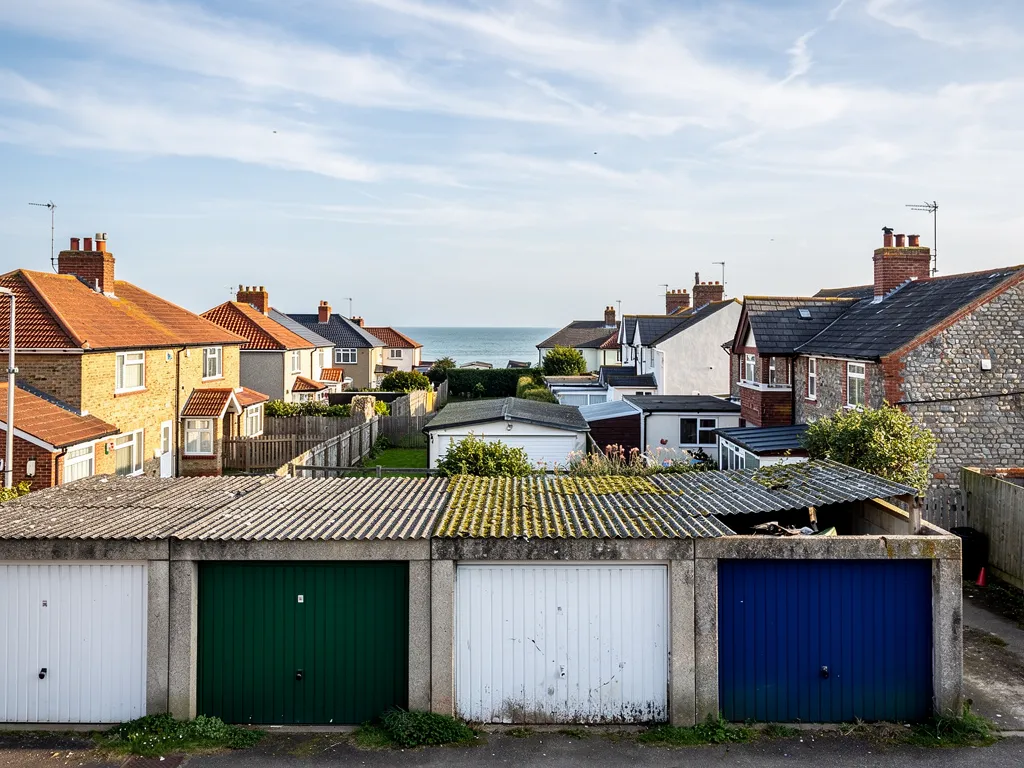
A corrugated cement roof over a garage or shed picks up moss and algae like any other. The difference is that scrubbing or jetting them can release fibres, so the usual cleaning methods are the wrong ones.
Why the usual cleaning methods are wrong here
Moss removal normally means brushes, scrapers and sometimes a jet, and each of those works the surface of the material. On asbestos cement the surface is where the risk sits. Weathered sheets can shed fibres when abraded, and a jet can carry wet debris and loosened fibres across the roof, the ground and the gutters.
HSE's guidance on asbestos cement notes that when the material starts to break up and create significant dust, the job becomes notifiable non-licensed work. In plain terms, a cleaning job that damages the sheets stops being a simple chore and becomes a regulated one.
HSE's starting assumption for any building constructed or refurbished before 2000 is that asbestos is present. That takes in a great many garages, sheds and farm-style outbuildings across Sussex. Moss and staining cannot tell you what a sheet is made of, but laboratory analysis can. Until you know, treat any corrugated cement roof of uncertain age with caution. HSE lists rainwater goods alongside roof sheeting among the asbestos cement products found on buildings, so old cement gutters and downpipes on the same building call for the same care.
Fragile, as well as hazardous
HSE is equally blunt on a second point: AC roofs are always fragile. Even a sheet that looks sound can break under body weight, and the person ends up falling through to the floor below. A fall of that kind is the more immediate danger than the dust. Moss makes matters worse, because it hides cracks and leaves the surface slippery.
That rules out the casual approach. No one should walk on the roof to scrape it, lean a ladder against the sheets or reach across them. Crawling boards do not make the roof safe on their own.
For the same reason, treat rooflights set into these roofs with suspicion. Old translucent panels can be more brittle than the sheets around them, and growth can cover them completely so they cannot be seen.
Garage roofs get their own coverage elsewhere on this site. The point here is simply that wanting a tidier roof is not a reason to go up there, and that no amount of moss justifies the risk of putting a foot through a sheet.
What the sensible options are
Start by finding out what you have. A sample analysed by a laboratory confirms whether the sheets contain asbestos, and an asbestos surveyor can arrange that. Until you know, leave the moss where it is, since it is doing no harm, and keep children and pets away from any loose or broken pieces.
If the sheets are confirmed as asbestos cement and are in reasonable condition, the usual routes are to leave them alone and keep watching them, to take specialist advice on treating the surface, or to have the roof covered over or taken off. HSE's own guidance asks whether you can overlay the sheets with a non-asbestos material instead, because that avoids disturbing the cement at all.
HSE places careful removal of asbestos cement in the non-licensed group, provided the sheets are lifted without being broken. Substantial breakage changes that. Asbestos waste is wrapped twice and labelled, and asbestos taken from a home travels with a consignment note, so ask any contractor who will handle the paperwork and where the material is going. Moss and algae that have grown through the surface layer are not a reason to hurry any of this.
Questions to ask before anyone starts
Ask whoever you invite how they intend to handle the sheets, and whether they will lift them whole. Ask what they will use to keep dust down, where the waste is going and how it will be carried. Ask for the method in writing, and ask what they would do if a sheet cracked while they were working. A sensible answer describes stopping, keeping people away and deciding how to go on, not carrying on regardless.
Ask, too, whether the job really needs doing now. Moss on an intact cement roof is usually a looks problem, not an urgent one, and waiting costs nothing while you gather facts.
Treat an offer to jet wash a corrugated roof quickly and cheaply as a reason to say no. An unsolicited offer to clean an outbuilding roof deserves extra caution when the sheets look old.
If you rent the building, or the roof belongs to a shared property, tell the landlord or managing agent, since they have duties around asbestos in buildings they control.
If the roof turns out to be something else, such as slate or concrete tiles, the picture changes completely. See the best time to remove moss, cleaning a slate roof and moss in roof valleys. The full range sits under roof cleaning and moss removal, and whether cleaning is worth it helps you decide what to do first.
Cement roofs: two more questions
Is the moss on a cement sheet roof itself a hazard?
The moss is not the hazard, and disturbing it is. Left in place, it does no harm to the sheets. The risks are breaking them or abrading them. Stay off the roof and arrange a proper assessment before anyone scrapes it.
Can an asbestos cement roof be painted or sealed to stop moss?
Sealing is sometimes used on sound sheets, but the surface needs preparing first, and preparation is what disturbs it. Ask a specialist who works to HSE guidance before anything is applied, and do not scrub the roof beforehand.
Tell us about your roof
Describe what is happening and we will call you back to arrange a visit.
- Photographs of what we find
- A written quote with one total price
- Or call 01903 299063
10-year workmanship guarantee, in writing.